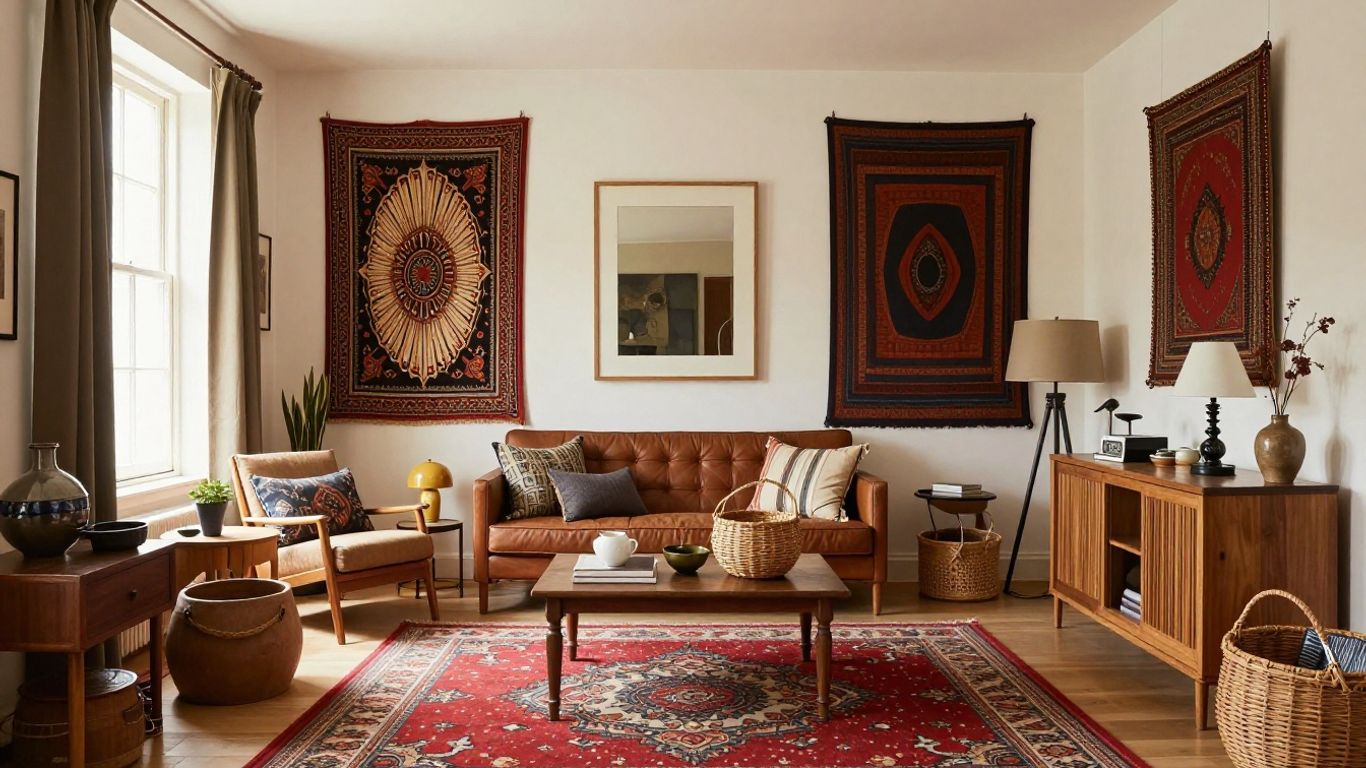
Key Takeaways
A finished-looking room usually comes from a few considered choices rather than a crowded collection of objects.
- Define a decorating direction before buying accents.
- Study the room’s light, proportions, and existing features.
- Layer color, texture, pattern, and varied heights gradually.
- Choose accessories that suit each room’s practical needs.
- Shop selectively and maintain pieces so the room can evolve.
Define your decorating style before shopping
The best accessories for home decor feel connected to the people and architecture already in a space. Before shopping, notice what you repeatedly save, photograph, or pause over. A clear direction makes decisions easier and reduces impulse purchases that look attractive alone but awkward together.
Identify the colors, materials, and shapes you already love
Begin with your own home rather than a blank mood board. Look at the finishes of your furniture, the colors in your largest textiles, and the forms that naturally recur: rounded vessels, straight-lined frames, sculptural lamps, or delicate metal details. A short list of favorites gives you a useful filter when a shop is full of tempting options.
Pay attention to how those preferences feel as well as how they look. Warm wood and woven fibers may make a room feel relaxed, while glass, stone, and polished metal can bring a crisper mood. The goal is not to label your style perfectly; it is to recognize the visual language you are already building.
Combine style influences without creating visual clutter
Most inviting rooms are not faithful to one style category. A traditional chair can sit comfortably beside a clean-lined table, or a modern room can gain character from an old ceramic pot. The connection comes from repeating one or two elements, such as a shared color, finish, or sense of scale.
Choose a dominant direction and let the secondary influence appear in smaller doses. If the room is mostly calm and contemporary, a few weathered or handmade objects may add depth without turning the space into a collection of unrelated themes. This is also the approach encouraged by a practical room-by-room decorating guide, where comfort and cohesion matter as much as appearance.
Use inspiration images to spot recurring design details
Save images in groups instead of collecting them without review. After a week or two, scan the collection and identify what keeps returning: low-contrast palettes, oversized art, open shelving, dark wood, or abundant textiles. Those repetitions are more useful than any single image because they reveal what you genuinely like.
Use inspiration as a vocabulary, not a blueprint. A room in a photograph may have different ceiling height, daylight, and furniture proportions, so copying every object can create a strained result. Borrow the relationship between elements and adapt it to your own rooms.
Build a practical palette for accessories
A small palette keeps shopping focused. Select a base color already present in the room, one or two supporting neutrals, and an accent that can appear in modest amounts. The accent might show up in a vase, cushion, artwork detail, or book jacket rather than across every surface.
Keep a note of the palette on your phone when you shop. Include existing finishes, too, because a room with warm brass hardware needs a different supporting mix from one with cool chrome. A palette should guide you, not prevent an occasional unusual piece that has genuine meaning.
Assess the room before choosing decorative accents
Accessories work best when they respond to the room instead of floating independently within it. Walk through the space at different times of day and notice where the eye naturally lands. Then consider what the room needs: warmth, height, softness, storage, color, or simply less visual noise.

Consider the room’s size, layout, and natural light
A small, dim room often benefits from fewer pieces with lighter surfaces and useful reflective qualities. A large room can handle broader gestures, such as a substantial rug, a tall plant, or artwork with enough presence to hold a wall. Neither approach is a rule; it is a way to keep the accessories in proportion.
Observe circulation before placing anything near a walkway. A beautiful floor basket becomes frustrating if it narrows the path, while a low bowl can work well on a broad console. Natural light also changes the perceived weight of color, so check samples and finishes near their eventual locations.
Work with existing furniture and architectural features
Treat furniture, windows, fireplaces, beams, niches, and built-ins as the room’s fixed vocabulary. Accessories should support these features rather than compete with them. For example, a long console may need a horizontal arrangement, while a narrow mantel might be better with one tall form and a few low companions.
Make a quick inventory of materials already present. Repeating a finish once or twice can make a room feel intentional, but repeating it everywhere can become mechanical. A helpful home accessory planning guide can offer broader inspiration, while your own furniture remains the final authority.
Identify empty areas that need balance
Not every empty spot needs filling. Some open surfaces give the eye a pause, and a clear section of wall can make nearby artwork feel more important. Look instead for areas that feel accidentally unfinished, such as a bare corner beside a substantial sofa or a long wall with no visual anchor.
Balance does not require symmetry. A tall object on one side of a cabinet may be balanced by a wider group on the other, provided their visual weight feels comparable. Step back often and judge the room from the doorway, where uneven arrangements are easier to spot.
Measure surfaces, walls, and display spaces
Measure before buying anything that needs to fit a shelf, console, wall, or tabletop. Record the width, depth, and usable height, then leave room for doors, drawers, cords, and cleaning. A piece that technically fits can still feel wrong if it leaves no breathing space around it.
For wall art and mirrors, use paper or painter’s tape to mark the proposed outline. This simple test shows whether the piece is too small, too high, or too close to neighboring furniture. Measurements also make online shopping less speculative and help prevent expensive returns.
Choose foundational accessories for home decor
Large and frequently used accents establish the room before smaller decorative objects enter the picture. Rugs, curtains, mirrors, lighting, and storage affect comfort, movement, and visual rhythm at the same time. Choose these foundations with both the room’s mood and its daily demands in mind.
Start with rugs, curtains, and other large-scale pieces
A rug can connect separate furniture pieces and make a seating area feel deliberate. Curtains soften hard architectural lines and influence how tall or wide a window appears. These pieces deserve more planning than a small ornament because they occupy so much visual territory.
Check practical details such as pile height, cleaning needs, fading, and clearance beneath doors. Select a pattern only after considering the patterns already in the room. When the larger textiles are calm, smaller accents have more freedom; when the rug is expressive, supporting pieces can be quieter.
Add mirrors and wall art to create visual focus
Wall pieces give the eye a destination and can correct an awkward sense of scale. A mirror may reflect daylight or visually extend a narrow area, while artwork can introduce color, memory, or a strong shape. The right choice depends on what the wall needs rather than on the category of the object.
Hang pieces in relation to nearby furniture, not simply at a convenient height. A low console usually wants art that feels connected to it, while a tall empty wall may need a larger composition. For more ideas about proportion and placement, see this guide to strategic mirror placement.
Use lighting as both a functional and decorative element
Layered lighting helps a room change from bright and active to quiet and restful. Combine general illumination with task light and softer accent light where possible. Lamps, pendants, and sconces also contribute shape and finish even when switched off.
Choose the shade size and lamp height in relation to the furniture beneath it. A lamp on a deep side table can be more substantial than one on a narrow console. Keep switches and cords practical, because decorative lighting that is difficult to operate will eventually be ignored.
Select storage baskets, trays, and boxes that support the room’s purpose
Storage is often the most satisfying kind of decoration because it improves the room while reducing loose clutter. A tray can gather remote controls and cups, a basket can hold blankets, and a lidded box can make small necessities disappear. Choose each container for the items it will actually hold.
Material matters here. Woven fibers add softness, painted boxes bring color, and metal trays can withstand more frequent handling. The broader idea of mixing useful and decorative objects also appears in curated home decor, where baskets and trays are treated as part of a composed room rather than as afterthoughts.
Layer color, texture, and pattern
Once the foundations are in place, smaller accents can add character without making the room feel busy. Variety creates interest, but repetition creates calm. Aim for a conversation among surfaces and colors rather than a different statement at every corner.

Mix materials such as wood, glass, metal, and ceramics
Material contrast gives even a restrained palette more life. A matte ceramic vessel beside a glass object, a wooden bowl near a metal frame, or a stone base under a linen shade creates subtle variation. Each material catches light differently, which keeps a neutral room from becoming flat.
Use a few materials repeatedly instead of introducing one new finish per object. Three or four related materials are usually enough for a room to feel collected. The aim is quiet material variety, not a showroom of samples.
Create contrast with soft and hard textures
Soft textures make a room feel comfortable, while hard surfaces provide definition. Pair a nubby throw with a smooth table, a woven basket with a glazed vase, or a plush cushion with a structured frame. Contrast is especially useful in rooms built around one dominant neutral.
Texture should also match use. Delicate surfaces may work on a high shelf but not on a busy family-room table. Touch, cleaning, and durability are part of the design decision, not separate concerns to solve later.
Repeat accent colors throughout the room
An accent color feels intentional when it appears in at least two or three places, preferably in different forms. A muted blue might occur in art, a cushion, and a small ceramic object; a terracotta tone might move from a rug detail to a vase and a book spine.
Do not distribute the color with mathematical precision. Let one occurrence be stronger and the others quieter. This creates a visual path without making the room look as if every object was purchased as a matching set.
Combine patterns while controlling scale
Pattern mixing becomes easier when the designs differ in scale and share at least one color. A broad geometric rug can sit beneath a small organic print, while a narrow stripe might bridge the two. If every pattern is equally bold, the room loses a place for the eye to rest.
Start with one dominant pattern, add a supporting pattern, and use a small-scale detail only if the room still feels calm. A carefully edited mix usually feels more sophisticated than a large number of unrelated prints. The same principles of shape and contrast appear in this overview of modern decorative accessories, though your own room should determine the final combination.
Get the scale and arrangement right
Good accessories can still disappoint when they are too small, too evenly spaced, or crowded onto one surface. Arrangement is less about achieving a perfect formula than about creating a clear visual hierarchy. Move objects around, take a photograph, and assess the composition from several distances.
Match accessory size to furniture and room proportions
A tiny bowl on a deep coffee table can look accidental, while an oversized sculpture may overwhelm a slim console. Compare the object to the furniture beneath it and to the volume of the room around it. Larger rooms generally need stronger anchors, but a small room can still use one generous piece instead of many tiny ones.
Think in terms of visual weight, not only measurements. Dark, solid, or highly textured objects appear heavier than pale, open, or transparent ones. This lets you balance a composition without forcing every object to be the same physical size.
Group objects using varied heights
Groups are easier to read when they include a high point, a middle point, and something low. A tall vase, medium bowl, and small stack of books create movement; three objects at the same height often form a dull line. Varying shape as well as height keeps the arrangement from feeling rigid.
Leave enough separation for each item to retain its identity. Objects can overlap slightly, but they should not merge into an indistinct mass. Rotate pieces as you work and view them from the side, since arrangements are experienced in motion.
Create balanced vignettes on shelves and tabletops
Begin with the largest object, then add pieces that explain or support it. On a shelf, this might mean a framed work paired with a vessel and a low stack of books. On a coffee table, a tray can establish order while leaving space for the surface to remain usable.
Balance both sides of the composition without making them identical. A wide object can counter a tall one, and a darker finish can balance several lighter pieces. Take a quick photograph before finalizing; the camera often reveals gaps and tangles that the eye has adapted to.
Avoid overcrowding and leave intentional negative space
Empty space is not evidence that you forgot to decorate. It gives important objects room to register and makes cleaning easier. If a surface feels restless, remove one or two pieces before buying anything new.
A useful test is to clear the area completely, return only the objects that serve a visual or practical purpose, and then stop. Negative space can frame a single meaningful object more effectively than a crowded display. It also lets you change the arrangement later without starting from scratch.
Choose accessories by room
Every room asks something different of its accessories. A living room needs comfort and conversation, a bedroom benefits from softness, and a kitchen must tolerate work. Starting with function keeps decorative choices attractive after the novelty has passed.
Make living rooms feel inviting with layered accents
Living rooms can carry more variety because people gather there and view the space from multiple angles. Combine a rug, cushions, throws, table objects, lamps, and art, but distribute them across the room so no single surface carries all the activity. Repeated color can connect pieces that serve different purposes.
Keep coffee tables usable and pathways open. A bowl for small items, a tray, and one sculptural object may be enough for a compact table. For a fuller plan, this living room decorating guide offers a useful way to think about mood, furniture, lighting, and maintenance together.
Add warmth and personality to bedrooms
Bedrooms benefit from fewer, softer visual interruptions. Choose bedside lighting, textiles, artwork, and a small number of personal objects that support rest rather than demand attention. Natural materials and warm, low-contrast colors can make the room feel settled.
Be practical about dust and nighttime movement. Avoid fragile objects on narrow nightstands and keep lamps easy to reach. A bench, basket, or folded throw at the foot of the bed can add texture while serving a clear purpose.
Keep kitchen and dining accessories practical
In kitchens and dining areas, decorative pieces should tolerate crumbs, steam, spills, and frequent handling. Use boards, bowls, canisters, trays, and textiles that can be cleaned without special treatment. Open shelves look best when useful objects are arranged with a little breathing room.
On a dining table, favor a centerpiece that can be moved easily when meals begin. A low vessel, bowl of seasonal produce, or compact arrangement keeps sightlines open. In a busy kitchen, restraint often looks more polished than filling every available ledge.
Use bathroom accessories that withstand moisture
Bathrooms need finishes that can handle humidity and regular cleaning. Glazed ceramics, sealed wood, treated metal, glass, and washable textiles are generally more practical than porous or delicate materials. Keep decorative items away from direct splashes whenever possible.
Choose accessories that organize daily routines: a soap dispenser, lidded container, tray, towel basket, or mirror. A small plant may work if the room has enough light and the species suits the conditions, but it should not create extra maintenance in an already damp space.
Create welcoming entryways with functional decor
The entryway sets the tone for the home and handles a surprising amount of practical work. A mirror, runner, catchall tray, hooks, basket, or narrow bench can make arrivals and departures easier while giving the area visual structure. Select pieces according to the width of the passage.
Keep the surface near the door edited. One attractive bowl for keys and a small piece of art may feel more welcoming than a crowded console. A durable rug and a wipeable finish are especially valuable where outdoor dirt and wet shoes are common.
Shop thoughtfully and maintain your decor
Decorating does not need to happen in one weekend. Buying gradually gives you time to understand what the room lacks and prevents a temporary trend from defining every surface. Set priorities, inspect quality, and leave some budget for the pieces you discover later.
Set priorities for different decorating budgets
Start with the changes that affect the room most: a rug, lighting, curtains, storage, or a significant wall piece. Smaller accents can wait because they are easier to find and replace. Before shopping, write down the room’s three biggest needs and rank them.
A simple budget table can keep attractive distractions from taking over. Use it as a planning tool rather than a strict prediction:
| Priority | Typical role | Buying question |
|---|---|---|
| Foundation | Rug, curtains, or lighting | Will it change comfort or proportion? |
| Function | Storage, tray, or mirror | Will it solve a daily problem? |
| Character | Art, vessel, or sculpture | Does it add something personal? |
| Refresh | Cushion, throw, or small object | Can it work with what I own? |
After setting priorities, compare materials, dimensions, delivery costs, and care requirements. A modest object that fills a real need is usually a better purchase than an expensive piece chosen only because it is currently popular.
Decide when to buy vintage, handmade, or new pieces
Vintage pieces can bring patina and history, while handmade objects often add small variations that make a room feel personal. New pieces may offer predictable sizing, consistent finishes, and easier replacement. None is automatically better; the right choice depends on the role and the conditions of the room.
Inspect secondhand and handmade pieces carefully for stability, odors, damage, and repair needs. For new products, look beyond photographs and read dimensions and care information. This home decor shopping guide is a useful reminder to define needs and budget before browsing.
Select durable accessories for busy households
Durability is partly about material and partly about design. Rounded edges, stable bases, washable covers, and finishes that conceal everyday marks can make decorative items easier to live with. If children or pets share the home, place fragile objects higher and choose weighted or difficult-to-tip pieces below.
Do not confuse heavy construction with good quality. Check seams, hardware, glazing, weave, and how an object sits on its surface. A well-made accessory should suit the amount of handling it will receive, not merely look impressive in a photograph.
Refresh displays seasonally without replacing everything
Small seasonal changes can make a room feel fresh without creating storage problems. Switch a few textiles, rotate artwork, bring in branches or produce, or change the contents of a tray. Keep the foundational rug, lighting, and larger furniture steady so the room retains continuity.
Store seasonal items by room and label the containers clearly. Photographing a display before taking it apart makes it easier to recreate later. Rotation also gives overlooked pieces a second life and helps you identify what you no longer enjoy.
Clean and store accessories to preserve their appearance
Dust objects according to their material rather than treating every surface the same way. Use appropriate cloths for glass, gentle methods for ceramics, and care instructions for textiles, metal, and wood. Keep liquids away from porous finishes and dry surfaces thoroughly after cleaning.
When storing pieces, wrap fragile objects separately, avoid crushing woven forms, and do not stack items that can scratch one another. Regular, light maintenance is easier than trying to restore a neglected collection. For broader inspiration on functional and decorative pieces, browse home accessories as a category rather than shopping without a plan.
Conclusion
A finished room grows from attention: notice what you love, understand what the space needs, and choose accessories that support both beauty and daily life. With measured foundations, thoughtful layers, and a willingness to edit, your home can feel collected without feeling overworked.
Frequently Asked Questions
How many accessories should a room have?
There is no fixed number. Begin with the room’s size, function, and existing furniture, then add pieces until the space feels balanced and useful rather than crowded.
Should every room use the same decorating style?
Rooms can have distinct moods while sharing a few connecting elements, such as a color family, material, or finish. These links create continuity without making the home feel repetitive.
How do I choose an accent color?
Borrow a color already present in artwork, textiles, flooring, or furniture, then repeat it in a few different forms. Start with a muted or moderate version if you are uncertain.
What is the best way to arrange objects on a coffee table?
Use a tray to gather smaller items, add one object with height, and leave clear space for everyday use. Vary heights and shapes while keeping the arrangement easy to move.
How can I decorate a small room without making it feel cluttered?
Choose fewer, more useful pieces and pay close attention to scale. Reflective surfaces, light textiles, wall-mounted storage, and intentional open space can help the room feel calmer.
Are decorative accessories worth the investment?
They can be, especially when they improve function or bring lasting personal value. Prioritize well-made foundational pieces, then add less expensive accents that can be changed over time.
How often should I refresh my home decor?
Refresh whenever the room no longer supports how you live, rather than following a strict schedule. Rotating textiles, artwork, and small objects seasonally can create change without replacing the whole collection.


Leave a Reply