Key Takeaways
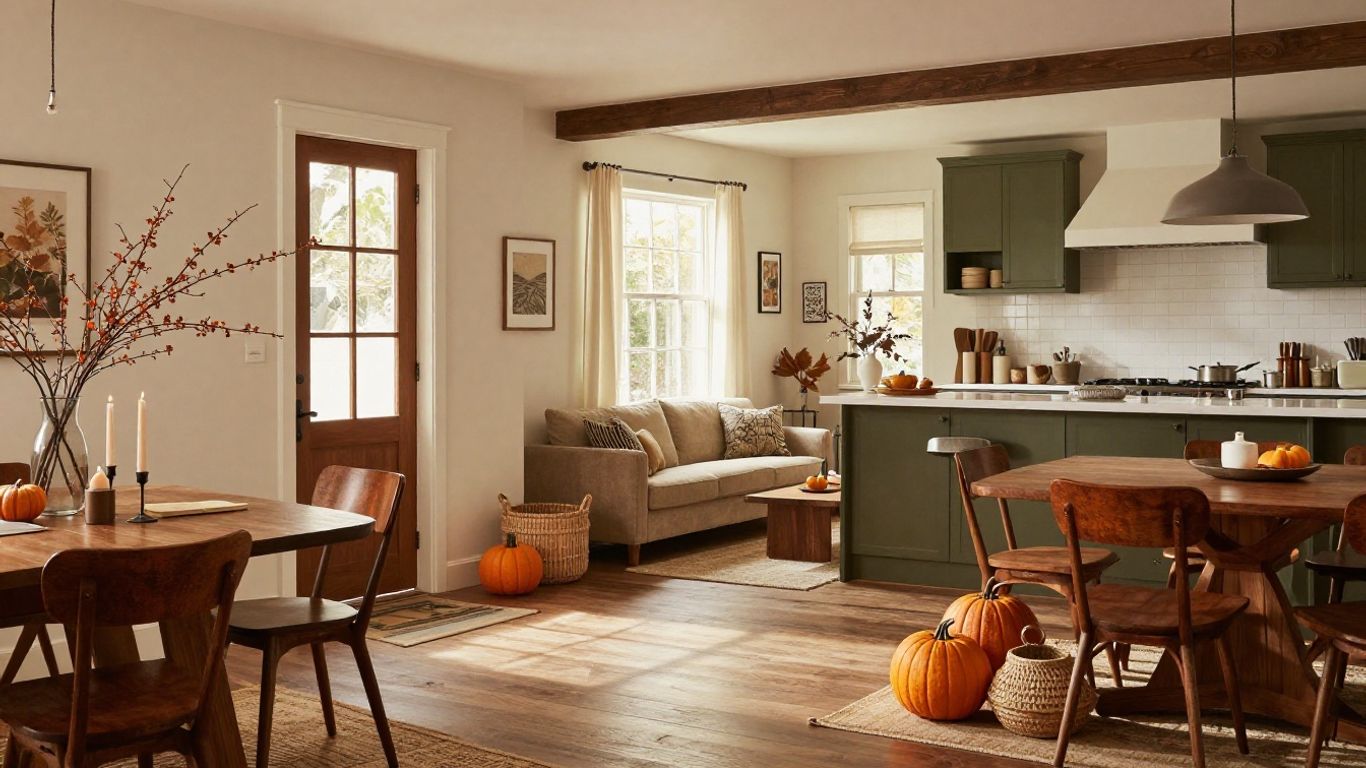
A welcoming fall home does not need to look themed from every angle. Choose a restrained palette, repeat a few natural textures, and make seasonal changes where they improve comfort or atmosphere.
- Start with a decorating style and a limited color palette.
- Refresh the entryway before adding accents throughout the home.
- Use throws, lighting, branches, and table linens for easy warmth.
- Repurpose everyday objects instead of buying a complete seasonal collection.
- Store a small, useful group of decorations for an easier refresh next year.
Define your fall decor style and color palette
The best home decor fall ideas feel connected to the home already in place. Before shopping, look at your furniture, flooring, artwork, and the colors that appear repeatedly in each room. Then decide whether fall should arrive as a quiet shift in texture or a more noticeable change in color. A clear direction prevents seasonal pieces from competing with one another.
Choose between rustic, farmhouse, modern, and traditional looks
Rustic rooms can lean into weathered wood, woven baskets, and earthy ceramics, while farmhouse spaces often suit checked textiles and simple painted pieces. A modern approach might use one sculptural pumpkin, a dark vase, or a single branch arrangement. Traditional rooms can carry richer colors, brass details, and layered patterns. If you want broader guidance on creating a comfortable room on a budget, this decor style guide is a useful companion.
Build a palette beyond orange and brown
Orange and brown are familiar, but they are not the only route to an autumn mood. Try clay with cream, olive with muted gold, or plum with warm gray. Repeat two or three of these tones rather than introducing every seasonal color at once. The result feels intentional, especially when the palette appears in small details such as a pillow edge, a bowl, or a folded runner.
Balance seasonal colors with your existing furnishings
Let permanent furnishings do most of the visual work. If your sofa is navy, rust and ochre can add warmth without fighting it; if the room is already full of wood tones, pale linen and soft green may be enough. A simple planning table can help you decide where to place color before buying anything.
| Existing room feature | Fall color direction | Easy seasonal addition |
|---|---|---|
| Navy or charcoal sofa | Rust, ochre, cream | Pillow covers or a throw |
| Light neutral upholstery | Olive, clay, muted gold | Vase, runner, or dried stems |
| Warm wood furniture | Plum, ivory, soft green | Ceramic bowl or table linens |
| Patterned rug | One color pulled from the rug | Small accent, not another pattern |
After choosing one direction, repeat it lightly across two or three rooms. That small amount of continuity usually looks more polished than matching every accessory.
Use texture to create warmth without visual clutter
Texture often makes a room feel autumnal before color does. Combine one chunky knit with smooth ceramic, matte wood, or a nubby woven basket. Keep patterns quieter when several surfaces are already textured. A restrained mix of textures gives the eye somewhere to rest while still making the room feel layered.
Refresh the entryway for a seasonal first impression
The entryway is a good place to begin because it can change the mood of the home without requiring a large project. Focus on the floor, the front door, and one small surface if you have one. The most successful arrangement still leaves room for shoes, bags, and the daily rush. Think of fall decorating here as editing, not filling.

Layer a fall-inspired doormat and runner
A low-profile doormat paired with a washable runner adds color and softness while protecting the floor. Choose patterns that do not hide dirt completely, and check that doors clear the combined height. A faded stripe, small check, or natural fiber texture can suggest the season without making the entrance feel like a display.
Add a welcoming focal point with a wreath or arrangement
A wreath, dried branch bundle, or small pot of hardy foliage gives the eye one clear landing place. Keep its scale proportional to the door and avoid placing too many objects around it. Collections that include pumpkins, mugs, wall decor, and ribbons can offer inspiration; for example, fall entryway decorations include wreaths and other seasonal accents suited to a first impression.
Style a console table with practical seasonal accents
If you have a console, begin with a bowl for keys, a lamp, and one seasonal object. A shallow wooden tray can contain a candle, a small vase, and a few pinecones without spreading clutter across the surface. Leave some empty space; it makes the useful objects easier to reach and gives the arrangement a calmer shape.
Keep high-traffic areas functional and easy to maintain
Seasonal styling should not create a tripping hazard or make cleaning awkward. Secure runners, keep breakables away from children and pets, and choose washable fabrics near the door. If the entry is narrow, one strong element on the wall may work better than several objects on the floor.
Create a cozy fall living room
The living room benefits from changes that can be felt as well as seen. Softer textiles, warmer pools of light, and a few organic shapes make evenings more inviting without asking you to rearrange every piece of furniture. Keep the room usable for reading, conversation, and ordinary life. Cozy is a way of arranging comfort, not a number of accessories.
Layer throws, pillows, and rugs for warmth
Begin with the seating you already own and change only the pieces that affect touch. Add a folded throw to the arm of a chair, two pillow covers in related tones, or a small rug beside the sofa. Vary scale and material rather than buying a complete matching set. A woven textile may be all the seasonal change a minimal room needs.
Arrange candles, lanterns, and lighting for a softer atmosphere
Use lamps, dimmers, and battery-operated lights to create layers at different heights. A lantern on a hearth or a small lamp on a side table can make the room feel warmer than a bright overhead fixture. If you use candles, place them on stable, heat-resistant surfaces and keep flames away from fabric, branches, and walking paths.
A short decorating video can be useful for seeing how textiles and lamps work together in a real room, but the principle is simple: light the areas where people actually sit and gather.
Style the mantel or media console with natural elements
Choose a horizontal arrangement that leaves the screen, fireplace, or controls visible. A branch in a tall vase can anchor one side, while a low bowl or a few small gourds balances the other. Natural materials keep the display from feeling overly manufactured, and they can often be removed in minutes when the room needs to return to its everyday look.
Mix decorative objects at different heights
A flat row of objects tends to look accidental, even when each piece is attractive. Combine a tall vase, a medium frame, and a low tray, then step back to check the negative space. Three or five objects often provide enough rhythm; adding more is worthwhile only when the surface is large and the group still has a clear focal point.
Bring autumn details into the kitchen and dining area
Kitchens and dining spaces need a lighter touch because they already contain tools, appliances, and activity. Use pieces that can be moved quickly before cooking or serving. Seasonal color can come from textiles and food-safe vessels rather than fragile ornaments. This keeps the room welcoming while preserving the workspace.

Add seasonal color through linens and tableware
A runner, napkins, dish towels, or a serving bowl can introduce fall color without changing the whole kitchen. Choose washable fabrics for everyday use and let one color do the strongest work. Cream, olive, terracotta, and muted mustard are easy to combine with white dishes and natural wood.
Create an easy centerpiece with branches, leaves, or gourds
For a simple centerpiece, place a few branches in a sturdy pitcher and add one low bowl of gourds or fruit. Keep the arrangement low enough for conversation across the table. Dried leaves and flowers can provide shape for weeks, while fresh branches are best replaced when they begin shedding or drying unpredictably.
Style open shelves and countertops without losing workspace
Open shelving needs breathing room, so group seasonal objects with everyday dishes rather than adding a separate layer in front. On countertops, reserve the areas around the sink and stove for work. A small arrangement beside a cutting board or near a breakfast nook can carry the seasonal message without taking over the kitchen.
Choose durable materials for everyday meals and entertaining
Stoneware, wood, metal, and washable cotton are forgiving choices for a busy dining area. Avoid delicate finishes where spills are likely, and use trays to move several small accents at once. For an atmosphere that needs to serve guests as well as family, ideas from restaurant interior designers can be helpful when thinking about flow, seating, and practical visual balance.
Use natural and budget-friendly fall decorations
A seasonal refresh can be inexpensive because autumn already supplies strong visual material. Branches, seed pods, pinecones, and dried flowers add irregular shapes that manufactured accessories often try to imitate. Shop your own cupboards first, then buy only what fills a real gap. A few adaptable pieces will usually outlast a crowded collection of one-season novelties.
Incorporate pumpkins, pinecones, branches, and dried flowers
Vary the size and finish of pumpkins rather than lining up identical ones. Tuck pinecones into a bowl, place branches in a bottle, or use dried flowers in a vessel that normally holds fresh stems. Natural objects work best when grouped loosely, with space between them and no need to cover every surface.
Repurpose baskets, glass jars, and wooden trays
A basket can hold throws, a glass jar can become a vase, and a wooden tray can gather small objects on a coffee table. These containers add structure while remaining useful after fall. If you want a rustic direction, farmhouse fall decor offers ideas built around baskets, lighting, blankets, and antique-inspired pieces.
Make simple seasonal accents with materials you already own
Try tying a dried stem to a napkin, filling a jar with pinecones, or layering fabric scraps beneath a bowl. These small projects are flexible and easy to undo. For a compact plan, choose three materials, three containers, and one room to start; that limitation often produces a more coherent result than an ambitious whole-house makeover.
- Gather objects in one color family before spreading them around.
- Use one tray or basket to contain small seasonal pieces.
- Replace a year-round accent instead of adding beside it.
- Photograph arrangements you like before packing them away.
The point of these small projects is not perfection. They make the seasonal change feel personal, and they keep spending tied to a real decorating decision.
Shop strategically for reusable pieces and end-of-season deals
Prioritize items that can work in another room or another season, such as neutral vases, woven baskets, plain runners, and softly colored ceramics. Compare measurements before purchasing and consider storage space as part of the cost. Budget-friendly fall home finds can be a source of ideas for low-upkeep swaps such as faux pumpkins, foliage, pillows, and blankets.
Keep fall decor comfortable, practical, and easy to remove
The final test is whether the home still feels like yours after the decorations arrive. Seasonal objects should support comfort, not make ordinary tasks harder. Leave clear paths, protect surfaces, and notice what collects dust quickly. A smaller edit that lasts for several weeks is often more satisfying than an elaborate arrangement that needs constant attention.
Avoid common overdecorating and matching mistakes
Do not repeat the same pumpkin, sign, or fabric in every room. Instead, carry one color or material through the home and let each space interpret it differently. Mixing a few shapes and finishes keeps the look collected. Before adding something new, remove one existing object and see whether the room improves.
Select safe candle and lighting options
Battery-operated candles are useful on shelves, near curtains, and in homes with pets or young children. For real flames, use sturdy holders, keep wicks trimmed, and never leave candles unattended. Avoid placing dry branches directly above heat sources, and check cords so temporary lighting does not create a trip point.
Adapt decorations for small spaces and rental homes
Renters and small-space dwellers can rely on removable hooks, textiles, tabletop arrangements, and door decor that does not alter the walls. A narrow shelf, windowsill, or dining table may be enough for a complete seasonal moment. If you are preparing for a move, a moving checklist can help you decide what to keep, donate, or pack before adding more possessions.
Store seasonal pieces so next year’s refresh is simpler
Clean fabrics before folding them, wrap fragile objects, and label boxes by room rather than by vague categories. Keep wreaths in a sturdy container and store dried materials somewhere dry and dark. A short inventory on your phone can prevent duplicate purchases next fall. For a home with a changing view or maintenance needs, even roof inspection drones are a reminder that remote, visual checks can save unnecessary effort; your decor storage deserves the same practical mindset.
Conclusion
A cozy fall home comes from a few thoughtful changes: a compatible palette, tactile layers, useful lighting, and natural details placed where they can be enjoyed. Start with one room, edit as you go, and let the season complement your home rather than cover it.
Frequently Asked Questions
When should I decorate my home for fall?
Begin when you want the seasonal mood, often as the weather starts to cool. Start with small changes such as a runner, throw, or table arrangement, then add more only if the room needs it.
How can I decorate for fall without using orange?
Try olive, cream, clay, muted mustard, plum, or warm gray. Repeating one or two of these tones in textiles and ceramics can create an autumn feeling without relying on bright orange.
How much fall decor is too much?
If surfaces are difficult to clean, pathways feel crowded, or every room repeats the same object, edit the arrangement. A few varied pieces with open space around them usually feel more intentional.
What are the easiest fall decorations to make?
Branches in a pitcher, pinecones in a bowl, dried stems in a jar, and seasonal napkins are simple starting points. They require little equipment and can be removed or reused easily.
How can I make a small apartment feel seasonal?
Focus on vertical and portable pieces, including a wreath, a throw, a small lamp, or one tabletop arrangement. Choose objects that serve a practical purpose so they do not consume valuable space.
Are real candles safe for fall decorating?
They can be used safely with stable holders, clear surroundings, trimmed wicks, and constant supervision. Battery-operated candles are a better choice near fabrics, children, pets, or dry natural materials.
How should I store fall decorations?
Clean and dry everything first, wrap breakables, and label containers by room. Store wreaths and dried items in protective boxes, and keep a brief inventory so next year’s decorating begins with what you already own.


Leave a Reply