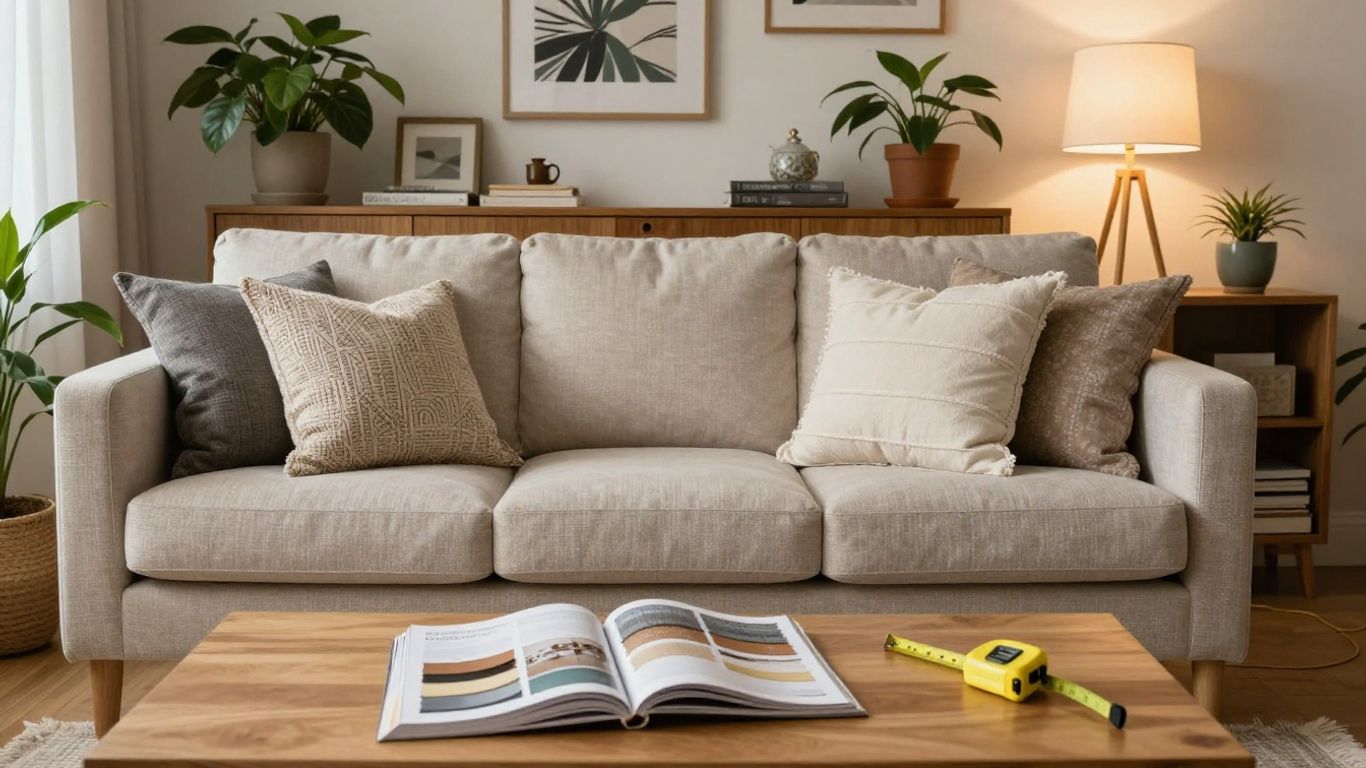
Key Takeaways
A home & decor magazine can be a useful source of ideas, but the best results come from filtering inspiration through your own rooms, routines, and budget.
- Define your style before collecting too many ideas.
- Choose publications that match your project and location.
- Turn attractive images into measurements, priorities, and decisions.
- Adapt editorial rooms for comfort, scale, light, and cost.
- Refresh selectively instead of redecorating the whole home.
Define your decorating style before you start
Good decorating usually begins with noticing, not shopping. Before opening a dozen magazines, pay attention to the rooms, colors, and objects that make you pause. A clear sense of preference gives you something to compare inspiration against, so your home does not become a collection of unrelated purchases.
Identify the colors, materials, and shapes you naturally prefer
Start with the things already around you. Photograph a favorite chair, a well-used ceramic bowl, a piece of clothing in a color you often wear, or a room where you feel at ease. Look for repeated qualities such as warm wood, cool stone, rounded furniture, strong geometry, muted colors, or bright contrast.
This exercise is more useful than choosing a style label too quickly. You may discover that you like both traditional detailing and modern proportions, or that your real preference is less about color than about texture and natural light. A personal style guide can help you sort those observations into a visual direction without forcing the room into a rigid category.
Use rooms you admire to spot recurring design patterns
When a room catches your attention, ask what is actually working. Is it the relationship between the rug and seating, the quiet wall color, the way artwork is grouped, or the contrast between old and new pieces? Naming the mechanism behind the appeal makes inspiration easier to use.
Save images with a short note about the detail you want to remember. “Soft contrast,” “low furniture,” or “open shelving with restraint” is more useful later than a folder filled with unlabeled photographs.
Separate lasting preferences from short-lived trends
Trends can be enjoyable, but they move quickly. Give a new idea time before building a room around it, especially when it involves expensive finishes or furniture that is difficult to replace. Ask whether you would still like the shape, color, or material if it disappeared from every magazine next season.
A lasting choice does not have to be plain. It simply earns its place because it works with your architecture, habits, and existing possessions. Use trends for smaller, reversible details when you are unsure.
Create a practical style profile for your home
Write a short profile that describes the home rather than a decorating identity. Include the atmosphere you want, three or four preferred materials, colors to repeat, colors to avoid, and the amount of visual activity you can comfortably live with. Add practical facts such as children, pets, entertaining, storage needs, and maintenance tolerance.
That profile becomes a filter for every magazine spread and product page. It also helps you explain your choices to anyone sharing the project, which can prevent a beautiful idea from becoming an impractical one.
Choose the right home & decor magazine for your goals
Not every publication serves the same purpose. Some are strongest at architecture and complete home tours, while others focus on accessible projects, regional homes, gardens, or visual trend reports. Treat a home & decor magazine as a tool for a specific question rather than as a catalog of things to buy.

Compare shelter, interior design, and lifestyle publications
Shelter magazines tend to show finished homes and broad decorating concepts. Interior design publications may offer more detail about architects, materials, and spatial planning, while lifestyle titles often connect rooms with cooking, entertaining, travel, or everyday routines.
Choose according to the stage of your project. If you are changing a floor plan, look for architecture and renovation coverage. If you are making a room feel warmer, a publication rich in styling details may be more useful. For regional perspective, Carolina design coverage offers a particularly focused view of art, architecture, and interiors.
Match magazine coverage to your home’s architecture and region
A magazine becomes more practical when its homes resemble yours in some meaningful way. Compare ceiling heights, window proportions, climate, building traditions, and access to local materials. A dramatic city loft may still teach you about color or lighting, but its furniture plan may not translate to a low-ceilinged suburban room.
Regional publications can also reveal craftspeople, suppliers, and construction approaches that are available near you. The point is not to copy a local look; it is to notice what feels plausible in your own setting.
Look for magazines focused on budgets, DIY projects, or luxury design
Be honest about the kind of guidance you need. Luxury design photography can stretch your imagination, but budget-conscious or DIY coverage may provide better information about sequencing, tools, and substitutions. A mixed reading list often works well: one source for ambition, another for practical execution.
For polished visual references, ELLE Decor inspiration offers home tours, room ideas, and design features. Use those images to identify a direction, then investigate the construction, dimensions, and cost behind the look before treating it as a plan.
Evaluate print subscriptions, digital editions, and online archives
Print is slower and often easier to browse without distraction. Digital editions are searchable, portable, and convenient when you are comparing several rooms at once. Online archives can be valuable for a specific renovation question, though older recommendations may need checking against current products and building standards.
A simple comparison helps you choose without accumulating subscriptions you will not use.
| Format | Best for | Watch for |
|---|---|---|
| Slow browsing and visual memory | Storage and recurring cost | |
| Digital | Searchable references and portability | Screen fatigue and changing access |
| Online archive | Finding a specific idea quickly | Outdated prices or availability |
After a month, keep the format that leads to actual decisions. Inspiration is useful only when it moves a project forward.
Turn magazine ideas into a workable design plan
An inspiration image is a beginning, not a specification. The next step is to translate atmosphere into choices you can test: a paint range, a furniture footprint, a material sample, or a lighting position. This is where browsing becomes design work.
Collect and organize images by room or project
Create separate collections for each room and for larger projects such as flooring, storage, or a bathroom update. Save only images that answer a question or reveal a detail you may use. Too many near-duplicates make it harder to see what you actually prefer.
Add a sentence to each saved image explaining its value. “Use the narrow console idea,” for example, is more actionable than “I like this hallway.” Include a few images of things you do not want; they clarify boundaries just as well.
Translate inspiration photos into specific design decisions
Break each image into parts: layout, palette, furniture shape, material, lighting, and accessories. Then mark each part as keep, adapt, or skip. A photo may inspire the placement of a reading chair without dictating the exact chair, fabric, or wall color.
This translation protects you from buying a complete look by accident. It also makes it easier to compare alternatives while keeping the original mood intact.
Measure your space before selecting furniture and decor
Measure walls, doors, windows, ceiling height, outlets, radiators, and the clear paths people use every day. Record those dimensions in one place, along with photos taken from each corner. A paper plan or digital layout can reveal conflicts that are easy to miss in a store.
If you are comparing finishes, a flooring material comparison can help you think beyond appearance and consider maintenance, lifespan, acoustics, and moisture. Those qualities matter just as much as the photograph.
Build a project brief with priorities, constraints, and deadlines
A short brief keeps the work from expanding endlessly. State the room, the problem, the desired feeling, the must-have functions, the budget range, and the date by which the room needs to work. Separate fixed constraints from preferences so you know what can change.
Useful briefs usually answer four questions:
- What needs to function better?
- Which existing pieces will stay?
- What must happen first?
- How will you know the project is finished?
Once those answers are written down, a magazine image becomes a reference rather than an instruction. You can borrow its logic while making different choices for your own home.
Adapt editorial room designs to real homes
Editorial rooms are photographed under carefully controlled conditions. They may have unusually generous proportions, hidden storage, professional styling, and lighting chosen for the camera. Admire the composition, but test every idea against the dimensions and daily demands of your own rooms.
Scale furniture and layouts to fit your space
Use the image as a diagram of relationships rather than a shopping list. Notice the distance between the sofa and table, the amount of walkway around a bed, and the height of artwork above furniture. Then recreate those relationships with tape on the floor or folded paper before ordering anything.
A smaller room may need fewer pieces, not miniature versions of every piece in the photograph. Empty space is part of the composition and often makes a room feel calmer.
Adjust color palettes for natural and artificial light
Colors shift during the day and under different bulbs. Test paint and fabric samples near windows, in shadow, and under the lighting you use at night. A shade that looks gentle in a bright magazine spread may feel gray, yellow, or unexpectedly intense at home.
Keep a record of the direction of the windows and the colors of nearby floors or cabinets. Those surrounding surfaces influence the final result more than a tiny printed swatch suggests.
Balance visual appeal with comfort and daily function
Ask how the room behaves when it is busy. Can people sit, pass through, put down a drink, reach a lamp, and clean around the furniture? Comfort is part of the composition, not a compromise made after the styling is complete.
A good room supports the activities that happen there while still having a clear visual rhythm. If an arrangement looks perfect but makes ordinary tasks awkward, it needs another round of editing.
Replace high-end pieces with realistic alternatives
Look for the qualities that create the effect rather than chasing an identical object. A sculptural silhouette might come from a modest side table; layered texture might come from a throw, a woven basket, or a secondhand textile. Compare construction and proportions before comparing labels.
Keep one or two meaningful investments if they will be used often, then let less permanent pieces carry the experimentation. This produces a room with character without making every decision financially heavy.
Plan a cohesive room-by-room decorating scheme
A cohesive home does not require every room to match. It needs a few repeated signals—perhaps a wood tone, metal finish, undertone, or approach to pattern—that help connected spaces feel related. Each room can then develop its own pace and personality.

Establish a consistent foundation across connected spaces
Begin with the spaces visible from one another. Choose a broad foundation for floors, trim, major upholstery, or wall colors, then allow smaller rooms to become more expressive. Repetition creates continuity, while variation keeps the home from feeling staged.
A hallway can act as a quiet transition rather than another competing statement. From there, repeat one or two materials or colors into adjacent rooms so the eye has a gentle route through the home.
Layer lighting for ambiance, tasks, and accent effects
Plan lighting in layers. General light makes movement easy, task light supports reading or cooking, and accent light gives artwork, shelves, or architectural details more presence. Relying on one central fixture often leaves a room flat and creates glare.
Use dimmers where possible and place switches where the room is actually used. Table lamps, floor lamps, wall lights, and concealed sources can change the atmosphere without changing the furniture.
Combine patterns, textures, and materials without visual clutter
Mixing is easier when the elements differ in scale and share a color relationship. Pair a broad pattern with a smaller one, then add quiet texture through wood, linen, wool, ceramic, or stone. Leave some surfaces calm so the more expressive pieces have room to register.
Before adding another accent, remove one competing object and see whether the room improves. Editing is often more effective than buying.
Use artwork and accessories to personalize each room
Accessories should tell the story of the people who live there, not simply fill empty shelves. Group objects by a shared quality such as color, height, material, or origin, and vary the spacing between them. Artwork can anchor a wall, establish scale, or introduce a color that appears elsewhere.
For a dining setting, details such as fabric napkins and table decor can add pattern and color without committing the room to a permanent change. Rotate smaller pieces as your taste or season changes.
Budget for furniture, finishes, and decorative details
A decorating budget works best when it reflects how the room will be used. Spend first on the elements that affect safety, comfort, durability, or the layout, then use smaller purchases to add personality. Leave some flexibility for the surprises that appear once work begins.
Divide spending between essentials and finishing touches
List the essentials before browsing accessories. These might include a bed, sofa, lighting, storage, window treatments, flooring, or installation. Finishing touches can wait until the larger pieces establish the room’s scale and palette.
A useful budget is not just one total number. Divide it into categories and keep a small reserve for delivery changes, replacement hardware, repairs, or an item that turns out to be worth upgrading.
Compare custom, vintage, secondhand, and mass-market options
Each source has a different trade-off. Custom work can solve an awkward dimension, vintage pieces bring history, secondhand shopping can lower costs, and mass-market options may be easy to replace. Inspect construction and condition rather than assuming one category is always better.
Mixing sources usually makes a room feel more personal. It also lets you reserve money for the pieces that need precise sizing or heavy everyday use.
Account for delivery, installation, and maintenance costs
The ticket price is only part of the calculation. Add freight, stairs, assembly, installation, disposal, finishing, cleaning, and future replacement parts. For larger renovations, also consider time away from the room and temporary storage.
A cheaper item can become expensive if it needs specialized installation or frequent care. Write those costs beside each option before deciding.
Decide where quality matters most
Quality matters most where failure would be disruptive or unsafe, and where the object will be touched or used every day. A frequently used sofa, mattress, faucet, or floor may deserve more attention than a decorative object that can be changed next year.
Consider a home energy review as part of larger work, too. An energy resilience checklist can prompt questions about insulation, ductwork, appliances, and electrical capacity before finishes conceal the infrastructure.
Shop responsibly for your home design projects
Shopping from inspiration can be exciting, but it also encourages quick assumptions. Slow down long enough to confirm what an item is made of, how it will arrive, and whether it suits the way your household operates. Responsible buying protects both the budget and the room.
Verify dimensions, materials, and product specifications
Read the full specification sheet rather than relying on a styled photograph. Confirm assembled dimensions, seat height, clearance, finish, fabric content, weight, mounting method, and whether colors vary between batches. Measure the route from delivery door to final position.
Save the product information with your room plan. If the item is delayed or discontinued, you will still have the details needed to find a reasonable alternative.
Assess durability, care requirements, and warranty coverage
Ask what cleaning, refinishing, tightening, or replacement a piece will require. A delicate finish may be fine in a low-use room but frustrating in a busy family space. Warranty terms can also reveal which parts are expected to wear and what the seller considers normal use.
Keep receipts, care instructions, and installation records together. Good documentation makes maintenance less mysterious and returns less stressful.
Consider sustainable, local, and vintage sourcing
Buy fewer things when possible, and favor pieces that can be repaired, reused, or passed on. Local makers may reduce shipping and allow better questions about materials, while vintage shopping can keep well-made furniture in circulation. Sustainability is not only about a product label; it is also about longevity and actual use.
For a complex move, Wayfinder is described as a relocation platform with a single dashboard, role-based data access, and tools including Threshold, PackWise, ClearSpace, Steady, NewRhythm, NightAnchor, and Bearings. That kind of documented operational scope belongs to moving logistics, not to decorating decisions, so keep the two needs distinct.
Watch for sponsored content and editorial product bias
A beautiful spread may include paid placements, affiliate relationships, supplied products, or photography that hides practical limitations. Look for clear disclosures and compare the same item across independent sources. Editorial attention is not proof that a product is the best fit for your home.
When researching a property or a major lifestyle decision, separate promotional copy from your own due diligence. For example, Privé Malibu is presented as a Malibu community with designer interiors, resort-style amenities, and coastal views; those are descriptions to verify for yourself, not reasons to assume a purchase is right.
Keep your home style current without constant redecorating
A home can evolve without being repeatedly stripped and rebuilt. Small changes in textiles, art, lighting, and arrangement often have more effect than a new collection of large furniture. The goal is to keep the rooms responsive to your life, not permanently tuned to a magazine cycle.
Refresh a room with reversible seasonal updates
Change cushion covers, throws, flowers, table settings, and a few displayed objects before changing paint or upholstery. Store seasonal pieces in labeled boxes and keep the permanent foundation quiet enough to support several moods.
A simple rotation also shows which items you truly miss when they are packed away. Those are usually the pieces worth keeping visible year-round.
Know which trends are worth adopting
A trend is worth considering when it improves function, fits your architecture, or gives you genuine pleasure. It is less convincing when it requires replacing useful things merely to make the room look current. Test uncertain ideas through small, reversible additions.
Ask whether the trend supports your existing style profile. If it does not, enjoy it in a photograph or a temporary accent rather than forcing it into the whole home.
Maintain a rotating collection of artwork and accessories
Keep a small group of extra artwork, books, vessels, and textiles in storage. Rotating them can make a familiar room feel newly considered without adding clutter. Photograph each arrangement so you can return to combinations that worked.
The collection should remain edited. A rotation is not an excuse to keep every object; it is a way to give the best pieces more attention.
Review your space regularly as your needs change
Once or twice a year, walk through the home with fresh eyes. Notice furniture that blocks movement, storage that no longer works, lighting that feels harsh, and rooms that are rarely used. Changes in work, family, health, or hobbies may call for a different arrangement before they call for new purchases.
A home that changes gradually is usually easier to afford and easier to live in. Let use guide the next improvement, then return to your style profile before making a large decision.
Conclusion
The best home & decor magazine is not the one with the most extravagant rooms; it is the one that helps you see your own home more clearly. Collect ideas with curiosity, test them against real measurements and routines, and spend carefully on the changes that will improve everyday life. Style becomes more convincing when it grows from attention rather than imitation.
Frequently Asked Questions
How do I choose a home & decor magazine?
Choose one that matches your project, budget, architecture, region, and preferred level of detail. A renovation may call for architecture-focused coverage, while a small refresh may benefit more from styling and accessory ideas.
How many inspiration images should I save?
Save enough to reveal patterns, but not so many that every option feels equally important. A focused collection of images with notes about what you like is more useful than a large, unlabeled archive.
How can I tell whether a decorating trend will last?
Ask whether it suits your home, supports your routines, and still appeals to you outside its current popularity. Try uncertain trends in small or reversible forms before committing to costly finishes.
What should I measure before buying furniture?
Measure the room, doors, windows, ceiling height, outlets, radiators, and walking paths. Also measure the delivery route, including stairs, elevators, corners, and narrow passages.
How can I make different rooms feel connected?
Repeat a few foundation elements such as a wood tone, undertone, metal finish, or approach to lighting. Let each room vary in pattern and personality while keeping those underlying signals consistent.
Where should I spend more of my decorating budget?
Prioritize pieces that affect safety, comfort, daily use, durability, or the room’s layout. Decorative accents can usually be changed later, so they do not need to consume the budget first.
How often should I update my home?
Review the space when your needs change or when a room consistently feels inconvenient. Small seasonal adjustments and occasional editing are usually enough; constant redecorating is not required.


Leave a Reply