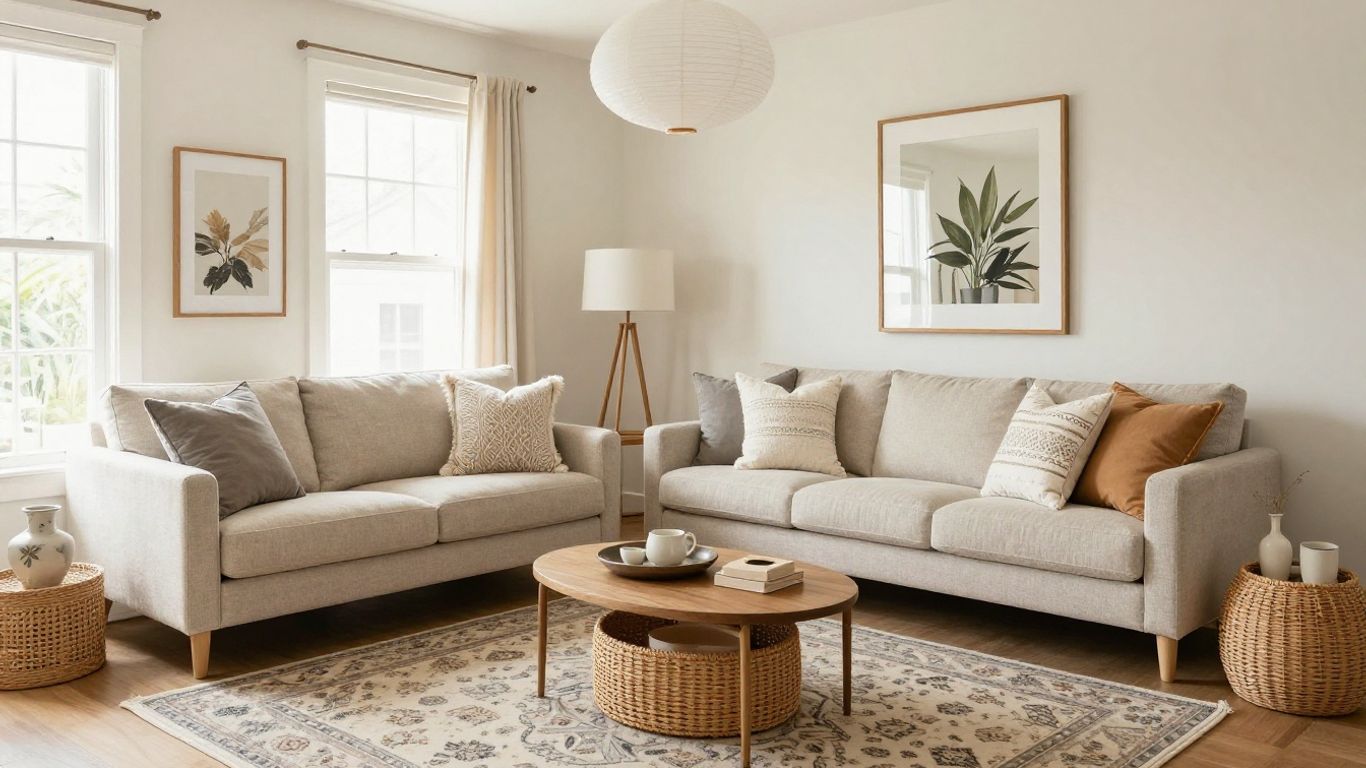
Key Takeaways
Clearance shopping works best when you treat it as a design exercise, not a race to grab the biggest markdown. A little planning helps you save money while keeping the room intentional.
- Measure the spaces that need attention before shopping.
- Set a total budget, including delivery and replacement costs.
- Inspect clearance pieces carefully for damage and missing parts.
- Use color, texture, and repetition to connect different finds.
- Buy seasonal items when the discount outweighs the storage wait.
Define your decorating goals before you shop
The best clearance purchase is one that solves a real decorating problem. Before opening a browser or walking into a store, decide which room needs help, what mood you want, and how much you can spend. This simple pause makes home decor on clearance feel curated rather than random.
Identify the rooms and areas that need attention
Walk through your home with a notebook and list the places that look unfinished, worn, or inconvenient. A bare entry wall may need one large piece, while a sitting room may benefit more from better lighting or a softer textile. Measure the area and note nearby furniture so you can judge scale later.
A useful decorating style guide can help you turn vague dissatisfaction into a specific plan. Rank each area by urgency, since a short list keeps a low price from pulling you toward items that have nowhere to go.
Choose a color palette and design style
Choose two or three main colors, then add one or two supporting tones that already appear in the room. You do not need every piece to match, but a shared palette makes unrelated clearance finds feel connected. Consider whether your space leans warm, cool, rustic, modern, traditional, or eclectic before shopping.
Save a few reference images or make a quick mood board. A home design inspiration guide offers a useful way to notice recurring colors, materials, and silhouettes without copying an entire room.
Set a realistic clearance budget
A clearance price is only part of the cost. Include delivery, mounting hardware, light bulbs, cleaning supplies, and possible alterations when deciding what you can comfortably spend. Leave a small reserve for an unusually good find, but do not let that reserve become permission to overspend.
The most practical budget separates essentials from optional upgrades. A guide to budget-friendly home decorating can also help you prioritize comfort and function before decorative extras.
Separate must-haves from impulse buys
Write down the qualities a purchase must have before you shop: approximate size, useful function, acceptable materials, and a price ceiling. Then create a second list for items that would simply be nice. This distinction keeps a discounted object from becoming an expensive storage problem.
Ask yourself whether you would still want the piece at full price, whether you know where it will go, and whether it works with something you already own. A lower price is not a design plan, so give yourself time to answer honestly.
Know where to find home decor on clearance
Clearance inventory appears in more places than a single aisle. Online outlet pages, endcaps, seasonal displays, and discontinued collections can all offer worthwhile pieces, but stock changes quickly. Approach each source with the same measurements and color notes you prepared at home.

Check online clearance sections and outlet pages
Online clearance pages are convenient for comparing sizes, finishes, and reviews before you travel. Use filters carefully, read the full product description, and check whether the image shows one item or a set. Save promising pieces in a short list rather than buying the first marked-down object you see.
For readers browsing options, clearance home decor is a natural place to look for discounted accent pieces. Still, verify availability and delivery charges before deciding that an online price is genuinely better.
Visit store clearance aisles at the right time
A store visit lets you inspect texture, color, weight, and construction in person. Visit when you have enough time to look behind stacked items and check every side, rather than making a hurried stop on the way home. Ask staff whether additional markdowns follow a regular schedule, but treat any timing advice as store-specific.
Bring a tape measure and a photo of the room. Those two small tools make it easier to reject pieces that look appealing under bright retail lighting but are too large or too visually busy at home.
Explore seasonal, overstock, and discontinued items
Seasonal and discontinued pieces can be excellent buys when their style works beyond the original display. Neutral vases, baskets, frames, and simple textiles often remain useful year-round. Holiday-specific colors or shapes require more caution because they may have a narrow window of use.
Consider how the item could serve you after the season ends. A serving tray may become an ottoman surface, while a decorative container may organize a shelf, but only if its proportions and finish suit the rest of the room.
Compare prices across retailers before buying
A markdown does not automatically make an item the best value. Compare the current price with similar sizes and materials elsewhere, then include shipping, delivery windows, and required accessories. The goal is not to chase the lowest number; it is to find the strongest combination of quality, fit, and total cost.
A quick comparison is especially useful for common pieces such as lamps, mirrors, baskets, and curtain panels. If the savings are small, buying the better-made or more convenient option may be wiser.
Evaluate clearance items for quality and value
Clearance goods deserve the same scrutiny as full-price goods. Some are discounted because a collection is ending, while others have cosmetic flaws or incomplete packaging. Slow down enough to distinguish a harmless imperfection from a problem that will cost more to fix.
Inspect materials, construction, and finishes
Run your hands over wood, metal, ceramic, and fabric surfaces to check for rough edges, weak joints, chips, or uneven finishes. Open drawers, test hinges, examine stitching, and look at the back of frames and mirrors. A small scratch may be acceptable on a hidden surface, but structural weakness rarely is.
Think about how the piece will be used. Decorative objects can tolerate more variation than a frequently handled table, a heavily walked-on rug, or a lamp that will be switched on every day.
Look for damage, missing parts, or incomplete sets
Count the pieces before leaving the store or completing an online order. Check that shelves, brackets, cords, shades, lids, and mounting hardware are present. For sets, confirm whether the clearance price covers the complete grouping or only one component.
Photograph visible flaws and ask for the defect to be recorded on the receipt when possible. That small record can clarify what you accepted and what would count as a new problem later.
Calculate the final price with shipping and discounts
Write down the real cost rather than relying on the large percentage printed on a tag. Delivery, assembly, replacement parts, and cleaning may change the calculation. If a piece needs professional installation, add that expense before comparing it with a ready-to-use alternative.
A simple comparison table can make the decision less emotional. Use the same categories for every option so a dramatic markdown does not hide an inconvenient total.
| Item | Marked price | Added costs | Estimated total |
|---|---|---|---|
| Mirror | $80 | $25 delivery | $105 |
| Table lamp | $42 | $8 bulb and adapter | $50 |
| Area rug | $120 | $15 delivery | $135 |
Once the totals are visible, consider durability and fit alongside price. The cheapest option is useful only when it performs the job without creating another expense.
Understand final-sale and return policies
Read the return conditions before paying, especially for damaged, floor-model, and discontinued goods. Confirm the time limit, restocking fee, return shipping responsibility, and whether clearance purchases are final sale. Online orders may have different rules from in-store purchases.
If you cannot return the item, be more demanding about measurements and condition. A discount should compensate for the reduced flexibility, not pressure you into accepting a piece you do not trust.
Shop strategically by decor category
Different decor categories call for different kinds of inspection. A frame may be judged mainly by scale and finish, while a rug needs close attention to fiber, backing, and dimensions. Match your shopping method to the object instead of treating every markdown as equivalent.

Find savings on wall art and mirrors
Wall art can change a room quickly, but scale matters more than the size of the discount. Measure the wall, consider the furniture below it, and check whether the frame or hanging system is included. For mirrors, inspect the reflective surface, edges, backing, and mounting points.
When a piece is visually strong, let it occupy a clear focal position. Smaller prints can work in groups, but buy them only when their colors, spacing, and proportions can form a deliberate arrangement.
Compare deals on lighting and lamps
Inspect lamp bases for stability and cords for wear, then confirm that switches work and shades sit evenly. Make sure the fixture accepts a readily available bulb and that its height suits the table or ceiling. A beautiful lamp in the wrong scale can make a room feel awkward.
Think about lighting in layers: general illumination, task light, and a softer accent. One affordable lamp may be more useful than several decorative lights that do not improve how the room functions.
Choose discounted rugs, curtains, and textiles
Textiles are often forgiving clearance purchases because they can soften a room and add color without changing its structure. Check dimensions, fiber content, seams, backing, and odor. Look for uneven dye, pulls, stains, and shrinkage concerns, particularly in floor pieces and washable curtains.
For patterns, compare the textile with upholstery and existing art before buying. A quiet rug can balance expressive furniture, while a patterned curtain may need simpler accessories nearby.
Refresh spaces with small accents and accessories
Small accessories are useful for testing a new color or texture without committing to a large purchase. Choose a few pieces that serve a purpose, such as trays, baskets, vases, or catchalls, rather than filling every open surface. Grouping similar objects usually looks more intentional than scattering many unrelated bargains.
A short shopping list keeps this category under control:
- One useful container for an entry or living area.
- One accent object that repeats an existing color.
- One soft item, such as a cushion or throw.
- One flexible piece that can move between rooms.
After shopping, place the items temporarily and live with the arrangement for a day. You may discover that two strong accents are enough and the remaining pieces belong elsewhere.
Coordinate discounted pieces into a cohesive room
Clearance finds rarely arrive as a ready-made collection. Cohesion comes from repeating a few choices across the room while allowing enough variation to keep it personal. Start with what you already own, then use discounted pieces to fill gaps rather than replace everything at once.
Combine clearance finds with existing furniture
Take photographs of the room before shopping and compare new pieces against the furniture that stays. A discounted side table should relate to the sofa in height, while a new artwork can echo a color already present in a cushion or rug. This approach makes the room feel collected over time.
Do not overlook function. A beautiful object that blocks a walkway or leaves nowhere to place a drink is not a successful addition, regardless of the discount.
Mix patterns, textures, and finishes intentionally
Pattern mixing works when at least one quality connects the patterns, such as color, scale, or visual mood. Pair a large pattern with a smaller one, and balance smooth surfaces with woven, nubby, or matte textures. A mix of finishes can feel warm, but too many competing metals or wood tones may look accidental.
Change one variable at a time. If the rug is highly patterned, keep nearby accessories calmer; if the room is mostly neutral, a textured throw may add enough interest without another bold print.
Use repetition to create visual balance
Repeat a color, shape, material, or finish at least twice so it feels intentional. A dark frame can be echoed by a lamp base, while a curved vase might relate to a rounded mirror or chair. Repetition guides the eye around the room and helps separate purchases look like companions.
Step back from the room after arranging each group. Balance is not always symmetry; it is often a distribution of visual weight that keeps one corner from feeling crowded.
Avoid buying pieces that compete for attention
Every room benefits from a focal point, supported by quieter pieces. Before buying a dramatic mirror, colorful chair, or large sculpture, decide whether the room already has a feature that deserves attention. If it does, choose clearance items that frame or soften that feature instead of challenging it.
When several pieces are loud, remove one and reassess. Editing is often the least expensive way to make a discounted room feel more polished.
Make the most of seasonal clearance opportunities
Seasonal clearance can stretch a decorating budget, but it rewards patience and storage discipline. Buy items because they suit your home, not only because the calendar has made them cheaper. A simple, versatile piece is usually a better long-term choice than a novelty that works for one week.
Shop after major holidays and seasonal changes
After-holiday markdowns can be useful for ornaments, table linens, entertaining pieces, and occasional accents. Shop with next year in mind, and favor durable materials and colors that will still appeal to you. For spring and summer items, end-of-season reductions may offer useful outdoor textiles or lightweight accessories.
The best time to buy depends on stock and demand. Waiting for the final markdown can produce the lowest price, but the most versatile sizes and colors may disappear earlier.
Time purchases around moving and renovation cycles
Moving and renovation periods create opportunities to clarify what you actually need. Measure after the major work is complete whenever possible, since flooring, paint, and built-ins can change how a piece looks and fits. For temporary spaces, choose items that can move easily to the next room or home.
Avoid filling an unfinished room simply because a sale is underway. A short-term gap is cheaper than a large item that becomes difficult to use after the layout changes.
Store seasonal decor safely until needed
Clean and dry items before packing them away, then use sturdy containers that protect against dust, moisture, and crushing. Wrap fragile ornaments individually and label boxes by season and room. Keep textiles away from damp areas and avoid overpacking anything that can crease or deform.
Choose storage locations you can access without damaging other belongings. A bargain loses its value if it is forgotten, broken, or too difficult to retrieve.
Know when waiting could mean missing out on popular items
Some clearance pieces are unlikely to return, especially unusual sizes, limited finishes, and well-made neutral basics. If an item fits your measurements, palette, and budget, waiting for a deeper discount may not be worth losing it. This is where your original priorities help you act without guessing.
A good rule is to wait on decorative impulse buys but move promptly on a functional item that solves a defined problem. That balance leaves room for patience without turning every decision into a gamble.
Conclusion
Shopping home decor on clearance can produce a stylish room when every purchase has a job, a place, and a relationship to what you already own. Plan first, inspect carefully, calculate the real cost, and let color and repetition do the connecting work. The result is not merely a cheaper room, but one that feels considered.
Frequently Asked Questions
Is clearance home decor worth buying?
Yes, when the item fits your space, meets your quality standards, and remains a good value after delivery, repairs, or accessories are included.
How can I avoid impulse buys on clearance?
Shop with measurements, a palette, a written list, and a firm budget. If you cannot name where an item will go, leave it behind.
What should I inspect first on clearance furniture?
Check structural stability, joints, drawers, doors, finishes, hardware, and any signs of water damage, pests, or warping.
Are final-sale decor items a bad idea?
Not necessarily, but they require stricter inspection. Buy only when the condition, size, function, and total cost are acceptable without a return option.
How do I mix clearance pieces with existing decor?
Repeat at least one color, material, shape, or finish, and use scale to keep the arrangement balanced. Existing furniture should guide new purchases.
When is the best time to shop seasonal clearance?
Shop after major holidays or when a season changes. Earlier markdowns offer better selection, while later markdowns may offer lower prices.
How much should I budget for clearance decorating?
Set a total limit based on the room and include delivery, installation, replacement parts, and care supplies. Keep a small reserve, but do not treat it as money that must be spent.


Leave a Reply