Key Takeaways
Finding the right local decor shop becomes easier when you know what you need before searching.
- Define your style, rooms, priorities, and budget before browsing.
- Use location-based searches, map listings, reviews, and store categories together.
- Check selection, hours, policies, parking, and delivery options before visiting.
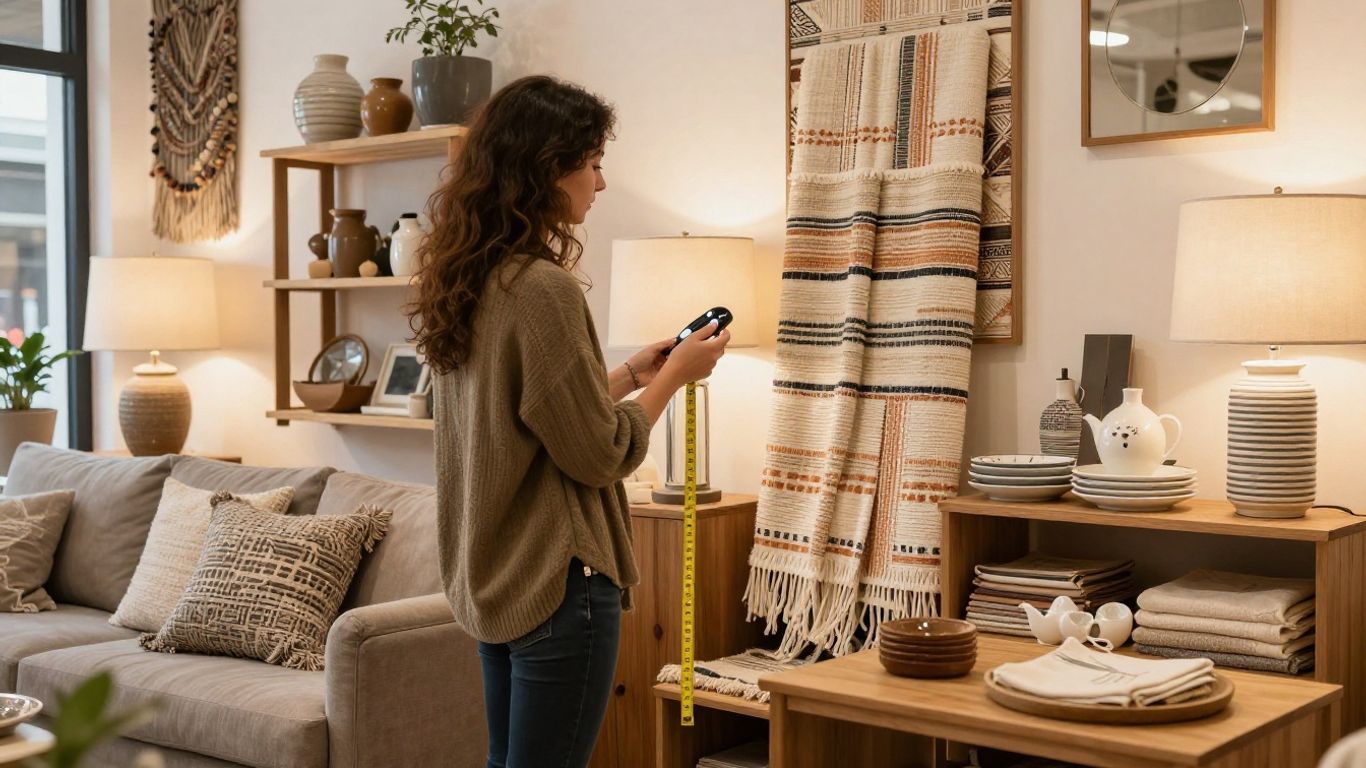
- Shop for each room with measurements and a clear sense of scale.
- Mix durable basics with distinctive pieces that make the space feel personal.
Understand what you want from a local home decor store
A productive shopping trip starts before you open a map app. Think about the atmosphere you want, the rooms that need attention, and the amount you can comfortably spend. A short plan keeps attractive but unsuitable pieces from taking over your day. For more room-by-room planning ideas, this room-by-room decor guide is a useful starting point.
Define your decorating style
Collect a few images that make you pause, then look for patterns rather than copying a single room. You may be drawn to warm wood, quiet neutrals, bright color, old-world detail, clean lines, or a mixture of several directions. Describe the result in a few words, such as relaxed coastal, earthy modern, or collected vintage. That description will help you recognize suitable stores and avoid browsing without a clear filter.
Identify the rooms and items you need
Walk through your home and write down what is missing, what is worn, and what would simply make a room more welcoming. Separate functional purchases, such as lamps and storage, from decorative ones, such as vases, artwork, and cushions. Notice where scale matters most: a rug, mirror, or sideboard can change the balance of an entire room. A focused list also makes it easier to compare stores fairly.
Set a realistic shopping budget
Give yourself a total budget and smaller ranges for individual categories. Leave room for tax, delivery, installation, or the occasional repair, especially when buying furniture or fragile objects. It helps to rank purchases as urgent, useful, or optional rather than treating every attractive item as equally necessary. A flexible budget protects your taste without turning one impulse purchase into the whole project.
Decide whether you prefer new, vintage, or handmade pieces
New items are often easier to match and replace, while vintage pieces can add patina and a sense of history. Handmade work may bring unusual proportions, local character, or small variations that make a room feel less predictable. Decide how much wear, imperfection, and maintenance you are comfortable with before visiting. You can also combine categories: a new lamp beside a vintage table often feels more natural than a room purchased in one sweep.
Search for home decor near.me effectively
The phrase home decor near.me works best when you add details that describe your actual errand. Search by neighborhood, room, product, or shopping preference instead of relying on one broad phrase. Local results can change by opening hours, inventory, and distance, so treat the first screen as a lead rather than a final recommendation.

Use location-based search terms
Try combinations such as “home decor near.me,” “vintage decor near me,” “lighting store near me,” or “handmade home goods near me.” Add a nearby district, landmark, or suburb when the results feel too broad. If you need a particular piece, include its name and approximate size. Several focused searches will reveal different kinds of stores and give you a better sense of the local market.
Check map listings and store categories
Map listings are useful for seeing clusters of shops, travel times, photos, and basic business information. Look at the category assigned to each store, since a furniture showroom, antique market, gift shop, and design studio may offer very different selections. Open the listing rather than judging it only by the map pin. Save promising places in a short route so you can compare them without crossing town repeatedly.
Compare nearby retailers, boutiques, and marketplaces
Retailers may offer broad ranges and predictable basics, while boutiques often provide a tighter point of view. Marketplaces and resale shops can be worthwhile when you want one-off objects, older furniture, or lower prices, although inventory may change quickly. For a broader reference point, World Market describes a selection of global-inspired furniture, home decor, rugs, and outdoor essentials. Use that kind of reference to clarify your preferences, not to assume every local shop carries the same categories.
Look beyond the highest-ranked results
The most visible listing is not automatically the best fit for your project. Read through several pages, search social profiles for recent arrivals, and inspect customer photographs when available. A smaller store may have exactly the finish or scale you need even if it has fewer reviews. Local editorial roundups can also uncover less obvious places; a Houston decor shop guide is one example of how neighborhood discoveries can broaden a search.
Evaluate local stores before you visit
A little checking can save a disappointing drive. Store pages and recent posts may tell you what is currently displayed, but they do not always show every price or item in stock. Before setting out, compare the practical details with your original list and decide which questions are worth a phone call.
Review product selection and price ranges
Look for evidence that a store carries the kinds of materials, sizes, and price points you need. A shop with beautiful accessories may not be the right destination for a large sofa, while a furniture showroom may have few small finishing pieces. Make notes about entry-level, midrange, and higher-priced options where the information is visible. This prevents you from confusing a polished display with a suitable overall selection.
Check store hours, location, and parking
Confirm the opening hours on the day you plan to go, particularly around holidays or special events. Check whether the store is inside a shopping center, on a busy street, or in an area where loading access is limited. Parking and carrying conditions matter when you are inspecting furniture or bringing home breakable goods. A five-minute planning check can make a multi-stop trip much calmer.
Read recent customer reviews
Recent reviews are most useful when they describe specific experiences rather than simply awarding stars. Look for comments about staff help, product accuracy, waiting times, damaged goods, and how the store handled a problem. Treat repeated patterns more seriously than one unusually enthusiastic or negative account. Reviews should inform your questions, not replace your own judgment in the showroom.
Confirm return, delivery, and pickup policies
Ask whether floor samples, custom items, clearance goods, and ordinary stock have different return rules. For furniture, clarify delivery fees, scheduling, assembly, stair access, and what happens if an item arrives damaged. Pickup may be convenient, but only if your vehicle and available help can manage the load safely. Get important details in writing before paying a deposit.
Find the right decor for each room
Decor works best when it responds to how a room is used. A beautiful object still needs the right scale, position, and level of durability for the people who live with it. Move through the home one room at a time, considering comfort, maintenance, light, and the visual connection between spaces.

Choose living room accents
Start with the largest visual gaps: an empty wall, bare coffee table, or dark corner often needs more attention than a collection of small objects. Consider a rug, floor lamp, mirror, artwork, or pair of cushions before adding many ornaments. A mirror can be both useful and decorative, and this guide to styling mirrors at home offers ideas for shapes, frames, and placement. Keep pathways clear and leave enough surface space for everyday use.
Shop for bedroom decor
Bedrooms benefit from quiet repetition rather than visual competition. Soft lighting, a restrained palette, bedside storage, and textiles with varied texture can make the room feel finished without making it busy. Check that lamps are easy to reach and that decorative pieces do not interfere with drawers, doors, or cleaning. Choose materials you will not mind touching and maintaining every day.
Select kitchen and dining accessories
Kitchen and dining pieces should tolerate frequent handling, heat, spills, and cleaning. Look for trays, serving bowls, runners, stools, and lighting that support the way you actually host or eat. Leave adequate space around place settings and work surfaces rather than filling every open area. Natural stone may be an option for some surfaces or accents; SurfacesGalore presents marble, travertine, and limestone tiles and mosaics, including different finishes and patterns.
Find bathroom and entryway updates
Small rooms often respond well to a few deliberate changes. A framed mirror, hooks, woven basket, soap dish, runner, or compact stool can add function without consuming valuable floor space. In an entryway, prioritize a place for keys, shoes, and bags before adding purely decorative objects. Bathrooms need finishes that cope with moisture, while entryways need pieces that can withstand passing traffic.
Compare quality, value, and design appeal
Price is only one part of a good decor decision. Consider construction, repairability, comfort, and how easily an item will work with what you already own. A piece that is slightly more expensive but useful for years may offer better value than a cheaper object that needs replacing quickly.
Inspect materials and construction
Check seams, joints, finishes, hardware, weight, and the stability of anything that needs to stand or support another object. Open drawers, sit in chairs, and view surfaces in different light when possible. For textiles, examine the weave and care instructions; for ceramics and glass, look for chips and uneven stress marks. The item should feel appropriate to its intended use, not merely attractive from across the room.
Compare prices across local and online stores
Use online listings as a price reference, while remembering that local stores may offer personal advice, immediate inspection, or easier pickup. Compare like with like: dimensions, material, finish, warranty, shipping, and assembly can change the real cost considerably. Write down the full price rather than relying on memory after several visits. This is especially helpful for items available in multiple sizes.
Look for unique pieces and seasonal discounts
Local stores may receive limited batches, consignment goods, or seasonal stock that cannot be compared perfectly online. Ask when new deliveries arrive and whether floor samples or end-of-season items are reduced. Do not let a discount persuade you to buy an object with the wrong scale or poor construction. A good deal is still a poor choice if it has no practical place in your home.
Balance statement pieces with everyday essentials
A statement piece gives a room its point of view, but quieter items create the space needed to appreciate it. Pair an expressive vase, chair, or artwork with simple lighting, storage, and textiles. A vase can be an easy place to add height and color; these home decor vase ideas cover choices for different rooms and styles. Repeating one or two finishes across the room can make varied purchases feel intentional.
Plan a successful local decor shopping trip
Once you have a shortlist, turn it into a simple route and a short decision process. Start with items that affect measurements or delivery, then browse for finishing touches if time allows. A thoughtful plan leaves room for discovery without making every purchase feel urgent.
Create a prioritized shopping list
Group the list by room and mark each item as essential, preferred, or optional. Include quantities, approximate dimensions, acceptable colors, and a maximum price where those details matter. A compact list is easier to use than a page of vague inspiration. For a practical trip, prioritize these categories:
- Pieces that solve an immediate functional problem.
- Items with strict size or installation requirements.
- Durable basics that will be difficult to replace later.
- Flexible accents that can wait for the right find.
Afterward, revisit the list before checking out and remove anything that does not serve a clear purpose. The goal is not to buy the most, but to return with pieces that work together.
Bring measurements, photos, and color references
Take photographs from several corners of each room, including floors, walls, windows, and nearby furniture. Record ceiling height, doorway width, and the dimensions of any space a new item must occupy. A paint chip, fabric sample, or phone album can be more reliable than trying to remember a color under unfamiliar lighting. These references also help staff give more specific suggestions.
Ask about customization and professional advice
If an item is nearly right, ask whether another size, finish, fabric, or configuration is available. Some stores can explain care requirements or help you judge scale, while others may refer you to a designer or maker. Keep the conversation focused on your measurements and intended use. For unusual home projects, a 5-star Airbnb portable home planning guide can also prompt useful questions about comfort, amenities, safety, and practical layout, even if your own project is simply a residence.
Arrange delivery for large or fragile items
Measure the route from the vehicle or delivery entrance to the final room, including turns and stairwells. Confirm packaging, timing, assembly, and inspection procedures before the item leaves the store. Fragile objects should be carried securely and kept away from loose items that can shift around them. If a purchase involves craft supplies rather than furniture, a knitting and crochet converter can help reconcile needle and hook sizing before you buy materials locally.
A local shopping trip works best when transport and handling are treated as part of the purchase, not an afterthought. Keep receipts, policy details, and measurements together until everything is home and checked.
Conclusion
The best home decor near.me search is not simply the one that finds the closest store. It is the one that connects your style, room requirements, budget, and practical plans with a shop worth visiting. Search broadly, evaluate carefully, and let the right pieces arrive gradually so your home feels considered rather than hurried.
Frequently Asked Questions
How do I search for home decor near.me?
Use the phrase alongside a neighborhood, room, product type, or style, then compare map listings, store categories, reviews, and current business information.
How many stores should I visit in one trip?
Two to four stores is usually manageable, depending on distance and the size of the items you are shopping for. A shorter route leaves enough time to inspect pieces properly.
Should I shop by room or by product type?
Shop by room when you are solving a complete design problem, and by product type when you need to compare similar items such as lamps, mirrors, or rugs across several stores.
How can I stay within my decor budget?
Set a total limit, assign ranges to priority items, and reserve money for delivery, tax, installation, or repairs. Delay optional purchases until essential needs are covered.
What should I bring when shopping for furniture?
Bring room and doorway measurements, photos, color references, a tape measure, and notes about existing furniture. These details make scale and coordination easier to judge.
Is vintage decor worth buying?
Vintage pieces can add character and individuality, but inspect their condition, stability, odors, finishes, and repair needs before deciding whether the price represents good value.
How do I know whether a decor item will work in my home?
Consider its size, material, maintenance, color, and relationship to nearby pieces. If you cannot identify where it will go or how it will be used, it may be better to wait.


Leave a Reply