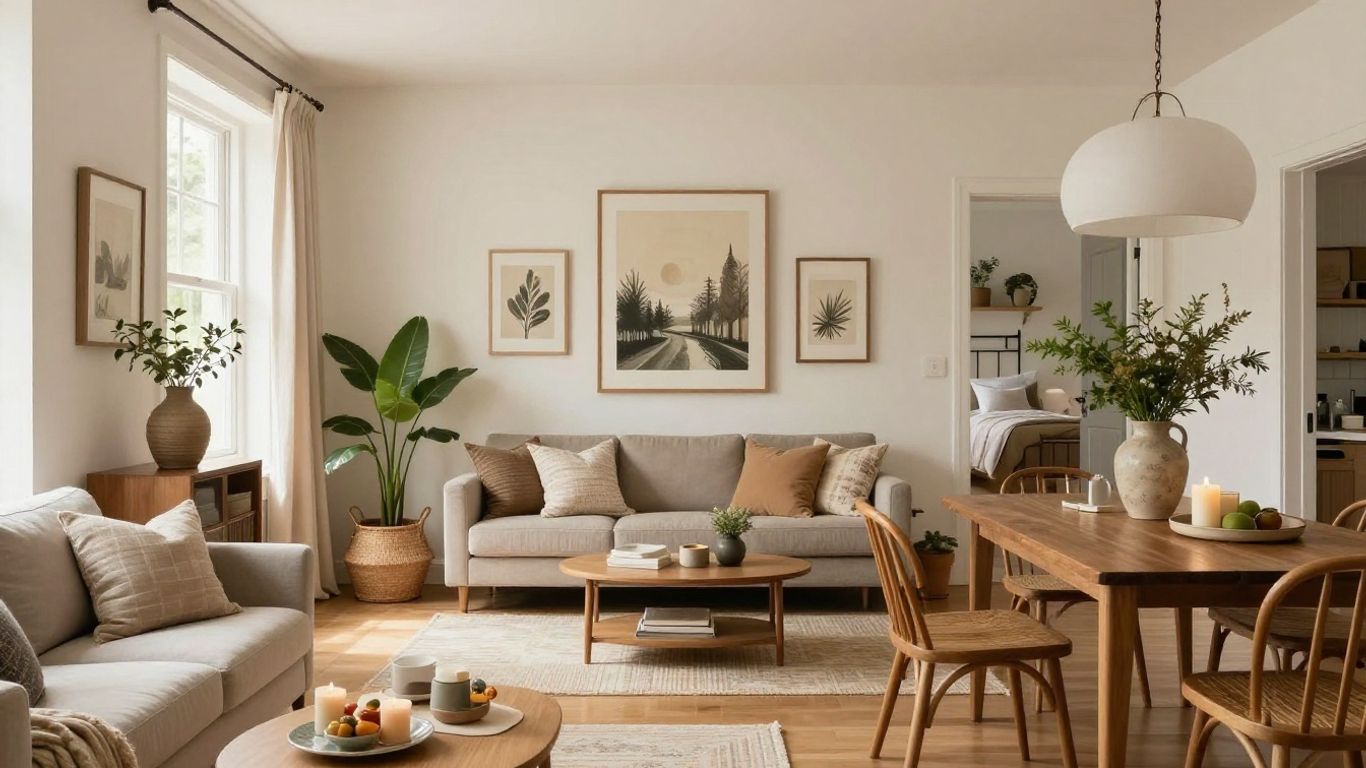
Key Takeaways
Home accessories can change the feeling of a room without requiring a complete redesign. Start with your personal preferences, then edit with scale, function, and repetition in mind.
- Begin with colors, textures, and materials that already make you feel at home.
- Choose accessories according to each room’s purpose, traffic, and natural light.
- Balance statement pieces with quieter objects and generous breathing room.
- Repeat a few colors or finishes so the home feels connected.
- Refresh gradually by rotating, repairing, reusing, and choosing pieces with staying power.
Define your home accessories style
A room rarely feels personal because of one perfect object. It feels personal when small choices—fabric, finish, color, shape, and placement—repeat in a way that feels natural. Before shopping, look at what you already own and notice which pieces you would gladly carry into your next home. That simple exercise gives you a more reliable starting point than a passing trend.
Identify colors, textures, and materials you love
Begin by collecting visual clues from your everyday life: a favorite jacket, a ceramic mug, a landscape photograph, or an old wooden table. Look for recurring qualities rather than exact matches. Perhaps you prefer chalky neutrals, warm timber, brushed metal, and loosely woven fabrics, or maybe glossy color and crisp geometric forms appeal to you more.
Make a short list of three colors, three textures, and two or three materials. This does not need to become a strict formula. It is simply a filter that helps you recognize pieces that belong together and pass on attractive objects that would make the room feel scattered.
Choose between modern, traditional, and eclectic looks
Modern rooms often rely on clean profiles, open space, and a restrained material palette. Traditional rooms tend to welcome ornament, symmetry, aged finishes, and objects with a sense of history. An eclectic room can include both, but it needs a thread—perhaps a repeated color, similar visual weight, or a shared appreciation for handmade surfaces.
You do not have to label your style perfectly. Choose the description that helps you make decisions, then allow exceptions for objects you genuinely love. The Perfect Painter decor style guide offers a useful way to think about personal taste, architecture, lighting, and budget together rather than treating style as a fixed category.
Use inspiration without copying a single room
Reference images are most useful when you study their structure. Notice how many colors appear, where the eye rests, how much of the room is left quiet, and whether the accessories are doing a practical job as well as a decorative one. Save images for particular reasons instead of building a board filled with rooms you admire only as a whole.
You might borrow the idea of a low bowl on a dining table, the contrast between rough stone and soft linen, or the rhythm created by three related objects. Then reinterpret it with your own furniture, collection of books, and daily habits. Inspiration should give you a direction, not remove your personality from the room.
Create a cohesive style throughout your home
Cohesion does not mean every room needs matching vases or identical colors. It can come from repeating warm wood, using the same metal finish in small doses, or carrying one accent color from the living room into a hallway. The effect is subtle, but it makes moving through the home feel more intentional.
Give each room its own mood while keeping one or two connecting elements. A quiet bedroom might share the living room’s linen textures, while a more energetic kitchen borrows its dark hardware. A consistent thread matters more than perfect matching.
Choose home accessories by room
The best accessory for a room is shaped by what happens there. A living room needs comfort and conversation, a bedroom benefits from softness, and a kitchen rewards objects that can withstand regular use. Thinking room by room also keeps you from buying decorative pieces that have nowhere useful to live.

Living room accents that add comfort and character
Start with the surfaces and seating people actually use. A tray can gather remotes and a candle, while a soft throw makes an armchair look inviting and offers warmth on a cool evening. Add a lamp where the room needs a pool of light, then use art, books, a plant, or a sculptural object to give the arrangement a personal center.
Coffee tables often look better with a low grouping than with several tall objects competing for attention. On a bookcase, leave some shelves partly open so the collection can breathe. For ideas about finishing surfaces with trays, vases, candleholders, and sculptural pieces, browse these modern home accents as a source of visual direction rather than a shopping prescription.
Bedroom accessories for a calm, layered look
Bedrooms benefit from fewer, softer decisions. Begin with bedding, then add a pair of lamps or wall lights, a small dish for jewelry, and one or two textiles with distinct but related textures. A rug or runner can soften the first step out of bed, while curtains help control glare and make the room feel settled.
Keep decorative objects at a comfortable visual volume. A single framed print leaning on a dresser may feel calmer than a crowded gallery, and a covered basket can hold extra blankets without turning storage into a display. Choose accessories that support rest rather than asking the room to perform.
Kitchen and dining pieces that balance style and function
Kitchens are already visually busy, so useful objects should earn their place. A wooden board, ceramic crock, fruit bowl, linen towels, or attractive canisters can add warmth while remaining within easy reach. In the dining area, a runner, low centerpiece, or pair of candlesticks can define the table without interfering with plates and conversation.
Consider cleaning before buying. Porous materials may need more care near the sink, delicate finishes can suffer beside a cooktop, and tall arrangements can obstruct sightlines. Beautiful kitchen accessories work best when they fit the rhythm of preparing, serving, wiping, and putting away.
Entryway and bathroom accessories that make a strong impression
An entryway has to handle arrival, departure, shoes, keys, and bags, often in a very small footprint. A mirror, catchall bowl, narrow bench, hook rail, or lidded basket can make the area feel finished while reducing the familiar pile at the door. If you are also considering the approach to the house, this driveway design guide shows how materials, planting, color, drainage, and lighting can work with a home’s architectural character.
Bathrooms need the same combination of restraint and usefulness. A framed print away from splashes, a tray for everyday toiletries, fresh towels, and a small plant suited to the light can make the room more welcoming. Choose washable or moisture-tolerant materials wherever water is likely to land.
Build a balanced accessory collection
A collection feels considered when every object has room to be seen. That does not require minimalism; it requires a relationship between visual weight, height, texture, and empty space. Walk around the room after placing each group, since an arrangement that looks pleasing from one chair may feel heavy from the doorway.
Combine large, medium, and small decorative pieces
Large accessories establish presence: a generous mirror, floor lamp, oversized bowl, or substantial planter can anchor a wall or corner. Medium pieces connect that anchor to the surrounding furniture, while small objects provide the details that reward a closer look. Without variation, a display can feel either timid or top-heavy.
Try building groups in stages. Place the largest item first, add a medium companion with a different shape, and finish with one or two small pieces that do not fill every gap. The aim is a visual slope, not a rigid pyramid.
Layer different shapes and textures
Shape is often more effective than adding another color. Pair a round bowl with a rectangular book, a slender candlestick with a broad ceramic vessel, or a soft cushion with a structured tray. Texture then gives the eye something else to notice: polished glass beside woven fiber, matte pottery beside metal, or nubby wool against smooth wood.
Change at least one quality between neighboring objects. Similar objects can still work together, but an entire surface of identical finishes tends to flatten. A collection with modest variation feels more collected and less like a single purchase.
Create focal points with statement accessories
A statement accessory should have enough scale or character to hold attention without making the rest of the room irrelevant. It might be a large artwork, a distinctive lamp, a dramatic mirror, or a vessel with an unusual silhouette. Give it a clear setting and remove nearby competition.
Use lighting to support the focal point, especially in the evening. A directional lamp or warm pool of light can make one corner feel deliberate. The home accessories collection is another useful visual reference for combining decorative objects with trays, bookends, ceramics, and ambient candlelight.
Avoid clutter with intentional spacing
Clutter is not simply a matter of owning too many things. It can also come from placing too many objects at the same height, using every available surface, or mixing unrelated visual weights. Step back and ask whether each piece contributes beauty, function, memory, or useful storage.
A short editing routine can make a display feel lighter without making it impersonal. Try these steps when a shelf or tabletop feels crowded:
- Remove the least useful or least loved object.
- Group related pieces instead of scattering them across the surface.
- Leave a visible patch of empty space beside the main grouping.
- View the arrangement from the room’s entrance and primary seating.
After editing, live with the arrangement for a day before adding anything back. Empty space is not unfinished; it gives the objects you kept a clearer role.
Use color and pattern with confidence
Color becomes easier when it is treated as a relationship rather than a series of isolated choices. Look at flooring, upholstery, cabinetry, walls, and natural light before introducing anything new. Accessories can repeat what is already present, soften a hard contrast, or add a deliberate note of surprise.

Select a practical base color palette
Choose a foundation of two or three quiet colors that can support frequent changes. Warm white, sand, charcoal, olive, navy, and muted wood tones are flexible starting points, but the right base depends on the room and the furniture already there. A palette should feel comfortable in daylight and under artificial light.
Use larger accessories for the calmer colors and reserve stronger shades for items that are easy to move. This keeps the room adaptable. It also makes seasonal updates less expensive because a new cushion cover or small arrangement can shift the mood without replacing the foundation.
Add contrast with accent colors
Accent colors work best when they appear more than once. A rust cushion might relate to a ceramic bowl and a small detail in artwork; a blue vase might echo a rug or a view beyond the window. Repetition makes contrast feel intentional rather than random.
Limit the number of strong accents in a single sightline. One vivid object can be striking, while five competing accents may make the room feel restless. If a color is difficult to place, try it first in a small, movable object.
Mix patterns without overwhelming the room
Pattern mixing becomes manageable when scale and density vary. Pair a large, open motif with a smaller pattern, then balance both with solids or quiet texture. Keep a color connection between patterns, even if their shapes are unrelated.
Use patterned accessories at different levels rather than clustering every print on one sofa or table. A cushion, a runner, and a small piece of art can create a gentle rhythm across the room. If the result feels busy, remove one pattern before changing everything else.
Coordinate accessories with existing furniture and finishes
Study the undertones of the room. A cool gray wall may sit comfortably with blue-green glass and pale metal, while a warm beige room may welcome terracotta, aged brass, and honey-colored wood. This does not mean every finish must match; related undertones help different materials sit together.
A simple comparison table can make decisions clearer when you are choosing among several accessories:
| Existing room element | Helpful accessory response | Effect to aim for |
|---|---|---|
| Pale upholstery | Warm wood or woven fiber | More depth and comfort |
| Dark cabinetry | Light ceramic or glass | Contrast and visual lift |
| Patterned rug | Solid cushions or bowls | A calmer counterpoint |
| Polished metal fixtures | Matte pottery or linen | Softer material balance |
Use the table as a prompt, not a rulebook. The room’s light, scale, and your own taste should have the final say.
Make home accessories practical and sustainable
Decorating well includes deciding what deserves space, money, and maintenance. A beautiful object that blocks a drawer, gathers dust in a busy walkway, or cannot survive ordinary use may become frustrating quickly. Practicality is not the enemy of style; it often makes a room feel more relaxed.
Prioritize storage, lighting, and everyday function
Begin with the small inconveniences you notice repeatedly. A basket by the sofa can gather throws, a tray can contain daily items, and a lamp can make a dark reading corner usable. When an accessory solves a real problem, it is less likely to be pushed aside during the next tidy-up.
Look for concealed function where possible. Lidded boxes, ottomans, wall hooks, and attractive containers can reduce visual noise without making the home feel overly organized. Before buying more storage, measure the space and decide what the container will hold.
Choose durable materials for high-use spaces
High-traffic areas call for finishes that tolerate contact, dust, moisture, and repeated handling. Wood, metal, stone, sturdy cotton, washable linen, and well-made ceramics can all work, depending on the object and the care it receives. Durability is also influenced by construction, not just the material label.
A detailed home inspection checklist can help homeowners think broadly about safety and the condition of a property. It is not a decorating guide, but the same habit of checking what is sound, secure, and fit for use is valuable when arranging accessories near stairs, outlets, heat sources, or damp areas.
Shop secondhand, handmade, and responsibly made pieces
Secondhand shopping can bring age, variation, and a more personal feel to a room. Handmade pieces often have small irregularities that make a display less uniform, while responsibly made goods may offer clearer information about materials and production. Take your time with both: inspect condition, ask how an item should be cared for, and avoid buying simply because something is unusual.
Buying fewer, better-loved objects is one practical way to reduce waste. Repair a frame, re-cover a cushion, or repurpose a bowl before replacing it. Perfect Painter’s advice appears again in this kind of approach: style can be personal and attractive without requiring every element to be new.
Select versatile accessories that can move between rooms
Versatility protects both your budget and your future decorating plans. A neutral throw can move from bedroom to sofa, a tray can serve in a bathroom or dining room, and a small lamp can shift as furniture arrangements change. Choose pieces with a scale and finish that will not depend on one exact setting.
Useful gifts can follow the same logic. Someone who enjoys active hobbies may appreciate ideas in a pickleball birthday gift guide, while a home-focused gift might be a handmade bowl, soft textile, or movable light. The best choice fits the recipient’s habits rather than adding another object they must find room for.
Style and update your space throughout the year
A home does not need a dramatic makeover every season. Small changes in arrangement, texture, and light can make familiar rooms feel attentive again. Seasonal styling is most successful when it works with the room’s existing character instead of covering it up.
Arrange accessories using height and grouping
Use height to create a gentle visual rhythm. A low bowl, medium vase, and taller branch or lamp can form a varied group, while books can lift a small object to a more useful level. Keep the tallest piece toward the back or side so the arrangement remains easy to see through.
Odd numbers can be a helpful starting point, but they are not mandatory. What matters more is that objects relate in color, material, or purpose. Photograph the arrangement from the main viewing angle; a picture often reveals an unintended gap or an overly crowded edge.
Refresh rooms with seasonal accents
Seasonal updates can be as simple as changing textiles, branches, or tabletop color. In spring, pale linens, fresh greenery, and lighter ceramics may bring a room forward; in autumn, wool, deeper tones, and warm candlelight can make it feel grounded. Keep a few reliable neutral pieces in place so the change feels layered rather than theatrical.
For a hearth or mantel, these spring fireplace ideas offer visual directions involving light wood, natural elements, floral accents, and airy color. Adapt the scale to your own room, and keep combustible materials safely away from heat.
Rotate decorative pieces to keep rooms feeling new
Rotation gives existing objects another chance. Store a small selection of cushions, vases, artwork, and tabletop pieces together, then bring out only what suits the current season or arrangement. The collection will feel refreshed even when nothing has been purchased.
Keep a note of where each item works best. A vase that disappears on a crowded bookcase may become a strong entryway accent, and a framed print may look entirely different when moved from a bright wall to a dimmer corner. Moving things around is a low-cost way to learn your home.
Maintain and care for different accessory materials
Care begins with knowing what an object is made from. Dust delicate surfaces with a soft cloth, use coasters beneath moisture-sensitive pieces, and follow manufacturer guidance for textiles, metal, wood, glass, and ceramics. Avoid harsh cleaners when a simple dry cloth or lightly damp wipe will do.
Inspect accessories as you clean. Tighten loose hardware, replace worn pads, and move objects away from direct sun or excess humidity when needed. Regular care preserves the visual calm you worked to create and helps good pieces remain useful for many years.
Conclusion
Choosing home accessories is less about filling every surface than about making thoughtful relationships between beauty, function, memory, and space. Start with what you love, edit with patience, and let each room change gradually as your life changes. The result will feel collected because it is genuinely yours.
Frequently Asked Questions
What are home accessories?
Home accessories are decorative or useful objects that support the feeling and function of a room. They can include textiles, lighting, mirrors, vases, baskets, trays, artwork, plants, and small storage pieces.
How many accessories should a room have?
There is no universal number. Use the room’s size, furniture, and visual complexity as a guide, then leave enough open space for the objects you keep to remain visible and useful.
How can I make accessories look cohesive?
Repeat a few colors, materials, shapes, or finishes across the room and, more subtly, throughout the home. Cohesion comes from relationships between pieces rather than from buying matching sets.
Should accessories match my furniture?
They should coordinate with the furniture, but they do not need to match exactly. Contrast in texture, shape, or finish can add depth while a shared undertone keeps the combination comfortable.
How do I style a small room without clutter?
Choose fewer pieces with more than one purpose, keep pathways clear, and use vertical space carefully. A mirror, wall-mounted light, or attractive storage container can add impact without taking much floor area.
How often should I refresh my home accessories?
Refresh whenever a room feels inconvenient, flat, or disconnected from your current life. Small seasonal rotations or occasional rearrangements are usually more useful than frequent shopping.
What makes an accessory sustainable?
Look for durable construction, repairable materials, responsible production information, and a design you expect to enjoy for a long time. Buying secondhand, choosing versatile pieces, and caring for what you own also reduce unnecessary replacement.


Leave a Reply