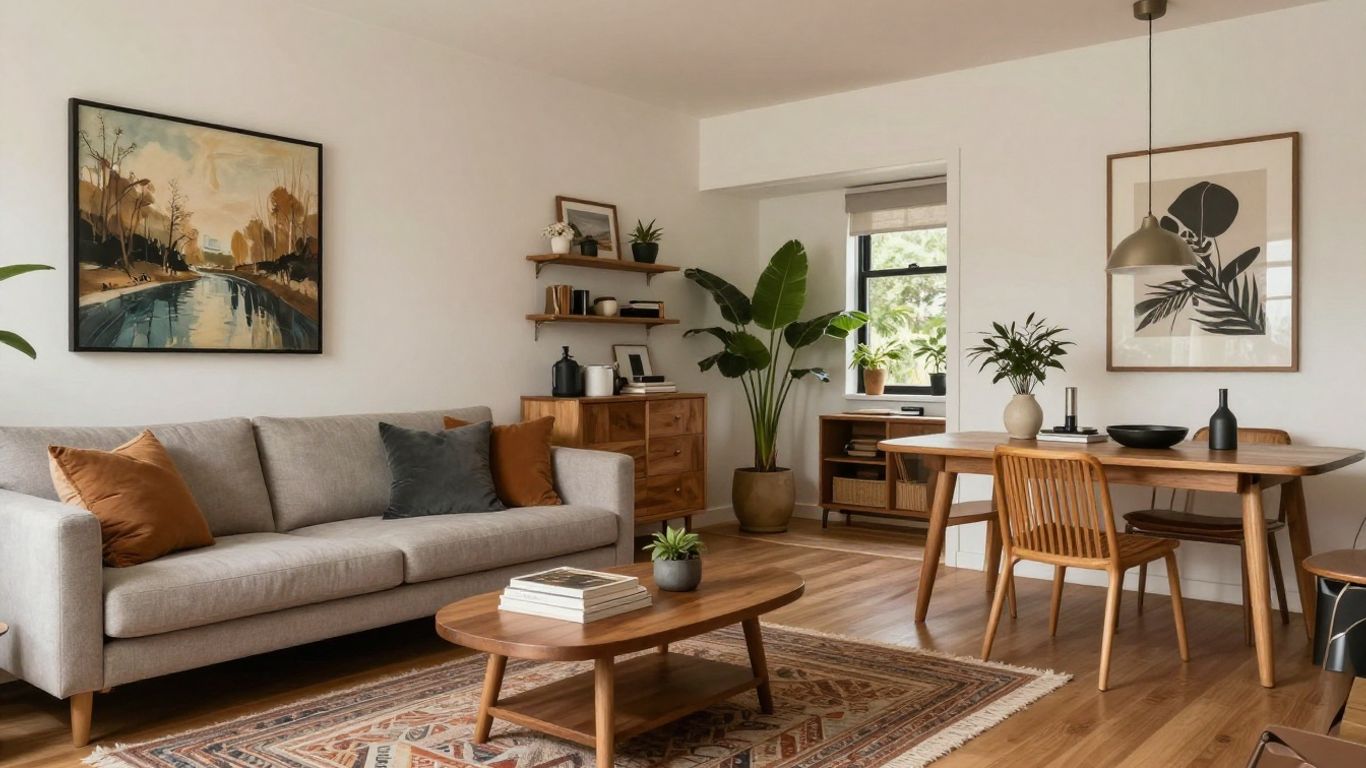
Key Takeaways
A stylish home grows from practical decisions, not from buying every attractive thing you see. Start with your habits, plan the room carefully, and add personality in layers.
- Define a decorating direction that suits your everyday life.
- Measure rooms and map movement before buying furniture.
- Invest first in useful, appropriately scaled foundational pieces.
- Repeat colors, materials, and textures to create visual connection.
- Refresh gradually by editing, repairing, and rearranging what you own.
Define your home’s style and priorities
A home feels collected when its choices support the people who live there. Before browsing for home decor & furniture, think about how you want each room to feel and function. A clear direction helps you spend with intention instead of chasing every passing trend.
Identify the design elements you love
Begin with evidence rather than labels. Save rooms, colors, fabrics, shapes, and details that repeatedly catch your eye, then look for patterns among them. You may discover that your taste is less about one named style and more about warm wood, curved forms, quiet colors, or an eclectic mix of old and new.
A small mood board can make those patterns easier to see. Include both beautiful images and practical references, such as flooring, window treatments, or furniture silhouettes. This room-by-room decorating guide can also help you turn broad inspiration into decisions for individual spaces.
Balance aesthetics with everyday comfort
A beautiful chair that no one wants to sit in is not a successful purchase. Consider the way you relax, entertain, work, eat, and move through the house before choosing finishes or proportions. Soft upholstery may suit a quiet reading room, while a busy family space may need fabrics that tolerate frequent use.
Comfort also includes visual ease. Leave enough breathing room around furniture, keep frequently used objects within reach, and avoid filling every surface simply because it is available. The best rooms usually have a little restraint alongside their decorative details.
Set goals for each room
Give every room a short written brief. “A calm place to sleep,” “a flexible area for guests,” or “an organized landing zone” is more useful than a vague wish for something stylish. These goals guide purchases when several attractive options seem equally tempting.
Prioritize the changes that will improve daily life first. In a living room, that might mean better seating and task lighting; in an entryway, it might mean a place for shoes, bags, and keys. A focused goal keeps decoration connected to use.
Create a realistic decorating budget
Separate essentials from enhancements before you shop. Price the pieces that affect comfort and function first, then reserve a smaller amount for art, accessories, and seasonal changes. Include delivery, assembly, installation, and window or floor treatments so the budget reflects the finished room.
A useful budget is flexible rather than perfect. You might buy a long-lasting sofa this month, live with it for a while, and add a side table later. A slower buying rhythm often produces a more personal home and reduces expensive mistakes.
Plan your space before buying
Good planning makes furniture look better because the room has room to work. Measure first, sketch second, and shop third. This sequence is especially helpful when a space has narrow passages, unusual corners, or several competing uses.

Measure rooms, walls, and entryways
Record the length and width of the room, ceiling height, doors, windows, radiators, and fixed shelving. Then measure the route from the delivery point to the room, including stairwells, elevators, and tight turns. A piece that fits the floor plan may still be impossible to bring indoors.
Keep the measurements in one place and note which dimensions are fixed. When comparing products, check the packaged dimensions as well as the assembled size. This simple habit prevents many frustrating returns.
Map traffic flow and furniture placement
Imagine the paths people take between the entrance, seating, kitchen, bathroom, and outdoor areas. Furniture should support those routes rather than forcing everyone to weave around corners. Pulling a sofa slightly away from a wall can sometimes improve circulation and make the room feel more intentional.
Mark the main walking paths on a sketch or with removable tape. Notice where doors swing and where drawers need to open. If a layout looks attractive but interrupts normal movement, it will become irritating quickly.
Use a room layout to test proportions
A floor plan lets you compare several arrangements before committing to heavy pieces. Draw furniture to scale, or use paper cutouts for a quick hands-on test. Look at the relationship between the largest item and the room, then check whether smaller pieces balance it without crowding the edges.
Use the test layout to answer practical questions: Can two people pass behind the sofa? Is there enough space to pull out a dining chair? Does the bed leave a comfortable route to the closet? These answers matter more than making every gap identical.
Account for lighting, outlets, and storage
A room can be well furnished and still feel inconvenient if lamps have nowhere to plug in or daily items lack a home. Note outlet locations, natural light, switch positions, and the direction of afternoon sun. Plan storage near the point where objects are used, not only where an empty wall happens to be.
For complex changes, a kitchen planning resource such as Dallas kitchen remodeling may offer useful context on layouts, durable materials, and coordinated finishes, even when your own project is smaller. The broader lesson is to solve infrastructure before decoration.
Choose foundational furniture pieces
Foundational furniture carries the visual and practical weight of a room. These are the pieces you use most often, so their comfort, scale, and construction deserve more attention than a decorative accent. Once they are right, smaller additions become much easier to choose.
Start with sofas, beds, and dining tables
Begin with the furniture that defines how the room is used. Test seating depth, mattress support, table height, and clearance around each piece rather than judging only by photographs. A sofa may look compact online but feel imposing once paired with a coffee table and side chairs.
Think about the full arrangement, not one item in isolation. A dining table needs comfortable chair space, a bed needs circulation and bedside access, and a sofa needs enough nearby surface for lighting or drinks. These relationships create function.
Select durable materials for your lifestyle
Material choice should follow real habits. Families with pets or young children may prefer resilient upholstery and finishes that disguise everyday wear, while a formal sitting room can accommodate more delicate textures. Also consider maintenance: removable covers, washable textiles, and easily cleaned surfaces can make a meaningful difference.
Do not confuse durability with heaviness or expense. A well-made simple piece may serve you better than a visually elaborate one with fragile construction. Ask how a material ages, how it is repaired, and whether replacement parts are available.
Match furniture scale to the room
Scale is the relationship between a piece and everything around it. A large sectional can make a generous room feel welcoming, but it may overwhelm a compact apartment. Conversely, undersized furniture can leave a large room feeling scattered and less comfortable.
Use the measurements from your layout rather than relying on intuition. Compare seat height, arm width, table thickness, and visual weight. Repeated proportions—such as a similar leg height or consistent tabletop line—can make different pieces feel related.
Decide when custom or multifunctional pieces make sense
Custom furniture is most useful when a room has unusual dimensions, a demanding storage need, or a feature you cannot find ready-made. Multifunctional pieces earn their place when they solve a genuine problem, such as a storage ottoman that provides seating and hides blankets.
Avoid paying for flexibility you will never use. A complicated mechanism can add cost and maintenance without improving your routine. Choose the simplest design that handles the task well.
Build a cohesive color and material palette
Cohesion does not require every item to match. It comes from repeating a few visual ideas—perhaps a warm neutral, a particular wood tone, and a recurring metal finish—while allowing enough variation to keep the room alive. Start with the elements that are hardest to replace, then build outward.

Choose a base color for larger pieces
Large upholstered furniture, walls, and substantial rugs establish the room’s visual foundation. Neutrals are flexible, but they do not have to be plain white or gray; sand, olive, clay, navy, and softened black can all work as grounding choices. Test samples in morning, afternoon, and evening light.
A base color should make future changes easier. If you enjoy changing art and cushions, a quieter sofa may give you more freedom. If the rest of the room is restrained, a richly colored chair or headboard can become the anchor.
Add contrast with accent colors
Accent colors are most effective when they appear more than once. Repeat a shade in a cushion, ceramic, artwork, or small piece of furniture so it feels deliberate rather than accidental. Contrast can also come from light and dark values, not only from bright hues.
Keep the number of strong accents limited in a small room. A restrained palette leaves space for texture and shape to contribute, which often feels more sophisticated than adding another color whenever the room seems quiet.
Mix wood, metal, glass, and textiles
Material variety gives a room depth, especially when the color palette is simple. Pair smooth surfaces with tactile ones, such as a glass table beside a nubby chair or a metal lamp over a timber console. Repetition helps the mix feel designed: echo a wood tone or finish in at least two locations.
This is also where shopping research can be useful. Decor Home Furniture presents furniture and mattresses, while West Elm covers modern furniture, home decor, and lighting; comparing categories can clarify which material combinations suit your plan. Keep the final choice tied to your room rather than to a retailer’s overall look.
Use patterns without overwhelming the space
Treat patterns as part of the room’s rhythm. A large-scale pattern can anchor a rug or curtain, while smaller motifs work well on cushions or occasional upholstery. Vary scale and leave some solid surfaces between patterns so the eye has somewhere to rest.
When several patterns share a color, they can coexist more comfortably. You can also balance a busy pattern with quiet materials nearby. The goal is not perfect matching, but a clear hierarchy.
Layer home decor for warmth and personality
Decorative layers are what make a room feel inhabited rather than staged. They should build comfort, highlight the architecture, and reveal something about the people who live there. Add them gradually so you can tell which elements improve the atmosphere and which merely create clutter.
Add rugs to define different zones
A rug can gather seating into a conversation area, soften a bedroom, or distinguish a dining zone within an open plan. Choose a size that allows at least the front legs of major seating to sit on it when possible. A rug that is too small can make otherwise generous furniture feel disconnected.
Consider pile height, cleaning needs, and door clearance before choosing a design. Pattern and texture can hide everyday marks, but they should still relate to the palette established by the larger pieces.
Use lighting at multiple levels
One ceiling fixture rarely provides the right mood for every activity. Combine general light with task lighting for reading or cooking and lower, warmer sources for evening relaxation. Table lamps, floor lamps, sconces, and under-cabinet lighting each solve different problems.
Place switches and lamps where they support actual habits. A beautiful lamp that sits behind a sofa or lacks a nearby outlet becomes decoration without much usefulness. Lighting should be planned as part of the layout, not added as an afterthought.
Style walls with art, mirrors, and shelving
Wall decor gives the eye a reason to travel upward and can balance the height of substantial furniture. Hang art at a comfortable viewing level, group smaller pieces with consistent spacing, and use shelving to combine books with a few objects rather than filling every inch.
Mirrors can add depth and reflect available light when placed thoughtfully. A mirror placement guide offers ideas for choosing shapes, frames, and locations across the home. Check the reflection before installing one; what it faces matters as much as where it hangs.
Finish surfaces with pillows, throws, and accessories
Soft accessories are a low-risk way to adjust color and comfort. Layer a few pillow shapes, keep a throw within reach, and use trays to gather small objects on coffee tables or consoles. A single distinctive object often has more presence than a crowded collection.
For a small finishing touch, home decor vases can add height, color, or sculptural form to a surface. Rotate accessories seasonally or move them between rooms before buying more. That small edit can make familiar pieces feel new.
Make smart choices for different rooms
Each room asks for a slightly different balance of comfort, storage, durability, and atmosphere. A consistent palette can connect the home, but the details should respond to what happens in each space. Let use determine the priority, then let decoration support it.
Create a comfortable and practical living room
Arrange the living room around conversation, viewing, reading, or whatever happens most often there. Provide enough seating without blocking paths, and include surfaces for drinks, books, and lighting. Closed storage can contain less attractive necessities while open shelving displays objects with meaning.
For more detailed planning, this living room design guide covers layout, lighting, storage, materials, and comfort. The central principle is simple: the room should make its everyday activities easy before decorative styling takes over.
Design a restful and organized bedroom
A bedroom benefits from visual quiet and dependable storage. Keep the bed position practical, provide bedside lighting, and choose textiles that feel comfortable against the skin. If wardrobes are limited, use under-bed drawers, a narrow chest, or hooks without allowing storage to dominate the room.
Limit work-related items where possible. A clear surface, soft light, and a small number of personal objects can make the room feel calmer at night. Function is still present, but it stays visually contained.
Combine storage and style in the entryway
The entryway needs to handle the transition between outside and inside. A bench, hooks, a tray for small items, and a durable surface can create a reliable landing zone. If space is narrow, choose shallow storage and use the wall height rather than extending too far into the walkway.
Make the system easy to maintain. A basket for everyday items and a closed cabinet for overflow are often more useful than an elaborate display. One mirror or artwork can provide personality without reducing the available working space.
Choose functional decor for kitchens and dining areas
Kitchens and dining spaces benefit from accessories that are attractive because they are used. Display a favorite serving board, keep frequently used utensils accessible, and choose table linens that can tolerate regular washing. Dining lighting should illuminate faces and food without creating glare.
If you want a stronger decorative statement, use one focal point—a pendant, a painted cabinet, a runner, or a substantial piece of art—then keep nearby details quieter. Jonathan Adler offers modern home decor and mid-century inspired designs, which can be a reference point for distinctive accents without requiring an entire room to follow one look.
Shop for quality, value, and longevity
Shopping well means asking better questions, not simply choosing the lowest price or the most impressive photograph. Compare construction, dimensions, care requirements, and return terms before you commit. A piece that serves you for years may be better value than several quick replacements.
Compare materials, construction, and warranties
Look at joinery, frame materials, hardware, stitching, drawer movement, and the feel of moving parts. For upholstered furniture, ask about the frame, cushion filling, fabric content, and cleaning method. A warranty is useful only when you understand what it covers and for how long.
Use a simple comparison method when several options seem similar:
- Check the materials that carry the most weight or wear.
- Read the care instructions before deciding on a finish.
- Compare warranty coverage and return conditions.
- Consider repairability alongside the initial price.
After that comparison, the most attractive option may change. Quality is not always visible at a glance, so a little research protects the budget and the room.
Evaluate online listings and product dimensions
Online listings require careful reading. Confirm overall width, depth, height, seat height, clearance, finish descriptions, shipping conditions, and the dimensions of the packed item. Product photos can distort scale, especially when the room around the item is unusually large.
Place painter’s tape on the floor to represent the footprint before ordering. For purchases in a new property, a Maple Ridge and Pitt Meadows home-buying guide is a reminder that location, access, and the practical details of a property can affect furnishing decisions too.
Mix investment pieces with affordable finds
Spend more selectively on objects that receive daily use or are difficult to replace, such as a sofa, mattress, or dining table. Save on easily changed accents, small tables, baskets, and seasonal textiles. This approach leaves room for experimentation without making every update expensive.
Value can also come from buying fewer, more useful things. A well-proportioned lamp or sturdy side table may improve a room more than several decorative purchases that compete for attention.
Refresh your home without replacing everything
A refresh can begin with editing. Move furniture, rotate art, repair a loose handle, change lampshades, or re-cover a cushion before shopping for a replacement. Even a new arrangement can reveal that the room had enough good pieces all along.
When you do buy, choose something that connects to what is already there. For outdoor spaces, custom landscaping planning offers a useful broader example of adapting design to site conditions; indoors, the equivalent is responding to your room’s light, circulation, storage, and existing materials. Thoughtful additions age better than wholesale makeovers.
Conclusion
A stylish, functional home is built through observation and patience: understand your habits, plan proportions, choose dependable foundations, and let color, texture, light, and meaningful objects accumulate over time. The result does not need to look finished all at once; it needs to feel increasingly useful and increasingly like you.
Frequently Asked Questions
How do I choose a decorating style?
Collect images and objects you genuinely like, then identify repeated colors, shapes, materials, and moods. Use those patterns as a flexible direction rather than a strict label.
What should I buy first for a room?
Start with the pieces that determine how the room functions, such as a bed, sofa, dining table, or storage unit. Confirm measurements and circulation before adding decorative items.
How can I make different rooms feel connected?
Repeat a few colors, materials, or finishes throughout the home while allowing each room to have its own emphasis. Consistent details create flow without making every space identical.
How much furniture is too much?
A room is overfilled when movement is awkward, doors or drawers cannot open fully, or surfaces have no practical breathing room. Remove or relocate pieces until daily routines feel easy.
What colors work best for large furniture?
Choose colors that you can live with through changing seasons and accents. Soft neutrals, muted earth tones, and deep versatile shades are often easier to update than highly specific trend colors.
How do I decorate on a limited budget?
Prioritize comfort and function, buy fewer foundational pieces, and use paint, lighting, textiles, rearrangement, and secondhand finds to create change. Spend more only where durability or daily use justifies it.
How can I keep decor from looking cluttered?
Group related objects, vary their heights, leave some surfaces empty, and remove items that no longer serve a purpose or bring pleasure. Editing is as valuable as adding.


Leave a Reply