Key Takeaways
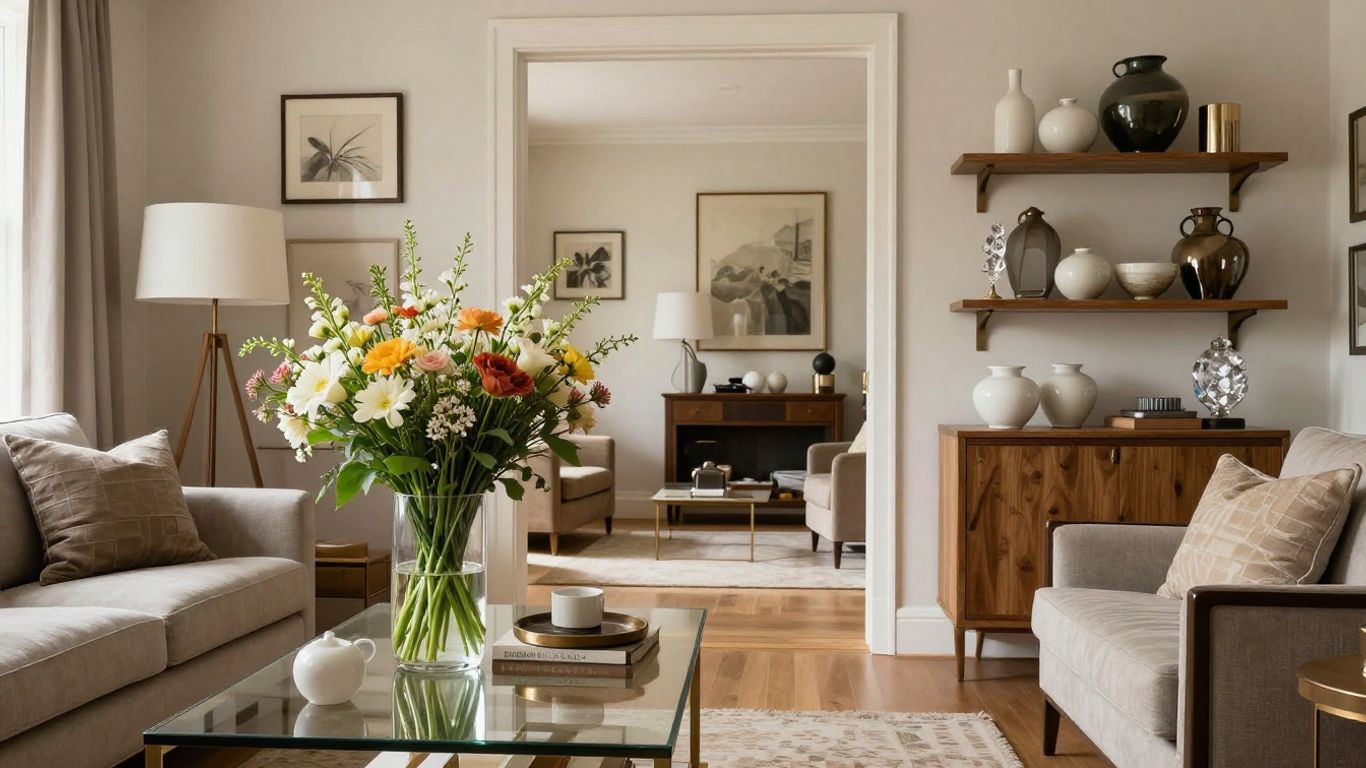
A well-chosen home decor vase can quietly tie a room together or become its central piece. Start with the room, the available surface, and the kind of display you actually want to maintain.
- Choose the vase’s material, shape, and scale together.
- Match colors and finishes to the room before adding contrast.
- Use narrow openings for controlled stems and wide openings for fuller branches.
- Let a vase stand alone when its silhouette already provides enough interest.
- Protect surfaces and keep arrangements simple enough to live with.
Define your decorating goals
Before shopping, decide what the vase needs to do. It might soften an empty console, add height to a shelf, hold seasonal flowers, or simply bring a sculptural shape into a quiet corner. A clear purpose makes attractive options much easier to compare.
Decide where the vase will be displayed
Look at the surface first rather than the vase. Measure the width and depth of a console, shelf, table, or windowsill, then consider how much room should remain for books, lighting, or everyday use. A quick look at this vase styling guide can also help you think about height, texture, and visual flow before buying.
Match the vase to your interior design style
A rounded ceramic vessel feels at home in a relaxed, collected room, while a clean glass or metal shape suits a more pared-back interior. Traditional rooms can carry ornament and richer finishes, but the best choice still echoes something already present, such as wood tone, hardware, or upholstery.
Choose between a statement piece and subtle accent
A statement vase earns open space around it and usually has an unusual silhouette, strong color, or generous scale. A subtle accent works almost like punctuation, repeating a nearby tone without asking for attention. Let the room set the volume rather than making every accessory compete.
Consider whether it will hold flowers or stand alone
A vase intended for flowers needs a stable base, a useful opening, and an interior that is easy to clean. A standalone piece can be more sculptural, irregular, or delicate because it does not have to support stems or hold water.
Explore popular home decor vase materials
Material affects more than appearance. It changes how light moves through the object, how heavy it feels on furniture, how easy it is to clean, and whether it reads as casual or formal. Compare the choices by both mood and daily use.

Glass vases for light and versatility
Glass keeps a room feeling open and works with nearly any flower color. Clear glass is especially useful when you want stems and water to become part of the arrangement, while colored or smoky glass adds atmosphere without the visual weight of a solid vessel.
Ceramic vases for texture and character
Ceramic brings body, softness, and tactile interest to a room. Unglazed surfaces feel earthy; glazed finishes can be bright, reflective, or richly colored. They are often forgiving choices when you want a vase to look finished even without flowers.
Crystal vases for an elegant focal point
Crystal catches light and can make a small arrangement feel more ceremonial. Choose one with enough surrounding space for its facets or cut details to remain visible; placing it among too many shiny accessories can flatten its effect. For inspiration, browse these crystal vase designs with flowers or as standalone accents.
Polyresin vases for detailed decorative designs
Polyresin is useful when you want a decorative form with pronounced detail, unusual relief, or a larger floor-standing presence. Neutral finishes can settle easily into both dark and light rooms, much like the tall hallway accents in this polyresin vase collection.
Metal and natural-material vases for added warmth
Metal vases add structure and a little gleam, especially in brass, bronze, or blackened finishes. Wood, rattan, stone, and woven fibers bring a softer, organic note. A simple comparison can clarify which material best suits the setting:
| Material | Visual effect | Best use | Care consideration |
|---|---|---|---|
| Glass | Light and transparent | Flowers or airy shelves | Wipe fingerprints and handle carefully |
| Ceramic | Textured and grounded | Standalone accents or bouquets | Check glaze and weight |
| Crystal | Bright and formal | A carefully framed focal point | Hand-wash and store securely |
| Metal | Warm or reflective | Console tables and modern rooms | Watch for scratches and tarnish |
The table is a starting point, not a rulebook. A heavy ceramic vase can feel surprisingly delicate in a pale room, while a small metal vessel may add just enough warmth to a minimalist arrangement.
Select the right vase shape and size
Shape determines how a vase occupies visual space, while size determines whether it feels intentional or misplaced. Pay attention to the furniture beneath it and the negative space around it. A beautiful silhouette still needs breathing room.
Choose a silhouette that complements the room
Tall cylinders create vertical emphasis, rounded vessels soften angular furniture, and bottle shapes naturally direct the eye upward. If the room already contains many strong geometric forms, a curved vase may provide welcome relief rather than another hard edge.
Match vase height to furniture proportions
On a side table, a low or medium-height vessel usually leaves sightlines comfortable. On a tall console or floor, a larger vase can hold its own. Test the scale with a temporary object first; this avoids discovering that the finished arrangement blocks a lamp, artwork, or conversation.
Use narrow openings for arranged stems
A narrow neck gathers stems neatly and helps a small number of flowers look deliberate. It is ideal for tulips, single branches, or a few long stems that would spread too widely in a broad vessel.
Use wide openings for branches and fuller displays
Wide openings suit generous foliage, loose branches, and bouquets with a relaxed outline. They also allow you to adjust the arrangement from several angles, though they may need filler or a hidden support to prevent stems from falling outward.
Combine different shapes for visual balance
When grouping vases, vary height and outline without making every piece unrelated. One tall form, one rounded middle piece, and a low bowl often create a natural rhythm. Repeating one color or material keeps the grouping from looking accidental.
Coordinate colors, patterns, and finishes
Color is where a home decor vase can either settle into a room or wake it up. Begin with the palette already in place, then decide whether you want continuity or a deliberate interruption. Finish matters too: a muted shape and a glossy shape can feel entirely different even in the same hue.

Match the vase to your existing color palette
Pull a vase color from a rug, cushion, artwork, or nearby ceramics for an easy connection. It does not need to match exactly; a lighter or dustier version often looks more considered than a perfect duplicate.
Use contrasting colors to create a focal point
A contrasting vase works best where the eye naturally pauses, such as an entry console or dining table. Keep the surrounding objects quieter so the contrast reads as a choice rather than visual noise.
Compare glossy, matte, textured, and reflective finishes
Gloss reflects light and feels crisp, matte surfaces feel calm, and raised textures invite a closer look. Reflective metal or crystal can brighten a dim corner, but too many reflective finishes may make the arrangement restless.
Balance patterned vases with simpler furnishings
A patterned vase needs a little visual quiet around it. Pair it with plain books, a single branch, or solid-colored textiles, and repeat only one small detail from the pattern elsewhere in the room.
Style a home decor vase in each room
The same vase can behave differently depending on the room. Entryways benefit from a clear welcome, living rooms need arrangements that work from several viewpoints, and bedrooms usually reward restraint. Let traffic, light, and daily habits guide the placement.
Create a welcoming entryway arrangement
Place a medium or tall vase on a console where it can be seen as soon as someone enters. Add one branch, a small bowl, or a stack of books, but leave enough surface open for keys and other practical items.
Add height and texture to a living room
A vase can fill the vertical gap beside a bookcase, fireplace, or low cabinet. Combine it with woven baskets, framed art, or greenery so the room gains texture without relying on a single oversized accessory.
Decorate dining and kitchen surfaces
On a dining table, choose a height that does not obstruct faces across the table. Kitchens often suit smaller vessels on open shelving or islands, especially when their color relates to cabinetry, tile, or countertop material. Collections such as these glass and ceramic table vases offer useful variety in shape and finish.
Bring personality to a bedroom or home office
A bedroom vase might hold a few soft stems on a dresser, while an office vase can bring color to a desk or bookcase. Keep the form stable and the arrangement low enough that it does not interfere with screens, drawers, or work materials.
Style shelves, mantels, and console tables
Use shelves to create staggered heights rather than lining up identical vessels. On a mantel, place a vase slightly off center and balance it with artwork or an object on the opposite side. A console usually benefits from one dominant piece and only a few supporting accents.
A simple room-by-room check can keep the styling practical:
- Entryway: preserve a clear landing space for keys.
- Living room: consider the arrangement from more than one seat.
- Dining room: keep the center low enough for conversation.
- Bedroom or office: avoid delicate pieces in busy work zones.
These small adjustments make decorative choices easier to live with. For broader renovation planning, EDB Builders & Consulting describes a collaborative design process for California ADUs, remodels, additions, and concrete work; that is a different scale of project, but the same habit of planning around how a space is used still applies.
Arrange flowers and decorative objects
A vase does not need a grand bouquet to look complete. The strongest arrangements usually have a clear outline, a stable base, and enough empty space for each element to be seen. Work with the vessel instead of forcing it to hold more than it comfortably can.
Choose fresh flowers for an organic look
Trim stems at different lengths and remove leaves that would sit below the waterline. Odd numbers often create an easy, informal balance, while one flower type can look especially clean in a narrow-necked vase.
Use dried flowers and branches for lasting style
Dried grasses, seed heads, and branches offer texture without daily watering. Their muted colors suit ceramics, woven materials, and matte finishes, though brittle stems should be placed where passing shoulders and pets will not disturb them.
Create a minimalist display with a few stems
Three or four strong stems can be more effective than a crowded bouquet. Leave some of the vase visible, angle the stems slightly, and repeat a color from the room for a display that feels light rather than unfinished.
Decorate empty vases with stones, beads, or foliage
An empty vase can hold smooth stones, beads, shells, or clipped foliage when flowers are not available. Choose fillers that are clean, dry, and proportionate to the opening so they add interest without turning the vessel into a container for clutter.
Keep arrangements stable and easy to maintain
Use a small amount of floral foam, a hidden grid, or clean stones when stems need support. Change water regularly, wipe the rim, and place a felt pad beneath the vase if it will be moved often. Even professional commercial painting services guidance recognizes the value of protecting sensitive equipment and surfaces during work; the same care is useful around decorative objects.
Avoid common vase decorating mistakes
Good styling is often a matter of editing. A vase should add something the room needs—height, color, texture, or shape—without making the surface harder to use. Step back several feet after arranging it; distance reveals clutter that is easy to miss up close.
Prevent overcrowding small surfaces
On a narrow shelf or side table, one vase may be enough. If you add companions, vary their height and leave visible gaps between them. Empty space is part of the composition, not wasted room.
Keep proportions consistent with surrounding decor
A tiny vase can disappear beside deep furniture, while a large one may overwhelm a delicate shelf. Compare the vessel with nearby lamps, frames, and furniture edges rather than judging it in isolation.
Avoid competing colors and excessive patterns
Choose one dominant color and one supporting accent before adding decorative objects. If the vase is patterned, simplify nearby textiles and artwork; if the room is already busy, a plain vessel will usually provide relief.
Protect furniture from water and scratches
Set vases on coasters, trays, or felt pads, and dry the outside before returning them to wood or painted surfaces. For homes in hot climates, practical maintenance matters as much as appearance; Pinpoint Property Services discusses HVAC, roof, plumbing, and window care for Las Vegas homes, a useful reminder to account for the conditions around your decor.
Clean and store vases properly
Rinse vases soon after removing flowers, use a soft brush for narrow openings, and avoid abrasive tools on delicate finishes. Store smaller pieces with padding and keep heavier vessels on low, stable shelves where they are less likely to tip.
When selecting materials for a renovation or refresh, mainland and freezone companies may face different operational needs; home decorating has its own version of that principle. The right vase is not just attractive—it suits the room, the surface, and the way the household actually lives.
Conclusion
Choosing a home decor vase becomes much simpler when you start with purpose, then narrow the options by material, proportion, color, and maintenance. Whether it holds a few fresh stems or stands alone as a sculptural accent, the best vase feels connected to its room without disappearing into it.
Frequently Asked Questions
What size vase works best for a living room?
Choose a size that relates to the furniture beneath it and does not block sightlines, lamps, artwork, or conversation. A medium vessel often suits tables and consoles, while a taller floor vase needs open space around it.
Should a vase match the room exactly?
Exact matching is not necessary. Repeating a nearby color family or finish usually creates cohesion, while a carefully chosen contrasting shade can establish a focal point.
Are glass or ceramic vases better?
Neither is universally better. Glass feels light and versatile, while ceramic adds texture and visual weight, so the better choice depends on the room, the arrangement, and how much maintenance you prefer.
Can a vase look good without flowers?
Yes. A strong silhouette, interesting finish, or thoughtful filler such as stones or dried foliage can make an empty vase feel intentional rather than incomplete.
How do I choose a vase opening for flowers?
Narrow openings gather a few stems and help them stay upright. Wide openings are better for branches and fuller displays, but they may need support to keep the arrangement stable.
Where should I place a decorative vase?
Use a location that benefits from added height, color, texture, or shape, such as a console, shelf, mantel, dining table, or quiet corner. Keep high-traffic areas clear and protect the surface below.
How often should I clean a vase?
Rinse it after each fresh arrangement and clean it more thoroughly when residue or cloudiness appears. Soft tools and gentle cleaning methods help preserve delicate finishes.


Leave a Reply