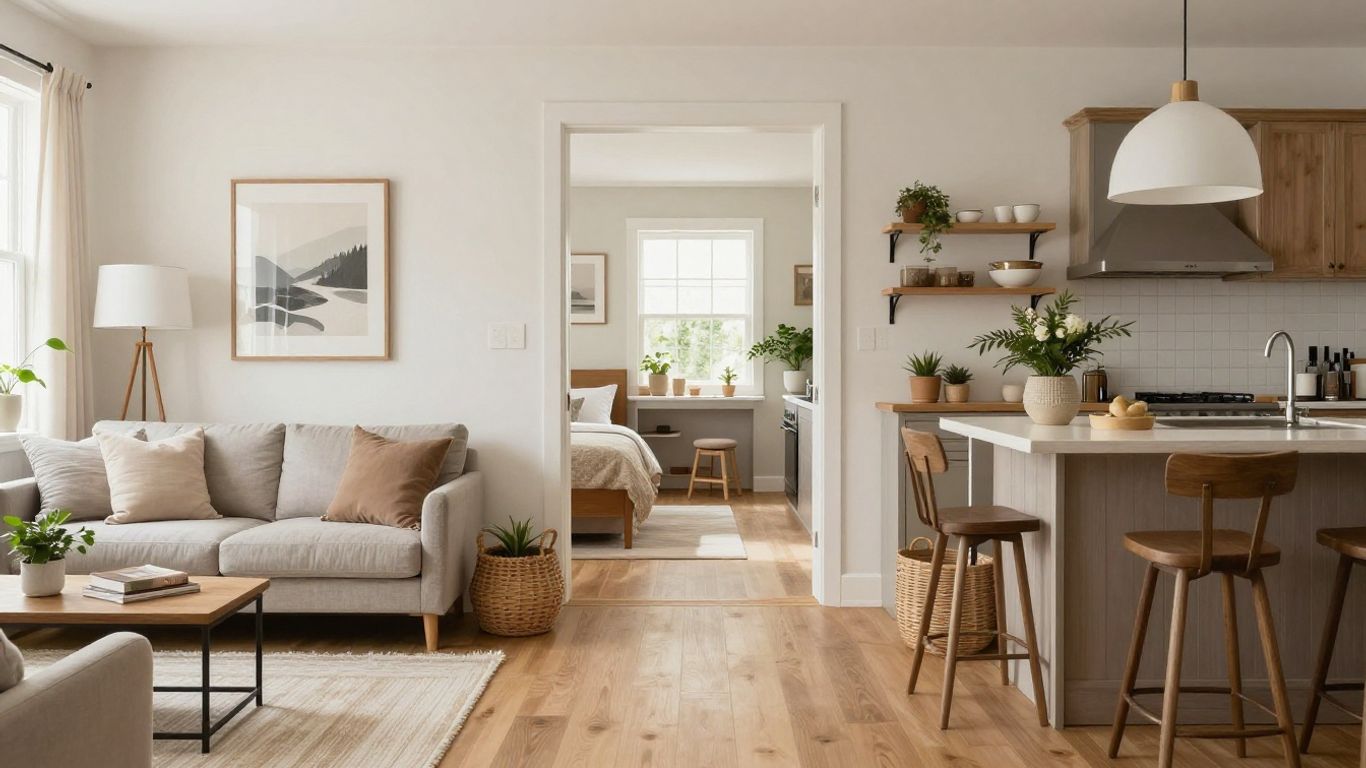
Key Takeaways
A stylish home does not require a large decorating budget. Thoughtful priorities, patient shopping, and a few well-chosen details can make inexpensive decor feel personal and polished.
- Decide which rooms and surfaces need attention first.
- Set spending limits before browsing or buying.
- Use lighting, textiles, and wall decor for visible impact.
- Mix affordable finds with what you already own.
- Choose durable, versatile pieces and avoid impulse purchases.
Set a realistic home decor budget
A useful home decor budget begins with the room you want to live in, not with a shopping cart. Walk through the house and notice what feels tired, inconvenient, or simply unlike you. Then choose a manageable starting point rather than trying to change everything at once. This approach keeps home decor inexpensive without making the process feel restrictive.
Decide what to refresh first
Start with the area you use most or the one that affects the mood of the whole home. A living room with harsh lighting may benefit more from a lamp and softer textiles than from a collection of small ornaments. If the entryway is chaotic, a basket, hooks, or a small tray may create a bigger improvement than decorative objects elsewhere.
Make a short list of visible changes and functional repairs. Rank them by impact, cost, and urgency, then choose one or two projects for the first month. A narrow focus makes it easier to see progress and prevents a modest budget from disappearing across too many half-finished ideas.
Separate needs from wants
Needs support comfort, safety, storage, or everyday use. Wants are the pieces that add personality, charm, or a seasonal accent. Both have a place, but naming the difference helps you decide whether a purchase solves a problem or merely catches your eye.
Try a waiting period for wants. Save an image, note the price, and revisit it after a week; if it still suits the room and your budget, it may be worth considering. This small pause often reveals that you wanted the feeling of a piece more than the piece itself.
Set spending limits by room
Give each room a ceiling instead of treating the entire house as one open budget. A simple plan also lets you reserve more money for items that need to work hard, such as a comfortable rug or a durable outdoor chair.
| Room or area | First priority | Sample budget approach |
|---|---|---|
| Living room | Lighting or seating textiles | Spend on one visible anchor, then add small accents |
| Bedroom | Bedding or bedside lighting | Refresh the mood with softness before accessories |
| Kitchen | Organization and useful surfaces | Choose attractive items that also improve function |
| Entryway | Storage and a welcoming detail | Keep the plan compact and easy to maintain |
The numbers do not need to match these categories exactly. The value of the table is in forcing a decision: each room gets a job for the money before you begin browsing.
Plan for seasonal and unexpected costs
Leave a small reserve for delivery fees, replacement hardware, paint supplies, and seasonal needs. A throw blanket may be inexpensive, but a set of curtain rods, anchors, and alterations can change the final total. Include those supporting costs before calling a project affordable.
It also helps to create a seasonal list rather than buying holiday or weather-related decor in a rush. Store useful pieces carefully, reuse them in new arrangements, and set aside a little money each month for the occasions you genuinely enjoy.
Find affordable decor without sacrificing style
Affordable shopping works best when you have a point of view. Decide whether your home leans warm and rustic, light and minimal, colorful and collected, or somewhere in between. Then compare pieces by proportion, material, and usefulness instead of judging every item by price alone.

Compare prices across online and local stores
A quick price comparison can reveal whether a bargain is real. Check the item price, shipping, delivery time, return terms, and any minimum order requirement. Local stores may cost slightly more at first but let you inspect color, weight, and finish before committing.
Use home decor shopping guidance when you need a broader way to compare styles, price points, material descriptions, and shipping costs. For outdoor purchases, Design Concepts is a useful example of a source discussing outdoor furniture, including quick-dry foam, UV-resistant Sunbrella fabric, rust-free aluminium, and teak frames.
Shop sales, clearance sections, and thrift stores
Sales are most useful when they meet a need already on your list. Clearance sections can be excellent for frames, lamps, baskets, and textiles, while thrift stores often reward patience with unusual shapes and older materials. Look beyond the original purpose of an object if its size and condition suit your room.
A sale is not a reason to lower your standards. The home decor sales guide offers ideas for building a budget, tracking sales, distinguishing trends from timeless pieces, and checking material details and return policies. Those habits make discounted shopping more deliberate.
Look for affordable home essentials under $10
Small functional pieces can quietly improve a room. Storage cases, door hangers, dish towels, trays, and countertop organizers may not look dramatic in a product photograph, but they can reduce visual mess and make daily routines smoother.
The under-$10 home essentials collection includes practical storage, kitchen, cleaning, and organizing items at low prices. Choose only pieces that solve a specific problem, and consider whether the color or material will blend with what you already own.
Evaluate quality before buying
Look closely at seams, joins, fabric density, hardware, and the stability of anything that must stand or carry weight. For secondhand pieces, check for odors, pests, water damage, and repairs that may cost more than the item. A low price is less appealing when a piece needs immediate replacement.
Before you buy, ask yourself these four quick questions:
- Will I use this regularly or enjoy seeing it often?
- Can it work in another room if my style changes?
- Is the material appropriate for its intended use?
- Does the total cost still fit my room’s limit?
The answers are more helpful than a star rating or a dramatic markdown. A modest item that remains useful for years is usually a better budget choice than a fragile trend piece.
Choose inexpensive pieces with a big visual impact
Some decorating moves change the atmosphere of a room far more than their price suggests. Light, scale, softness, and placement all affect what the eye notices first. If you are working with home decor inexpensive ideas, begin with elements that occupy visual space rather than collecting many tiny objects.
Use lighting to change the mood
A room with one overhead fixture can feel flat even when the furniture is attractive. Add layers with a table lamp, floor lamp, plug-in sconce, or warm-toned bulb, and place the light where you read, gather, or get ready. A shaded lamp can also soften a bare corner.
Use different heights to create depth. A low lamp beside a sofa, a higher light near a bookcase, and a small glow in an entryway can make the home feel calmer without replacing the main fixture.
Add rugs, curtains, and textiles
Textiles bring softness and help connect separate pieces. A rug can define a seating zone, curtains can make windows feel taller, and a throw or cushion can introduce a new color without committing to a large furniture purchase.
Measure before shopping, especially for rugs and curtains. A slightly imperfect fit can make a room feel accidental, while the right scale gives even inexpensive fabric a more considered appearance.
Create focal points with wall decor
One larger artwork, mirror, or framed textile often has more presence than a crowded collection of small prints. Hang it in relation to the furniture below, leaving enough breathing room that the arrangement feels intentional.
For practical guidance on placement, thrifted finds, printable files, and DIY options, see this wall art styling guide. You can also gather inspiration from home decor catalogs, especially when you are trying to understand how different color combinations and room layouts work together.
Style shelves and surfaces with intention
Begin by removing everything from a shelf, console, or coffee table. Return only the pieces that are useful, meaningful, or visually helpful, then vary their heights and leave open space around them. A stack of books, a bowl, and one organic shape can be enough.
Rotate accessories instead of displaying every favorite at once. This keeps the room fresh, protects delicate pieces from becoming background noise, and gives you a place to use new finds without adding permanent clutter.
Make inexpensive decor look more expensive
The impression of quality comes less from a high price than from restraint. A room looks polished when colors relate, materials have variation, and objects are given room to be seen. You can create that feeling with pieces you already own and a few carefully selected additions.

Use a cohesive color palette
Choose two or three main colors and let smaller accents echo them. This does not mean every item must match; it means the room has a visual thread that connects the rug, art, upholstery, and accessories.
If you are drawn to minimalist rooms, modern decor ideas can help you think about neutral palettes, clean lines, natural materials, and uncluttered storage. Borrow the principles rather than copying a finished room exactly.
Mix textures and materials
A room made entirely of one smooth finish can feel flat, even when the colors are right. Combine cotton with wood, ceramic with metal, woven fibers with glass, or a nubby throw with a crisp curtain. Texture adds depth without requiring expensive pattern or ornament.
Keep the mix controlled by repeating one material in two or three places. A wooden frame, small stool, and bowl can feel connected, while a single wood object may look random.
Group accessories in balanced arrangements
Arrange objects in small clusters rather than scattering them evenly across every surface. Odd-numbered groupings often feel natural, but the more useful rule is to vary height, shape, and visual weight while keeping the arrangement easy to understand.
Try building around one anchor, such as a vase, lamp, or framed print. Add one lower object and one smaller detail, then step back and remove anything that competes with the anchor. A little empty space makes the remaining pieces look more deliberate.
Avoid clutter and overly matched pieces
A coordinated room is not the same as a matching set. Too many identical finishes can make inexpensive furnishings look flatter, while too many unrelated accents create noise. Keep the larger shapes simple and allow personality to appear in smaller, changeable details.
Edit from the doorway and from the main seating position. If your eye jumps between too many objects, remove one or two and see whether the room settles. Good decorating often involves subtraction.
Create budget-friendly decor for each room
Every room benefits from a different kind of refresh. The living room needs comfort and gathering space, the bedroom needs calm, and practical areas need order before ornament. Matching the improvement to the room keeps your spending focused and makes inexpensive changes feel purposeful.
Refresh the living room
Start with the seating area because it usually occupies the largest visual footprint. Rearrange the furniture to improve conversation, add a lamp near a reading chair, and layer one or two textiles that repeat a color from the artwork or rug.
If the room feels bare, use a large plant, mirror, or framed piece as a focal point rather than filling every surface. A tray on the coffee table can gather remotes and candles while keeping the arrangement easy to move.
Make the bedroom feel more inviting
Softness matters more than decoration in a bedroom. Fresh bedding, a washable throw, bedside lighting, and a small basket for loose items can change the room without requiring a new bed or dresser.
Keep the palette restful and reserve strong patterns for one element. Clearing the floor and nightstands may have as much effect as adding anything, since visual calm is part of the room’s comfort.
Add personality to the kitchen and dining area
In a kitchen, useful objects can become decor when they are grouped neatly. A wooden cutting board, a bowl of fruit, a rail of frequently used utensils, or a small herb planter gives the room warmth while remaining functional.
At the dining table, change the atmosphere with a runner, cloth napkins, or a simple centerpiece. A low arrangement is usually more practical than a tall one because it keeps conversation open across the table.
Improve the entryway and bathroom
The entryway sets the tone for the home, so focus on a place for keys, shoes, and bags before adding decorative extras. A small mirror, hook rail, or basket can make a narrow area feel more useful and welcoming.
In the bathroom, fresh towels, a coordinated soap dispenser, and a washable mat can provide an inexpensive lift. Keep surfaces spare and choose materials that tolerate moisture rather than buying delicate objects that will quickly deteriorate.
Save money with DIY and upcycling projects
DIY works best when it extends the life of something you already have. Before buying supplies, inspect the furniture or object, decide what finish you want, and estimate the time involved. The goal is not simply to make something; it is to create a result that you will actually use.
Repurpose furniture and household items
A sturdy crate can become open storage, a large serving tray can organize a coffee table, and an unused frame can hold fabric, postcards, or a favorite print. Repurposing is most successful when the object already has a useful shape and needs only a small adjustment.
Clean and repair the item before styling it. A careful wipe, tightened screw, or replacement pad can make a bigger difference than elaborate decoration.
Create custom wall art
You can make attractive wall art with fabric remnants, pressed leaves, children’s drawings, postcards, or downloaded artwork printed at home. Use consistent frames or mats to make varied materials feel like one collection.
Keep the composition simple. One oversized piece above a sofa or a small, evenly spaced grouping above a desk usually looks more finished than a wall covered with unrelated experiments.
Update dated pieces with paint and hardware
Paint can refresh a small table, mirror frame, cabinet, or tired planter, while new knobs and pulls can change the character of a storage piece. Preparation matters: clean the surface, sand when appropriate, and allow coats to dry fully.
Use one finish repeatedly if you are updating several items. A consistent matte black, warm brass, or soft wood tone can connect mismatched furniture without making the room feel like a showroom.
Know when a DIY project is not worth the cost
Skip a project when the item is unstable, damaged by moisture, difficult to disassemble, or likely to require specialized tools. Add the cost of primer, brushes, hardware, protective equipment, and your time before deciding that a makeover is cheaper.
Sometimes donating the piece and choosing a sound secondhand replacement is the more sustainable choice. DIY should save money or add meaning, not turn a simple need into a long-running obligation.
Shop sustainably and avoid common budget mistakes
A low-cost home is not necessarily a thoughtful one. Sustainable decorating means buying fewer items, caring for them, and choosing pieces that can move through the home as your needs change. It also means being honest about what you will maintain.
Prioritize durable and versatile items
Look for neutral foundations that can work in more than one arrangement. A well-made lamp, plain wooden stool, sturdy basket, or washable textile may serve several rooms over time and reduce the need for replacement.
For inspiration beyond mass-produced pieces, browse distinctive small decor shops and consider whether an unusual object has lasting appeal. A memorable accent is more useful when it can move with you instead of belonging to one short-lived theme.
Measure your space before purchasing
Write down the width, depth, and height of the spot, including door swings, walkways, outlets, and nearby furniture. Save those measurements on your phone so they are available when you browse in a store or at a thrift shop.
Scale is especially important for rugs, artwork, lamps, and storage. A beautiful item that blocks a path or overwhelms a surface is not a bargain, no matter how low the price looks.
Check return policies and shipping fees
Read the return window, restocking terms, and delivery charges before placing an order. Large or fragile items can become expensive after shipping, and a final-sale purchase may be risky when color and texture are difficult to judge on a screen.
Keep packaging and receipts until you know the piece works in the room. A few minutes spent checking the policy can prevent a budget setback later.
Avoid impulse buys and short-lived trends
A trend can be enjoyable, but it should not dictate every purchase. Wait before buying novelty shapes, highly specific colors, or accessories that have no obvious place in your home.
The home decor gift ideas guide is a reminder that useful, attractive objects can suit different interior styles; apply that same test to your own purchases. For larger decisions, even a home-buying resource such as Maple Ridge and Pitt Meadows home guidance illustrates the value of defining goals before making a major commitment. And if a room needs a personal, hands-on finish, PERFECT PAINTER discusses choosing and styling wall art, including vintage, thrifted, printable, and DIY options.
A pause before checkout gives you time to ask whether the item improves the room, supports daily life, and fits the plan. If it fails two of those tests, leave it for someone else.
Conclusion
Creating a stylish home on a budget is mostly an exercise in attention: notice what matters, spend where the effect is lasting, and give affordable pieces enough space to shine. With a clear plan, patient shopping, and a willingness to reuse what you already own, home decor inexpensive can feel warm, layered, and entirely your own.
Frequently Asked Questions
How can I decorate my home inexpensively?
Begin with lighting, textiles, storage, and one focal point in the room that matters most. These changes often affect comfort and atmosphere more than a large collection of small accessories.
What should I buy first when decorating on a budget?
Buy the item that solves the clearest problem or changes the room most noticeably. That may be a lamp, rug, curtain, storage piece, or comfortable textile rather than a purely decorative object.
How do I make cheap decor look stylish?
Use a limited color palette, mix textures, vary heights, and leave open space around accessories. Good proportion and editing can make modestly priced pieces feel intentional.
Are thrift stores good for home decor?
Yes, especially for frames, baskets, mirrors, small furniture, ceramics, and unusual accents. Inspect condition carefully and consider repair or cleaning costs before buying.
How much should I budget for home decor?
Choose an amount that fits your finances, then divide it by room and priority. Leaving a reserve for delivery, hardware, supplies, and unexpected costs will make the plan more realistic.
What are the best DIY decor projects for beginners?
Start with low-risk projects such as rearranging furniture, framing existing art, painting a small item, replacing hardware, or repurposing a sturdy container. These projects require fewer tools and are easy to undo or refine.
How can I avoid buying too much decor?
Measure first, keep a written list, and use a waiting period for nonessential purchases. If an item has no clear location or purpose, it probably does not need to come home with you.


Leave a Reply