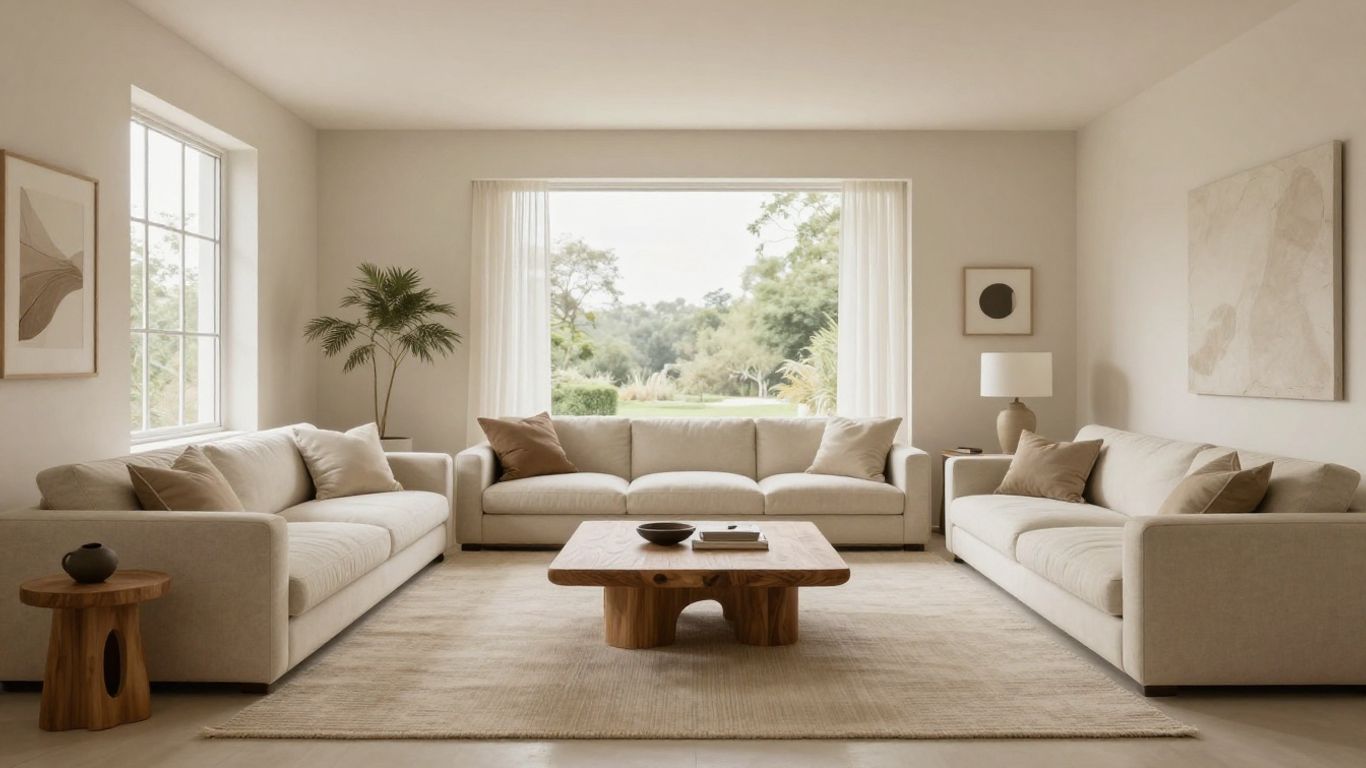
Key Takeaways
Designing a space that feels both contemporary and serene requires thoughtful choices that emphasize simplicity and function. These five principles provide a roadmap for achieving a refined aesthetic in any residence.
- Prioritize a neutral color palette to create an expansive, calm backdrop.
- Invest in clean-lined furniture pieces that serve a distinct purpose.
- Leverage natural light to amplify the sense of space and openness.
- Incorporate organic textures to prevent a minimalist room from feeling cold.
- Eliminate visual noise by utilizing clever, integrated storage systems.
1. Neutral color palettes for a clean foundation
Establishing a neutral base is the most effective way to start any project focused on decor home modern sensibilities. By utilizing shades of cream, bone, soft gray, and warm beige, you create a cohesive canvas that allows architectural details to stand out. This approach minimizes visual overwhelm, ensuring that your living area feels intentional rather than crowded.
Consider the saturation and undertones of your wall colors carefully as you develop your scheme. Cool whites can feel crisp and professional, while warmer off-whites provide a cozy, inviting atmosphere that balances well with wooden elements. You can lean into decor home modern strategies by maintaining consistent tones across large surfaces like walls and structural trim, which helps unify the entire floor plan.
Once the foundational color is established, it becomes easier to introduce subtle variations in the same color family to create depth. This monochromatic layering prevents the room from feeling flat by playing with different materials that reflect light differently. A well-designed neutral room feels like a breath of fresh air, offering a restful escape from the outside world.
2. Minimalist furniture with clean lines
Whenselecting your key furniture pieces, prioritize items that emphasize geometry and simplicity. A sofa or dining chair should feature slim legs, sharp edges, and a lack of excessive decorative flourishes. This intentional simplicity ensures that every item in the room contributes to a balanced, airy feeling.

It is helpful to view each purchase as a long-term investment. High-quality craftsmanship remains the hallmark of modern home decor that stands the test of time, resisting the urge to follow fleeting aesthetic cycles. When furniture frames are stripped back to their essentials, the quality of the upholstery or wood finish becomes the primary focus, inviting tactile appreciation.
Integrating multifunctional pieces also supports the minimalist goal without compromising on aesthetic appeal. A sleek console that conceals electronics or a coffee table with hidden compartments keeps surfaces clear while maintaining a sharp, profile-driven look. These decisions ensure the space remains highly functional while honoring the principles of uncluttered, thoughtful design.
3. Strategic use of natural lighting
Natural light is perhaps the most important design element for a minimalist home. Avoid heavy drapery that blocks sunlight, opting instead for sheer linens or roller shades that allow light to permeate the space while maintaining your privacy. When daylight is directed efficiently, it makes rooms feel significantly larger and more inviting.
Consider how window placement influences your daily traffic flow and furniture arrangement. Positioning seating toward a window not only creates a desirable reading nook but also connects the interior to the outdoor context, which is a staple of modern home decor practice. If your room lacks sufficient natural exposure, adding reflective surfaces like minimalist mirrors can help bounce available light into darker corners.
Effective lighting strategies transform how a room evolves throughout the day. Morning light creates a different mood than soft, late-afternoon sun, and managing this change allows the home to feel alive and dynamic. By keeping windows clean and silhouettes low, you maximize the impact of the sun as a major architectural participant in your home’s character.
4. Incorporating organic and textural materials
Minimalism often risks feeling sterile, which is why introducing organic materials is necessary to add warmth. Think of raw wood beams, stone mantels, or hand-woven wool rugs that ground the space with weight and history. These materials introduce a sensory layer that softens the rigid lines of modern furniture.
| Material Type | Best Application | Visual Impact |
|---|---|---|
| Natural Oak | Custom cabinetry | Warm organic tone |
| Honed Marble | Coffee table top | Elegant matte finish |
| Woven Linen | Window treatments | Soft diffused light |
Selecting natural materials allows you to curate a space that feels humble yet sophisticated. Following the advice in this home decor guide, balance the hardness of stone or metal surfaces with the softness of natural textiles. This juxtaposition creates a sophisticated tension that keeps the eye engaged without requiring dozens of accessories.
Focusing on these natural elements honors the "less is more" philosophy while ensuring the home feels authentically human. Whether it is a chunky knit throw left casually on a chair or a solid wood sideboard, these items bridge the gap between stark design and a liveable environment. They ensure the room feels approachable for guests and comfortable for daily living.
5. Statement lighting as focal points
In a space where decorations are kept to a minimum, lighting fixtures gain significant importance. A sculptural pendant or a bold floor lamp acts as a piece of art, grounding the room and providing a visual anchor. Choose fixtures that feature clean silhouettes but hold a unique shape to provide interest.
These essential accent pieces from Val’s Home Decor help elevate your living space by providing character that standard recessed lights simply cannot match. A large, circular pendant over a dining table can define the zone and create intimacy during meals. In a reading area, an architectural floor lamp serves as both a tool for visibility and an aesthetic statement.
Effective lighting is about more than just brightness; it involves creating a layered experience. By focusing on statement pieces, you ensure that even the darkest hours contain beauty. Choose finishes like matte black or burnished brass to coordinate with your home’s existing color palette while adding a hint of contrast that completes the overall look.
6. Functional storage solutions to reduce clutter
Achieving a minimalist look is impossible if your surfaces are covered in daily essentials. The key is to integrate storage so that it disappears into the walls, effectively making the room look larger. Floor-to-ceiling built-ins are an ideal solution for masking household items away from view.

Consider these strategies for maintaining a clean surface:
- Use wall-mounted shelves to keep floor space clear and open.
- Install hidden magnetic latches to eliminate the need for hardware.
- Design custom cupboards tailored to the specific dimensions of your items.
- Incorporate organizers into drawers to ensure every belonging has a place.
When clutter is properly managed via hidden systems, the beauty of your chosen decor can actually be appreciated. It is the ultimate key to success when trying to maintain an orderly home. With fewer distractions on every countertop, the room’s architecture and the quality of your key pieces become the stars of the design.
7. Geometric patterns in textiles and art
Geometric patterns offer a way to introduce complexity without relying on chaotic floral prints or cluttered imagery. A simple diamond stitch on a rug or a repeat pattern of lines in a framed print can add visual rhythm to an otherwise neutral wall. These patterns are perfect for keeping the space grounded in a contemporary style.
Look for pieces that emphasize clean lines rather than complex, ornamental designs. When applied to textiles like throw pillows or area rugs, geometry adds a sense of structure that enhances the overall logic of the room. It feels modern and thoughtful, providing a sharp focal point that draws the eye without demanding heavy attention.
When choosing art, stick to simple framed drawings that rely on geometric compositions to frame a blank wall. This approach prevents a gallery wall from looking messy. By balancing these patterns with solid colors throughout the room, you create a space that feels curated and intelligent to any observer, reinforcing a high-end, uncluttered aesthetic.
8. Adding warmth with indoor greenery
Plants represent the simplest way to introduce life and color into a minimalist home. A floor-standing fiddle leaf fig or a small succulent on a desk provides a necessary spot of color that contrast against neutral tones. Greenery softens sharp architectural lines and makes a room feel oxygenated and fresh.
Keep pots simple, opting for monochrome ceramic or concrete finishes that match your home’s palette. Over-decorating with several small plants can quickly look cluttered, so focus on one or two larger specimens that serve as sculptural statements. This ensures that the plant feels like an intentional design choice rather than an afterthought.
Gardening in a modern space is essentially about managing volume and shape. Leafy, spreading varieties provide a lush contrast to the straight, rigid nature of minimal furniture. By placing plants near sources of light, you ensure their health while utilizing them to lead the eye toward windows, making the transition between interior and exterior spaces feel nearly seamless.
9. Curated gallery walls for personal touches
Minimalism does not have to mean an empty home devoid of personality. A gallery wall is a refined way to display meaningful photographic prints or sketches while keeping the presentation precise. Use consistent frame sizes and colors to maintain a clean appearance, ensuring the arrangement looks as if a professional curated it.
Selecting art that contains similar color palettes or themes will prevent the gallery wall from becoming a distraction. It is best to hang pieces with uniform spacing, as this creates a sense of harmony that aligns with the rest of your decor. This curated approach allows you to show your interests while adhering to a strict design aesthetic.
If you find yourself stuck, explore 75 stunning home design ideas that can inspire your layout and help you determine how large-scale pieces might fit into your wall space. A well-ordered wall of personal photography can serve as a conversation starter, making your house feel distinctly personal while remaining true to the clean lines required for a minimalist aesthetic.
10. Open floor plans to enhance flow
Open floor plans are naturally suited for a modern aesthetic because they invite light and movement. By removing unnecessary interior walls, you enlarge the perceived volume of your home and improve the utility of each square foot. This openness requires furniture to be placed strategically to define zones without blocking sightlines.
Use rugs to signify where a lounge area ends and a dining zone begins, rather than using furniture pieces that act as barriers. Because you are working with an open space, it is vital to keep your color scheme consistent across the entire footprint to ensure uniformity. A unified floor plan allows the architectural beauty of the space to communicate directly without being interrupted by tight corridors.
Living in an open house empowers you to prioritize function as the center of your lifestyle. You can move easily between zones, making the space more adaptable for both entertaining guests and solitary relaxation. This approach creates an environment that feels expansive and calm, reflecting the purest form of contemporary domestic design.
Conclusion
Creating a home that embraces modern minimalism is a journey of refinement where you learn to balance space, light, and texture. By curating your surroundings with intentional, functional pieces and keeping your color foundation neutral, you build a sanctuary that supports your lifestyle. Whether through the strategic use of natural light or the integration of hidden storage solutions, each choice moves you toward a more serene, beautiful living space that remains timeless in its appeal.
Frequently Asked Questions
Can I achieve a modern minimalist look in a small apartment?
Yes, small apartments actually benefit significantly from minimalist decor as it reduces visual clutter. Focusing on multifunctional furniture and using mirrors to enhance the natural light will make any compact space feel much more open and intentional.
How do I add personality to a minimalist room without adding clutter?
Include a few high-quality, statement pieces such as a large piece of art or a well-placed indoor plant. By choosing items that are meaningful and sculptural, you can demonstrate your personal taste without cluttering your surfaces with many small decorative objects.
What are the best colors to use for a clean, modern foundation?
Stick to a palette comprising whites, soft creams, light grays, and muted beiges. These colors create a neutral canvas that maximizes light reflection and provides an expansive, airy feel that is essential for a minimalist look.
Is it necessary to get rid of all my belongings to be minimalist?
Minimalism is about intentionality rather than just having few things. It is about keeping items that serve a daily purpose or add genuine value to your life while storing away items that purely contribute to visual noise.
How can I make a minimalist home feel warm and inviting?
Introduce natural materials such as raw wood, stone, and woven textiles to your design. These additions provide texture and depth, which balances the clean, sharp lines often associated with modern furniture, making the home feel soft and comfortable.
How do I choose the right art for a minimalist space?
Look for art that features simple compositions, geometric forms, or monochromatic color schemes. Framing these pieces in uniform, simple frames and organizing them with symmetrical spacing will help keep the overall appearance professional and uncluttered.
How does lighting affect the perception of a minimalist room?
Proper lighting is one of the most effective tools for defining the mood of a minimalist room. Using large pendant fixtures can provide a visual anchor, while sheer window treatments ensure that natural light fills the space, making the room seem larger and more serene throughout the day.


Leave a Reply