Key Takeaways
A comfortable home does not require a large budget or a perfectly matched furniture set. Start with your habits, make a few thoughtful choices, and let the space develop over time.
- Define a decorating style around the colors, textures, and shapes you genuinely enjoy.
- Choose a limited color palette and repeat it across connected rooms.
- Measure carefully before buying furniture or committing to a layout.
- Layer lighting, textiles, artwork, and plants to add warmth and personality.
- Spend first on updates that improve both appearance and everyday function.
Define your home decor style and priorities
Good at home home decor begins with observation rather than shopping. Notice what you already pause to admire, then consider how you move through your home and what feels inconvenient. A room can be stylish and practical when its choices support the way you actually live. The goal is not to copy a finished photograph but to create a setting that feels natural to you.
Identify the colors, textures, and shapes you love
Collect a few images, fabric scraps, paint cards, or objects that catch your eye. Look for patterns in them: warm or cool colors, rounded or angular furniture, smooth ceramics or nubby textiles. You may discover that your preferred style is less a named category than a repeated mood, such as quiet, earthy, bright, or collected.
Try to name three qualities you want a room to convey. Those words become a useful filter when a tempting purchase does not quite fit. A simple preference for aged wood, soft linen, and deep green can guide decisions more reliably than chasing every new trend.
Balance personal taste with your home’s architecture
Work with the features that are already present, including ceiling height, window placement, flooring, trim, and exposed beams. A compact room with low ceilings may feel better with lighter visual weight, while a broad traditional room can carry larger silhouettes and richer contrast. Personal style becomes more convincing when it responds to the structure instead of fighting it.
You do not need to preserve every existing detail exactly as it is. Rather, let the architecture establish a rhythm, then introduce furniture and accessories that echo one or two of its shapes or materials. This creates continuity without making the room feel overly coordinated.
Choose practical goals for each room
Before choosing colors or decorative objects, write down what each room needs to do. A living room might need flexible seating and hidden storage, while a bedroom may need softer light and fewer visual distractions. The best decisions usually solve a small daily irritation as well as improving the room’s appearance.
Separate essentials from wishes, especially if you are decorating gradually. A comfortable chair, a useful lamp, or a surface for dropping keys may contribute more to daily satisfaction than several small ornaments. Function gives your decorating plan a clear order.
Create a simple inspiration board
An inspiration board can be a phone album, a saved folder, or a sheet of paper with clipped images. Keep it deliberately small so that repeated ideas remain visible. The personal style guide is also a useful prompt for thinking about color, texture, and the relationship between older and newer pieces.
After collecting images, remove anything that feels attractive only because it is fashionable. Then identify a few recurring materials, colors, and proportions. This edited board will make shopping faster and reduce expensive detours.
Build a cohesive color palette
Color gives separate objects a shared conversation. It can make a small home feel connected, calm a busy room, or add energy to a plain one. You do not need a strict formula, but you do need some repetition so that every purchase does not begin a new visual story.

Select a foundation color for walls and large pieces
Begin with a foundation color for walls, rugs, sofas, cabinetry, or other large surfaces. Soft neutrals are flexible, but muted blues, greens, clay tones, and warm grays can work just as well when they suit the light. Test samples at different times of day because sunlight and artificial light can change the apparent temperature of a color.
If you are working with existing furniture, treat its strongest finish as part of the palette rather than pretending it is invisible. A wood floor, stone counter, or patterned rug may already provide the undertone that guides the rest of the room.
Add accent colors through accessories and artwork
Accent colors are easiest to adjust when they appear in smaller pieces. Cushions, throws, vases, books, artwork, and lampshades can introduce a stronger note without forcing a full repaint. Repeat an accent two or three times, changing the shade or texture slightly so it feels collected rather than copied.
A useful palette might include a foundation, a secondary color, and one lively accent. Keep the accents unevenly distributed: a little near the window, some across the seating area, and perhaps a small echo on a shelf can create movement without visual noise.
Use contrast to keep rooms from feeling flat
Rooms built entirely from similar pale tones can look peaceful but also unfinished. Contrast may come from dark wood, black metal, a patterned textile, a glossy surface, or a shadowy corner. The right amount depends on the room’s size and natural light, so begin with one strong contrast and add more only if the space still feels washed out.
A quick planning table can help you see whether the room has enough variation before you buy anything else.
| Element | Softer choice | Higher-contrast choice |
|---|---|---|
| Walls | Warm white or pale taupe | Deep olive or charcoal |
| Furniture | Light oak or woven upholstery | Dark wood or saturated fabric |
| Accessories | Matte ceramic and linen | Glass, metal, or patterned pieces |
| Artwork | Gentle tonal landscape | Graphic print with dark outlines |
After using the table, look for balance rather than equal quantities. One dark frame or a single patterned chair may be enough to give a light room definition. Contrast should clarify the room’s composition, not compete with every other object.
Connect different spaces with repeating tones
Open-plan homes benefit from colors that appear again as you move from one area to another. A terracotta cushion in the living room might reappear as a small vase near the dining table, while a muted green from the kitchen could show up in hallway artwork. These echoes make the home feel intentional without requiring every room to match.
For more planning help, use a simple color palette as a starting point, then adjust it to the light and materials already in your home. Repetition works best when it is subtle enough to notice gradually.
Choose furniture that fits your space
Furniture determines how comfortably a room functions, so appearance should not be the only test. A beautiful piece that blocks a doorway or leaves no space to walk around will become frustrating quickly. Measure first, keep circulation visible, and buy fewer pieces if that allows each one to work harder.
Measure rooms, doorways, and walking paths
Record the length and width of the room, ceiling height, door swings, window positions, vents, and electrical outlets. Measure stairwells, hallways, elevators, and doorways too; a sofa that fits the living room may still be impossible to bring inside. Mark prospective furniture dimensions on the floor with painter’s tape to understand its footprint.
Leave enough room for doors to open and for people to pass without turning sideways. These empty areas are not wasted space. They are what make the furniture usable.
Combine essential pieces with flexible furniture
Start with the pieces that define the room’s purpose, such as a bed, sofa, dining table, or desk. Then consider furniture that can change roles: nesting tables, storage ottomans, folding chairs, benches, and compact consoles. Flexibility is especially useful in smaller homes or rooms that host more than one activity.
Avoid buying storage simply because it is available. First identify what needs to be stored, how often it is used, and whether it should be visible. A smaller, well-placed cabinet often feels calmer than several improvised containers.
Balance scale, proportion, and visual weight
Scale refers to how large a piece feels in the room, while proportion describes how its parts relate to one another. A deep sofa may overpower a narrow room even if its width technically fits. Conversely, tiny furniture can make a generous room feel oddly empty.
Compare new pieces with nearby architectural features. A tall bookcase can echo a high window, and a low coffee table can reinforce a low seating arrangement. Proportion shapes comfort as much as it shapes appearance.
Arrange furniture for conversation and movement
Place seating so that people can talk without shouting across a large empty gap. In a living room, a rug can help gather chairs and a sofa into one area, while a clear route should remain around the group. In a bedroom, keep the path to the closet and bathroom easy to use at night.
Do not push every piece against a wall automatically. Even a small amount of breathing room can make a room feel more considered. Try two or three layouts before deciding that the first arrangement is the only possible one.
Layer lighting for a warmer atmosphere
Lighting changes how color, texture, and scale are experienced. A single ceiling fixture often leaves corners dull and makes evening activities less comfortable. A warmer room usually combines several modest sources, each serving a different purpose.

Combine ambient, task, and accent lighting
Ambient light provides general visibility, task light supports activities such as reading or cooking, and accent light draws attention to a feature. Use a ceiling fixture or wall wash for the first layer, a floor or table lamp for the second, and small directional lights for the third. The sources do not need to match exactly.
Think about lighting from a seated position as well as from the center of the room. A lamp beside a chair should illuminate a book without shining directly into someone’s eyes. In a kitchen, work surfaces need clear, even light rather than decoration alone.
Choose fixtures that complement your decor style
A light fixture is both equipment and a visible object. Look at its finish, shape, scale, and shade material in relation to the room’s existing details. A simple linen shade may soften a formal space, while a slim metal fixture can add definition to a room with many upholstered pieces.
Let one fixture be distinctive if you like, then keep the surrounding choices quieter. Repeating a finish once elsewhere, perhaps on a frame or cabinet pull, can make the choice feel integrated.
Use bulbs and dimmers to control the mood
Bulb color affects whether a room feels crisp, intimate, or slightly sterile. Choose bulbs according to the activity and existing daylight, then use dimmers where possible so one fixture can serve several moments. Check that bulbs are compatible with their fixtures and that shades distribute light comfortably.
A small adjustment in brightness can change an evening routine more than another decorative object. Test the room after dark, when glare and shadow become easier to spot.
Highlight artwork, shelves, and architectural details
Accent lighting works best when it has something worthwhile to reveal. Aim a small lamp toward artwork, wash light across a textured wall, or place a warm source near a shelf of meaningful objects. Keep wires tidy and avoid shining directly onto reflective glass.
Use light to establish a visual path through the room. A softly lit corner can make the entire space feel more welcoming, even when the center remains relatively simple.
Add personality with decor and accessories
Accessories are where a home begins to sound like its residents. They carry memories, interests, color, and humor in a way that a matching furniture set rarely can. The trick is to edit what you display so that individual pieces have room to be noticed.
Style shelves, tables, and surfaces without clutter
Group objects by varying height, shape, and texture rather than lining up items of the same size. Leave some open space, and place a few larger pieces among smaller ones to create a visual pause. A tray can gather scattered objects on a coffee table, while a stack of books can provide height for a small bowl or plant.
Rotate accessories when the room starts to feel crowded. Keeping a small collection in storage gives you a way to refresh the space without shopping every season.
Use textiles to introduce softness and pattern
Curtains, rugs, cushions, blankets, and fabric lampshades add comfort as well as color. Combine textures with restraint: perhaps a smooth cotton cushion, a nubby throw, and a woven rug are enough. Patterns can repeat a palette while adding movement, but they should not all compete for attention.
Choose textiles according to use. Washable covers suit busy seating, durable rugs help in entryways, and breathable bedding usually feels better than fabric selected only for its appearance.
Select artwork that reflects your personality
Artwork does not have to match the sofa or fill a predetermined theme. Choose pieces that hold your attention, whether they are photographs, prints, paintings, textiles, or objects collected during travel. A group can share a frame finish or color while remaining varied in subject and scale.
Hang pieces at a comfortable viewing height and consider the furniture beneath them. The wall decor guide offers further ideas for measuring, arranging, and creating a focal point without making every wall equally busy.
Bring in plants and natural materials
Plants add shape and living color, while wood, stone, rattan, clay, and woven fibers make rooms feel less synthetic. Select plants according to available light and the amount of care you can realistically provide. One healthy plant is more effective than several struggling ones.
Natural materials also age gracefully. A wooden stool, stone bowl, or handmade ceramic can introduce variation without adding a loud color, and small imperfections help a room feel lived in.
Decorate beautifully while staying on budget
A limited budget can make decorating more deliberate. Instead of spreading money thinly across every room, decide which changes will be seen and felt most often. Paint, lighting, textiles, hardware, and thoughtful arrangement can alter a space considerably without a full renovation.
Prioritize high-impact updates
Start with the room that causes the most daily frustration or has the greatest potential for improvement. Set a maximum amount, divide it into needs and optional upgrades, and leave a small reserve for unexpected costs. This approach is more useful than buying whatever catches your eye during a sale.
For broader projects, read this remodeling planning guide before hiring help or committing to construction. Even a modest project benefits from clear scope, realistic timing, and a contingency amount.
Shop secondhand and compare prices
Secondhand shops, estate sales, local listings, and neighborhood exchanges can yield well-made furniture and distinctive accessories. Inspect joints, drawers, upholstery, finishes, and odors before purchasing. For new items, compare dimensions, materials, delivery fees, return policies, and warranties rather than looking only at the sticker price.
Use a catalogue as a planning reference rather than a shopping list. A home decor shopping guide can help you compare local and online options while keeping your style and budget in view.
Refresh existing pieces with paint or new hardware
A dated side table may need only sanding, a new finish, or replacement pulls. Before beginning, check whether the piece is structurally sound and choose products suited to its surface. Small changes can be especially effective on cabinets, dressers, mirrors, and inexpensive frames.
Make one test area first. Color can look different on wood, laminate, and metal, and a careful preparation step usually matters more than an elaborate technique.
Avoid common decor mistakes that make a home look dated
Some rooms feel tired because of accumulated small choices rather than one terrible purchase. Watch for furniture sets that are too identical, undersized rugs, crowded surfaces, harsh lighting, and artwork hung too high. Updating every item at once can also erase the character that makes a home personal.
A short review before buying helps keep the plan grounded:
- Is the piece the right size for the room?
- Does it solve a real need or duplicate something you own?
- Can it work with at least two existing items?
- Will its care and maintenance suit your routine?
After this check, wait a day before making nonessential purchases. The pause often reveals whether the item supports the room or merely fills a temporary impulse.
Make each room feel finished and functional
A finished room is not one with the most objects; it is one where the major needs have been considered. Seating, storage, light, surfaces, and a few personal details should work together. Walk through each room at different times of day and notice what feels awkward, empty, or difficult to maintain.
Create a welcoming living room
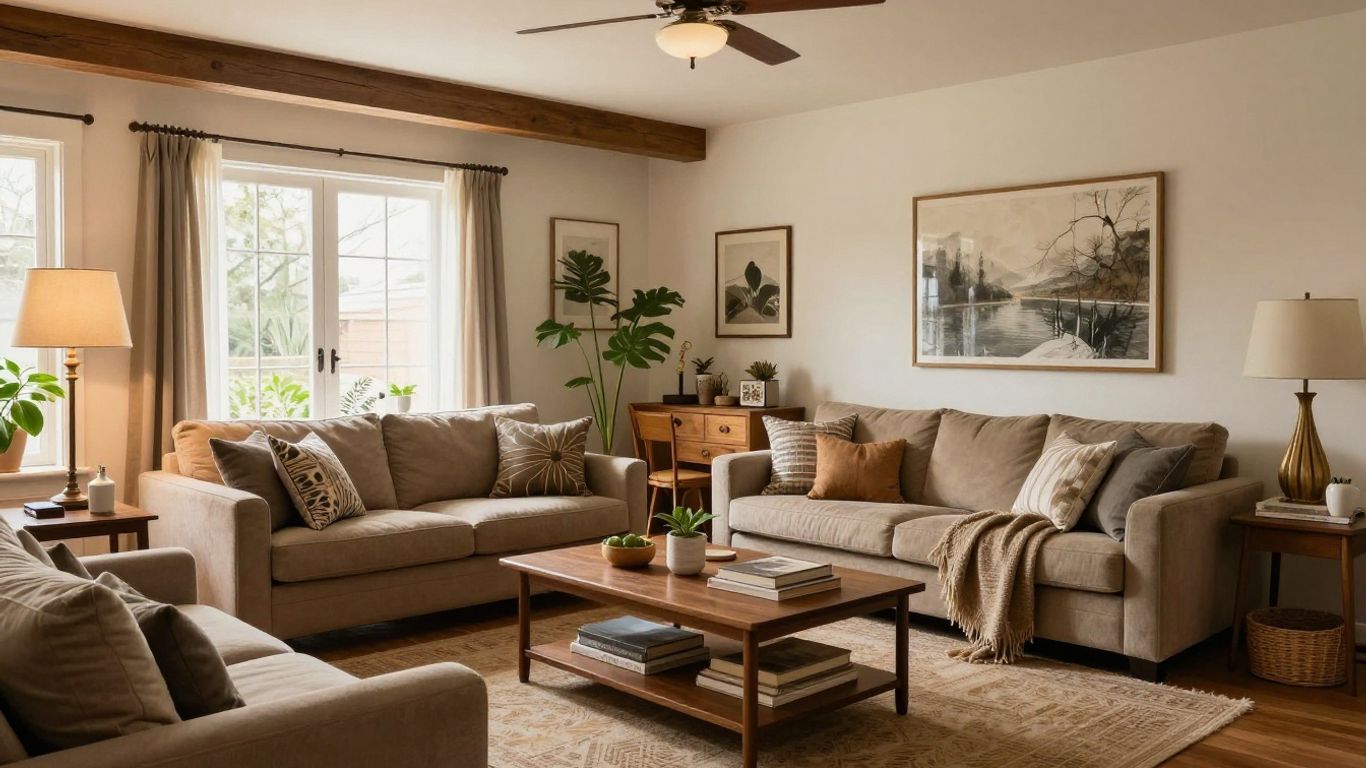
Begin with seating that supports conversation, then add a surface for drinks, a lamp for evening use, and storage for common clutter. A rug can define the seating area, while cushions and a throw add softness without requiring a new sofa. Keep one clear route through the room so guests do not have to navigate around furniture.
Finish with a few objects that reveal your interests rather than filling every shelf. Comfort should be obvious before decoration becomes noticeable.
Design a restful and organized bedroom
Use the bed as the visual anchor and keep the palette calmer than in social spaces if that helps you settle. Provide a reading light, a place for everyday items, and storage that makes putting things away easy. Curtains, rugs, and upholstered surfaces can soften sound as well as appearance.
Avoid turning the bedside table into a catch-all. A lamp, book, water glass, and one small object may be all the room needs there.
Improve the comfort and efficiency of a kitchen
Keep frequently used tools close to the areas where tasks happen, and make sure work surfaces remain available. A runner, pendant light, open shelf, or framed print can add warmth, but decorative pieces should not interfere with cleaning or food preparation. Choose materials that tolerate the room’s moisture, heat, and spills.
If the kitchen opens into another room, repeat one color or material nearby to connect the spaces. The result feels more considered than a kitchen decorated as an isolated zone.
Add useful style to entryways and small spaces
An entryway needs a place for keys, shoes, bags, and coats before it needs elaborate decoration. A narrow console, wall hooks, mirror, basket, or washable runner can make a small area feel complete. In a tight hallway, use vertical space and keep the walking path clear.
Small rooms benefit from fewer, better-chosen details. A striking lamp, framed piece, or plant can provide personality without sacrificing the openness that makes the area comfortable.
Conclusion
Thoughtful at home home decor grows from paying attention: to your routines, your architecture, your budget, and the objects that genuinely make you happy. Choose a clear direction, make practical improvements first, and allow color, light, texture, and personal pieces to build the atmosphere gradually. A home feels stylish when it feels like it belongs to the people who use it.
Frequently Asked Questions
How do I choose a decorating style?
Begin with images, objects, and rooms you already enjoy, then identify repeated colors, materials, shapes, and moods. Your style can be a personal combination rather than a single established category.
What is the easiest affordable decorating update?
Paint, improved lighting, rearranged furniture, and fresh textiles often make a visible difference without requiring major construction. Start with the room you use most and choose one or two changes that address its biggest weakness.
How many colors should a room have?
A foundation color, a secondary tone, and one or two accents are enough for many rooms. Vary texture and shade so the palette feels layered rather than rigid.
How can I make a small room feel larger?
Keep walking paths clear, choose furniture that fits the room’s scale, and use light strategically. Mirrors, pale or mid-tone colors, and furniture with visible legs can also preserve a sense of openness.
How do I mix old and new furniture?
Repeat one or two qualities, such as wood tone, metal finish, color, or silhouette, while allowing the pieces to remain distinct. Contrast feels intentional when there is a small visual connection between the objects.
Where should I spend more money?
Prioritize items that receive daily use or affect comfort, including a mattress, sofa, desk chair, durable rug, or well-made light fixture. Save on temporary accents and pieces that are easy to replace or refresh.
How do I know when a room is finished?
The room is finished enough when it supports its intended activities, has comfortable circulation, and no longer feels as though it needs purchases to fill empty space. Leave some room for life and future discoveries.


Leave a Reply