Key Takeaways
Vases can quietly change the balance, color, and personality of a room. The best results come from choosing pieces that suit the space, then styling them with restraint.
- Use vases to add color, texture, and height without overcrowding a room.
- Match material, shape, and scale to the furniture and decorating style.
- Style each room according to how people move through and use it.
- Combine varied vessels and botanicals while leaving breathing room.
- Refresh vase arrangements seasonally and keep maintenance practical.
Understand the role of vases in home decor
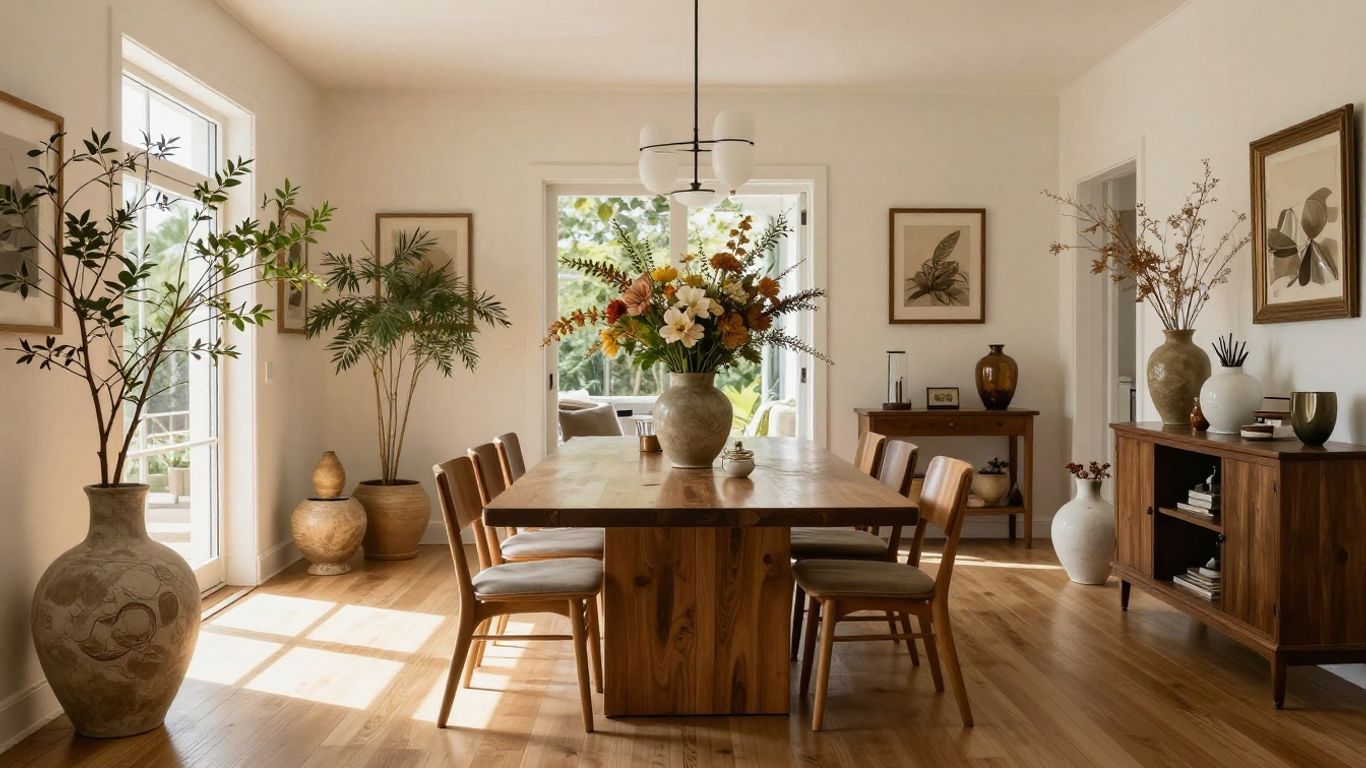
Vases are more than containers for flowers. They can soften hard furniture lines, bring a small hit of color to a neutral room, or add height where a surface feels visually flat. Even an empty vessel can act as a sculptural accent, which makes it useful throughout the year.
Add color, texture, and visual height
A vase is an easy way to introduce a new material or shade without committing to a large piece of furniture. A matte ceramic vessel feels grounded and tactile, while clear glass keeps a display light. Taller forms draw the eye upward, especially when placed beside lower books, bowls, or framed art.
Think of the vase as part of the room’s texture story. If the space already has woven baskets and rough wood, a glossy finish can provide contrast; if it feels sleek and reflective, a handmade-looking surface can make it warmer.
Create a focal point in any room
A single vase can anchor a console, mantel, dining table, or otherwise forgotten corner. Give it enough surrounding space to be noticed, and pair it with one or two supporting objects rather than a crowded collection. The focal point should feel deliberate, not as if every attractive item in the house landed in the same spot.
A strong focal point also benefits from a quiet background. Against a plain wall or on a simple shelf, a distinctive silhouette has room to do the visual work. This is one reason sculptural vessels can look finished even without flowers.
Complement your existing decor style
Start with the shapes and finishes already present in the room. Rounded vases echo curved chairs and mirrors, while angular vessels suit linear shelving and contemporary furniture. A traditional room can handle an ornate or softly glazed piece, whereas a pared-back interior often benefits from one unusual form rather than several decorative details.
For more ideas on mixing personal objects with simple surroundings, browse this guide to unique home decor. The same principle applies to vases: choose something that feels connected to your habits and taste, not merely something that fills an empty surface.
Balance function with decorative appeal
A beautiful vase still needs to work where you place it. Check that it is stable, that its opening suits the stems you plan to use, and that it will not interfere with conversation or daily movement. On a busy kitchen counter, a compact vessel may be more successful than a tall centerpiece.
Practical beauty matters when an object stays in regular use. Keep water-filled vases on protected surfaces, use a liner when appropriate, and reserve fragile pieces for locations where they will not be knocked over.
Choose the right vase for your space
Choosing among home decorations vases becomes easier when you consider the room before the object. Look at the furniture scale, the available light, and the materials already doing the visual work. A vase should add something distinct while still feeling at home in the setting.

Compare ceramic, glass, metal, and wooden vases
Material changes the mood as much as the shape does. Ceramic tends to feel substantial and versatile, glass can reflect light and keep arrangements airy, metal introduces a crisp or industrial note, and wood brings warmth and visible grain. Consider both the vase itself and what will sit inside it; delicate flowers may look lost in a heavy vessel, while branches can make glass feel more grounded.
The finish matters too. A soft matte surface hides fingerprints better than a highly polished one, while transparent glass makes water lines and stems part of the display. Choose based on the care you are genuinely willing to provide.
Select shapes that suit different interiors
Narrow-necked bottles help control a few stems, wide bowls make generous arrangements feel relaxed, and tall cylinders work well with long branches. Rounded urns or organic vessels can soften a room full of straight edges. Rather than chasing a particular trend, consider which outline repeats or balances the forms already around it.
If you enjoy expressive glasswork, Kosta Boda crystal vases can serve as a sculptural focal point as well as a floral vessel. For a quieter look, choose a simple silhouette and let the contents provide the variation.
Match vase size to furniture and room scale
A vase should relate to the surface beneath it. On a narrow shelf, a low or slender piece prevents visual and physical crowding; on a large console, a taller vessel or a group of graduated forms can hold its ground. Floor vases need enough height and weight to feel intentional, especially in a corner beside substantial furniture.
Use this quick comparison before buying or arranging:
| Placement | Useful vase direction | Main consideration |
|---|---|---|
| Small shelf | Low or narrow | Preserve usable shelf space |
| Console table | Medium to tall | Balance the wall and furniture |
| Dining table | Low to medium | Keep sightlines open |
| Empty floor corner | Tall and stable | Avoid a top-heavy silhouette |
The table is a starting point rather than a rulebook. Measure the surface, leave room for daily use, and step back several feet to judge whether the vase feels appropriately scaled.
Consider color, finish, and pattern
A vase can repeat a color already present in a rug, artwork, or cushion, but it does not need to match exactly. Related tones usually look more collected than a perfectly coordinated set. If the room is busy, use a calm finish; if the furniture is restrained, a patterned or richly colored vessel can provide a welcome point of interest.
Before deciding, view the piece in the actual room’s light. Colors can look cooler near a window and deeper in evening light, so a sample or temporary arrangement may prevent an expensive mismatch.
Style vases by room
The right placement depends on how each room functions. Entryways benefit from welcoming height, living rooms need arrangements that work from several viewing angles, and bedrooms usually call for softer, quieter accents. Treat the vase as part of the room’s rhythm rather than a decoration that must be centered everywhere.
Create an inviting entryway arrangement
An entryway vase can make a first impression without taking over the landing zone. Place it on a console with a small tray for keys and perhaps one framed piece behind it. A tall, lightly branched arrangement adds movement, while a compact vessel is safer in a narrow passage.
Keep the arrangement slightly to one side instead of forcing perfect symmetry. That small shift can make the entrance feel relaxed and leave practical space for the objects that naturally collect there.
Decorate living room shelves and coffee tables
On shelves, vary the direction of attention by placing a vase near books, artwork, or a small object with a contrasting profile. A pair of identical vessels can work, but different heights and related finishes often feel more personal. On a coffee table, use a low vessel so people can see across it and comfortably set down a drink.
A vase and botanical display can be adapted to either setting, from a small flower-filled piece on a side table to a taller sculptural accent in an open corner. Keep the surrounding objects modest so the display does not become a visual traffic jam.
Add character to dining tables and kitchen counters
Dining arrangements should support conversation, not block it. Low bowls, short stems, or several small vessels spread along the center of the table keep the composition within a comfortable viewing height. On a kitchen counter, choose a piece with a stable base and enough clearance around it for food preparation.
For a larger gathering, repeat one material across several small vessels rather than using one oversized arrangement. This keeps the table flexible and makes it easier to remove the display when serving begins.
Refresh bedrooms, bathrooms, and home offices
Bedrooms suit muted colors, dried stems, and small bedside vessels that do not compete with rest. In a bathroom, a petite vase can sit beside folded towels or on a vanity, provided it is protected from splashes. A home office benefits from one simple shape near a monitor or bookcase, where a little organic texture can break up hard equipment lines.
If you are planning a broader bathroom update, ideas for luxury bathroom vanities can help you think about lighting, mirrors, and surface proportions around a decorative vessel. Keep health-related choices separate from décor decisions; a bladder health guide belongs to a different kind of practical planning.
Build attractive vase arrangements
Good arrangements have a clear center of attention, but they are not overly engineered. Begin with the vessel, then decide whether the flowers, branches, or dried material should echo its shape or deliberately contrast with it. A little asymmetry often makes the result feel more natural.

Combine different heights and silhouettes
Height gives a grouping a sense of movement. Pair a tall, narrow vessel with a lower rounded one, or place a broad bowl beside a thin bottle. The silhouettes should be easy to distinguish from one another, especially when the arrangement is viewed from across the room.
Use the tallest piece as an anchor and let the smaller vessels step down gradually. This creates a gentle visual path instead of a row of objects competing at the same level.
Create groupings with odd numbers
Groups of three or five often feel more relaxed than pairs because the eye can move through the arrangement without searching for a rigid center. The vessels do not have to be identical: repeat one color, material, or botanical detail to give the collection a thread of connection.
When a group looks awkward, change the distance between pieces before buying anything new. One vessel may need to move forward, or the smallest may work better slightly outside the main cluster.
Mix flowers, branches, and dried botanicals
Combining botanical types adds contrast in line, softness, and density. Fresh flowers bring color and fullness, branches contribute height and structure, and dried botanicals offer lasting texture. Use one dominant element, then add supporting material sparingly so the arrangement does not become indistinct.
For inspiration that includes vessels used with or without flowers, explore these ways to decorate with vases. Let the room determine the finish: airy stems suit bright spaces, while fuller branches can hold their own against darker furniture.
Leave space for a clean, curated look
Negative space gives every piece a visual edge. Leave a little surface visible between vessels, and avoid pushing an arrangement so close to the wall that its outline disappears. The goal is not emptiness for its own sake, but enough quiet around the display to make its shape readable.
Step away and view the arrangement from the doorway. If your eye lands on too many places at once, remove one element and reassess before adding another.
Decorate vases with seasonal elements
Seasonal styling does not require a new collection of containers every few months. A dependable set of vases can shift from fresh flowers to foliage, branches, or dried stems as the year changes. This approach keeps the room familiar while allowing small, timely updates.
Use fresh flowers in spring and summer
Spring and summer arrangements can be light and loosely gathered. Choose flowers in colors that already appear in the room, then allow a few stems to extend beyond the main shape. Clear or pale vessels are especially useful when you want sunlight and water to remain part of the composition.
Change the water regularly and trim stems at an angle when needed. Even a modest bunch looks considered when the vessel is clean and the stems are arranged with room to breathe.
Add warm foliage and natural textures in fall
Autumn displays gain richness from branches, russet leaves, grasses, seed pods, and dried flowers. Pair warm foliage with a grounded material such as ceramic, wood, or aged metal. The arrangement can be sparse; a few strong shapes often feel more elegant than a dense bundle.
Seasonal rental spaces can also benefit from restrained changes, such as the seasonal decor ideas used to create atmosphere without filling every surface. At home, one arrangement in a living area may be enough to signal the shift in season.
Create winter displays with branches and greenery
Winter arrangements work well with bare branches, evergreen stems, pinecones, and pale dried materials. Use a heavier vase for visual stability, particularly if the branches spread widely. A few warm lights nearby can add atmosphere, but keep cords and heat sources safely away from water and foliage.
A winter display should still suit the room after the holidays. Neutral branches and greenery are easier to live with than highly themed pieces, and they can remain in place through the colder months.
Refresh arrangements without replacing the vases
Keep the vessel and change only the contents. Rotate between fresh stems, dried grasses, leafy branches, and an empty sculptural display. You can also shift a vase from the entryway to a bedroom or swap a tall arrangement for a lower one when the room’s needs change.
If a vase is part of a larger home update, home remodel planning is a useful reminder to consider durability, timing, and everyday function alongside appearance. The same thinking applies to a small seasonal refresh.
Avoid common vase styling mistakes
Most vase problems are problems of proportion or placement, not taste. A vessel may be attractive on its own but look awkward when it is too tall for a shelf or too small for a large table. Pause before arranging, and judge the object in relation to the room rather than in isolation.
Choose arrangements that are too large or too small
An oversized arrangement can make a table feel cramped and obscure artwork or sightlines. A tiny vase on a deep console, meanwhile, may disappear among larger objects. Use the surrounding furniture as your measuring guide, and consider both the vessel’s height and the spread of its contents.
When uncertain, start smaller. It is easier to add a second supporting piece than to make an overgrown arrangement feel lighter.
Prevent cluttered groupings and uneven spacing
Too many vases can turn a curated display into a collection of interruptions. Give each vessel a little breathing room, vary the heights, and remove objects that repeat the same shape without adding texture or function. Uneven spacing can be attractive when it feels intentional, but accidental gaps make the arrangement look unfinished.
Photograph the display from the main viewing angle. The image often reveals crowded edges or a hidden silhouette more quickly than standing beside the table does.
Coordinate colors without making the room look matched
A room feels more natural when colors relate without repeating in exact pairs. Choose one connecting shade, then vary its intensity or introduce a nearby neutral. Materials can also create cohesion: several different colors may work when they share a handmade finish or similar visual weight.
Avoid adding a vase simply because it matches one cushion. Ask whether it contributes shape, texture, or useful height as well as color.
Keep decorative vases practical and easy to maintain
Dust gathers around textured surfaces, and water can mark unprotected wood or stone. Select washable pieces for areas exposed to cooking or frequent handling, and use coasters, liners, or trays where appropriate. Heavy vessels should sit securely, while fragile ones belong away from busy paths and curious pets.
A simple maintenance routine helps the display stay attractive: empty old water promptly, rinse the interior, wipe the exterior, and replace tired botanicals. Practical care is what allows a decorative piece to remain part of the room for years.
Conclusion
The most polished home decorations vases are not necessarily the largest or most expensive ones; they are the pieces chosen with attention to scale, material, light, and daily life. Start with one room, create a clear focal point, and leave enough space for the vase and its contents to be seen. With seasonal stems and a little editing, the same vessels can keep a home feeling fresh without making it feel overdecorated.
Frequently Asked Questions
What is the best vase material for home decor?
There is no single best material. Ceramic feels warm and substantial, glass feels light and reflective, metal adds definition, and wood brings natural texture. Choose according to the room, the arrangement, and how much maintenance the surface requires.
How do I choose the right vase size?
Match the vase to the furniture and available surface area. A low vessel suits a dining table or coffee table, while a taller piece can balance a console or empty floor corner. Always leave enough room for movement and everyday use.
Can I decorate with empty vases?
Yes. A distinctive shape, color, or finish can make an empty vase a complete decorative object. Empty vessels are especially useful when you want texture or height without the maintenance of fresh flowers.
How many vases should I group together?
Groups of three or five often create a relaxed composition, though two pieces can work when their heights or shapes contrast clearly. The available surface matters more than a fixed number. Stop when the display begins to feel crowded.
What flowers work well in a narrow-necked vase?
A narrow-necked vase suits a small number of upright stems, delicate branches, or flowers with naturally slender profiles. Avoid forcing in a dense bouquet, since the opening may compress the arrangement and make it look top-heavy.
How often should I change fresh flowers in a vase?
Change the water regularly and remove fading stems as soon as they begin to decline. The exact timing depends on the flower type and room conditions, but clean water and a clean vessel generally help an arrangement last longer.
How can I update vases for a new season?
Keep the containers and replace only the botanical elements. Use fresh flowers in warmer months, foliage and dried textures in fall, and branches or greenery in winter. Moving the vase to another room can also make the update feel new without buying more décor.


Leave a Reply