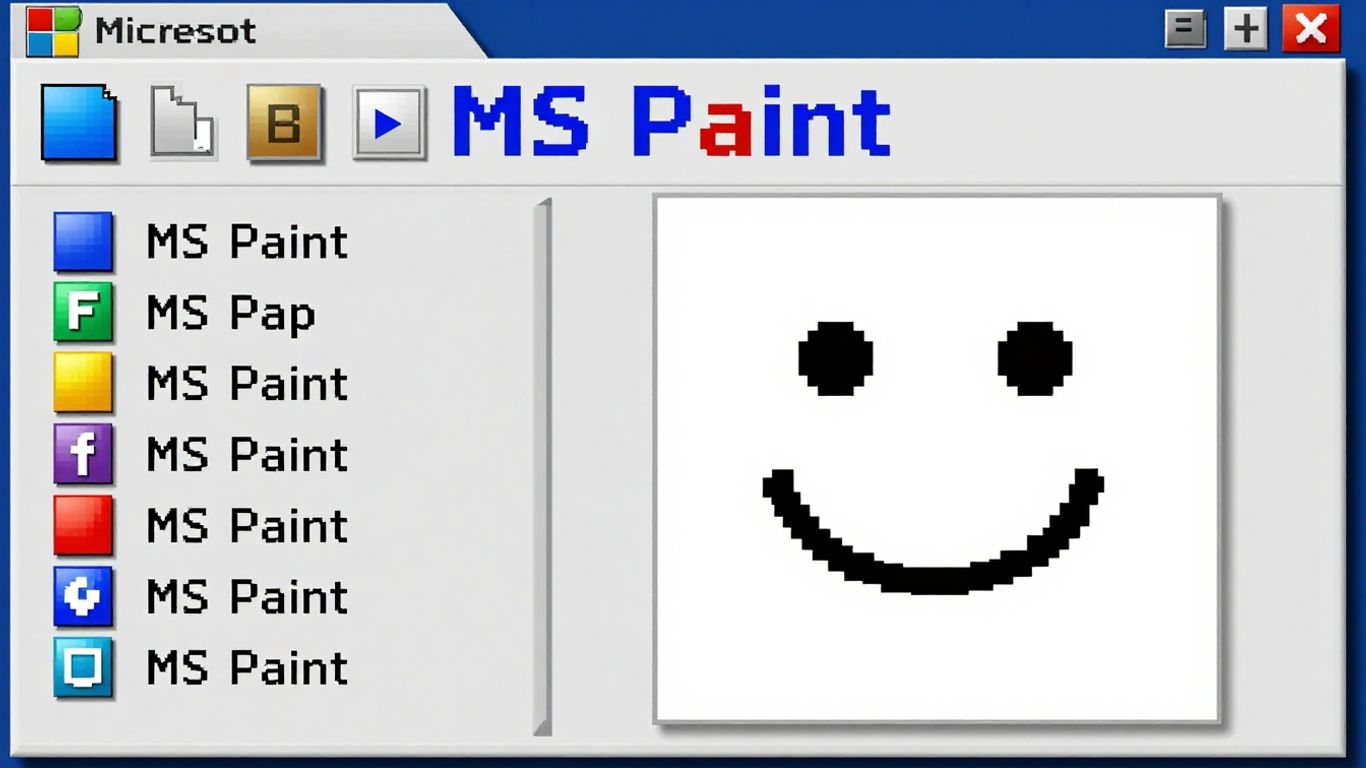
Remember fiddling around with old Microsoft Paint? It feels like ages ago, doesn’t it? That simple program was where many of us first dipped our toes into digital art. It wasn’t fancy, but it had a certain charm. We’re going to take a trip back and explore why this old software still holds a special place in our memories and creative journeys.
Key Takeaways
- The basic tools in old Microsoft Paint offered a surprisingly fun way to start creating art.
- Its pixelated look and limited color choices give it a unique, nostalgic aesthetic.
- Many people have fond memories of using old Microsoft Paint for early creative projects.
- The simplicity of the program allowed for spontaneous and unplanned artistic expression.
- Exploring old Microsoft Paint can reconnect us with childhood creativity and simple joys.
The Enduring Charm of Old Microsoft Paint

A Digital Canvas for Early Creativity
Remember the days of staring at that blank white screen, the little toolbox on the side, and the thrill of creating something from nothing? Old Microsoft Paint was often the very first digital canvas many of us ever touched. It wasn’t fancy, but it was accessible. It was a gateway into the digital art world for a generation. Before complex software and expensive tablets, Paint offered a simple, intuitive way to get ideas out. Whether it was a lopsided house with a smoking chimney or a rainbow-colored alien, Paint let us experiment. It was where early digital creativity took its first, often wobbly, steps.
The Pixelated Aesthetic
There’s a certain charm to the blocky, pixelated look that comes from using old Paint. Lines weren’t perfectly smooth; colors could be a bit jarring. But this wasn’t a flaw, it was a feature. This limited resolution and basic toolset gave artwork a distinct, retro feel. It’s a look that’s hard to replicate intentionally, and that’s part of its appeal today. Think of it like the difference between a high-definition photo and a grainy Polaroid – both have their place, but the Polaroid has a unique vibe. This aesthetic is now being celebrated, with artists even creating new works that mimic that classic pixelated digital interface look.
Unlocking Nostalgic Memories
Just seeing the familiar interface of old Paint can bring back a flood of memories. It might remind you of school computer labs, long afternoons spent doodling instead of doing homework, or even the first time you showed a digital creation to your family. It’s tied to a simpler time, before the constant connectivity and pressure of social media.
Here are some common Paint memories:
- Creating birthday cards for friends.
- Drawing your favorite cartoon characters (however poorly).
- Experimenting with the spray can tool to make clouds or explosions.
- Trying to draw realistic portraits and ending up with abstract blobs.
The simplicity of old Paint meant that the focus was purely on the act of creation itself. There were no layers to manage, no complex filters to apply, just the raw tools and your imagination. This lack of complexity allowed for a more direct and often more playful approach to making art.
Rediscovering Childhood Artistry
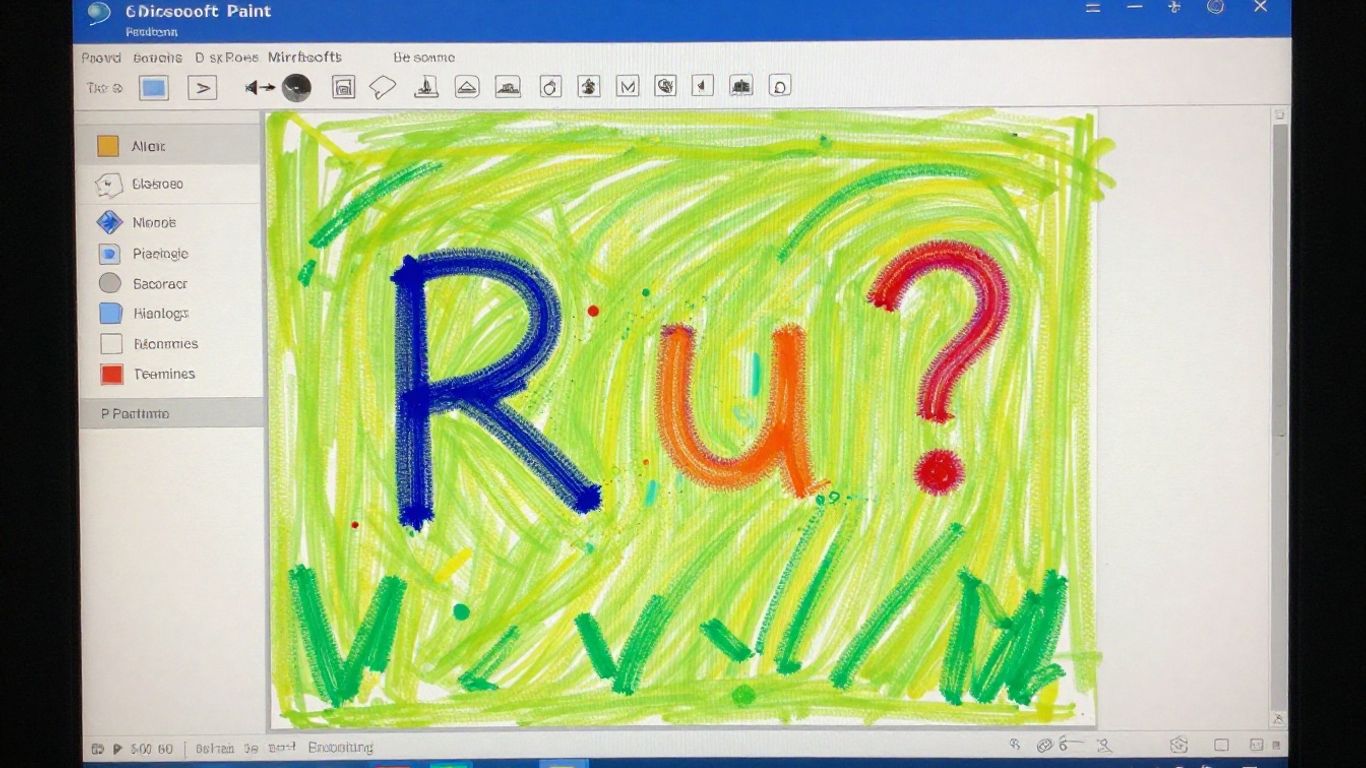
Remember those days of endless afternoons, armed with a mouse and a blank digital canvas? Old Microsoft Paint was often our first gateway into digital creation, a place where imagination ran wild without the pressure of perfection. It’s fascinating to look back and see how this simple tool shaped our early artistic impulses.
From Sketchbooks to Digital Doodles
Before we had fancy tablets or complex software, many of us started with crayons and paper, filling sketchbooks with whatever came to mind. Then came the computer, and with it, Microsoft Paint. Suddenly, our doodles could be saved, copied, and even ‘erased’ (though sometimes with a bit of a mess!). This shift from physical to digital wasn’t just a change in medium; it was an expansion of possibilities. We could experiment with colors we didn’t have, create shapes that were hard to draw by hand, and share our creations with a click. It was a whole new world for our childhood art.
The Joy of Simple Creations
What was so special about Paint? It was its sheer simplicity. The tools were basic: a pencil, a brush, a fill bucket, and a spray can. There weren’t layers to manage or complex filters to apply. You just drew. This lack of complexity was actually a strength. It meant you could focus purely on the idea, on getting that wobbly circle or that strangely proportioned house onto the screen. The results were often charmingly imperfect, but that was part of the appeal. We weren’t trying to be professional artists; we were just having fun.
- Spontaneity: You could just start drawing without overthinking.
- Experimentation: Trying out different tools and colors was easy.
- Sharing: Saving and showing off your work was straightforward.
Embracing Imperfect Art
Looking back at those early digital creations, you’ll likely see a lot of what might be considered ‘mistakes’ by today’s standards. Lines might be shaky, colors might not quite fill the space, and perspectives could be… well, creative. But these imperfections are precisely what make the art so endearing. They are honest reflections of our skill level at the time and the limitations of the software. This raw, unpolished quality is a significant part of the nostalgic charm. It reminds us that art isn’t always about technical mastery; it’s about expression and the joy of making something, anything, at all.
The beauty of these old digital drawings lies in their unpretentious nature. They represent a time before the internet was saturated with perfectly curated images, a time when a simple, hand-drawn smiley face in MS Paint felt like a genuine accomplishment. It was art for art’s sake, pure and simple.
It’s a reminder that sometimes, the most enjoyable creative experiences come from the simplest tools. Rediscovering these old digital canvases can be a wonderful way to reconnect with that uninhibited childhood spirit and appreciate the journey of artistic exploration, no matter how pixelated it might have been.
Exploring the Unique Style of Old Microsoft Paint
The Beauty of Basic Tools
Old Microsoft Paint wasn’t about fancy brushes or complex layers. It was about the fundamentals. You had your pencil, your spray can, your fill bucket, and a few basic shapes. This simplicity was its superpower. It forced you to be creative with what you had. Think about the iconic spray can tool – how many of us spent hours just making fuzzy blobs or trying to create gradients by painstakingly spraying color after color? It wasn’t sophisticated, but it was effective for its time. The limited toolset meant you had to really think about how to achieve a certain effect, often through clever workarounds. It’s a stark contrast to today’s feature-rich software, where you can get lost in options. Back then, it was just you and the pixels.
Creating Art with Limited Palettes
Remember those default color palettes? They weren’t exactly extensive. You had your primary colors, some secondary ones, and a few shades of gray. This limitation, however, often led to some really interesting artistic choices. Artists had to learn to mix colors by dithering – placing pixels of different colors next to each other to create the illusion of a third color. It’s a technique that gives old digital art a distinct, almost textured look. It’s a far cry from the millions of colors available today, but it had its own charm.
Here’s a look at a typical limited palette:
| Color Name | Hex Code |
|---|---|
| Black | #000000 |
| White | #FFFFFF |
| Red | #FF0000 |
| Green | #00FF00 |
| Blue | #0000FF |
| Yellow | #FFFF00 |
| Cyan | #00FFFF |
| Magenta | #FF00FF |
Grunge Art and Abstract Patterns
Because of its basic tools and limited color options, old Paint often lent itself to a kind of raw, unpolished aesthetic. Think bold lines, blocky shapes, and sometimes a slightly chaotic feel. This is where you’d see a lot of spontaneous doodles and abstract patterns emerge. It wasn’t about creating photorealistic images; it was about expression. You could create these really interesting, almost ‘grunge art’ styles just by messing around with the pencil tool and filling in shapes. It’s that feeling of just letting your mind wander and seeing what comes out on the digital canvas, much like aesthetic doodles that explore mood and texture.
The beauty of old Microsoft Paint lies in its constraints. These limitations weren’t roadblocks; they were creative prompts. They encouraged a different way of thinking about art, focusing on resourcefulness and the joy of simple creation rather than technical perfection. It’s a reminder that powerful art can come from the most basic of tools.
This raw, unrefined style is something that many artists today try to replicate, seeking that authentic, retro feel. It’s a testament to how even the simplest digital tools can inspire unique artistic movements and personal expression.
Nostalgic Art and Retro Aesthetics
Vintage Color by Number Inspiration
Remember those coloring books from when you were a kid? The ones with simple outlines just begging for a splash of color? Well, there’s a whole world of digital art that taps into that same feeling. Think of vintage color-by-number games, where you fill in designs inspired by old cars, classic fashion, or even just neat geometric patterns. It’s a really relaxing way to connect with a simpler time. These digital experiences bring back the charm of retro aesthetics, letting you create art that feels both familiar and new. It’s like a little trip down memory lane, one color at a time.
Retro Themes in Digital Art
Digital art today often plays with retro themes, and old Microsoft Paint is a big part of that. You see it in pixel art that mimics the low-resolution look of early computer graphics, or in designs that use those classic, sometimes clunky, color palettes. It’s not just about looking old; it’s about capturing a specific vibe. Think about how some artists create art that looks like it was made directly in MS Paint, complete with jagged lines and limited color choices. It’s a deliberate choice to evoke a certain feeling, a nod to the digital tools that shaped our early creative experiences. You can even find decor that brings this look to life, like a MS Paint-inspired mirror.
Connecting with Past Eras Through Art
Art has always been a way to look back. When we explore older art styles, we see how things have changed and what’s stayed the same. Artists today often take inspiration from the past, mixing old techniques with new ideas. This helps us understand different time periods better and can spark new creativity. It’s like building a bridge between different artistic moments. Studying old ways of making art can give modern artists new skills, letting them play with colors and shapes that aren’t as common now. It’s a journey that makes our current art scene richer. It’s amazing how a simple tool like old Microsoft Paint can be a gateway to exploring these connections, reminding us of where we came from and how far we’ve come. It’s a way to appreciate the evolution of creativity and to find inspiration in the digital artifacts of our past, much like finding a retro MS Paint mirror that sparks joy.
The act of creating art, especially with tools that feel familiar from our past, can be incredibly grounding. It allows for a unique form of self-expression that doesn’t require complex software or advanced techniques. It’s about the joy of making something, anything, and finding beauty in the simplicity of the process.
The Creative Process in Old Microsoft Paint
Spontaneous Doodles and Abstract Forms
Working with old Microsoft Paint often felt like playing with digital clay. There wasn’t a lot of pressure to create a masterpiece. You just opened the program and started messing around. The beauty was in the unplanned nature of it all. You’d grab the pencil tool, maybe the spray can, and just see what happened. Lines would cross, colors would blend (or not blend, depending on your skill level!), and suddenly, you had something that looked like… well, something. It wasn’t about following a strict plan; it was about letting your hand move and seeing where it took you. This often resulted in a lot of abstract shapes and patterns, kind of like the grunge art people explore today, but with a much simpler toolkit. It was a very freeing way to make art.
The Freedom of Unplanned Art
Think about it: no complex layers, no fancy brushes that mimic real-world textures. Just basic tools. This limitation actually pushed creativity. You couldn’t easily fix mistakes, so you learned to work with them. A stray line might become part of a cloud, or a blob of color could turn into a weird alien. It was all about improvisation. This kind of spontaneous creation is something many artists try to recapture even now, using more advanced software. The process was less about technical skill and more about just doing. It was a digital playground where the only rule was to have fun. You could spend hours just filling in shapes or making patterns, and nobody would judge it. It was your own little world on the screen.
Finding Inspiration in Simple Shapes
Sometimes, the simplest things sparked an idea. A circle could be a sun, a face, or a planet. A square could be a house, a robot, or just a block. The magic happened when you combined these basic shapes in unexpected ways. You might start with a square and then add a triangle on top, and suddenly it’s a rudimentary house. Or you’d draw a few circles and connect them with lines, and it might look like a funny little character. This approach is similar to how some artists today might start a drawing with basic geometric forms before adding detail. It’s a way to build complexity from simplicity. For those looking to get a feel for this kind of basic digital art creation, looking at a typical window painting process might give you some ideas. It’s a quick look at how simple tools can be used.
Artistic Journeys and Personal Expression
Reflecting Culture and History
Art has always been a mirror to the times it was created in. When we look back at old Microsoft Paint creations, we’re not just seeing simple drawings; we’re seeing glimpses of culture and history. Think about the early internet days, the first digital art experiments, or even just the personal stories shared through these basic digital canvases. These artworks can tell us a lot about what people were thinking, feeling, and creating back then. It’s like finding a digital time capsule.
Bridging Artistic Eras
Old Paint art can feel like a bridge connecting different periods of creativity. It shows us where digital art started, long before the complex software we have today. Artists today can look at these old styles and find inspiration, mixing the simplicity of Paint with modern techniques. It’s a way to honor the past while making something new. This kind of exploration helps us see how art evolves and how different styles influence each other over time. It’s fascinating to see how a simple tool can be used in so many ways, from basic doodles to more complex pieces that might even be reinterpreted in oil paint today [bf46].
The Power of Self-Expression
Ultimately, creating art, even with limited tools like old Microsoft Paint, is about personal expression. It’s about putting your thoughts, feelings, and ideas onto a digital canvas. The freedom to create without the pressure of perfection is incredibly liberating. Whether it was a childhood doodle or a more deliberate piece, each creation is a unique expression of the artist. It’s a way to communicate without words, to share a piece of yourself with the world. Embracing these simple forms of art reminds us that creativity isn’t about having the best tools, but about the desire to make something and share it. It’s a reminder that art can be found anywhere, and personal expression is always possible, no matter the medium. Looking back at these old digital sketches can feel like finding a time capsule of your own artistic journey [ac9b].
Still Got It
So, yeah, Microsoft Paint. It might not be the fancy art tool it once was, but there’s definitely something special about it. It’s like an old friend you haven’t seen in a while – a bit clunky, maybe, but still brings back good memories. Whether you’re making silly doodles or trying to recreate that one picture from 2005, Paint is still there, ready to go. It’s a reminder that sometimes, the simplest tools can be the most fun, and that a little bit of digital nostalgia goes a long way. Go on, open it up. See what you can make. You might surprise yourself.
Frequently Asked Questions
What makes old Microsoft Paint special?
Old Microsoft Paint was special because it was super simple and easy to use. It let anyone draw and create digital art without needing fancy tools. It was like a digital coloring book for everyone, and many people remember using it when they were kids.
Why do people feel nostalgic about old Microsoft Paint?
People feel nostalgic because old Microsoft Paint reminds them of their childhood and early days of using computers. It was often the first art program they ever used, so it brings back memories of simple times and early creative moments.
What kind of art can you make with old Microsoft Paint?
You can make all sorts of fun art! Think pixelated pictures, simple drawings, colorful patterns, and even abstract designs. Because the tools are basic, it encourages a unique, blocky style that’s charming in its own way.
Is it hard to create art with old Microsoft Paint?
Not at all! The beauty of old Microsoft Paint is its simplicity. It has basic tools like a pencil, brush, and fill bucket, making it easy for anyone to jump in and start drawing without feeling overwhelmed. It’s all about having fun.
Can I still use old Microsoft Paint today?
Yes, you can! While newer versions exist, you can often find older versions of Microsoft Paint or similar simple drawing programs. Many people even use it on purpose to get that specific retro, pixelated look for their art.
What’s the difference between old and new art programs?
Newer art programs have way more tools, layers, and advanced features, which can be great for professional artists. Old Microsoft Paint was much simpler, with fewer options. This simplicity is what makes it so charming and nostalgic for many people today.


Leave a Reply