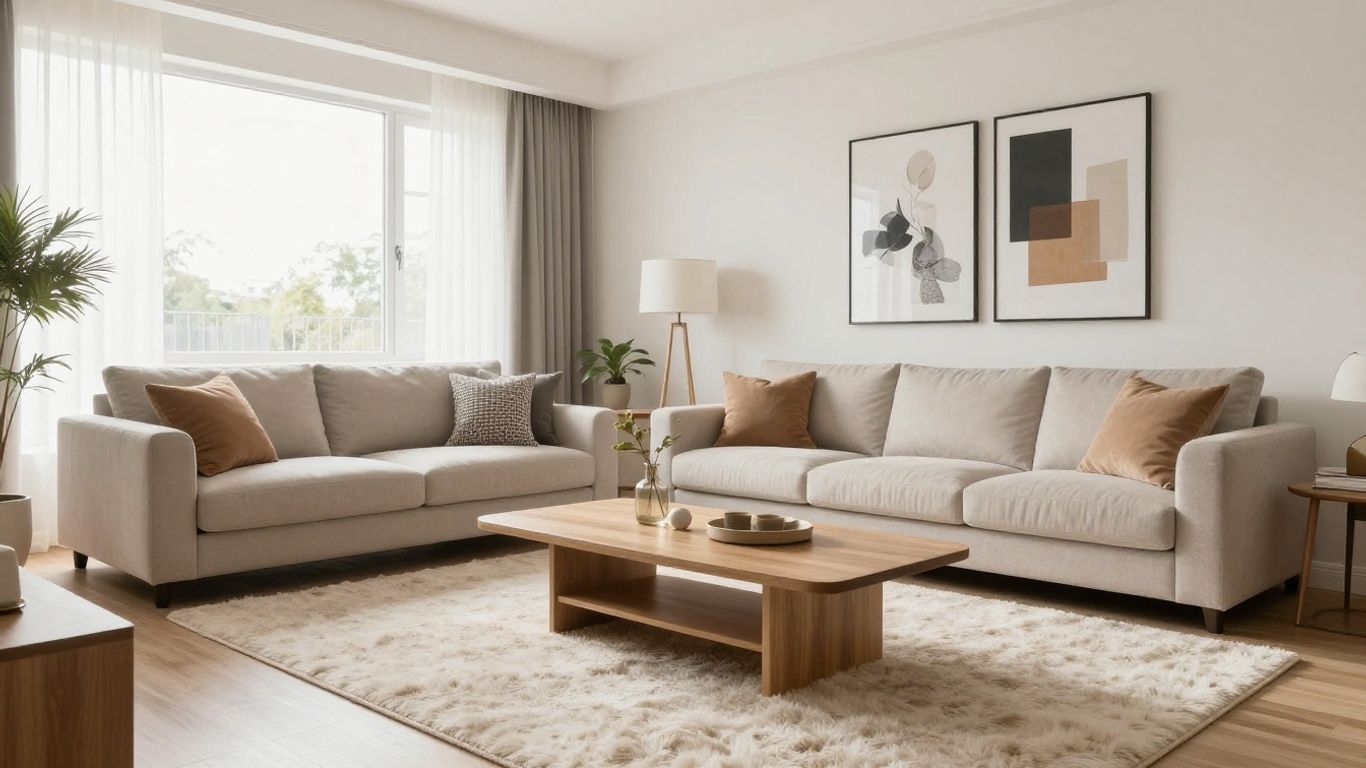
Updating your living room can make a big difference in how you feel at home. Whether you’re aiming for a totally new look or just want to make things feel cozier and more put-together, there are lots of simple living room design ideas to try. It’s all about making the space work for you, looking good, and feeling comfortable. Let’s explore some ways to give your living room a fresh vibe.
Key Takeaways
- Arrange furniture to create a good flow and encourage conversation, using multi-functional pieces to save space in smaller areas.
- Add personality with pops of color through art and accessories, and mix different textures and styles for a unique look.
- Use layered lighting—overhead, task, and accent—along with stylish lamps to create a warm and inviting atmosphere.
- Choose the right size rug to anchor the space and mix pillows with different textures and sizes for comfort and visual appeal.
- Incorporate smart storage solutions like built-in shelves and furniture with hidden compartments to keep the room tidy and stylish.
Maximizing Space and Flow in Living Room Layouts
Getting the layout of your living room right is super important. It’s not just about shoving furniture in; it’s about making the room feel good to be in, easy to move around, and actually useful for how you live. Think about it – this is where you unwind, catch up with family, or have friends over. A well-planned space makes all of that better.
Choosing the Right Furniture Arrangement
When you’re figuring out where everything goes, start with the big pieces. Where will the sofa sit? What about armchairs? Try to create a natural conversation area. Don’t push all your furniture against the walls; pulling pieces slightly away can actually make a room feel bigger and more inviting. Consider the main purpose of the room. If it’s for watching TV, make sure the seating faces the screen comfortably. If it’s more for chatting, arrange seating to face each other.
Here are some common arrangements to consider:
- Symmetrical: Two sofas facing each other, or a sofa with two chairs opposite. This feels balanced and formal.
- Asymmetrical: A sofa with chairs placed at an angle, or a sectional. This can feel more relaxed and dynamic.
- Conversation Grouping: Seating arranged in a circle or U-shape, perfect for encouraging interaction.
Creating Distinct Zones in Open Concept Spaces
Open-plan living can be great, but it can also feel a bit like one big, undefined room. Using furniture is a smart way to break things up. You can use a sofa with its back to the dining area to create a clear separation. A large rug can also visually anchor the living room area. Even a console table behind the sofa can act as a subtle divider.
Think about how you want each zone to feel. The living area might be cozy with soft seating, while a nearby reading nook could have a comfortable armchair and a good lamp.
Incorporating Multi-Functional Pieces
In smaller homes, or just for smart design, multi-functional furniture is a lifesaver. An ottoman with storage inside can hide blankets or magazines. A coffee table that lifts up can become a desk or dining surface. Sofa beds are obvious choices for guest rooms, but they can also work in a living room if you have people stay over often. Even a simple bench can offer seating and storage.
When planning your layout, always think about traffic flow. You don’t want to be constantly bumping into things or having to squeeze past furniture to get from one part of the room to another. Aim for at least 3 feet of clearance for main walkways.
Here are some handy measurements to keep in mind:
| Item | Recommended Distance |
|---|---|
| Sofa to Coffee Table | 16-18 inches |
| Walkway Clearance | 36 inches |
| Side Table to Sofa Arm | Roughly the same height |
| TV Viewing Height (seated) | Eye level |
Modern Living Room Design Ideas with Personality
Making your living room feel like you is the whole point, right? It’s not just about having a nice-looking room; it’s about creating a space that feels comfortable and reflects your personal style. Forget cookie-cutter designs; let’s talk about how to inject some real character into your modern living room.
Injecting Color Through Art and Accessories
Color is such a powerful tool. You don’t need to paint your walls a wild shade to make a statement. Think about using art and accessories to bring in those pops of color. A vibrant abstract painting can totally change the mood of a room. Or maybe it’s a collection of colorful throw pillows on a neutral sofa. Even small things like a bright vase or a stack of interesting books can add a lot of personality. Don’t be afraid to mix and match colors that speak to you.
Here are a few ways to play with color:
- Art: Choose pieces that you genuinely love, whether it’s a large canvas or a curated gallery wall. Look for living room inspiration, featuring furniture, lighting, and color ideas. Explore excellent designs.
- Textiles: Think throw blankets, pillows, and even curtains. These are easy swaps that can make a big impact.
- Decorative Objects: Vases, sculptures, and even plants can bring in color and texture.
Mixing Textures for Visual Interest
Texture is what makes a room feel layered and inviting. A room that’s all smooth surfaces can feel a bit flat. Mixing different textures adds depth and makes the space more interesting to look at and touch. Imagine a soft, chunky knit throw draped over a sleek leather sofa, or a rough jute rug under a plush velvet armchair. It’s these contrasts that create a cozy and sophisticated feel.
Consider these texture combinations:
- Soft & Smooth: Velvet, silk, polished wood, glass.
- Rough & Natural: Linen, wool, rattan, stone, concrete.
- Cozy & Plush: Faux fur, shearling, high-pile rugs.
A well-balanced mix of textures can make even a minimalist space feel warm and lived-in. It’s about creating tactile experiences that invite you to relax and stay awhile.
Blending Styles for a Unique Look
Who says you have to stick to just one design style? Blending different styles can result in a look that’s truly unique and personal. Maybe you love the clean lines of modern furniture but also appreciate the warmth of rustic elements. Or perhaps you’re drawn to the elegance of mid-century modern pieces mixed with a touch of bohemian flair. The key is to find common ground, like a shared color palette or material, to tie everything together. This approach allows you to curate a space that feels collected over time, rather than something that was put together all at once. It’s about creating a story within your home.
Lighting Strategies for a Cozy and Inviting Living Room

Lighting is what makes a living room really feel like home—it’s not just for function, but for mood too. Don’t be tempted to rely on one big ceiling fixture; the best spaces use lighting in layers for warmth and flexibility. You want a space that works just as well for reading as it does for a movie night with friends. Here’s how to make that happen.
Layering Overhead, Task, and Accent Lighting
Use a mix of light sources to create both function and atmosphere. Rather than depending on harsh over-head lights, try out a combination approach:
- Overhead lights: Use soft white bulbs or dimmers to keep things from feeling too harsh.
- Task lighting: Desk lamps, reading lights, or adjustable floor lamps by the sofa make sure your eyes aren’t strained during focused activities.
- Accent lighting: Wall sconces or small table lamps add a soft glow to darker corners, helping the room feel complete.
| Lighting Type | Best For | Placement Ideas |
|---|---|---|
| Overhead | General illumination | Center of the ceiling |
| Task | Reading, hobbies | Beside sofas/chairs, work area |
| Accent | Soft mood lighting | Corners, shelves, wall mounts |
Warm, layered lighting can take a living room from cold and basic to a spot that invites you in every evening—especially when you want to relax after a long day.
Highlighting Architectural Details
Sometimes the best way to make a room shine is to focus on what you already have. Try placing uplights behind a large houseplant or using hidden LED strips to draw attention to shelves, a fireplace, or unique molding. Doing this can bring out textures and features that might be overlooked during the day.
Here are some simple ways to highlight details:
- Point small spotlights at artwork or textured walls.
- Place LED tape lights under floating shelves for a subtle, hazy edge.
- Use dimmable sconces to call attention to an interesting alcove or built-in.
Choosing Stylish Lamps as Focal Points
Lamps can be more than just practical; some are downright show-stoppers. Think of a bold floor lamp or a sculptural table lamp as both light source and decor. In fact, well-placed lamps often double as pieces of art—and become a conversation starter for visitors. Check out tips for a cozier living room look, which often involve choosing the right lamp shapes and shade materials, at this guide to using ambient lighting for warmth.
Remember:
- Choose lamps that echo your room’s vibe, whether it’s modern, rustic, or classic.
- Don’t be afraid of mixing metals, ceramics, or fabric shades for extra color and pattern.
- Use lamps to anchor corners or highlight favorite furniture pieces—the right lamp placement can really tie a seating area together.
Try playing around with switches, dimmers, and bulbs until the space feels just right. Lighting isn’t just about seeing, it’s about how the space feels when you settle in for the evening.
Rugs and Pillows: Essentials for Comfort and Style
Rugs and pillows are like the cozy hug your living room needs. They’re not just about making things soft; they really pull a room together and give it personality. Think of a rug as the foundation for your seating area. It anchors everything, making the space feel more intentional and less like random furniture floating around.
Choosing the Perfect Rug Size and Placement
Getting the rug size right is a big deal. Too small, and it makes your furniture look like it’s awkwardly perched on a postage stamp. Too big, and it can overwhelm the room. A good rule of thumb is to have at least the front legs of your sofa and chairs resting on the rug. For most standard living rooms, an 8×10 or 9×12 foot rug is a good starting point. If you have a larger space, you might need even bigger. It’s all about creating a cohesive zone for conversation and relaxation.
Here’s a quick guide for placement:
- Living Room Layout:
- All Furniture on Rug: Ideal for larger rooms, this creates a very defined and luxurious feel.
- Front Legs on Rug: The most common and practical choice, connecting your main seating pieces.
- Just Coffee Table on Rug: Generally too small, unless it’s a very small rug in a very small space.
- Room Dimensions: Measure your seating area and add at least a foot or two around it for a balanced look.
- Shape Matters: Match the rug shape to your room’s layout. Rectangular rugs work well in most spaces, while round rugs can soften a square room or seating arrangement.
Mixing and Matching Pillows for a Polished Look
Pillows are where you can really have some fun. They’re like the jewelry for your sofa. Don’t be afraid to mix textures, patterns, and sizes. This is how you create that inviting, layered look that feels curated, not cluttered. Start with a couple of larger pillows in solid colors or subtle patterns, then add in smaller ones with more visual interest. Think about combining a chunky knit with a smooth velvet, or a geometric print with a floral. It sounds like a lot, but when done right, it adds so much depth.
- Texture Play: Combine different materials like linen, velvet, faux fur, or woven fabrics.
- Pattern Power: Mix complementary patterns – think stripes with florals, or geometrics with abstract designs.
- Size & Shape Variety: Use a mix of square, lumbar, and even round pillows. Place larger ones in the back and smaller ones in front.
- Odd Numbers: Often, styling pillows in groups of three or five looks more natural and appealing than an even number.
Don’t shy away from mixing and matching. The key is balance. If you have a very busy patterned rug, you might want to tone down the pillow patterns a bit, or vice versa. It’s about creating a visual conversation between the elements, not a competition.
Selecting Materials for Everyday Durability
While we all love the look of delicate fabrics, the living room is a high-traffic area. For rugs, natural fibers like wool or a durable synthetic blend are great choices. They hold up well to foot traffic and are often easier to clean. For pillows, look for covers made from cotton, linen blends, or performance fabrics that can withstand spills and general wear and tear. Removable covers are a lifesaver for easy washing. Remember, a stylish room should also be a practical one that can handle real life.
Smart Storage Solutions for a Tidy Living Room

A cluttered living room just doesn’t feel relaxing, does it? It’s the main spot for unwinding, catching up with friends, or just enjoying some quiet time. Keeping it organized is key to making it a truly comfortable and stylish space. Luckily, there are plenty of ways to stash your stuff without making your room feel like a storage unit.
Integrating Built-In Shelving and Bookcases
Built-in shelving is a game-changer for living rooms, especially if you want to make the most of your vertical space. Think floor-to-ceiling bookcases or custom-built nooks. These aren’t just for books; they’re perfect for displaying decor, storing media, and keeping everyday items out of sight. They also add a polished, architectural feel to the room. If you’re looking to add value and appeal to your home, experts often suggest upgrades like built-in shelving.
Using Hidden Storage in Furniture
Many furniture pieces now come with clever storage options. Ottomans with lift-off lids, coffee tables with drawers or shelves, and sofas with hidden compartments can be lifesavers. These pieces serve a dual purpose: they look great and provide a place to tuck away blankets, remotes, magazines, or even toys. It’s all about choosing furniture that works harder for you.
Styling Coffee Tables and Consoles Effectively
Your coffee table and console table are prime real estate for both function and style. Instead of letting them become dumping grounds, try styling them intentionally. Use trays to group items like remotes and coasters. Vary the heights of your decorative objects – a tall vase, a stack of books, and a small sculpture can create visual interest. Don’t forget to add a touch of green with a plant or some fresh flowers. If you have items you need to keep handy but don’t want on display, a decorative box can keep them tidy and out of sight.
Elevating Your Living Room with Art and Decor
Hanging Artwork at the Right Height
Getting your art hung at the right height makes a big difference. It stops the room from feeling off-balance. The general rule is to hang art so the center of the piece is at eye level. For most people, this is around 57 to 60 inches from the floor. This height works whether you’re hanging a single piece or creating a whole gallery wall. It makes sure the art feels like a natural part of the room, not just something stuck on the wall.
Creating Balanced Gallery Walls
Gallery walls can be tricky, but when done right, they really add personality. Think of the whole collection as one big piece of art. You want to keep the spacing between frames pretty consistent, usually about 2 to 3 inches apart. This keeps things looking neat and tidy. It’s also smart to make sure the overall shape of your gallery wall fits well with the furniture below it. A good guideline is to have the width of your art grouping be about two-thirds to three-quarters the width of the furniture it’s above, like a sofa or console table.
Incorporating Personal Touches and Greenery
Your living room should feel like you. That’s where personal items and plants come in. A few well-chosen decorative objects, like a cool sculpture or a memento from a trip, can really make a space feel unique. And plants? They’re fantastic. Whether it’s a big potted plant or a few stems in a vase, greenery adds life and a fresh vibe that works with pretty much any style. It’s a simple way to make your room feel more inviting and less like a showroom.
Here’s a quick guide for styling surfaces like coffee tables:
- Use trays: A tray helps group items together, making your display look organized instead of cluttered.
- Vary heights: Mix tall items (like a vase) with shorter ones (like books or small sculptures) to create visual interest.
- Add books: Coffee table books are great for adding color, height, and a sophisticated feel.
- Include something sculptural: A decorative object can add an artistic touch.
- Don’t forget greenery: A plant or some fresh flowers always brightens things up.
Window Treatments That Enhance Natural Light
Window treatments do more than just block the sun; they can really change how a room feels. Getting them right means you can control light, add privacy, and even make your windows look bigger or more interesting. It’s all about finding that sweet spot between letting the sunshine in and keeping things comfortable.
Selecting Curtains and Shades for Privacy and Style
When you’re picking out curtains or shades, think about what you need them to do. Do you want to see out during the day but keep prying eyes away at night? Or maybe you just want to soften the light without making the room dark. Different fabrics and styles work best for different situations.
- Sheer curtains: These are great for letting in a lot of light while still offering a bit of privacy. They give a soft, airy feel.
- Blackout curtains: Perfect for bedrooms or media rooms where you need to block out light completely.
- Roman shades: These offer a clean, tailored look and can be adjusted easily to control light.
- Roller shades: Simple and functional, they disappear when rolled up, making them good for minimalist spaces.
- Blinds (wood, faux wood, or metal): These give you precise control over light direction and intensity.
The right choice can make a big difference in how bright and open your living room feels.
Using Layered Window Coverings
Layering is a smart way to get the best of both worlds. You can combine different types of window treatments to get the look and function you want. For example, you could have sheer curtains for daytime light and privacy, and then add heavier drapes or blinds for when you need more darkness or insulation.
- Base Layer: Start with something like a sheer curtain or a roller shade. This provides a consistent level of light filtering and privacy.
- Secondary Layer: Add heavier curtains or drapes over the base layer. These can be opened or closed as needed for more light control, privacy, or warmth.
- Top Treatment (Optional): A decorative valance or cornice can add a finished look and hide hardware.
This approach gives you flexibility throughout the day and seasons.
Maximizing Daylight While Maintaining Comfort
It’s not just about the type of treatment, but also how you hang it. Mounting your curtain rod higher than the window frame, for instance, can make your ceilings look taller and allow more light in. Generally, aim to place the rod about 4 to 6 inches above the window frame. If you have high ceilings, you can even go closer to the ceiling itself. Also, make sure the rod extends a bit beyond the width of the window – about 8 to 12 inches on each side. This way, when the curtains are open, they stack back against the wall and don’t block any of the glass.
When choosing lengths, always measure from where the rod will be to the floor. It’s a good idea to add an extra inch or two to that measurement to make sure your curtains don’t end up looking too short, especially after washing.
Think about the fabric weight too. Lighter fabrics will let more light through, while heavier ones will block more. You can also consider the color – lighter colors tend to reflect light, making the room feel brighter. It’s a balance between letting that natural light flood in and keeping the room from getting too hot or glaring.
Wrapping It Up
So, there you have it! Updating your living room doesn’t have to be a huge project. Whether you’re going for a sleek modern vibe, a cozy organic feel, or something totally unique, remember to think about how you actually use the space. Mixing in personal touches, playing with lighting, and getting the layout just right can make a big difference. Don’t be afraid to experiment a little – after all, it’s your home, and it should feel like you. Happy decorating!
Frequently Asked Questions
How can I make my living room look bigger?
To make your living room feel more spacious, try arranging your furniture so it doesn’t block pathways. Using furniture with legs that you can see under also helps create an open feeling. Light colors on the walls and choosing furniture that’s not too bulky can also make a big difference. Think about using mirrors to reflect light and make the room seem larger.
What’s the best way to arrange furniture for good conversation?
The key is to place seating pieces so people can easily talk to each other without shouting. Arrange sofas and chairs facing each other or in a U-shape. Make sure there’s enough space between them for people to walk around comfortably. A coffee table in the middle can also help bring everything together.
How do I add color to my living room without being too bold?
You can add color through smaller items like throw pillows, blankets, and decorative objects. Artwork is also a fantastic way to introduce pops of color. Even a colorful rug or a few vibrant houseplants can liven up a space without overwhelming it.
What kind of lighting is best for a cozy living room?
Instead of relying only on bright overhead lights, use a mix of lighting. Table lamps and floor lamps create a warmer, more inviting glow. You can also use dimmer switches to control the brightness. Highlighting artwork or special features with accent lights adds a nice touch.
How do I choose the right size rug for my living room?
A good rule of thumb is to have at least the front legs of your main furniture (like the sofa and chairs) sitting on the rug. For most living rooms, an 8×10 foot rug is a common size. The rug should feel like it anchors the seating area, not just float in the middle of the floor.
What are some smart ways to store things in a living room?
Built-in shelves or bookcases are great for using wall space and keeping things organized. Furniture that has hidden storage, like ottomans with lids or coffee tables with drawers, is also very useful. Decorative baskets or boxes can help hide clutter on shelves or tables.


Leave a Reply