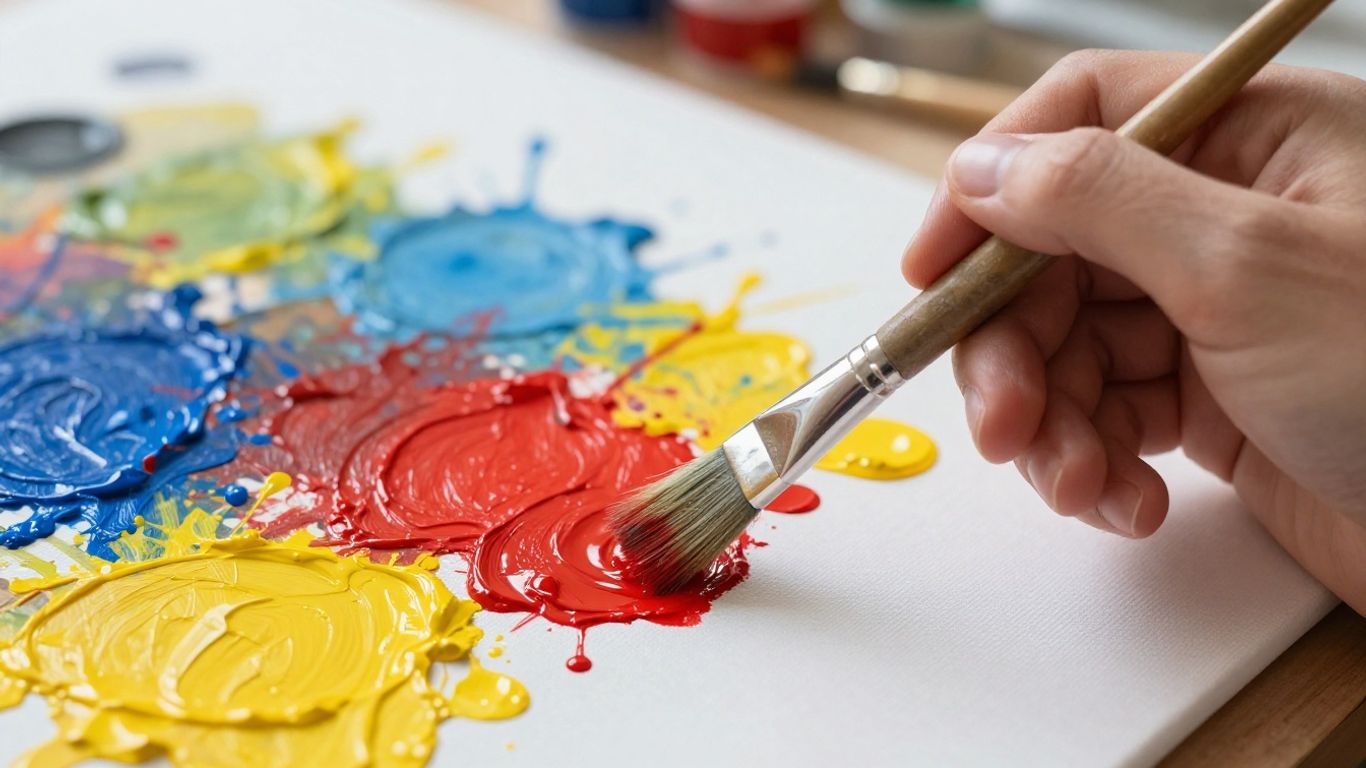
Thinking about picking up a paintbrush and diving into the world of art? Acrylics are a fantastic choice for anyone just starting out. They’re forgiving, dry fast, and you can do so much with them – from thin, watery layers to thick, textured strokes. This guide is all about making your first steps in painting in acrylic for beginners as easy as possible, covering the basics you need to get going without feeling overwhelmed. We’ll look at what you need, how to set up, and some simple techniques to get you painting right away.
Key Takeaways
- Acrylic paints are a great starting point for new artists because they are easy to use, dry quickly, and can be cleaned with water.
- Gathering the right materials, like a few basic colors, brushes, and a suitable surface, is important before you begin your painting journey.
- Setting up a dedicated space, even a small one, helps create a good environment for painting and keeps your supplies organized.
- Learning basic techniques such as controlling your brush, mixing colors, and layering paint will build your confidence and skill.
- Consistent practice and experimenting with different brushwork and paint application methods are key to developing your unique artistic style.
Getting Started With Acrylics For Beginners

Acrylic paints are a fantastic choice for anyone just starting out in the art world. They dry pretty fast, which is a big plus when you’re learning, and they’re super forgiving. If you mess up, you can usually just paint right over it once it’s dry. Plus, you can use them in so many different ways – from thin, watery washes that look like watercolors to thick, chunky applications that have a lot of texture. It’s this versatility that makes them so appealing for beginners who are still figuring out what they like.
Understanding Why Acrylics Are Great For Beginners
Acrylics really shine for newcomers because they offer a lot of flexibility without being overly complicated. Unlike oils, you don’t need special solvents to clean your brushes; just soap and water will do the trick. And because they dry so quickly, you can build up layers of color without waiting around for ages. This means you can move through your painting process much faster, which is great for keeping momentum when you’re just starting. You can also thin them down with water to create effects similar to watercolor, or use them straight from the tube for bold, opaque strokes. This adaptability means you can experiment a lot and discover different ways of applying paint without needing a huge range of specialized materials.
Essential Materials For Your First Strokes
To get going with acrylics, you don’t need a massive setup. A few key items will get you painting right away. Start with a basic set of acrylic paints; a limited palette of primary colors (red, yellow, blue) plus black and white is often enough to mix a wide range of colors. You’ll also need some brushes. A few different sizes and shapes – maybe a flat brush for broader strokes and a round one for details – will give you options. Don’t forget a surface to paint on, like canvas panels or thick paper designed for acrylics. And of course, a container for water to rinse your brushes and maybe a palette for mixing your colors. A paper plate or a piece of plastic works fine for a palette when you’re starting out.
Here’s a quick rundown:
- Paints: A starter set with basic colors (red, yellow, blue, black, white).
- Brushes: A few sizes – a medium flat and a small round are good to begin with.
- Surface: Canvas panels, thick paper, or a small stretched canvas.
- Water Container: For rinsing brushes.
- Palette: A disposable plate or plastic lid for mixing paints.
Setting Up Your Painting Space
Finding a good spot to paint is important. You want a place where you can spread out a bit and not worry too much about making a mess. A table with a surface you can easily wipe down is ideal. If you don’t have a dedicated art space, the kitchen table can work, just be sure to cover it with newspaper or an old sheet first. Good lighting is also key, so try to set up near a window or under a bright lamp. Make sure you have everything you need within easy reach – your paints, brushes, water, and paper towels. This way, you can focus on painting without constantly getting up to search for things.
When you’re just starting, it’s easy to feel overwhelmed by all the choices. The best approach is to keep your initial setup simple. Focus on getting comfortable with the materials and the basic act of applying paint to a surface. You can always add more supplies and techniques as you gain confidence and discover what you enjoy most.
Fundamental Acrylic Painting Techniques
Alright, so you’ve got your paints, your brushes, and your space is ready to go. Now what? It’s time to actually start painting! Acrylics are pretty forgiving, which is great news for beginners. You can play around with different ways of putting paint on the canvas and figure out what works for you. It’s not about being perfect right away; it’s about getting comfortable with the materials and seeing what happens.
Mastering Brush Control
Getting a handle on your brush is like learning to hold a pencil properly. It might seem obvious, but how you hold your brush and how much pressure you apply makes a big difference. A light touch can give you thin, wispy lines, while pressing down harder will give you broader, more solid strokes. Experiment with holding your brush at different angles too. Try holding it like a pencil for details, or further back on the handle for looser, more sweeping movements. Practicing different pressures and angles will help you make the marks you want, whether it’s a sharp edge or a soft blend.
Exploring Color Mixing
This is where the magic really happens. You don’t need a million colors to make a great painting. Start with the basics: a red, a yellow, a blue, plus black and white. You can mix almost anything from these. It’s a good idea to make a color chart. Just get some paper, draw a grid, and mix two colors together in each square. Write down what you mixed. This way, you’ll remember how you got that perfect shade of green or that moody purple.
Here’s a simple way to start your color chart:
- Mix Yellow + Blue = Green
- Mix Red + Yellow = Orange
- Mix Blue + Red = Purple
- Mix your mixed color + White = Lighter shade
- Mix your mixed color + Black = Darker shade
Don’t be afraid to just go for it. Mixing colors is a lot of trial and error, and sometimes you’ll discover a color you love by accident. Keep a record of your favorite mixes!
Layering Paint Effectively
Acrylics dry fast, and that’s a huge advantage for layering. You can put down a layer of paint, let it dry for a few minutes, and then paint right over it without the colors getting muddy. This is how you build up depth and detail. You can start with big, simple shapes and then add smaller details on top. Or, you can use thin, transparent layers (like a watercolor wash) to subtly change the color underneath. This is called glazing, and it can add a beautiful glow to your work. You can also use thicker paint for opaque layers that cover what’s beneath them completely.
Exploring Different Brushwork Styles
Alright, so you’ve got your paints, your canvas, and you’re ready to make some art. But how do you actually get the paint onto the canvas in a way that looks good? That’s where brushwork comes in. It’s not just about slapping paint around; it’s about how you use your brush to create different effects. Think of it like a chef using different knives – each one does a specific job.
Using Flat and Round Brushes
These are probably the most common brushes you’ll see. Flat brushes are great for covering big areas quickly. You can get nice, clean edges with them, which is handy for things like buildings or the horizon line in a landscape. If you turn a flat brush on its side, you can get thinner lines too. Round brushes, on the other hand, are your go-to for details. Want to paint individual leaves on a tree, or maybe some fine wisps of clouds? A round brush is your friend. They’re also good for making lines and dots.
- Flat Brushes: Good for broad strokes, sharp edges, and filling in large spaces.
- Round Brushes: Best for fine lines, details, and small marks.
Experimenting with Fan and Filbert Brushes
Once you’re comfortable with the basics, you might want to try some other shapes. Fan brushes look, well, like a fan. They’re surprisingly good at creating textures that look like grass or fur. You can also use them to blend colors together smoothly, kind of like you’re gently sweeping them. Then there are filbert brushes. These are a bit of a hybrid, sort of like a flat brush that’s been rounded off at the tip. They’re really versatile. You can use them for blending, but also for making softer shapes and details that aren’t quite as sharp as what you’d get with a flat brush.
Leveraging Palette Knives for Texture
Now, a palette knife isn’t technically a brush, but you absolutely have to know about it. These metal tools are fantastic for applying paint thickly. You can scoop up a blob of paint and spread it right onto the canvas. This creates a really cool, textured effect called impasto. It makes your painting look almost sculptural. You can use the edge of the knife for sharp lines or the flat side for broader strokes. It’s a different way of applying paint that can add a lot of interest and dimension to your work.
Palette knives let you get really thick paint onto the canvas, which can make parts of your painting pop out. It’s a great way to add texture that you can actually see and feel.
Achieving Depth and Texture

Acrylics are fantastic for building up layers, which is how you get that sense of depth in your paintings. Because they dry so fast, you can put down one layer, let it dry, and then add another on top without everything turning into a muddy mess. This quick drying time is a real game-changer for creating dimension.
The Power of Thin vs. Thick Paint Application
How you apply your paint makes a big difference. Using paint straight from the tube, or with just a tiny bit of medium, gives you thick, almost sculpted strokes. This is called impasto, and it’s great for making things pop out, like the texture of tree bark or rocks. On the other hand, thinning your paint down with water or a medium creates washes, which are like transparent veils of color. These are perfect for soft backgrounds, subtle shadows, or creating atmospheric effects like mist.
Here’s a quick look at the effects:
| Application | Effect | Best For |
|---|---|---|
| Thick (Impasto) | Raised texture, visible brushstrokes | Rocks, tree bark, highlights |
| Thin (Wash) | Transparent color, soft edges | Backgrounds, shadows, mist |
Creating Texture with Dabbing and Stippling
Want to make your painting feel more real or just add some visual interest? Try dabbing and stippling. Dabbing involves using a brush, sponge, or even a paper towel to press paint onto the canvas. You can get all sorts of textures this way, from the rough feel of sand to the soft look of clouds. Stippling is similar, but instead of dabbing, you’re making tiny dots. By varying the size and color of these dots, you can create surfaces that look solid from a distance, like fur, grass, or even sparkling water. It takes a bit of patience, but the results can be really striking.
Don’t be afraid to experiment with different tools for dabbing. A stiff-bristled brush can create a rougher texture, while a softer brush might give you a more blended effect. Even a crumpled paper towel can yield interesting patterns.
Adding Dimension with Glazing
Glazing is a technique where you apply very thin, transparent layers of color over a dry layer of paint. Think of it like stained glass. You mix a small amount of paint with a glazing medium or even just water, making it see-through. Each layer you add subtly changes the color underneath, deepening shadows, shifting hues, or adding a luminous glow. It’s a wonderful way to add richness and complexity to your colors without making them look muddy. You can use it to make skies more vibrant or to give objects a more realistic, subtle shading. It’s a bit like building up color slowly, and it really makes your paintings sing.
Developing Your Artistic Vision
So, you’ve got the hang of the basics – you know your brushes, you’ve mixed some colors, and maybe you’ve even finished a painting or two. That’s awesome! But now, how do you start making your paintings truly yours? It’s about moving beyond just putting paint on canvas and starting to think about what you want to say with your art. This is where developing your artistic vision comes in.
Planning Your Composition
Before you even pick up a brush, take a moment to think about what you want your painting to look like. Composition is basically how you arrange the elements in your artwork. It’s like setting the stage for a play – you decide where the actors stand, what props are visible, and how the lighting falls. A good composition guides the viewer’s eye through the painting, making it more interesting and impactful. Don’t just start painting and hope for the best; sketch out a few ideas first. Think about where the main subject will be, what the background will do, and how you can create a sense of balance or tension.
Here are a few things to consider when planning:
- Focal Point: What’s the most important thing in your painting? Make sure it grabs attention.
- Rule of Thirds: Imagine dividing your canvas into nine equal parts with two horizontal and two vertical lines. Placing key elements along these lines or at their intersections often creates a more pleasing image.
- Balance: Does your painting feel lopsided, or is there a good distribution of visual weight?
- Leading Lines: Use lines within your painting (like a road or a fence) to draw the viewer’s eye towards your focal point.
Practicing Consistently
This might sound obvious, but it’s probably the most important piece of advice. You won’t become a great painter overnight, and that’s totally okay. The key is to keep painting. Even if you only have 15-30 minutes a day, try to get some paint on a surface. It doesn’t have to be a masterpiece every time. You could practice mixing colors, trying out different brush strokes, or just doing quick sketches of objects around you. The more you do it, the more comfortable you’ll become with the materials, and the more your hand and eye will work together.
The idea that some people are just born with talent and others aren’t is a bit of a myth. Most artists develop their skills through a lot of hard work and practice. Think of it like learning to ride a bike; you might wobble and fall a few times, but eventually, you get the hang of it. Painting is the same way. Every stroke you make, even the ones you don’t love, is a step forward.
Seeking Constructive Feedback
It can be tough to share your work, especially when you’re just starting out. You might worry about what people will say. But getting feedback from others is a really good way to grow. Try to find people who understand art, maybe other beginners or more experienced painters. Ask them specific questions, like "What do you think of the colors here?" or "Does the composition feel balanced?" Listen to what they say, but remember that it’s your painting. You don’t have to agree with every suggestion, but consider their points of view. Sometimes, an outside perspective can help you see things you missed.
Here’s a simple way to approach feedback:
- Share your work: Show your painting to a trusted friend, family member, or art group.
- Ask specific questions: Instead of "What do you think?", try asking about composition, color, or technique.
- Listen actively: Hear what they have to say without getting defensive.
- Reflect: Think about the feedback and decide what you want to incorporate into your future work.
- Keep painting: Use the feedback to inform your next piece, but don’t let it discourage you.
Keep Painting!
So, you’ve taken your first steps into the colorful world of acrylics. Remember, every artist starts somewhere, and your journey is just beginning. Don’t worry about making perfect paintings right away. The most important thing is to keep practicing, trying out those techniques we talked about, and just having fun with it. You’ll get better with each canvas you touch, and soon you’ll be creating pieces you’re really proud of. So grab those brushes, mix up some colors, and happy painting!
Frequently Asked Questions
What makes acrylic paints good for people just starting out?
Acrylic paints are awesome for beginners because they dry super fast, which means you can add more layers without waiting forever. Plus, you can clean up your brushes and spills with just water, and they don’t have a strong smell like some other paints. They’re also really versatile – you can make them look like watercolors or thick oil paints.
What are the most important art supplies I need to begin painting with acrylics?
To get started, you’ll need a few basic acrylic paints in colors like red, yellow, blue, black, and white. You’ll also want a set of brushes with different shapes and sizes – maybe a flat one for big areas and a round one for details. Don’t forget a palette to mix your colors on, a canvas or thick paper to paint on, and a jar of water for cleaning your brushes.
How can I set up a good space for painting?
Find a spot where you can paint without worrying too much about making a mess. Cover your table with old newspapers or a plastic cloth. Make sure you have good light, maybe near a window. Keep your paints, brushes, water, and paper towels all within easy reach so you don’t have to stop painting to find things.
What’s the best way to mix colors when I’m new to acrylics?
Start with the basic colors: red, yellow, and blue, plus black and white. You can mix these together to create almost any other color you can imagine! It’s a good idea to make a color chart by mixing two colors at a time in little squares on paper. This helps you remember what combinations make what colors for next time.
How do I make my paintings look like they have more depth or texture?
You can create depth and texture in a few ways. Try using thin layers of paint, almost like a watercolor wash, for backgrounds. For thicker textures, use the paint straight from the tube or add a little medium. You can also dab paint on with a stiff brush or even a sponge to create interesting surfaces, like grass or clouds.
Is it important to practice a lot when learning to paint?
Yes, practicing is super important! The more you paint, the better you’ll get at controlling your brush and mixing colors. Try different techniques, don’t be afraid to make mistakes, and keep painting regularly. Even small amounts of practice add up over time and help you find your own unique style.


Leave a Reply