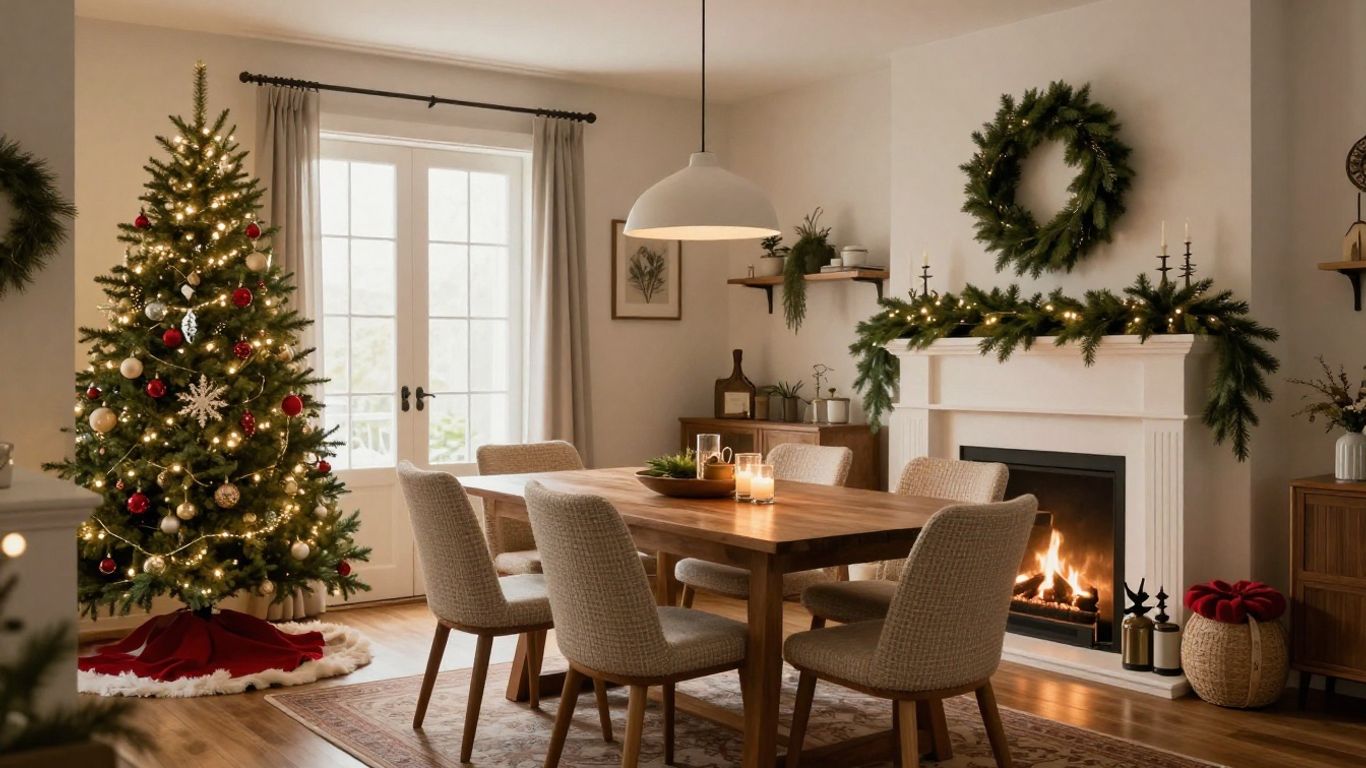
Key Takeaways
A warm Christmas home usually comes from a clear plan, a restrained palette, and thoughtful details rather than decorating every available surface.
- Choose a style and color palette before buying decorations.
- Plan spending, measurements, and focal points room by room.
- Repeat greenery, lighting, and textiles to create a connected look.
- Keep dining and smaller spaces festive without making them difficult to use.
- Store, protect, and remove decorations carefully so they last for years.
Start with a Christmas decor plan
Before bringing home boxes of ornaments, decide what you want the house to feel like. A little planning helps the rooms feel connected while leaving space for the ordinary things your household uses every day. The best home decor christmas schemes are personal, comfortable, and realistic to maintain.
Choose a decorating style and color palette
Start with two or three words that describe the mood you want, such as classic, natural, playful, or quiet. Then choose a base color, a supporting shade, and one accent; evergreen, warm white, and brass create a timeless combination, while red, cream, and wood feel more traditional. Repeating the same tones in different materials will make separate rooms feel related.
For more help defining an overall look, this home decor style guide offers a useful way to think about colors, materials, and function before shopping. Save a few images that genuinely appeal to you, but use them as direction rather than a strict template.
Set a realistic holiday decorating budget
Separate the decorations you already own from the pieces you truly need. A budget can include greenery, lights, replacement hooks, table linens, and storage materials, not just ornaments. The first-home buying guide is a reminder that household planning works best when needs, long-term costs, and practical choices are considered together.
A short shopping list keeps impulse purchases in check:
- Set a total amount before browsing.
- Reserve part of the budget for essentials and replacements.
- Choose one or two high-impact pieces for each main room.
- Leave a small amount for handmade or unexpected finds.
This approach makes room for creativity without turning December into a spending contest. It also encourages you to reuse what already works.
Measure rooms and identify focal points
Walk through the house with a tape measure before choosing a tree, wreath, runner, or oversized arrangement. Note doorway widths, ceiling height, mantel depth, and the distance around furniture. A simple sketch can prevent a beautiful piece from becoming an obstruction.
Look for the places people naturally notice first: the front door, the tree, a mantel, a dining table, or a stair rail. Give those areas more attention, then let quieter corners carry smaller echoes of the same colors and textures.
Balance festive details with everyday decor
Holiday pieces should join the room rather than take it over. Remove a few everyday accessories before adding seasonal ones, especially on shelves and consoles, so the finished arrangement has breathing room. A lighter touch often feels richer because each chosen detail can be seen.
Use familiar furniture as the foundation, then add removable layers such as a throw, garland, candles, or a bowl of ornaments. This makes decorating and undecorating less tiring, and it keeps the home recognizable throughout the season.
Create a welcoming Christmas entryway
The entryway sets the tone before guests reach the main living spaces. It should feel cheerful at first glance, but it also needs to handle coats, shoes, bags, weather, and daily traffic. Combine one strong focal point with a few durable accents rather than filling every ledge.

Style the front door with a wreath
Choose a wreath that suits the scale of the door and leaves room for the handle, peephole, and door swing. Fresh greenery feels fragrant and traditional, while dried branches, berries, fabric ribbon, or a simple metal ring can be reused in future seasons. Hang it securely and check that it does not scratch the finish when the door moves.
A wreath does not have to match the tree exactly. Repeating just one color or material—perhaps brass, red berries, or natural twine—is enough to connect the entrance to the rooms beyond it.
Layer doormats, lanterns, and greenery
A textured outdoor mat beneath a smaller seasonal mat gives the doorway a finished look and helps manage wet shoes. Place lanterns to one side or in an uneven pair, then add a low planter or a bundle of weather-resistant branches. Keep the composition close to the wall so it frames the door instead of narrowing the approach.
Use outdoor-rated lights and materials if the arrangement will be exposed to rain or snow. Small variations in height make the display feel collected, while too many objects can make a compact porch look crowded.
Add seasonal accents to a console table
Inside, a console can hold a shallow bowl for keys, a small evergreen arrangement, and one warm light. A mirror or artwork above it gives the display a visual anchor, while a folded runner or wood tray protects the surface and groups small objects together. Keep the tallest item toward the side rather than directly in front of the mirror.
If the entryway is narrow, choose low-profile decorations and use the wall rather than the floor. A few natural textures can make the area welcoming without sacrificing its everyday purpose.
Keep walkways clear and functional
Check the path from the door to the stairs and living room after every addition. Cords should be secured along edges, baskets should not protrude into the walking line, and floor-level decorations need enough clearance for shoes and cleaning. Practicality is part of the design, particularly when guests arrive carrying gifts or food.
For a broader reminder about preparing spaces for emergencies, review this fire safety guidance, then apply the same common sense at home: keep exits visible, avoid blocking equipment, and make sure everyone can move through the house easily.
Decorate the living room for Christmas
The living room often carries the greatest visual weight, so it helps to choose a clear center of attention. Usually that is the Christmas tree, fireplace, or seating arrangement, with other decorations supporting it. Warm light, soft textiles, and repeated natural elements can make the room feel festive without changing its character.
Build a cohesive Christmas tree display
Begin with lights, working from the trunk outward so the glow has depth. Add ribbon or garland next, then place larger ornaments at different heights before filling gaps with smaller pieces. Keep treasured ornaments at comfortable viewing levels and distribute colors around the whole tree rather than concentrating them on one side.
The tree stand should be stable, and the tree should leave enough clearance for doors, vents, and people moving through the room. A simple basket, skirt, or wrapped fabric at the base can conceal hardware while keeping the display polished.
Style the mantel with greenery and lights
Lay greenery along the mantel in a loose, slightly asymmetrical line. Add candles, stockings, or small objects in groups of varying heights, making sure nothing hangs close to a heat source. If there is no mantel, a media console or floating shelf can serve the same role with a shorter arrangement.
Choose lights with a soft, steady glow and hide the battery pack or cord as neatly as possible. The arrangement should look good from the sofa as well as from the doorway, since both viewpoints shape how the room is experienced.
Add festive pillows, throws, and textiles
Textiles are one of the easiest ways to change the room for a season. Combine a patterned pillow with solid velvet, wool, or woven covers, then fold one throw over the arm of a chair instead of spreading several blankets across every seat. This creates comfort while preserving the clean lines of the furniture.
Keep some everyday cushions in the room so the holiday fabrics feel like an addition, not a complete replacement. Natural cream, forest green, cinnamon, and muted red are especially easy to carry into January.
Use lighting to create a warm atmosphere
Layer the room with tree lights, a table lamp, a floor lamp, and perhaps a few flameless candles. Several modest light sources usually feel more inviting than one very bright fixture. Dim overhead lighting in the evening and let the smaller pools of light define the seating and display areas.
If winter temperatures make the room uncomfortable, compare suitable home heating solutions before relying on decorative candles or improvised heat sources. Seasonal atmosphere should never come at the expense of safe, comfortable living.
Bring Christmas decor into the dining area
The dining room needs to look special while remaining ready for meals, homework, serving dishes, and conversation. Keep centerpieces low enough for people to see across the table, and use decorations that can be moved in one piece when dinner is served. A restrained arrangement often photographs beautifully and works better in real life.

Create a simple holiday table centerpiece
Start with a tray, shallow bowl, or narrow runner so the centerpiece has a defined footprint. Add clipped evergreen branches, pinecones, fruit, or a few ornaments, then leave visible space around the edges for plates and serving dishes. Battery candles are useful when an open flame would be awkward.
Choose materials that can tolerate a little movement and do not shed heavily onto food. A centerpiece should be easy to lift away when the table needs to become practical again.
Layer place settings with seasonal details
Build each setting from the plate outward: charger if you use one, dinner plate, smaller plate or bowl, then flatware and glassware. A sprig of rosemary, a small paper card, or a single ornament can add a holiday note without crowding the place. Repeat the accent at every setting for a composed effect.
The most useful seasonal details are those that do not require special handling. Guests should be able to sit down, reach their napkins, and pass dishes without navigating a miniature display.
Choose napkins, linens, and tableware
Cloth napkins bring softness and can be changed more often than the whole table setting. Look for colors that echo the living room, but do not feel obliged to buy a matching set; cream linen with red ribbon or green glassware can be enough. A washable runner protects the table and creates a calm background for the centerpiece.
Use the tableware you own as the starting point. Mixing finishes can look intentional when one element repeats, such as a shared warm metal, a common color, or the same simple shape.
Make the dining space practical for guests
Before guests arrive, sit in each chair and check the clearance between settings. Remove unnecessary serving pieces, keep candles away from sleeves and napkins, and make sure the route to the kitchen is open. This small rehearsal often reveals problems that are invisible while styling the table.
The following quick guide can help you choose decoration by its job rather than its appearance alone:
| Element | Best use | Practical check |
|---|---|---|
| Low greenery | Adds color along the table | Keep it below eye level |
| Cloth napkins | Brings softness and pattern | Choose washable fabric |
| Battery candles | Creates evening glow | Test batteries beforehand |
| Shallow tray | Groups small accents | Lift it away easily |
Once the table has been tested, remove anything that interrupts conversation or serving. A festive dining area should support hospitality, not compete with it.
Add festive touches to bedrooms and smaller spaces
Holiday decorating does not have to stop at the living room. Bedrooms, hallways, kitchens, and bathrooms can carry the mood through small, repeatable details. Think of these rooms as quieter notes: soft fabrics, a little greenery, or a seasonal scent rather than another full display.
Use bedding and textiles for subtle holiday style
Add a folded throw at the foot of the bed, a knitted cushion, or flannel sheets in a restrained pattern. Green, burgundy, cream, and warm tan can suggest Christmas without making the room feel themed all year long. Keep the main bedding comfortable and neutral so the seasonal layers can be removed easily.
A small vase of branches on a dresser or nightstand is often enough. Avoid placing fragile ornaments where they can fall during the night or interfere with lamps and charging cables.
Decorate shelves, staircases, and hallways
Shelves benefit from repetition: place a few small trees, books, candles, or ornaments at varied heights, then leave some open space. Along a staircase, use a secure garland or ribbon only if it will not catch clothing or hands. Hallways can take one framed print, a narrow branch arrangement, or a tiny bowl of seasonal objects.
For more ideas about creating focal points, wall decor ideas can help you think about scale, mirrors, shelves, and textiles without treating every empty wall as a problem to solve.
Style kitchens and bathrooms with small accents
In the kitchen, switch to a seasonal tea towel, place a small wreath on a cabinet door, or set a bowl of citrus and greenery on the counter. In a bathroom, a winter-scented hand soap, a small branch, or a fresh guest towel adds enough character. Keep decorations away from sinks, stovetops, and appliances where moisture or heat could damage them.
These small changes work because they follow the room’s existing function. A decorative item should not take away the counter space needed to cook, wash, or prepare for guests.
Make guest rooms feel welcoming
Fresh bedding, an extra blanket, and a clear place for luggage matter more than a large display. Add one seasonal detail, such as a small wreath, a vase of winter branches, or a holiday pillow, then check the room from the guest’s perspective. Make sure outlets, switches, and bedside surfaces remain accessible.
A softly lit room feels welcoming, but avoid unattended candles and complicated electrical arrangements. Comfort is the most convincing form of hospitality.
Choose Christmas decorations that fit your home
The most successful collections tend to grow over time. They include pieces with memories, objects made by hand, and decorations that work with the architecture and furniture already in place. Instead of chasing a complete look in one shopping trip, build a selection that feels like it belongs to your household.
Mix store-bought pieces with handmade accents
Commercial decorations can provide consistency, while handmade pieces add irregularity and personality. Try pairing uniform ornaments with paper stars, dried orange slices, painted pinecones, or a small object made by a family member. The contrast keeps the display from looking overly arranged.
A useful unique decor guide encourages attention to color, texture, height, and meaningful objects. Those same principles work for seasonal decorating, especially when you want the result to feel collected rather than copied.
Select natural materials and reusable decor
Wood, paper, wool, cotton, dried fruit, and evergreen branches bring texture without relying on glitter or plastic. Choose durable versions of the pieces you use often, and buy only what you have a plan to store. Reusable ribbon, fabric napkins, and sturdy hooks can serve several rooms and several years.
Natural materials still need care. Keep dried branches away from heat, replace greenery when it becomes brittle, and compost or dispose of it responsibly after the season.
Match decorations to your home’s existing style
A modern home may suit simple shapes, tonal ornaments, and minimal greenery, while a traditional space can carry richer patterns and layered color. This does not mean every item must match. It means the holiday additions should respect the room’s proportions, finishes, and general rhythm.
If you are decorating gradually, a budget-friendly decorating plan can help prioritize high-impact changes, such as paint, lighting, or textiles, instead of encouraging a complete seasonal overhaul.
Use scale and texture to avoid visual clutter
Varying size creates interest, but too many small objects can look noisy. Pair a large wreath or branch arrangement with a few medium pieces and leave clear areas between them. Texture can do work that color does not: velvet, wood, glass, greenery, and woven materials give the eye somewhere to rest.
Try removing one item from each crowded surface before adding anything new. Often the display becomes stronger immediately, with less dusting and fewer fragile pieces to move.
Keep Christmas decorating safe and organized
A beautiful display should remain safe for children, pets, guests, and the people maintaining it. Plan cords, flames, weight, and placement before the final styling, not after something has been knocked over. Organization also matters because careful storage protects both the decorations and the home.
Place candles, lights, and electrical decor safely
Keep candles on stable, heat-resistant surfaces and well away from greenery, curtains, paper, and moving hands. Use lights according to their instructions, avoid overloaded outlets, and inspect cords for damage before installing them. Turn off decorative lighting when leaving home or going to sleep unless it is specifically designed for safe unattended use.
For heating equipment, keep fabric, paper, branches, and furniture clear of vents and radiators. A calm check of the room before bedtime is a small habit with a large practical benefit.
Protect furniture, floors, and delicate surfaces
Use trays beneath plants, candles, and arrangements that may leak or shed. Felt pads can prevent scratches under figurines, while a cloth or runner protects polished wood from moisture and wax. Avoid adhesive hooks or tapes on delicate paint and wallpaper unless the surface and product are compatible.
Heavy decorations should be placed where they cannot fall onto seating or walkways. If a piece is valuable or fragile, display it behind glass or in a less trafficked area.
Store decorations for easy reuse next year
Group items by room or function rather than putting everything into one large box. Wrap breakables individually, label containers clearly, and keep spare bulbs, hooks, and batteries in a small supply box. A simple inventory on your phone can prevent duplicate purchases and make next season’s plan much faster.
Store fabric clean and completely dry, and avoid crushing wreaths or delicate garlands under heavy objects. The few minutes spent sorting now can save an entire afternoon next year.
Remove decor without damaging your home
Take down decorations slowly, beginning with lights and fragile objects. Photograph arrangements you loved, then remove hooks according to their instructions rather than pulling quickly. Check walls, furniture, and floors as you go so small marks or spills can be addressed immediately.
If a display has left behind residue, use the gentlest suitable cleaning method and test it in an unseen spot. The goal is to finish the season with a home that feels refreshed, not repaired.
Conclusion
A warm Christmas home is built through proportion, repetition, and care. Choose a few focal points, let useful rooms remain useful, and allow personal pieces to sit alongside simple greenery and light. When the plan is realistic, home decor christmas ideas can create a welcoming atmosphere without overwhelming the spaces you live in.
Frequently Asked Questions
How can I decorate for Christmas without making my home look cluttered?
Choose a few focal points, remove some everyday accessories first, and repeat a small palette of colors and textures. Open space is part of the finished design.
What colors work well for Christmas home decor?
Classic combinations include red and green, cream and brass, or forest green and wood. Neutral homes can also use warm white, muted burgundy, or soft metallic accents.
How early should I start decorating for Christmas?
Start when you have time to plan rather than rushing. Gathering ideas and checking supplies early can make the actual decorating more relaxed, even if the display goes up later.
How do I decorate a small apartment for Christmas?
Use vertical surfaces, window areas, textiles, and one appropriately sized tree or branch arrangement. Favor removable accents that do not reduce walking or storage space.
What is the easiest way to make a dining table look festive?
Use a washable runner, a low centerpiece, cloth napkins, and one repeated accent such as greenery, ribbon, or a small ornament. Keep enough room for plates and serving dishes.
How can I make Christmas decorations feel more personal?
Mix meaningful ornaments, handmade pieces, family photographs, and natural materials with a few consistent store-bought elements. A collection feels personal when it reflects memories and daily life.
What is the safest way to store Christmas decorations?
Clean and dry items before packing them, wrap fragile pieces, label containers by room, and keep lights and accessories together. Store boxes somewhere dry and away from heat or pests.


Leave a Reply