

Gustav Klimt’s “The Kiss” is more than just a painting; it’s an icon. You’ve probably seen it everywhere, on posters, mugs, you name it. But there’s so much more to this golden masterpiece than meets the eye. We’re going to take a closer look at what makes this artwork so special, from the gold leaf to the hidden meanings. It’s a deep dive into love, art, and a bit of history.
Key Takeaways
- The painting “The Kiss” by Gustav Klimt is a famous work from his Golden Period.
- Klimt used gold leaf, inspired by Byzantine art, to create a spiritual and luxurious feel.
- The artwork explores themes of love, intimacy, and the connection between masculine and feminine energies.
- “The Kiss” broke from traditional art norms with its decorative style and symbolic depth.
- The painting continues to be admired for its timeless depiction of human connection and desire.
The Enigmatic Embrace of The Kiss
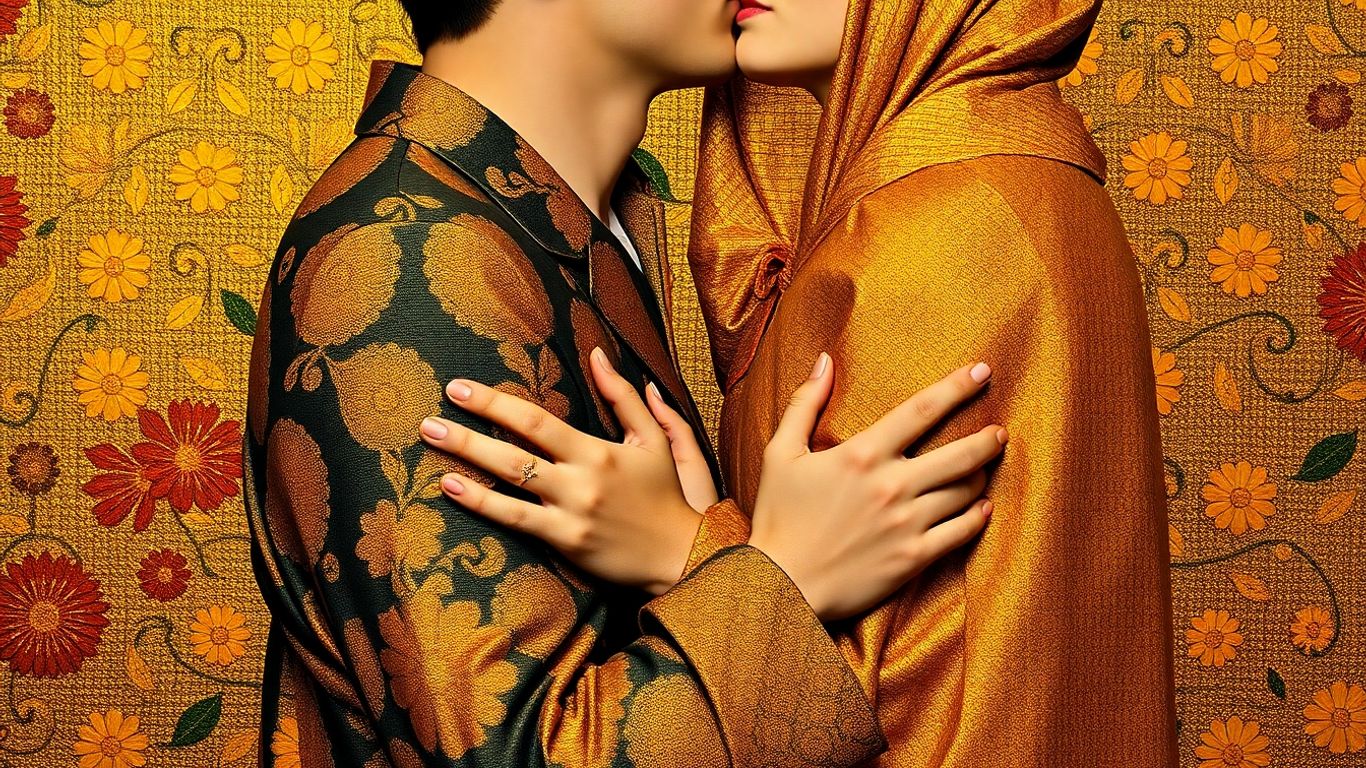
Gustav Klimt’s "The Kiss" is more than just a painting; it’s a whole mood, a moment frozen in time that feels both intensely personal and universally understood. Created between 1907 and 1908, this piece really captures the spirit of Klimt’s unique artistic vision, blending sensuality with a kind of spiritual intensity that’s hard to shake. It’s like he managed to bottle up pure emotion and splash it onto the canvas with gold.
A Glimpse into Gustav Klimt’s Artistic Vision
Klimt was a big deal in the Vienna Secession movement, a group that really wanted to break away from the old, stuffy art rules. "The Kiss" is a perfect example of that rebellion. He wasn’t afraid to mix things up, using intricate patterns and symbols to talk about love and the human experience. It’s a departure from the usual, showing his own path in art.
The Symbolic Language of The Kiss
This painting is packed with meaning. You’ve got this couple, totally lost in each other, wrapped in these amazing patterns that remind you of old Byzantine art. The gold leaf isn’t just for show; it makes the whole scene feel sacred, like their love is something divine. The shapes and swirls seem to suggest that everything is connected, a big cycle of life and creation. It really makes you think about what love means beyond just the physical.
The Enigmatic Embrace of "The Kiss"
When you look at "The Kiss," you can’t help but get drawn into that embrace. It feels so intimate, so passionate. The way the figures are covered in gold makes them seem almost otherworldly, existing in a special space separate from everyday life. It’s a powerful image that speaks to the deep connections we all crave. The painting really captures that feeling of being completely absorbed by another person, a moment of pure, unadulterated connection. It’s a visual poem about love, and it’s no wonder people are still talking about it today. It’s a bit like how Thomas Kinkade’s art brings a sense of warmth and comfort into homes; Klimt’s work, in its own way, offers a profound emotional experience, a touch of magic in the art world.
The Golden Creation: A Gilded Masterpiece
The Use of Gold Leaf in The Kiss
Gustav Klimt really went all out with the gold leaf in "The Kiss." It wasn’t just for show, though. This was a big part of his "Golden Phase," and it meant something. Think of it like this: gold in art, especially back then, often meant something divine or super important. Klimt was really into old Byzantine art, you know, those shiny religious pictures? He saw how gold made those figures seem otherworldly, and he wanted to do that with his own art. So, when you look at "The Kiss," that shimmering gold isn’t just making it look fancy; it’s supposed to make the love between the couple feel sacred, like it’s happening in a special, almost holy place, separate from everyday life. It’s like he’s saying their connection is that precious.
The Golden Phase and Its Significance
This whole "Golden Phase" thing for Klimt, roughly from 1903 to 1909, was when he really hit his stride with using gold. "The Kiss" is probably the most famous example, but he used it in other works too. It was a time when he was breaking away from more traditional painting and really experimenting with decorative elements and symbolism. The gold allowed him to create these really rich, textured surfaces that were unlike anything else at the time. It gave his paintings a unique glow and a sense of luxury, but more importantly, it helped him express deeper ideas about love, spirituality, and the human experience. It was his way of making art that felt both earthly and heavenly at the same time.
A Luminous and Ethereal Atmosphere
When you stand in front of "The Kiss," the first thing that probably hits you is how it just seems to glow. That’s all down to how Klimt layered that gold leaf. It catches the light in a way that regular paint just can’t. It creates this really soft, hazy effect, almost like you’re looking at a dream. The figures of the couple seem to float in this golden light, making their embrace feel incredibly intimate and special. It’s not just a painting of two people; it feels like an experience, a moment suspended in time, bathed in this beautiful, almost magical light. It really pulls you in and makes you feel like you’re part of their private world.
Klimt’s use of gold leaf wasn’t just about making things look pretty; it was a deliberate choice to imbue his subjects with a sense of the sacred and the eternal. It transformed a moment of human intimacy into something that felt almost divine, a testament to the power and beauty he saw in love.
Symbolism and Themes Explored
When you look at "The Kiss," it’s hard not to get drawn into the sheer emotion of it all. Gustav Klimt really packed a lot of meaning into this painting, making it more than just a pretty picture. It’s like he wanted to show us the whole package of love, not just the sweet parts.
The Intertwining of Love and Eros
Klimt wasn’t shy about showing the passionate side of relationships. The way the couple is locked together, it’s clear there’s a strong physical connection, a real sense of desire. But it’s not just about that. The elaborate patterns and the gold background suggest something deeper, a spiritual or eternal kind of love that goes beyond the physical. It’s like he’s saying love is both earthly and heavenly at the same time. This blend of the physical and the spiritual is what makes Klimt’s "The Kiss" so compelling.
Feminine Power in The Kiss
Something else that stands out is how Klimt portrays the woman. She’s not just passively being kissed; she’s actively participating, her face turned away but her body leaning into the embrace. Her robe is covered in soft, floral shapes, which many see as representing femininity and life. Meanwhile, the man’s robe is made up of strong, geometric blocks. This contrast isn’t about dominance, but rather a balance of energies. The woman, in her golden, almost halo-like gown, seems to hold a powerful, perhaps even divine, presence. It’s a really interesting take on gender roles for the time.
The Embrace of Love and Life
Beyond just romantic love, "The Kiss" also seems to touch on the broader idea of life itself. The patterns, especially the circular and swirling ones, can be seen as representing the cycles of nature and existence. The gold, which feels so rich and alive, adds to this sense of abundance and vitality. It’s as if the couple’s embrace is a celebration of life in its fullest form, a moment of pure connection that’s both intensely personal and universally significant. The painting really makes you think about how love and life are all tangled up together.
The Artistic Context of Klimt’s Work
Klimt’s Departure from Traditional Norms
Gustav Klimt didn’t always paint like we see him in "The Kiss." He started out with a pretty standard art education in Vienna. His early work involved big murals for new buildings in the city, which was a big deal back then. But around the mid-1890s, something shifted. He really changed his whole style, moving away from what was expected. This change marked his transition into the artist we recognize today. He became a leader in a new art group called the Vienna Secession. Their whole idea was "To every age its art and to art its freedom." They wanted to break free from the old, stuffy rules of academic art and explore new ideas, often looking at nature and creating art that really pulled you in. This movement had a lot in common with Art Nouveau.
The Influence of Byzantine Art
When you look at "The Kiss," you can really see how Klimt was inspired by Byzantine art, especially those old mosaics. That shiny gold leaf he used? It’s a direct nod to those religious icons from Byzantium. It gives the painting a kind of spiritual feel, almost like looking at something sacred. The way the figures are presented, a bit flat and elongated, with all those decorative bits, also reminds you of those ancient mosaics. He managed to mix the holy and the sensual in a really interesting way, which was pretty unique for his time. It’s like he took that ancient technique and made it feel completely new and modern.
The Vienna Secession Movement
The Vienna Secession, which Klimt helped start, was a big deal for Austrian art. It was formed in 1897 by artists, designers, and architects who were tired of the old ways. They wanted to create art that was modern and reflected their own time, not just copy the past. They even built their own exhibition space, the Secession Building, to show off their work. One of their most famous shows was for Beethoven, where Klimt created his Beethoven Frieze. This movement was all about pushing boundaries and giving artists the freedom to express themselves. It was a real turning point, and "The Kiss" is a perfect example of the kind of art they were trying to promote. You can see how this new artistic freedom allowed for works like Gustav Klimt’s "The Kiss" to emerge.
Unpacking the Visual Narrative
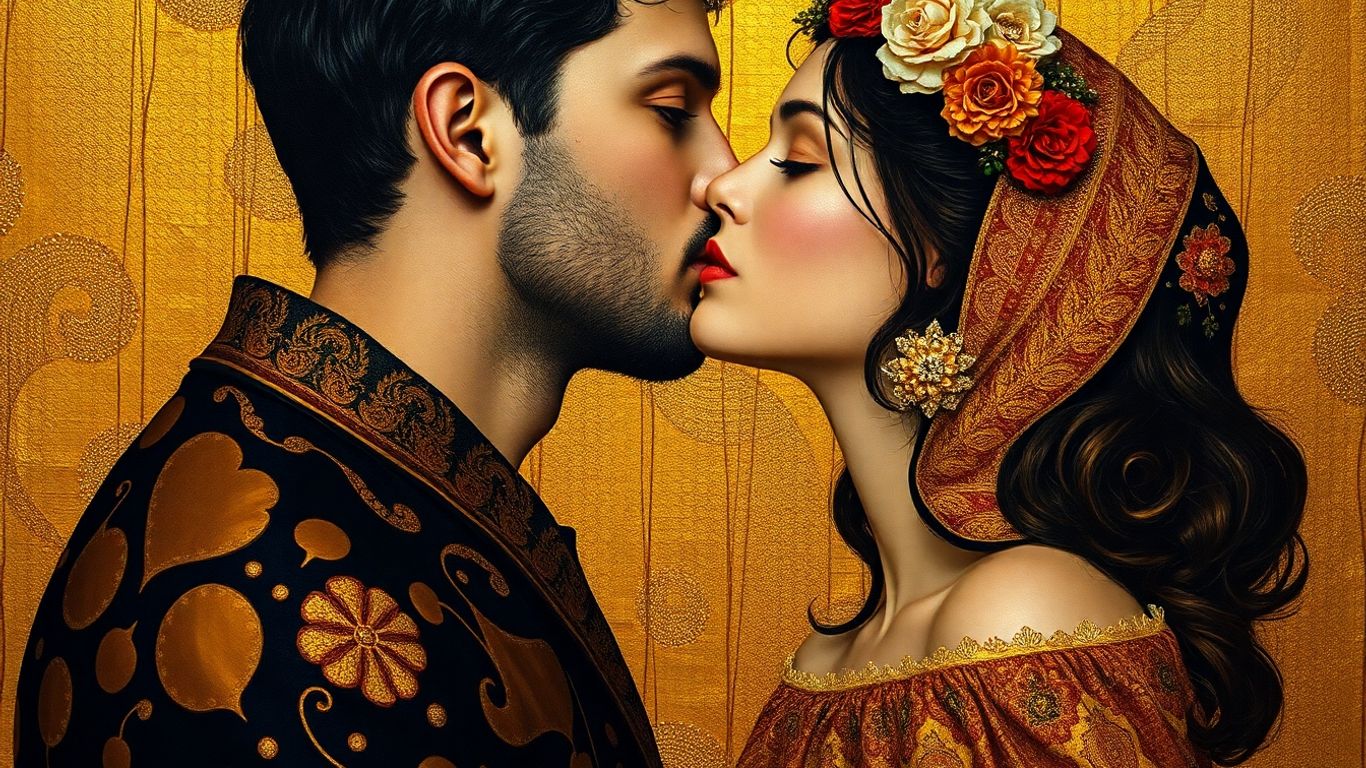
When you first look at Gustav Klimt’s "The Kiss," it’s easy to get swept up in the romance. It feels like a snapshot of a perfect moment, right? But the longer you really look, the more you realize there’s a lot going on beneath that shimmering gold surface. It’s not just a simple picture of two people kissing.
A Monument to a Particular Act
Some art historians, like Ivan Ristić, have called "The Kiss" a "monument to a particular act." That’s a pretty strong statement, and it makes you wonder what exactly that act is. Is it just the kiss itself, or something more? The way the figures are positioned, almost melting into each other, suggests a deep connection, but there are also hints of something more complex. The male figure seems to be holding the woman quite firmly, almost possessively, while her eyes are closed, leaving us to guess her feelings. Is she completely surrendered, or is there something else? It’s this ambiguity that makes the painting so compelling.
The Duality of the Couple’s Embrace
Looking closer at the couple, you can see how Klimt uses patterns to tell a story about them. The man’s golden robe is covered in strong, rectangular shapes, which many see as representing masculine energy. On the other hand, the woman’s dress is adorned with softer, circular patterns, often interpreted as feminine. This contrast isn’t just decorative; it highlights the different energies coming together in their embrace. It’s like a visual representation of how two distinct individuals merge, yet retain their unique qualities. This careful distinction between the male and female forms is a key part of how the painting communicates its themes, showing a union that is both complementary and perhaps a little unequal.
Geometric Patterns and Their Meaning
The patterns aren’t just random squiggles, you know. They’re really intricate and seem to carry a lot of symbolic weight. The geometric designs on the man’s robe, those rectangles, feel solid and grounded. Then you have the swirling, floral-like patterns on the woman’s dress, which feel more fluid and organic. It’s fascinating how these different shapes seem to flow into each other, mirroring the way the couple’s bodies are intertwined. Some art scholars suggest these patterns, along with the extensive use of gold leaf, draw inspiration from Byzantine mosaics, which often used gold to signify the divine. This connection hints that the embrace depicted might be seen as something sacred or transcendent, a moment elevated beyond the ordinary. It’s a way of saying that love, in its most intense form, can feel almost otherworldly. The way Klimt uses these visual cues really pulls you into the painting’s deeper layers, making you think about the spiritual side of human connection, not just the physical. It’s a beautiful way to explore how love can feel like a sacred experience, a concept that really comes through in Klimt’s Golden Phase.
The painting is a complex interplay of visual cues, where the decorative elements are not merely aesthetic but integral to the narrative. The contrast between the geometric and organic patterns, combined with the opulent gold, creates a rich tapestry of meaning that invites multiple interpretations of the couple’s intimate moment.
The Enduring Resonance of The Painting The Kiss
A Timeless Exploration of Human Relationships
It’s funny how some artworks just stick with you, right? Gustav Klimt’s "The Kiss" is definitely one of those. We see it everywhere – on posters, mugs, you name it. It’s almost hard to remember it’s an actual painting, not just a decoration. This constant presence means it’s kind of moved beyond where it started, becoming something more universal. It really makes you think about love and connection in a way that feels very personal, even though it’s so famous. The way Klimt captured that moment, it’s like he bottled up a feeling that’s hard to put into words. It’s a piece that invites you to look inward and consider your own experiences with intimacy and affection. It’s a powerful reminder of how art can speak to the deepest parts of us.
Captivating Audiences Across Generations
Ever since "The Kiss" first showed up back in 1908, it’s been a big deal. At first, some people were a bit shocked by how sensual it was, pushing the boundaries of what was considered proper back then. But it didn’t take long for it to become a total hit, not just for its time but for art history in general. Now, it’s a symbol of love that draws millions to the Belvedere Museum in Vienna every year. It’s pretty amazing how a painting made over a century ago can still grab people’s attention and make them feel something so strongly. It shows that the themes Klimt explored are pretty timeless. The way he used gold leaf and those intricate patterns just gives it this otherworldly feel that never gets old. It’s a true testament to his skill that it continues to connect with people from all walks of life.
The Painting as a Mirror of Desire
Looking at "The Kiss" again, you can’t help but notice how the background, with all those golden shapes, sets this intimate scene against what feels like a busy world. It really presents romantic love as something special and almost magical. The gold isn’t just about looking rich; it highlights how precious those shared feelings are. For me, this painting really makes me think about what love means and how we connect with others. Klimt managed to show something many of us feel but can’t quite express. It’s about being open, letting someone in, and the beauty that comes from that mutual feeling. It’s a constant reminder that love, in all its forms, is something worth celebrating. It’s more than just a pretty picture; it’s a reflection of our own deep-seated need for connection and affection. It’s a piece that truly speaks to the core of what it means to be human, just like Gustav Klimt’s "The Kiss".
| Aspect | Description |
|---|---|
| Dominant Colors | Gold, Green, Brown, hints of Red and Blue |
| Primary Theme | Love, Unity, Intimacy |
| Key Technique | Use of Gold Leaf, Decorative Patterns |
| Initial Reception | Controversial due to sensuality, later acclaimed |
| Current Status | Iconic symbol of love, major tourist attraction |
The painting’s enduring appeal lies in its ability to capture a universal human experience – the profound connection and intimacy shared between two people. It transcends cultural and temporal boundaries, speaking directly to the heart of the viewer.
A Lasting Impression
So, after looking at Klimt’s "The Kiss" from all these angles, it’s clear why it’s still so popular. It’s more than just a pretty picture with a lot of gold; it’s about love, connection, and maybe even a bit of mystery. Klimt really knew how to mix art styles and ideas to make something that still speaks to us today. It makes you think about relationships and beauty in a new way, and that’s what great art does, right? It sticks with you long after you’ve looked away.
Frequently Asked Questions
Why did Gustav Klimt use so much gold in “The Kiss”?
Klimt used gold leaf because he thought it made love look special and heavenly. It reminds people of old religious art with gold backgrounds, making the painting feel holy and timeless.
What do the different shapes on the couple’s clothes mean?
The man’s clothes have squares, which often represent strength and masculinity. The woman’s clothes have circles and swirls, which can mean softness and femininity. Together, these shapes show how different they are, but they are still joined together.
How was “The Kiss” different from other art at the time?
Back then, most art looked very realistic. Klimt, however, used lots of patterns, gold, and symbols. He wasn’t trying to paint things exactly as they looked, but more about how they felt and what they meant.
What is the connection between “The Kiss” and old Byzantine art?
Klimt loved looking at old art from places like Byzantium, which used gold and shiny patterns in religious pictures. He borrowed these ideas for “The Kiss” to make the painting feel grand and spiritual, like a sacred image.
Does “The Kiss” show both love and desire?
Yes, the painting shows both. The way the couple holds each other is very loving and tender. But the intense way they are together also shows strong feelings of desire and passion.
Why do people still love “The Kiss” so much today?
Even though it was painted a long time ago, “The Kiss” still speaks to us because it shows a powerful moment of human connection. It makes us think about love, closeness, and how important these feelings are in our own lives.





 PERFECT PAINTER
Leave a comment