
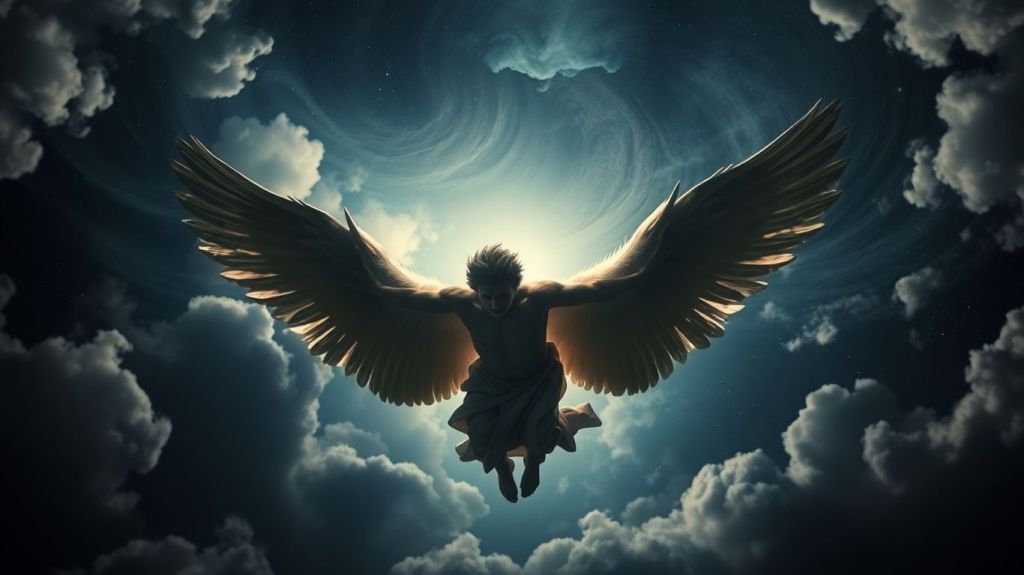
You know, I was looking at Alexandre Cabanel’s ‘Fallen Angel’ painting the other day, and it really got me thinking. It’s one of those pieces that just sticks with you, you know? It’s not just a picture; it’s got all this history and meaning packed into it. We’re going to break down what makes this angel fallen painting so special, from the artist’s choices to the deeper messages hidden within the canvas. It’s a pretty fascinating look into art and what it can say about us.
Key Takeaways
- Alexandre Cabanel’s ‘Fallen Angel’ painting, created in 1868, is a significant work that departs from his usual style, focusing on the dramatic depiction of Lucifer.
- The painting draws heavily from biblical narratives, particularly Milton’s ‘Paradise Lost,’ and is influenced by the Romantic movement’s emphasis on emotion and individualism.
- Symbolism is central to the angel fallen painting, with elements like broken wings, barren landscapes, and the angel’s posture conveying themes of rebellion, loss, and despair.
- Cabanel employed specific artistic techniques, including a masterful use of color and light, and careful composition, to heighten the emotional impact and narrative of the fallen angel.
- The ‘Fallen Angel’ painting has had a lasting cultural impact, serving as a symbol in various art forms and remaining a popular subject that continues to inspire and be interpreted by audiences.
Unveiling Alexandre Cabanel’s Fallen Angel Painting
Introduction to Alexandre Cabanel’s Fallen Angel Painting
Alexandre Cabanel was a big deal in French painting back in the 19th century, known for his really polished portraits, especially of women. He was a major player in the academic art scene, which really focused on classical subjects, perfect technique, and historical themes. But then, in 1868, he painted "The Fallen Angel," and it was a bit of a curveball. Instead of his usual graceful ladies, he gave us this massive oil painting of a male figure, widely thought to be Lucifer himself, after he’d been kicked out of heaven. This guy is just lying there, wings all messed up, face twisted in pain. It’s a stark contrast to his typical work, and honestly, that’s part of what makes it so interesting.
The Story Behind the Fallen Angel Painting
Cabanel actually painted "The Fallen Angel" in 1847, when he was just 24 and studying in Rome. The story goes that as part of his studies at the Villa Medici, he was supposed to paint a male nude. So, he started with a study for "The Fallen Angel" in 1846, and then spent months working on the final version. What’s really striking is how different this Lucifer is from the usual horned, scary devil. Cabanel depicted him as a young, incredibly fit man, almost like a sculpture from ancient Greece or Rome. He’s often called a "handsome devil," and you can see why. This portrayal really broke the mold.
Cabanel’s time in Rome, studying the old masters after winning the Prix de Rome scholarship, clearly had a huge impact. You can see that influence in the way he rendered Lucifer’s physique, drawing from Renaissance traditions. Plus, the whole Romantic movement was in full swing, with its focus on feelings and individual expression. All these things seem to have come together in this painting, giving us this really emotional take on Lucifer’s fall.
When you look at the painting, you notice a lot of details that tell a story. Lucifer’s posture – arms crossed, hands clenched, face hidden – suggests a deep sense of shame about his downfall. Cabanel even changed the original study, having Lucifer peek out from behind his arm instead of just looking down, which adds a layer of defiance or perhaps a plea. His right wing, spread out on the left side of the canvas, sort of fades into the background, losing its bright white color and looking more like dead leaves. This is a pretty clear symbol of his lost connection to heaven and his power. And while Lucifer is naked, showing his banishment, the angels in the sky are covered in blue cloth, representing their heavenly status. He’s leaning against a rock in a rocky, mountainous area, which just emphasizes how isolated he is. It’s a really carefully put-together scene, with every element adding to the overall feeling of loss and despair.
Decoding the Symbolism in the Fallen Angel Painting
Alexandre Cabanel’s ‘Fallen Angel’ is a painting that really makes you stop and think. It’s not just a pretty picture; it’s packed with meaning, drawing heavily from angelic and biblical stories. The central figure, the angel, is a really complex symbol. It represents both the idea of purity and the act of rebellion, all tied up in that dramatic fall from grace. This kind of duality is something you see a lot in religious art and stories, especially in texts like the Bible.
Exploring Angelic and Biblical Symbolism
The way Cabanel portrays the angel gives us a look into his own take on these old stories. It’s like he’s inviting us to look closer, to really dig into what all the different parts of the painting might mean. Understanding these layers often means looking at how different cultures and religions interpret angelic figures. For instance, the concept of a fallen angel, like Iblis in some traditions, often speaks to themes of disobedience and the consequences that follow angels in art.
Decoding Key Symbolic Elements
When you really examine the painting, you start to notice all these little details that add to the story. The angel’s expression, for example, is pure agony and sorrow. It’s a powerful way Cabanel shows us the weight of the angel’s fall. Then there’s the posture and even the clothing, or lack thereof, which all contribute to this feeling of loss and being cast out. The angel’s nudity, in contrast to the clothed angels in heavenly depictions, really highlights this banishment and unworthiness.
Cabanel also uses the background to amplify the emotional impact. The stormy sea and the empty, rocky landscape aren’t just scenery; they represent the chaos and instability the angel is experiencing internally. The barrenness of the land emphasizes the angel’s isolation and the desolation that comes with being cast out.
The Symbolism of Broken Columns and Barren Landscapes
Scattered throughout the scene, you’ll find broken columns. In the world of architecture, columns are usually symbols of strength and stability. So, seeing them shattered in this painting is a pretty clear sign of ruin and complete downfall. It’s a visual cue that reinforces the angel’s broken state.
Here’s a quick breakdown of some key symbolic elements:
- The Angel’s Expression: Shows deep sorrow and despair.
- Broken Wings: Represent the loss of divine power and the fall from grace.
- Barren Landscape: Symbolizes isolation and desolation.
- Stormy Sea: Reflects internal turmoil and chaos.
- Broken Columns: Signify ruin and the collapse of former strength.
The entire composition works together to tell a story of immense loss and the profound consequences of rebellion. Each element, from the angel’s posture to the desolate surroundings, contributes to the overwhelming sense of tragedy.
Analyzing the Artistic Techniques of the Fallen Angel
When you really look at Alexandre Cabanel’s "The Fallen Angel," it’s clear he wasn’t just painting a story; he was building an experience. His skill with paint is pretty amazing, and it’s worth breaking down how he did it.
Cabanel’s Artistic Style and Techniques
Cabanel was a big name in academic art, known for his polished style. But with "The Fallen Angel," he really leaned into the drama. He took inspiration from things like John Milton’s "Paradise Lost," and you can see that influence in the way he portrays Lucifer not just as evil, but as a complex, almost sympathetic figure in his defeat. This approach was pretty common during the Romantic period, which loved exploring big emotions and individual struggles.
He was a master at making his figures look real, almost like you could reach out and touch them. The way he painted Lucifer’s muscles, the texture of his wings, even the rough stone he’s leaning on – it all adds up to make the scene feel incredibly present. It’s not just a flat image; it’s like a snapshot of a very intense moment.
The Masterful Use of Color and Light
Cabanel’s color choices here are really something. He uses a palette that’s mostly soft blues and earthy tones. The blues, seen in Lucifer’s wings and the sky, feel heavenly, but they’re contrasted with the darker, rougher browns and grays of the rocky landscape. This contrast really drives home the idea of his fall from grace, from the sky down to this harsh earth. The way he uses light is particularly striking, casting Lucifer in a bright spotlight that makes him the undeniable center of attention. This lighting really sculpts his form, giving him a powerful, almost tangible presence against the slightly dimmer background.
Compositional Choices Enhancing Emotional Impact
Every part of how the painting is put together works to tell the story and make you feel something. Lucifer is positioned so he’s the main focus, his body angled in a way that suggests both power and pain. His wings, spread out but with darkening tips, seem to blend into the background, a visual cue for his lost connection to heaven. He’s leaning on a rock, which is elevated, making him seem isolated. Even the broken columns scattered around aren’t just random; they represent ruin and instability, reinforcing the theme of downfall.
Cabanel’s composition is a carefully constructed narrative. The placement of Lucifer, the details in his posture, and the surrounding elements all work together to convey the profound sense of loss and banishment. It’s a visual story where every brushstroke contributes to the emotional weight of the fallen angel’s plight.
Here’s a quick look at some key compositional elements:
- Focal Point: Lucifer is clearly the main subject, highlighted by light and central placement.
- Contrast: The use of soft blues against earthy tones visually separates the celestial from the terrestrial.
- Symbolic Elements: Broken columns and barren landscapes reinforce the theme of ruin and isolation.
- Posture: Lucifer’s pose, with folded arms and a covered face in some interpretations, speaks volumes about his shame and inner turmoil.
The Historical and Cultural Context of the Fallen Angel
Understanding the Context of ‘Fallen Angel’
Alexandre Cabanel’s "Fallen Angel," painted in 1868, didn’t just appear out of nowhere. It was born from a specific time and place, deeply influenced by the cultural currents of 19th-century France. The era was a bit of a mixed bag, with old traditions bumping up against new ideas. Think of it as a time when people were questioning things, looking at the world a bit differently, and that definitely seeped into the art.
Influences of the Romantic Movement
The Romantic movement was a big deal back then, and it really shaped how artists thought about emotion and individual experience. Instead of just sticking to strict rules, artists started exploring feelings, drama, and the power of imagination. Cabanel, even though he was known for his more polished style, clearly tapped into this. The intense emotion on the angel’s face, the dramatic pose – it all speaks to that Romantic spirit of expressing deep feelings. It was a way to break free from older, more rigid artistic ideas and connect with viewers on a more personal level. This shift allowed for subjects like the fallen angel to be explored with a new intensity, moving beyond simple religious illustration to a more psychological study. The focus on the individual’s struggle and inner turmoil was a hallmark of this period, and Cabanel’s work fits right in.
Societal Shifts Reflected in the Painting
Beyond just artistic trends, the society itself was changing. There was a growing interest in science and reason, but also a continued fascination with the spiritual and the dramatic. This tension between faith and doubt, the divine and the earthly, might be what Cabanel was playing with. The painting could be seen as a reflection of anxieties about losing faith or the consequences of rebellion, themes that would have resonated with people grappling with rapid societal changes. It’s like the painting captured a moment of questioning, a look at what happens when powerful beings, or even societies, stray from their established paths. The depiction of isolation and despair could mirror feelings of displacement or uncertainty experienced by many during this transformative period. It’s a visual representation of a world in flux, much like the world of Michelangelo’s Sistine Chapel ceiling was a reflection of its own time’s theological and humanistic concerns.
The painting captures a moment of profound internal conflict, a visual echo of the societal and artistic shifts occurring in mid-19th century Europe. It’s more than just a depiction of a biblical figure; it’s a commentary on the human condition, rendered through the lens of a tumultuous era.
Emotional Resonance and Viewer Perception
Analyzing the Painting’s Emotional Resonance
Alexandre Cabanel’s ‘Fallen Angel’ really pulls you in, doesn’t it? A big part of that is how he uses color. The painting leans heavily on softer blues and grays, and it’s not just about making it look pretty. These colors actually help show the angel’s inner feelings, that sense of sadness and being lost. It’s like Cabanel is painting not just a figure, but a whole mood, and that mood kind of seeps into you as you look at it. It makes you feel a bit of that melancholy yourself.
The Angel’s Expression and Posture
When you look at the angel itself, its expression and how it’s holding itself tells a huge story. You can see the pain and maybe even a bit of defiance in its eyes. It’s not just a passive figure; there’s a lot going on internally. The way the body is positioned, maybe a bit slumped but still with a certain strength, hints at a past glory and a present struggle. It’s this mix of vulnerability and pride that makes the character so compelling. It feels like a real person, even though it’s an angel.
Evoking Melancholy and Desolation Through Hues
Beyond just the colors themselves, it’s how Cabanel uses light that really seals the deal for the emotional impact. The angel is often shown in this dim, almost otherworldly light. It’s like a spotlight, but a sad one, highlighting the angel’s fallen state. This contrast between the light on the angel and the darker surroundings really emphasizes the feeling of being cast out or alone. It’s a clever way to show a being that was once divine now existing in shadow. The whole scene just feels heavy with a sense of loss and emptiness, and those colors and the way the light hits everything are key to that feeling.
The Fallen Angel Painting in Art History
Alexandre Cabanel’s "The Fallen Angel" isn’t the only famous take on this dramatic subject, but it certainly holds a significant place. When we look at other artists who tackled this theme, like Gustave Doré with his detailed illustrations for Milton’s "Paradise Lost," or Peter Paul Rubens’s intense "The Fall of the Damned," Cabanel’s work stands out. While Doré’s work is full of dramatic detail and Blake’s is more mystical, Cabanel manages to blend academic realism with a deep sense of Romantic emotion. It’s this mix that makes his portrayal of Lucifer so striking.
Comparison with Other Famous Fallen Angel Paintings
It’s interesting to see how different artists approach the same story. Cabanel’s painting, completed in 1868, shows a fallen angel in agony, a powerful image that really captures the drama of the fall from grace. Compare this to earlier works, for instance, where the focus might be more on the chaos of the battle in heaven. Cabanel’s approach feels more personal, focusing on the individual suffering and isolation of the fallen being. His use of light and shadow, typical of the era, really adds to the emotional weight, much like Rubens did in his own depictions of heavenly battles and their aftermath. The way Cabanel renders the angel’s form, with every muscle defined yet conveying immense pain, is a hallmark of his academic training, but the raw emotion is pure Romanticism.
The Legacy of Cabanel’s Fallen Angel Painting
Cabanel’s "Fallen Angel" has left a real mark on art. It’s a prime example of academic art but also shows how the Romantic movement influenced artists to explore deeper emotions and individual experiences. The painting’s power to move people hasn’t faded; it continues to inspire artists and art fans alike. Its themes of rebellion, the struggle between good and evil, and the consequences of defiance are timeless. The painting’s influence even stretches beyond the canvas, showing up in literature, music, and film, proving the enduring appeal of the fallen angel narrative. You can see this masterpiece at the Musée Fabre in Montpellier, France, where it’s a major draw for visitors interested in French academic painting.
Collecting Fallen Angel Paintings: Investment or Passion?
When it comes to collecting art like Cabanel’s "Fallen Angel," it really comes down to what drives you. Is it the potential for an investment, or is it a genuine passion for the art itself? The market for works by artists like Cabanel can be strong, given their historical significance and artistic merit. However, for many collectors, the real value lies in the emotional connection and the appreciation of the artist’s skill. Owning a piece that speaks to you, that tells a story and evokes strong feelings, is often more rewarding than any financial gain. It’s about bringing a piece of art history into your own space and living with its powerful imagery every day. The decision often balances the appreciation of artistic technique with the personal meaning the artwork holds.
Cultural Significance and Enduring Appeal
Evaluating the Cultural Impact of ‘Fallen Angel’
Alexandre Cabanel’s ‘Fallen Angel’ really made waves, and its influence didn’t just stop with art critics. This painting became a big deal in 19th-century French art, and honestly, it still catches people’s attention today. It’s like a go-to image for the idea of a fallen being. Lots of artists looked at Cabanel’s work and got ideas for their own pieces, showing how much it stuck with people across different places and times.
The Fallen Angel as a Cultural Artifact
Think about it – this painting isn’t just paint on canvas anymore. It’s become a symbol used everywhere. You see it pop up in books, songs, and movies, usually when someone wants to talk about rebellion, loss, or a fall from grace. It’s pretty amazing how a single artwork can become such a common reference point in our culture. It’s more than just a painting; it’s like a piece of history we can still connect with.
Popular Culture Interpretations of the Fallen Angel
When we look at how ‘Fallen Angel’ shows up in popular culture, it’s usually as a metaphor. It represents that moment when something or someone loses their status, their purity, or their place. It’s a visual shorthand for a dramatic downfall.
- Literature: Often used to describe characters who have lost their way or turned against a higher power.
- Music: Songwriters might use the imagery to convey themes of heartbreak, betrayal, or a loss of innocence.
- Film: Directors might employ the visual of a fallen angel to symbolize a character’s moral corruption or a dramatic shift in their journey.
The way Cabanel painted the angel, with that mix of beauty and despair, really hits home. It’s not just about a religious story; it’s about a very human feeling of being cast out or failing. That’s probably why it keeps showing up in different stories and art forms – it taps into something we all understand on some level.
It’s interesting to see how the same image can mean slightly different things depending on where you see it, but the core idea of a fall from a high place is always there. It’s a testament to the painting’s lasting power.
Wrapping Up Our Look at the Fallen Angel
So, after digging into Alexandre Cabanel’s ‘Fallen Angel,’ it’s clear this painting is way more than just a pretty picture. It’s packed with meaning, from the broken columns to the angel’s sad face, all telling a story of rebellion and loss. Cabanel really knew how to use color and light to make you feel something, drawing you into the angel’s struggle. It’s a piece that’s stuck around, influencing other artists and showing up in different parts of culture, proving it’s a pretty important work of art. It’s a reminder that even in art, there’s a lot going on beneath the surface.
Frequently Asked Questions
What is the story behind Alexandre Cabanel’s ‘Fallen Angel’ painting?
Alexandre Cabanel’s painting ‘Fallen Angel’ is based on the epic poem ‘Paradise Lost’ by John Milton. It tells the story of Satan’s rebellion against God and his subsequent banishment from heaven. The painting shows Lucifer after his fall, filled with pain and regret.
What does the Fallen Angel symbolize in the painting?
The Fallen Angel symbolizes rebellion, loss of grace, and the pain that comes with it. The broken wings represent his fall from heaven, and his sad expression shows his deep sorrow and suffering.
How does Cabanel use color and light to create emotion?
Cabanel uses soft blues and grays to create a sad and lonely feeling. He also uses light and shadow carefully. The angel is shown in a dim light, showing he is no longer divine, which makes the painting more emotional.
What artistic style is ‘Fallen Angel’ an example of?
The painting is a great example of academic art, known for its detailed and realistic style. However, it also shows influences from the Romantic movement, which focused on strong emotions and dramatic scenes, like the angel’s suffering.
Are there other famous paintings of the Fallen Angel?
Yes, many artists have painted the Fallen Angel. Other famous examples include illustrations by Gustave Doré and William Blake for ‘Paradise Lost,’ and Peter Paul Rubens’s ‘The Fall of the Damned.’ Cabanel’s version is unique for blending realism with deep emotion.
Where can I see Cabanel’s ‘Fallen Angel’ painting today?
You can see Alexandre Cabanel’s ‘Fallen Angel’ painting at the Musée Fabre in Montpellier, France. It is part of their permanent collection and is a popular piece for visitors.





 PERFECT PAINTER
Leave a comment