

Thinking about picking up a paintbrush or maybe just want to get better at painting? It’s not as hard as you might think to find art and painting classes near me. Whether you’re a total beginner or have been painting for years, there are tons of places to learn. You don’t need to be a natural genius to get started; just a bit of enthusiasm and someone to show you the ropes. Painting can be a really great way to express yourself and get creative. You can paint anything, really, from landscapes to abstract stuff. So, let’s look at some of the best spots to find classes.
Key Takeaways
- Community centers and libraries often have affordable art classes and workshops for various skill levels, but they fill up fast.
- Universities and colleges frequently offer public painting and drawing courses, sometimes taught by professional artists.
- Private tutors provide personalized instruction tailored to your specific needs and schedule, which can be very effective.
- Paint Nite events offer a fun, social way to learn painting, often in a casual setting with drinks, suitable for beginners.
- Consider the type of paint you want to use—acrylics are good for beginners, oils offer versatility, and watercolors are challenging but rewarding.
Community Centres
When you’re looking for a place to get your hands dirty with some paint, don’t forget about your local community centres. Seriously, these places are often overlooked but can be a goldmine for affordable art classes. They usually cater to all skill levels, from folks who’ve never picked up a brush to those who are pretty comfortable with them. You can often find weekend or evening sessions, which is super convenient if you work a regular 9-to-5. They also sometimes have special workshops pop up, so keep an eye on your local municipality’s website or bulletin boards.
It’s a good idea to check these places out early, though. Spaces can fill up surprisingly fast, especially for popular classes. Think of it like trying to get tickets to a concert – you gotta be quick!
What to Expect at Community Centre Art Classes
- Variety of Mediums: While painting is common, you might also find classes in drawing, pottery, or even mixed media.
- Beginner-Friendly: Most community centres aim to be accessible, so expect classes that start with the basics.
- Affordable Pricing: Compared to private studios or university programs, community centres are usually the most budget-friendly option.
- Community Vibe: It’s a great way to meet people in your neighborhood who share similar interests.
Community centres often have a relaxed atmosphere, making them perfect for trying something new without any pressure. It’s less about producing a masterpiece and more about the experience of creating.
If you’re curious about what’s available, a quick search for "community art classes near me" should point you in the right direction. You might be surprised at what your local centre has to offer. For example, places like Art Lab often have programs that are perfect for getting started.
Libraries
Libraries often surprise people with the range of creative programs they host. Beyond just books, many public libraries have stepped up to offer art and painting classes, sometimes even for free or at a very low cost. These sessions are fantastic for getting your feet wet with painting without a big commitment. You might find anything from a one-off watercolour workshop to a short series on acrylic techniques.
It’s worth checking your local library’s event calendar or asking a librarian directly. They might have drop-in sessions or scheduled classes that fit your schedule. Plus, libraries are usually pretty relaxed environments, making them great for beginners who might feel a bit intimidated by more formal settings. They’re a real community resource for learning new skills.
Libraries are increasingly becoming hubs for community learning, extending their services beyond traditional media to include hands-on creative workshops.
Here’s what you might find at your local library:
- Introductory Painting Workshops: Often focusing on a single medium like acrylics or watercolours, these are perfect for absolute beginners.
- Art History Talks: Some libraries host talks or discussions about art, which can be inspiring even if you’re not painting that day. For example, you can explore iconic American photography with art historians.
- Open Studio Time: Occasionally, libraries might offer open studio sessions where you can bring your own supplies and work on your projects in a shared space.
- Family Art Days: Many libraries have events geared towards families, encouraging creativity across all ages.
University Programs
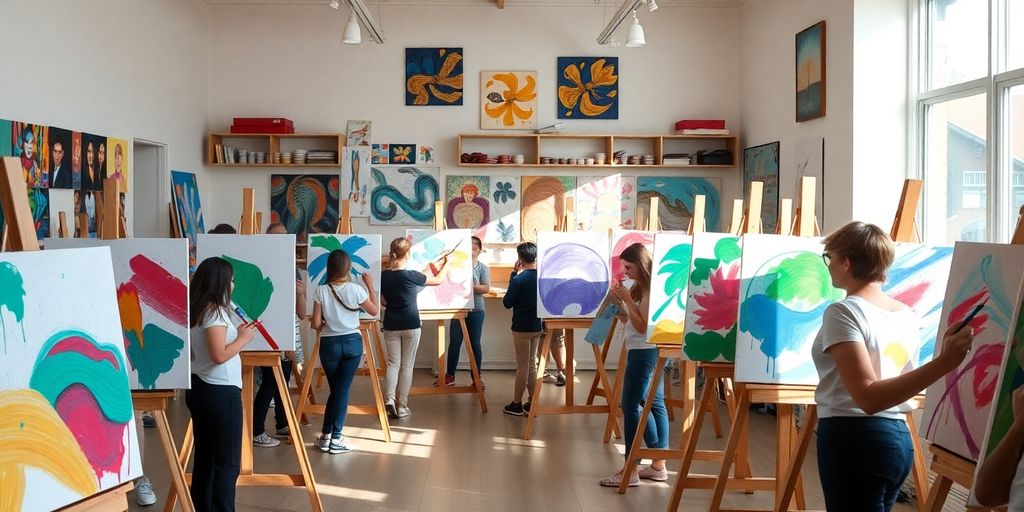
Many universities and colleges offer art and painting classes that are open to the public, not just enrolled students. These programs can provide a more structured learning environment, often taught by practicing artists who are also faculty members. You might find courses covering a wide range of techniques and styles, from traditional oil painting to more contemporary approaches like digital art or mixed media. It’s a great way to get a feel for university-level art education without committing to a full degree.
What to Expect:
- Curriculum Variety: Universities often have diverse programs that explore various mediums and concepts. You could study everything from classic drawing techniques to experimental installations.
- Expert Instruction: Classes are typically led by professors and professional artists who bring real-world experience and insights into the art world.
- Access to Facilities: Depending on the program, you might get access to specialized studios, equipment, and libraries.
- Art History and Theory: Many university courses integrate art history and critical theory, giving you a broader context for your artistic practice.
Finding Programs:
- Check University Websites: Look for continuing education or extension programs at local universities. Some institutions, like 92nd Street Y, have robust public art programs.
- Community Outreach: Some university art departments have community outreach initiatives or offer workshops open to the public.
- Continuing Education Departments: These departments are specifically designed to offer courses to non-degree students.
University art programs can offer a unique blend of technical skill development and theoretical understanding, providing a solid foundation for anyone looking to seriously explore painting.
Art Galleries and Museums
Many art galleries and museums don’t just display art; they also offer classes and workshops for people who want to learn how to create it. These places are fantastic because you’re literally surrounded by inspiration. You can often find courses that cover a range of skill levels, from absolute beginners to those looking to refine specific techniques.
For instance, some galleries might have a four or eight-week program focusing on a particular medium or style. Others might offer more casual drop-in sessions or even art history workshops that can inform your painting practice. It’s a great way to get hands-on experience and learn from instructors who are often practicing artists themselves. You might even get to see some of the art you’re learning about up close.
What to Expect
- Variety of Mediums: You can often find classes focusing on acrylics, oils, watercolours, or even drawing.
- Skill Levels: Most places cater to all levels, so don’t worry if you’ve never picked up a brush before.
- Expert Instruction: Learn from experienced artists and educators.
- Inspiring Environment: Immerse yourself in art and creativity.
Visiting a major art institution like the Montreal Museum of Fine Arts can be a really eye-opening experience, not just for the art on display, but for the learning opportunities they provide. It’s a chance to connect with art in a more active way.
When looking for classes, check the specific gallery or museum’s website. They usually have a dedicated section for their educational programs. You might be surprised at the range of options available right in your local area.
Private Tutors
Finding a Private Art Tutor
Sometimes, the best way to really get a handle on painting is to have someone guide you one-on-one. Private tutors can tailor lessons specifically to what you want to learn and when you want to learn it. It’s a pretty flexible way to go about it, especially if you have a busy schedule or a particular technique you’re struggling with. You can really customize your lessons to address the specific techniques you’d most like to work on and on a schedule that is most suitable for you.
When you’re looking for a private tutor, it’s a good idea to think about a few things beforehand. Here are some questions you might want to ask yourself:
- What kind of experience does the tutor have?
- What materials do they use, and what will you need?
- What does their availability look like?
- Do they teach at a level that’s right for you?
- What’s their teaching style?
- What do they charge per lesson?
- Where do they teach? Are they available in your local area?
Working with a private tutor means you get direct feedback and can focus on the areas where you need the most help. It’s a more personal approach than a large group class, and often, you can find someone who fits your budget and learning style.
Platforms like Airtasker can help you find local art tutoring services. You can get quotes from reviewed and trusted art tutors in your area, making the search a bit easier. It’s a good way to connect with instructors who can help you develop your skills at your own pace.
Paint Nite
Looking for a fun, social way to get creative? Paint Nite events are popping up all over, offering a relaxed atmosphere where you can create your own masterpiece, usually with a drink in hand. It’s not about being a pro; it’s about having a good time and letting your inner artist out.
These events are super beginner-friendly. An instructor guides you step-by-step through the painting process, making it easy for anyone to follow along. You don’t need any prior experience, and they usually have a huge library of paintings to choose from, so you can come back again and again and try something new.
Paint Nite is a great way to unwind and socialize. It’s perfect for a casual night out with friends, a unique date idea, or even a fun solo adventure.
Finding a Paint Nite Event
To find a Paint Nite near you, just check their events calendar online. You can search by city or town to see what’s happening locally. Once you spot an event you like, you can book your spot right there.
What to Expect
- Guided Instruction: A professional artist leads the session, breaking down the painting into simple steps.
- Social Atmosphere: Enjoy the company of friends or meet new people while you paint.
- Creative Freedom: While there’s a guided painting, feel free to add your own personal touches.
- Materials Provided: Typically, all the necessary art supplies, like canvases and paints, are included.
Age Appropriateness
It’s worth noting that age restrictions can vary. Some events are open to all ages, while others might be for adults only or teens and up. Always check the specific event details before booking. For example, you might find an event like the "Open Heart" paint night on August 12th, 2025, which is suitable for ages 8 and up, costing $35.00. You can find more details about local paint night events.
Acrylics
Acrylic paints are a fantastic choice, especially if you’re just starting out. They’re pretty forgiving, meaning you can often paint over mistakes without much fuss. Plus, cleanup is a breeze – just soap and water. Unlike oils, you don’t need a bunch of special solvents or anything. They dry pretty fast, which can be good for layering but might take some getting used to if you like to blend colors for a long time on the canvas.
When you’re looking for acrylic classes, keep an eye out for sessions that focus on the basics. You’ll want to learn about:
- Color mixing: How to get all the shades you want from a basic set.
- Brush techniques: Different ways to hold and use brushes for various effects.
- Layering and texture: Building up paint to create depth.
- Understanding mediums: How to alter the paint’s consistency and drying time.
Many local art studios and community centers offer introductory acrylic workshops. These are usually low-pressure environments where you can experiment and just have fun with the paint. It’s a great way to see if acrylics are the right fit for you before investing in a ton of supplies. You can often find these types of classes listed on local event calendars or through art organizations in Fort Worth.
Acrylics are super versatile. You can use them thinly, almost like watercolors, or build them up thick like oils. This flexibility makes them a great medium to explore different styles without needing a whole new set of paints.
Some classes might even provide all the materials you need, so you can just show up and start painting. It’s a good idea to check the class description to see what’s included. You might be surprised at how quickly you can start creating something you’re proud of.
Oil Painting
Oil painting is a classic choice for many artists, and for good reason. It offers a rich depth of color and a smooth blending capability that’s hard to match with other mediums. Unlike acrylics, which dry quickly, oils give you a lot more time to work with the paint, allowing for subtle transitions and detailed layering. This makes it a fantastic option if you enjoy a more deliberate pace in your creative process.
When you’re starting out with oils, you’ll want to get a basic set of colors. Typically, you’ll need a palette of primary colors (red, yellow, blue), plus black and white. You’ll also need brushes suited for oil paints – usually softer bristles work best. And of course, you’ll need a surface to paint on, like canvas or specially prepared wood panels. Don’t forget a medium, like linseed oil, which helps thin the paint and affects drying time and finish.
Here’s a quick rundown of what to consider:
- Paint Consistency: Oil paints can be used straight from the tube for thick, textured strokes, or thinned with mediums for glazes and washes.
- Drying Time: This is the big difference. Oils can take days or even weeks to dry completely, depending on the thickness and the mediums used. This extended working time is a major advantage for blending and achieving smooth gradients.
- Cleanup: Oil paints require solvents like turpentine or mineral spirits for cleaning brushes and palettes. It’s important to use these in a well-ventilated area.
- Color Mixing: The slow drying time allows for extensive color mixing directly on the canvas, which can lead to very nuanced and complex hues.
Many artists find that the tactile nature of oil paint, the way it feels and moves under the brush, is incredibly satisfying. It’s a medium that really encourages experimentation with texture and light.
If you’re looking to explore oil painting, consider checking out local art studios or even community centres that might offer introductory workshops. They can provide a great starting point to learn the basics and get a feel for the medium.
Watercolours
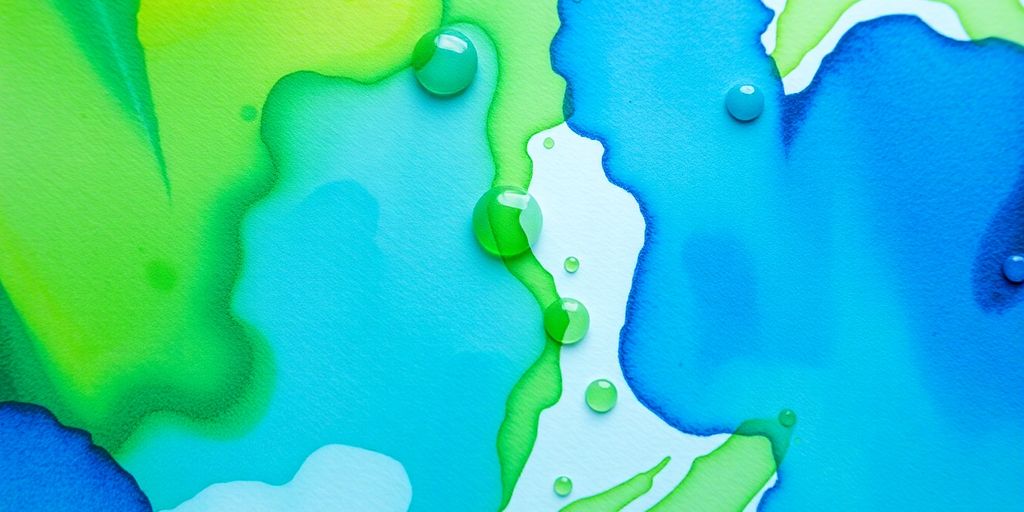
Watercolours can be a bit tricky, not gonna lie. Unlike acrylics or oils, mistakes with watercolours are harder to fix because the paint is so fluid. You really need to think ahead and plan your strokes. It’s not the best choice if you’re just starting out and want something forgiving. You’ll need a few specific supplies too, like watercolour paints, brushes designed for them, masking fluid to keep areas white, tape, and of course, special watercolour paper that can handle all that water without buckling.
Mastering watercolours involves understanding how the water and pigment interact.
Here’s a quick rundown of what you might learn in a watercolour class:
- Washes: Learning to apply even layers of colour, from light to dark.
- Layering: Building up colours and values by applying transparent washes over dried layers.
- Wet-on-Wet: Applying wet paint onto a wet surface for soft, blended effects.
- Wet-on-Dry: Applying wet paint onto a dry surface for sharper lines and more control.
- Lifting: Removing paint from the paper while it’s still wet or dry to create highlights or correct errors.
Many beginner watercolour classes focus on these foundational techniques. They’ll guide you through applying washes and constructing a composition, which is a great starting point for anyone new to the medium. You can find these introductory sessions at various local art centers or through specific art programs.
When looking for a class, check if they cover these basics. Some places might offer drop-in sessions, while others have structured courses. It’s always a good idea to see what the class covers before signing up.
Online Programs
Sometimes, getting to a physical class just isn’t in the cards. Life gets busy, right? Luckily, the internet has opened up a whole world of painting and art instruction. You can find classes covering everything from basic brush strokes to advanced techniques, all from the comfort of your own home. Many platforms offer pre-recorded video lessons, so you can learn at your own speed and rewind if you miss something. Some even have interactive elements or communities where you can share your work and get feedback.
Types of Online Programs
- Live Virtual Classes: These are like traditional classes but happen over video conferencing. You can interact with the instructor and other students in real-time.
- On-Demand Video Courses: Pre-recorded lessons you can watch anytime, anywhere. Great for fitting learning into your schedule.
- Interactive Apps: Many apps are available for smartphones and tablets that can help you practice drawing and painting techniques.
- Virtual Museum Tours & Inspiration: Big museums often have apps or online resources that let you explore famous artworks, which can be a great way to get inspired before you start painting.
Finding the Right Online Class
When looking for an online painting class, think about what you want to achieve. Are you a total beginner wanting to learn the basics of acrylics? Or maybe you’re looking to refine your watercolour skills? Check out platforms that specialize in creative arts education. You might find a great introductory course on pottery classes that also offers painting modules, or a dedicated painting school with a wide range of online options.
It’s easy to get overwhelmed by all the choices online. Start by looking for instructors whose style you admire and whose teaching methods seem clear and encouraging. Don’t be afraid to try a free trial or a beginner’s workshop first to see if it’s a good fit before committing to a longer course.
Ready to Pick Up a Brush?
So, you’re ready to get your hands a little messy and explore your creative side? That’s awesome. Remember, you don’t need to be a born artist to enjoy painting. Whether you’re drawn to the quick-drying nature of acrylics, the rich depth of oils, or the delicate flow of watercolors, there’s a class out there for you. From community centers and libraries offering casual workshops to universities and private tutors providing more focused instruction, the options are plentiful. Don’t forget about fun events like Paint Nite for a social experience, or even online resources if you prefer learning from your couch. The most important thing is to just start. Find a class that fits your schedule and your interest, grab some supplies, and see what you can create. You might surprise yourself!
Frequently Asked Questions
Where can I find painting classes near me?
You can find painting classes at local community centers, libraries, universities, art galleries, and museums. Sometimes, private tutors or special events like ‘Paint Nite’ also offer classes. Checking your local town or city’s website is a great first step.
What kind of paint should I use as a beginner?
Acrylic paints are often best for beginners because they’re easy to use, don’t need special gear, and clean up well. Oil paints are used by pros and are flexible, but watercolours can be tricky for newcomers due to how hard they are to control and fix mistakes.
Are ‘Paint Nite’ events suitable for beginners?
Yes, most ‘Paint Nite’ events are made for beginners! An instructor will guide you step-by-step, making it easy and fun, even if you’ve never painted before. They’re great for a fun night out.
Is learning from a private tutor a good idea?
Learning with a private tutor can be very effective. You get one-on-one help tailored to what you want to learn and when you want to learn it. It’s often better than large group classes where you might not get as much personal attention.
What basic supplies do I need to start painting?
You’ll typically need paints (like acrylics, oils, or watercolors), brushes, a surface to paint on (like canvas or paper), and a palette. Your instructor or the class description will usually tell you exactly what you need.
Do I need to be talented to start painting?
Absolutely! The most important things are your excitement to learn and sticking with it. You don’t need to be born with talent. With the right guidance, anyone can learn to paint and express their creative side.




 PERFECT PAINTER
Leave a comment