
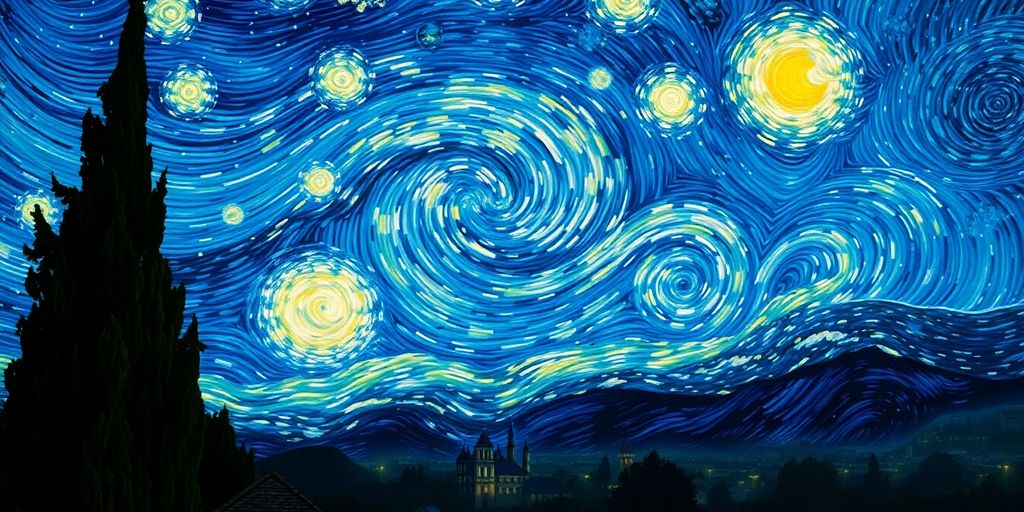
So, about Van Gogh’s Starry Night. It’s one of those paintings everyone seems to know, but what’s really going on in it? I decided to take a closer look at this famous painting by Van Gogh, and honestly, it’s pretty wild. From the swirling sky to that big dark tree, there’s a lot to unpack. It wasn’t just a pretty picture; it seems like Van Gogh poured a whole lot of himself into it, maybe more than he even realized. Let’s break down what makes this painting so special.
Key Takeaways
- The painting by Van Gogh, Starry Night, uses bold colors and distinct brushstrokes to create a powerful emotional impact.
- The cypress tree in the painting is often seen as a symbol of death and Van Gogh’s connection to the afterlife.
- Starry Night exemplifies Post-Impressionism by focusing on the artist’s feelings and the expressive use of color and light, rather than just realistic depiction.
- Van Gogh’s personal struggles and fascination with the night sky and the concept of death are deeply woven into the imagery of the painting.
- The composition contrasts the dynamic, energetic sky with the quiet village below, highlighting different aspects of Van Gogh’s experience.
Understanding The Starry Night’s Aesthetic
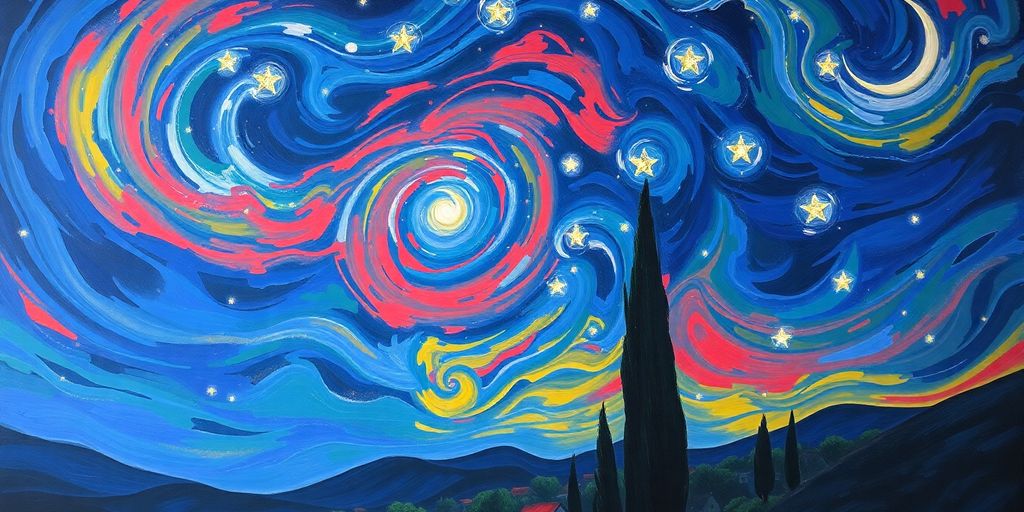
When you look at Van Gogh’s "The Starry Night," the first thing that grabs you is probably the sky. It’s not just blue; it’s this swirling, energetic mass of blues, yellows, and whites. Van Gogh really went all out with his color choices here. He used thick, bold strokes of paint, almost like he was sculpting the sky onto the canvas. You can see the texture, the way the paint stands out. It gives the whole scene a real sense of movement and life.
Van Gogh’s Use of Color and Light
Van Gogh believed the night held more colors than the day, and "The Starry Night" proves it. He uses deep blues, almost black, for the mountains, but then contrasts them with these incredibly bright yellows and whites for the stars and moon. The way he makes the celestial bodies glow is pretty amazing. It’s like they’re radiating their own light, pushing back the darkness. The morning star, that bright one to the left, really pops. It’s a masterclass in how color can create mood and drama.
The Iconic Brushstrokes
Those brushstrokes are what make "The Starry Night" so recognizable. They’re short, often circular, and full of energy. Look closely, and you can see how he applied the paint directly, creating this thick, almost sculpted surface. This technique gives the painting a sense of rhythm and flow, especially in the sky and that big cypress tree. It’s not a smooth, blended look; it’s raw and expressive. This style really captures the feeling of the night sky, making it seem alive and dynamic. It’s a key part of the painting’s brand perception.
Celestial Elements in the Sky
The sky itself is the main event. You’ve got the swirling blues, the bright, almost explosive stars, and that prominent crescent moon. Van Gogh wasn’t just painting what he saw; he was painting what he felt. The stars aren’t just dots; they’re these vibrant orbs of light, surrounded by halos. The moon seems to pulse with energy. And then there’s that bright morning star, a symbol of hope or perhaps just the coming dawn. It all comes together to create a sky that feels both real and otherworldly.
The way Van Gogh uses color and brushwork creates a powerful emotional impact. It’s not just a picture of a night sky; it’s an experience of it.
Symbolism Within the Painting
Van Gogh’s "The Starry Night" is more than just a pretty picture of the night sky; it’s packed with meaning. Artists have always used symbols to get their ideas across, and Vincent was no different. He wasn’t just painting what he saw; he was painting what he felt and thought about the world around him, and especially about life and death.
Interpreting the Cypress Tree
The tall, dark, flame-like shape dominating the left side of the painting is a cypress tree. These trees have a long history of being associated with death and cemeteries, often seen as a link between the earth and the heavens. For Van Gogh, it might have represented his own feelings about mortality, a somber yet powerful presence reaching towards the swirling sky. It’s a really striking element that draws your eye right up into the celestial drama.
The Meaning of the Stars and Moon
- The Stars: Van Gogh was fascinated by the night sky, seeing it as a place of hope and wonder. The exaggerated, glowing stars in "The Starry Night" could symbolize his spiritual yearning or perhaps even the souls of the departed. He wrote to his brother Theo about wanting to paint stars, mentioning that "looking at the stars always makes me dream." The sheer energy and movement in the sky suggest a powerful, almost divine force at play.
- The Moon: The crescent moon, also depicted with an intense glow, often represents cycles, change, and the passage of time. Its bright presence alongside the stars adds to the overall feeling of a vibrant, living cosmos.
The Village and Church Symbolism
The quiet village nestled below the dramatic sky offers a contrast. The houses seem peaceful, almost asleep, representing the earthly realm and human life. The church spire, however, points upwards, echoing the cypress tree’s reach towards the heavens. It could symbolize faith, community, or perhaps the human desire to connect with something greater than themselves. It’s interesting how the village feels so grounded while the sky above is so alive with energy. This contrast really makes you think about the different aspects of existence.
Van Gogh often used his art to express his inner world, and "The Starry Night" is a prime example of how he translated his emotions and spiritual thoughts into visual form. The painting invites us to look beyond the surface and consider the deeper meanings he embedded within each element.
The Starry Night as Post-Impressionism
When we talk about The Starry Night, it’s really important to see it as a prime example of Post-Impressionism. This art movement wasn’t just about copying what you saw; it was way more about showing how the artist felt about nature and the world around them. Van Gogh, like many artists of his time, was really drawn to nature, but he didn’t just paint pretty landscapes. He wanted to get his emotions across, and that’s super clear in this painting.
Focus on Emotion and Nature
Post-Impressionists like Van Gogh used their art to express personal feelings and ideas, often drawing inspiration from the natural world. Unlike Impressionists who focused on capturing a fleeting moment, Van Gogh aimed to convey a deeper emotional response. He found solace and meaning in nature, and The Starry Night is a testament to that. It’s not just a picture of a night sky; it’s Van Gogh’s intense experience of it.
Color and Light in Post-Impressionism
Color and light were huge for Post-Impressionists, and Van Gogh was a master at using them to create mood and feeling. He believed the night held more colors than the day, and you can see that in the vibrant blues and yellows swirling across the canvas. The way he applied paint, thick and textured, makes the light from the stars and moon seem to pulse with energy. It’s a departure from earlier styles, really pushing the boundaries of how color could be used to express inner states. This approach really set the stage for future art movements.
Van Gogh’s Artistic Feelings
Van Gogh’s personal feelings are woven into every brushstroke of The Starry Night. He saw a connection between death and traveling to the stars, a thought that likely fueled the painting’s powerful, almost spiritual, energy. The swirling sky and the dominant cypress tree, which he described as flame-like, seem to represent his own turbulent emotions and his yearning for something beyond the earthly realm. It’s a raw and honest expression of his inner world, making it a deeply personal piece despite its universal appeal. This painting is a great example of Vincent van Gogh’s artistic journey.
The painting captures a profound emotional landscape, reflecting Van Gogh’s unique perspective on the universe and his place within it. It’s a visual representation of his inner world, expressed through the dramatic beauty of the night sky.
Van Gogh’s Personal Connection to the Work
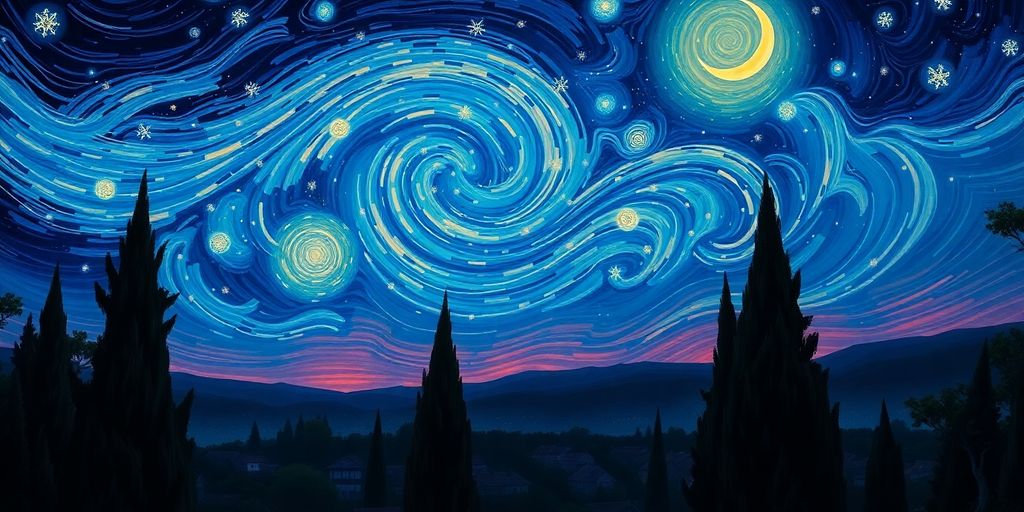
Vincent van Gogh’s "The Starry Night" isn’t just a pretty picture of the sky; it’s deeply tied to what was going on inside his head. He painted this while he was at an asylum in Saint-Rémy-de-Provence, looking out his window. It’s like he poured all his feelings, his hopes, and his struggles onto the canvas.
Mental State and Artistic Expression
It’s pretty clear that Van Gogh’s mental state heavily influenced his art. The swirling, energetic brushstrokes and the intense colors in "The Starry Night" are often seen as a direct reflection of his inner turmoil.
- The turbulent sky could represent his own emotional storms.
- The village, nestled peacefully below, might symbolize a sense of calm or normalcy he longed for.
- The cypress tree, a dark, flame-like shape, is often interpreted as a bridge between the earth and the heavens, or perhaps a symbol of death and his own mortality.
Van Gogh himself wrote about how he found solace and meaning in nature, even during his most difficult times. The act of painting, especially the night sky, seemed to be a way for him to process his experiences and connect with something larger than himself.
Fascination with the Night Sky
Van Gogh had a real fascination with the night sky. He wasn’t just painting what he saw; he was painting what he felt about it. He wrote to his brother Theo about wanting to paint the stars, saying, "Looking at the stars always makes me dream." He was particularly drawn to the idea of the night sky as a place of wonder and mystery. He found a unique beauty in the darkness, illuminated by the celestial bodies. This fascination is evident in how he depicted the stars and moon with such vibrancy and energy in The Starry Night by Vincent van Gogh.
The Concept of Death and Stars
There’s a strong connection between Van Gogh’s thoughts on death and his depiction of the stars. He often wrote about how dying might be like traveling to a star. For him, the stars weren’t just distant lights; they represented a kind of afterlife or a spiritual destination. The cypress tree, often associated with death and cemeteries, reaching towards the sky in the painting, further emphasizes this theme. It’s as if he’s contemplating his own existence and what comes after, using the vastness of the cosmos as his backdrop.
Analyzing the Composition of the Painting
When you look at Van Gogh’s "The Starry Night," it’s not just a pretty picture of the sky; there’s a lot going on with how it’s put together. The way he arranged everything really pulls you in and makes you feel something. It’s like he carefully placed each element to guide your eyes and your emotions.
Contrast Between Sky and Village
The most obvious thing is how different the sky and the village look. The sky is this wild, swirling mix of blues and yellows, full of energy and movement. It takes up most of the canvas, showing how vast and powerful nature is. Down below, the village is much calmer, with dark, quiet houses and a church spire. The contrast between the chaotic, bright sky and the peaceful, dark village is really striking. It makes you think about the difference between the big, overwhelming forces of nature and the small, human world.
The Dominant Cypress Tree
Then there’s that huge, dark cypress tree on the left. It shoots up from the ground, almost touching the sky, and it really dominates the scene. It’s so dark and flame-like, and it connects the earth to the heavens. People often see cypress trees as symbols of death or mourning, which adds a serious, somber note to the whole painting. It’s like a bridge between the earthly village and the celestial sky, but with a heavy feeling.
The Bright Morning Star
Look closely, and you’ll see a really bright, almost glowing star on the right side, just above the hills. This isn’t just any star; it’s often thought to be Venus, the morning star. It’s incredibly bright and stands out against the dark sky. Its intense light and prominent position suggest it’s important. It might represent hope, a guiding light, or even a spiritual presence in the vastness of the night. It’s a focal point that offers a bit of brightness and perhaps a sense of direction within the swirling chaos of the Vincent van Gogh’s "The Starry Night" sky.
The Starry Night: A Masterpiece of Art
Critical Reception of the Painting
It’s funny, isn’t it? Van Gogh himself thought this painting was a flop. He actually wrote to his brother Theo saying he felt the work was a failure, particularly because he made the stars look so big and, well, attention-grabbing. Can you imagine? The guy who painted The Starry Night felt it wasn’t good enough. But history, as it often does, had other ideas. Since The Museum of Modern Art in New York picked it up in 1941, it’s become one of the most recognized and loved artworks out there. It just goes to show, sometimes the artist doesn’t see what the rest of the world will eventually fall in love with.
Legacy of the Painting by Van Gogh
This painting, The Starry Night, has really cemented Van Gogh’s place in art history. Even though he didn’t think much of it himself, it’s become his most famous piece, hands down. You see it everywhere now – on posters, on coffee mugs, even on cakes, which is kind of wild. It’s a prime example of Van Gogh’s artistic feelings and how he poured his emotions onto the canvas. It’s more than just a painting; it’s a cultural icon now, representing a whole mood and a way of seeing the world.
Comparing to Earlier Works
When you look at The Starry Night, you can really see how Van Gogh’s style evolved. Compared to his earlier, darker pieces, this one bursts with color and a kind of swirling energy. He was really experimenting with how to show emotion through his brushwork and the intensity of his colors. While his earlier paintings might have focused more on capturing a scene realistically, The Starry Night is all about his internal experience of that scene. It’s a shift from just observing to truly feeling and expressing. It’s a great way to see the progression in masterpieces of Vincent van Gogh.
So, What’s the Big Deal?
Looking at "The Starry Night" is like looking into Van Gogh’s mind. He painted this while in an asylum, and you can really feel the energy, the swirling blues, and those bright stars. Some folks think the cypress tree is about death, others see science in the sky. Van Gogh himself wasn’t too happy with it, calling it a bit of a failure. But honestly, who cares what he thought? It’s become this huge masterpiece, a real icon of art. It just goes to show that even when things are tough, art can still be incredibly powerful and connect with people, even over a hundred years later.
Frequently Asked Questions
What kind of art is The Starry Night?
The Starry Night is a painting from the Post-Impressionist art movement. This means it focuses on showing the artist’s feelings and uses color and light in a special way, often with nature as the main subject.
When and where was The Starry Night painted?
Van Gogh painted The Starry Night while he was staying at an asylum in France to get help for his mental health. He painted it just a few months before he passed away.
What does The Starry Night show?
The painting shows a village at night under a sky filled with bright stars and a glowing moon. There’s a big, dark cypress tree on the left that looks like a flame, reaching up towards the sky.
What is the meaning behind The Starry Night?
Some people think the painting shows Van Gogh’s feelings about his mental health. The dark colors and the swirling sky might represent his struggles. He also thought that dying was a way to travel to the stars.
How did Van Gogh use color and brushstrokes in The Starry Night?
Van Gogh used bright blues, yellows, and whites in The Starry Night. He applied the paint thickly with short, swirling strokes, especially in the sky and the cypress tree, making the colors look very strong and alive.
Why is The Starry Night considered a masterpiece?
The Starry Night is considered a masterpiece because of its powerful use of color, its emotional expression, and its unique style. Even though Van Gogh himself didn’t think it was his best work, it has become one of the most famous and loved paintings in the world.





 PERFECT PAINTER
Leave a comment