

The Sistine Chapel ceiling is one of the most famous artworks in the world. Painted by Michelangelo between 1508 and 1512, this masterpiece showcases not just his incredible talent but also the ambition and challenges he faced during its creation. From the iconic scenes of Genesis to the intricate details of the figures, the painting on the ceiling of the Sistine Chapel is a testament to human creativity and perseverance. In this article, we will explore the artistic genius behind this remarkable work, the iconic imagery it contains, and the experience of viewing it in person.
Key Takeaways
- Michelangelo painted the Sistine Chapel ceiling between 1508 and 1512, showcasing his mastery of fresco techniques.
- The ceiling features nine central panels that depict stories from the Book of Genesis, including the famous Creation of Adam.
- The ignudi, or decorative nude figures, highlight Michelangelo’s skill in human anatomy and add depth to the overall composition.
- Restoration efforts in the 20th century revealed vibrant colors that had been hidden for centuries, sparking debates about preservation methods.
- Visiting the Sistine Chapel offers a unique experience, allowing viewers to connect with the artwork and its historical significance.
The Artistic Genius Behind the Painting on Ceiling of Sistine Chapel
Michelangelo’s Unique Approach to Fresco
Michelangelo wasn’t just handed this project; he had to figure out a lot as he went. He wasn’t even primarily a painter! He was a sculptor. But Pope Julius II had a vision, and Michelangelo, despite his reservations, stepped up. His approach to fresco was unique because he brought a sculptor’s eye to it. He made the figures look incredibly three-dimensional, almost like they were popping off the ceiling. He didn’t just slap paint on; he thought about form and volume in a way that was pretty new for fresco work. It’s like he was sculpting with paint, which is why the figures have such a powerful presence.
The Influence of Renaissance Techniques
The Renaissance was all about rediscovering classical art and knowledge, and Michelangelo was right in the middle of it. He studied anatomy intensely, which is why his figures are so realistic and muscular. He also used techniques like chiaroscuro (the use of light and shadow) to create depth and drama. The Renaissance emphasis on humanism, celebrating human potential and achievement, is super clear in the way he depicted the human body. It’s not just about religious stories; it’s about showing the beauty and power of humanity. All of this is evident in the Biblical creation story.
The Role of Color and Light in the Artwork
Color and light are HUGE in the Sistine Chapel ceiling. When it was first cleaned, people were shocked at how bright and vibrant the colors were. Michelangelo used a wide range of pigments to create a sense of depth and emotion. The way he used light is also really important. He strategically placed highlights and shadows to draw the viewer’s eye to certain areas and to make the figures look more alive. The light seems to come from different sources within the paintings, which adds to the drama and makes the whole thing feel more dynamic. It’s not just decoration; it’s a key part of the storytelling.
Michelangelo’s use of color and light wasn’t just about aesthetics; it was about creating a powerful emotional and spiritual experience for the viewer. He understood how these elements could be used to convey meaning and to draw people into the stories he was telling.
Here’s a quick breakdown of some common colors and their potential symbolism:
- Blue: Divinity, heaven
- Red: Passion, sacrifice
- Gold: Royalty, divinity
Iconic Imagery in the Painting on Ceiling of Sistine Chapel
The Creation of Adam: A Symbol of Divine Spark
Okay, so, the Creation of Adam? Seriously iconic. It’s that image you see everywhere, God reaching out to Adam, fingers almost touching. It’s more than just a painting; it’s like, a symbol of humanity’s connection to the divine. Michelangelo totally nailed it. The way he captured that moment of potential, that spark of life… it’s just amazing. It’s hard to believe he almost didn’t do the project. I mean, can you imagine the Sistine Chapel without it?
The Ignudi: Decorative Yet Symbolic Figures
So, the ignudi. These are those nude male figures that frame the main panels. You might think they’re just decoration, but they’re actually pretty symbolic. They show off Michelangelo’s skill at drawing the human body, sure, but they also represent something more. They’re like, the perfect human form, untouched by sin. They’re all different, too, which is cool. Michelangelo didn’t just copy and paste the same figure over and over. He made each one unique. It’s easy to miss them if you’re just looking at the big scenes, but they’re worth a closer look. They add a lot to the overall feel of the ceiling. The Sistine Chapel frescoes are truly amazing.
Scenes from Genesis: A Narrative Journey
The ceiling isn’t just a bunch of random paintings; it tells a story. It’s basically a visual version of the Book of Genesis. You’ve got the Creation, the Fall of Man, Noah’s Ark… all the big hits. Michelangelo didn’t just illustrate these stories; he brought them to life. He made them feel real and emotional. It’s like you’re watching the whole thing unfold above you.
It’s easy to get overwhelmed by the scale of the ceiling, but if you take the time to follow the story, it becomes even more powerful. It’s a journey through the beginning of everything, told in paint.
Here’s a quick rundown of some of the key scenes:
- The Separation of Light from Darkness
- The Creation of the Sun, Moon, and Earth
- The Deluge (Noah’s Ark)
The Scale and Ambition of Michelangelo’s Work
Covering Over 5,000 Square Feet of Ceiling
Imagine standing beneath a canvas that sprawls across more than 5,000 square feet. That’s the reality of the Sistine Chapel ceiling. Michelangelo undertook this monumental task, transforming a vast space into an enduring masterpiece. It wasn’t just the sheer size; it was the meticulous planning, sketching, and execution required to bring it all together.
Nine Central Panels Depicting Genesis
At the heart of the ceiling are nine central panels that vividly depict stories from the Book of Genesis. These include iconic scenes like "The Creation of Adam" and "The Flood". Each panel seamlessly flows into the next, creating a narrative that feels both grand and intimate. Michelangelo’s masterful use of light, shadow, and perspective draws your eyes upward, making you feel like you’re part of the story. It’s like reading a visual bible spread across the heavens.
The Architectural Challenges of the Chapel
The Sistine Chapel presented unique architectural challenges. Michelangelo had to work on a curved surface high above the ground. He designed his own scaffolding to get close enough to the ceiling, but this didn’t make the work any less physically demanding. Imagine craning your neck for hours, day after day, to paint intricate details. It’s no wonder Michelangelo suffered from physical strain. The chapel’s acoustics and lighting also posed problems, requiring careful consideration to ensure the artwork could be viewed and appreciated properly. It’s a testament to Michelangelo’s genius that he overcame these obstacles to create such a breathtaking work of art.
The scale of the Sistine Chapel ceiling is truly awe-inspiring. It’s a reminder of the ambition and vision that drove Michelangelo to create something extraordinary. The sheer size of the project, combined with the intricate details and powerful storytelling, makes it a truly unforgettable experience.
Meaning and Interpretations of the Painting on Ceiling of Sistine Chapel
Theological Themes in the Frescoes
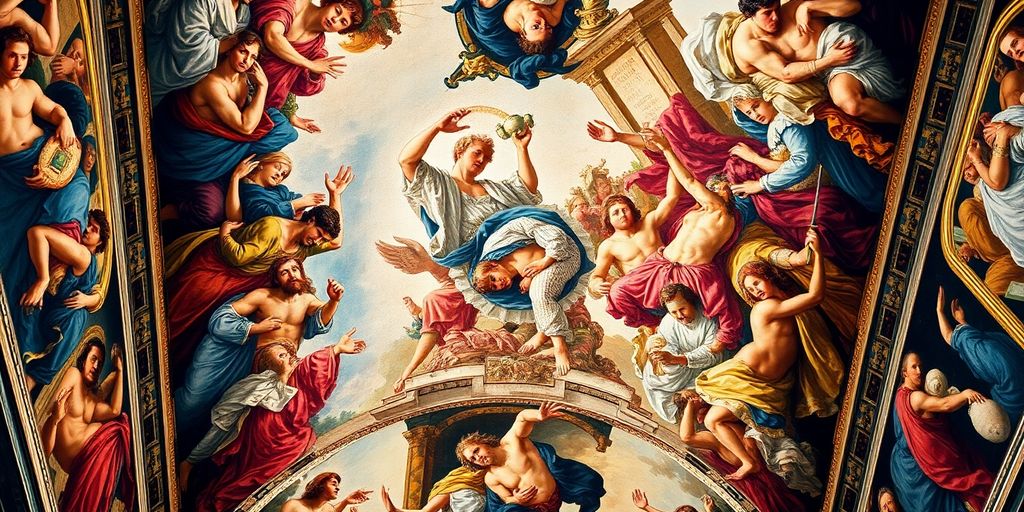
Okay, so, the Sistine Chapel ceiling? It’s not just pretty pictures. It’s packed with religious meaning. Michelangelo really went all-in on telling stories from the Bible, especially Genesis. You’ve got the Creation, the Fall, Noah’s Ark – the whole shebang. But it’s not just a straight-up retelling. He’s throwing in some serious theological ideas, like the nature of God, humanity’s relationship with the divine, and the consequences of sin. It’s heavy stuff, but it’s what makes the ceiling so powerful.
Symbolism of the Ignudi
Those nude guys, the ignudi, are more than just decoration. People have been scratching their heads over them for centuries. Some think they’re just there to show off Michelangelo’s skill at drawing the human body. Others see them as symbols of something deeper. Maybe they represent the human soul, or the ideal of human beauty. Or maybe they’re just there to balance out the composition. Honestly, nobody really knows for sure, and that’s part of what makes them so interesting. They add a layer of mystery and complexity to the whole thing.
Artistic Representations of Humanity
Michelangelo’s ceiling is all about humanity. He’s showing us where we came from, what we’re capable of, and what our place is in the universe. The figures are strong, muscular, and full of life. They’re not just passive subjects; they’re active participants in the drama of creation. He’s showing us the beauty and potential of the human form. It’s a celebration of what it means to be human, with all our flaws and imperfections. It’s a reminder that we’re all part of something bigger than ourselves.
It’s easy to get lost in the details of the Sistine Chapel ceiling, but it’s important to remember the big picture. Michelangelo was trying to tell a story about humanity’s relationship with God, and he used all his artistic skill to bring that story to life. It’s a story that continues to resonate with people today, centuries after it was first painted.
The Artistic Challenges of Painting the Ceiling
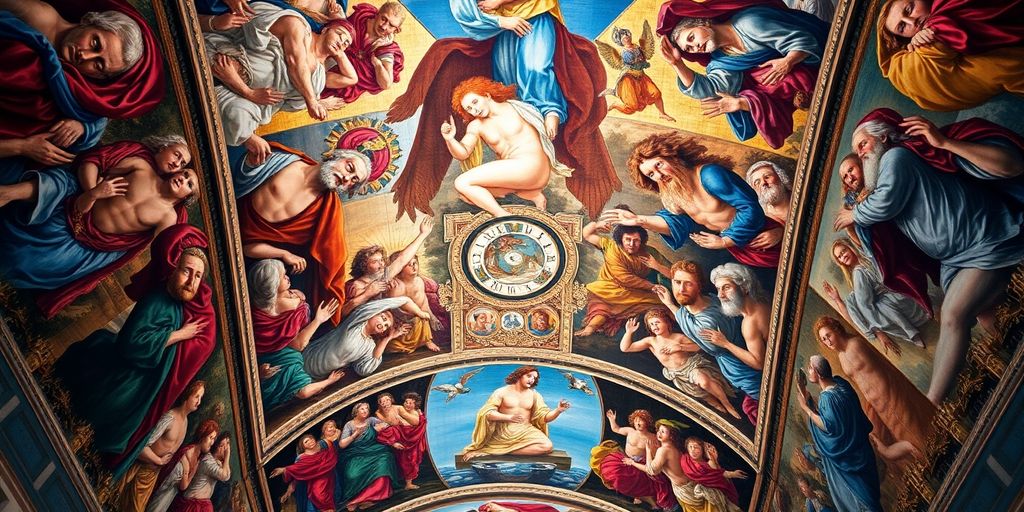
Painting the Sistine Chapel ceiling wasn’t a walk in the park. Michelangelo, primarily a sculptor, faced a ton of new challenges. He had to figure out fresco techniques, deal with the physical strain, and manage the sheer scale of the project. It’s easy to look up and admire the finished product, but understanding what it took to create it makes it even more impressive.
The Physical Demands of Working on a Ceiling
Imagine spending years with your neck craned upwards! Michelangelo endured immense physical strain while painting the ceiling. He was on scaffolding high above the floor, often in uncomfortable positions. This led to chronic pain and exhaustion. He even wrote a poem about how his body ached from the constant twisting and stretching. It’s hard to fathom the physical toll it took on him.
Overcoming Technical Obstacles
Michelangelo didn’t just pick up a brush and start painting. He had to figure out the technical aspects of fresco painting, which wasn’t his area of expertise. He had to learn how to prepare the plaster, mix the paints, and apply them quickly before the plaster dried. He also had to design and build his own scaffolding. He even refused to drill holes in the ceiling for support. It was a constant learning process, and he had to solve problems as they came up. The frescoes are a testament to his ingenuity.
The Emotional Toll on Michelangelo
Michelangelo wasn’t thrilled about painting the ceiling in the first place. He saw himself as a sculptor, not a painter, and he felt like he was being forced to do something he wasn’t suited for. He complained about the physical discomfort and the paint dripping on his face. He was also under immense pressure to deliver a masterpiece. All of this took a toll on his emotional state. It’s amazing that he was able to persevere and create such an incredible work of art despite the emotional challenges. He had invested much time and effort in the tomb, and what’s more, he had no experience at all working with frescoes.
It’s easy to forget that behind every great work of art, there’s a human being who faced challenges, doubts, and setbacks. Michelangelo’s story is a reminder that even the most talented individuals have to overcome obstacles to achieve their goals.
Modern Restoration and Controversies
Revealing Michelangelo’s Original Colors
Okay, so picture this: for centuries, everyone thought the Sistine Chapel ceiling was all muted and dark, right? Then comes the late 20th century, and BAM! Restoration time. Suddenly, colors pop like it’s a brand new painting. It was like someone cranked up the saturation on a TV screen. People were shocked. Turns out, Michelangelo wasn’t afraid of bright colors. Who knew?
Debates Over Restoration Techniques
Now, here’s where things got spicy. The restoration wasn’t all sunshine and rainbows. Some art historians and experts were NOT happy. They argued that the cleaning process was too aggressive, stripping away layers of grime and, potentially, some of Michelangelo’s original glazes. It was like a high-stakes art world showdown. People had opinions, and they weren’t afraid to share them. The restoration of the Sistine Chapel became a hot topic.
Here’s a quick rundown of the main points of contention:
- Overcleaning: Did they go too far?
- Solvents Used: Were the chemicals too harsh?
- Long-Term Effects: What will it look like in 100 years?
It’s a tough call. On one hand, you want to see the art as the artist intended. On the other hand, you don’t want to damage a priceless masterpiece in the process. It’s a delicate balance, and there’s no easy answer.
Impact of Restoration on Public Perception
So, what did everyone think after all the dust settled? Well, the restoration definitely changed how people viewed the Sistine Chapel. Some loved the vibrant colors and felt like they were seeing the ceiling for the first time. Others felt like something was lost, that the restoration had somehow sanitized the artwork. Either way, it sparked a conversation about art, history, and what it means to preserve the past. It made people think about Italian Renaissance art in a new light.
The Sistine Chapel Ceiling as a Visitor Experience
The Awe of Viewing the Ceiling in Person
Walking into the Sistine Chapel is something else. You’re instantly hit with this feeling of history, and the art is just…everywhere. The sheer size and the crazy details of the ceiling are pretty overwhelming. It’s more than just a painting; it’s like a huge story told with bright colors and amazing skill. It’s hard to describe until you’re actually there, craning your neck and trying to take it all in. It’s one of those things you have to see to believe. If you are planning a trip, consider exploring Vatican tours that provide expert insights and a more intimate experience of the Sistine Chapel ceiling.
Tips for Appreciating the Details
Okay, so you’re going to see the Sistine Chapel. Here are a few things I wish I knew before I went:
- Go early or late. Seriously, the crowds can be insane, and trying to appreciate art with a bunch of people pushing you isn’t fun.
- Get a guide or an audio tour. There’s so much symbolism and history that you’ll miss if you just wander in. They can point out stuff you’d never notice on your own.
- Don’t try to see everything at once. Pick a section, like one of the panels from Genesis, and really focus on it. You’ll get way more out of it than if you’re just rushing through.
It’s easy to get caught up in taking pictures, but try to put your phone down for a bit and just look. Really look. You’ll notice things you wouldn’t otherwise, and it’ll stick with you longer.
The Emotional Impact of the Artwork
It’s hard to put into words the feeling you get standing under that ceiling. It’s not just about the art itself, but also the history, the religion, and the sheer human effort that went into creating it. It’s inspiring, humbling, and maybe a little bit sad when you think about Michelangelo spending years of his life up there. It’s one of those experiences that stays with you. The Sistine Chapel can be overwhelming due to large crowds, and its location at the end of a lengthy visit may detract from the experience, making it feel average for some visitors. However, it holds significance for those on a religious pilgrimage.
Final Thoughts on the Sistine Chapel Ceiling
In the end, Michelangelo’s work on the Sistine Chapel ceiling is more than just a beautiful painting. It’s a story of hard work, creativity, and overcoming challenges. He faced a lot of pressure and personal struggles, yet he turned those obstacles into something amazing. When you stand under that ceiling, you can’t help but feel a connection to history and a sense of wonder at what one person can achieve. It’s a reminder that even the toughest tasks can lead to incredible results, and that’s what makes this masterpiece truly unforgettable.
Frequently Asked Questions
Who created the ceiling of the Sistine Chapel?
The ceiling was painted by Michelangelo between 1508 and 1512.
Why did Michelangelo hesitate to paint the Sistine Chapel ceiling?
Michelangelo was mainly a sculptor and didn’t feel confident in his painting skills. He was unsure about taking on the project.
How did Michelangelo manage to paint the ceiling?
He painted while standing on scaffolding, often looking up for long periods. He used a method called fresco, which involves painting on wet plaster.
What stories are shown on the Sistine Chapel ceiling?
The ceiling features scenes from the Book of Genesis, including famous moments like the Creation of Adam and the Great Flood.
What are the ignudi on the Sistine Chapel ceiling?
The ignudi are decorative nude male figures that surround many of the panels. They show Michelangelo’s talent in depicting the human body.
Why is the Sistine Chapel ceiling important today?
Michelangelo’s work changed art forever, inspiring many artists after him. It remains a stunning masterpiece admired for its size, detail, and emotional depth.





 PERFECT PAINTER
Leave a comment