
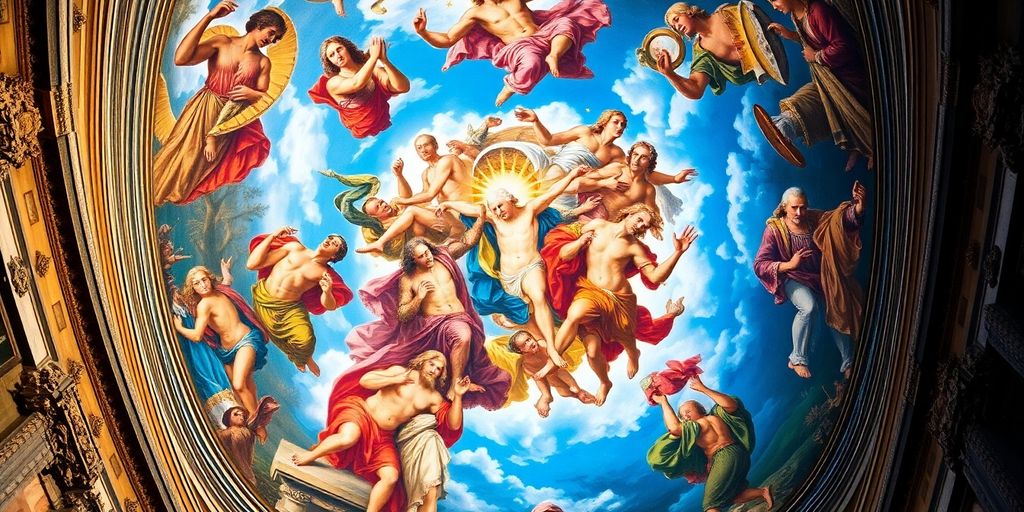
The Sistine Chapel ceiling is one of the most famous works of art in the world, painted by Michelangelo between 1508 and 1512. Located in Vatican City, this breathtaking masterpiece showcases a series of stunning frescoes that depict scenes from the Bible. Although Michelangelo saw himself primarily as a sculptor, his work on the ceiling has become synonymous with the High Renaissance. In this article, we will explore the historical background, artistic techniques, key scenes, and the impact of this monumental work, as well as what it’s like to visit the chapel today.
Key Takeaways
- Michelangelo was commissioned by Pope Julius II to paint the ceiling, despite initially being reluctant to take on the project.
- The painting of the Sistine Chapel ceiling showcases Michelangelo’s innovative use of color, light, and composition techniques.
- Iconic scenes like ‘The Creation of Adam’ highlight the themes of humanity and divinity present throughout the artwork.
- The ceiling has had a lasting influence on art and culture, inspiring countless artists and shaping the direction of Western art.
- Visiting the Sistine Chapel today offers a unique experience, with ongoing preservation efforts and guided tours available.
The Historical Context of the Sistine Chapel Ceiling
The Commission by Pope Julius II
The story of the Sistine Chapel ceiling starts with a clash of titans: Michelangelo and Pope Julius II. Julius, a powerful and ambitious pope, wanted to leave his mark on the Vatican. He initially asked Michelangelo to design his tomb, but things got complicated, and the project stalled. Then, Julius proposed something completely different: painting the ceiling of the Sistine Chapel. The existing ceiling was a simple blue backdrop with stars, and Julius wanted something far grander. Michelangelo, who considered himself a sculptor first and foremost, wasn’t thrilled. But you don’t really say no to the Pope, do you? The Sistine Chapel is a testament to this collaboration, however fraught it may have been.
The High Renaissance Influence
The High Renaissance was in full swing when Michelangelo started work on the ceiling in 1508. This period was all about humanism, a renewed interest in classical art and philosophy, and a focus on realistic depictions of the human form. Artists were pushing boundaries, experimenting with perspective, anatomy, and emotion. The Renaissance was a time of great artistic innovation. Michelangelo was right in the middle of it all, soaking up the influences of artists like Leonardo da Vinci and Raphael, even though he was also fiercely competitive with them. The High Renaissance influence is clear in the ceiling’s dynamic compositions, its idealized figures, and its celebration of human potential. It’s a reflection of the era’s intellectual and artistic ferment. The Old Testament scenes are a great example of this.
Michelangelo’s Reluctance to Paint
Michelangelo famously didn’t want to paint the Sistine Chapel ceiling. He saw himself as a sculptor, not a painter. He felt more comfortable working with marble and chisel than with brushes and pigments. Plus, he was already working on Pope Julius II’s tomb, a project he was passionate about. Being forced to switch gears and tackle this massive painting project was a major source of frustration for him. He complained about the difficulties of fresco painting, the physical strain of working on his back for hours, and the interference of the Pope. Despite his reluctance, Michelangelo poured his heart and soul into the project, creating a masterpiece that would define his legacy. It’s kind of ironic that something he didn’t even want to do is what he’s most famous for! The Last Judgement fresco is another example of his work in the chapel.
It’s easy to imagine Michelangelo grumbling and complaining as he worked on the ceiling, but his dedication and artistic genius ultimately prevailed. He transformed the Sistine Chapel into one of the most awe-inspiring spaces in the world, a testament to the power of art to transcend even the artist’s own doubts and reservations.
Here’s a quick look at the timeline:
| Event | Date |
|---|---|
| Commission by Julius II | 1508 |
| Completion of Ceiling | 1512 |
| Last Judgement | 1536 -1541 |
The Artistic Techniques Employed
Fresco Painting Methodology
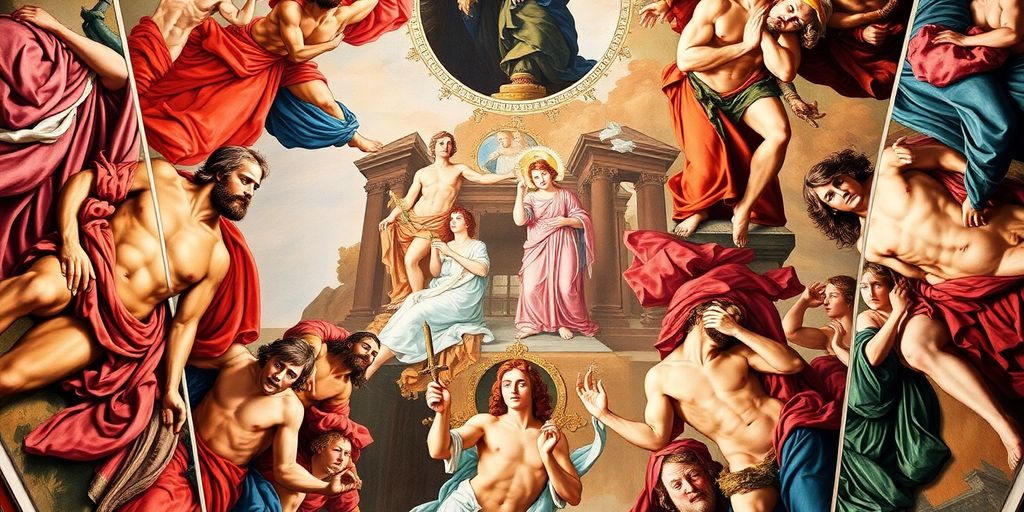
Okay, so Michelangelo didn’t just slap some paint on the ceiling. He used a technique called fresco, which is basically painting on wet plaster. This meant he had to work fast, finishing a section before the plaster dried. Imagine the pressure! Each day, a new section (called a giornata) was prepped, painted, and then left to dry. If he messed up? He had to chip it all off and start again. Talk about high stakes!
- The process started with a rough sketch.
- Then, a more detailed drawing was transferred to the arriccio (rough plaster layer).
- Finally, the intonaco (smooth, final layer) was applied, and the painting began.
It’s wild to think about the logistics of this. Michelangelo was up on scaffolding, applying paint to a ceiling, with plaster drying quickly. No room for error. It’s a testament to his skill and planning.
Use of Color and Light
Michelangelo’s use of color is something else. He didn’t have the range of pigments we have today, but he made the most of what he had. He used bright, vibrant colors to make the figures pop, and he understood how to use light and shadow to create depth and drama. The way he painted the Sistine Chapel is just amazing. It’s not just about the colors themselves, but how he used them to tell a story and create emotion.
Innovative Composition Techniques
Michelangelo didn’t just paint individual figures; he created a whole narrative up there on the ceiling. He broke away from traditional, symmetrical compositions and used dynamic poses and gestures to draw the viewer’s eye around the space. He divided the ceiling into sections, each telling a different part of the story of Genesis, but they all work together as a cohesive whole. It’s like he was directing a movie, but with paint and plaster. The ignudi, those nude youths, are a great example of his mastery of the human form and how he used them to frame the central scenes. It’s a masterclass in composition techniques.
Key Scenes and Their Significance
The Creation of Adam
Okay, so, "The Creation of Adam"? Probably the most famous part. It’s that image of God reaching out to Adam, their fingers almost touching. It’s everywhere, right? But think about what it means. It’s not just a nice picture; it’s about God giving life to humanity. It’s about the spark of the divine entering the human world. It’s a powerful statement about our connection to something bigger than ourselves. It’s a big deal in terms of art history, too. The way Michelangelo showed the human body was new and different. It influenced artists for centuries. It’s a cornerstone of Renaissance theology.
The Flood
Then there’s "The Flood." Talk about drama! It’s a chaotic scene, people scrambling to survive, the ark in the background. It’s a story of destruction, sure, but also of hope. God is wiping the slate clean, but he’s also saving Noah and his family to start over. It’s a reminder that even after the worst things happen, there’s always a chance for a new beginning. The composition is really something, too. All those figures crammed together, the swirling water… it really captures the panic and desperation of the moment. It’s a stark contrast to the calm and order of "The Creation of Adam."
The Prophets and Sibyls
And let’s not forget the prophets and sibyls. These are the figures around the edges of the ceiling, the ones who foretold the coming of Christ. They’re not just decoration; they’re important figures in their own right. The prophets are from the Old Testament, and the sibyls are from ancient Greek and Roman mythology. Michelangelo put them there to show that God’s message wasn’t just for one group of people. It was for everyone, everywhere. Each one is unique, with their own personality and story. They’re like a who’s who of ancient wisdom. The prophet Daniel is one of the most recognizable.
These figures are not just pretty faces; they represent the bridge between the divine and the human, the past and the future. They’re a reminder that history is always unfolding, and that we all have a role to play in it.
Here’s a quick rundown of some key figures:
- Isaiah: Known for his prophecies about the Messiah.
- Jeremiah: A prophet who warned of destruction.
- The Cumaean Sibyl: A priestess from ancient Greece.
Symbolism and Themes in the Artwork
Religious Symbolism
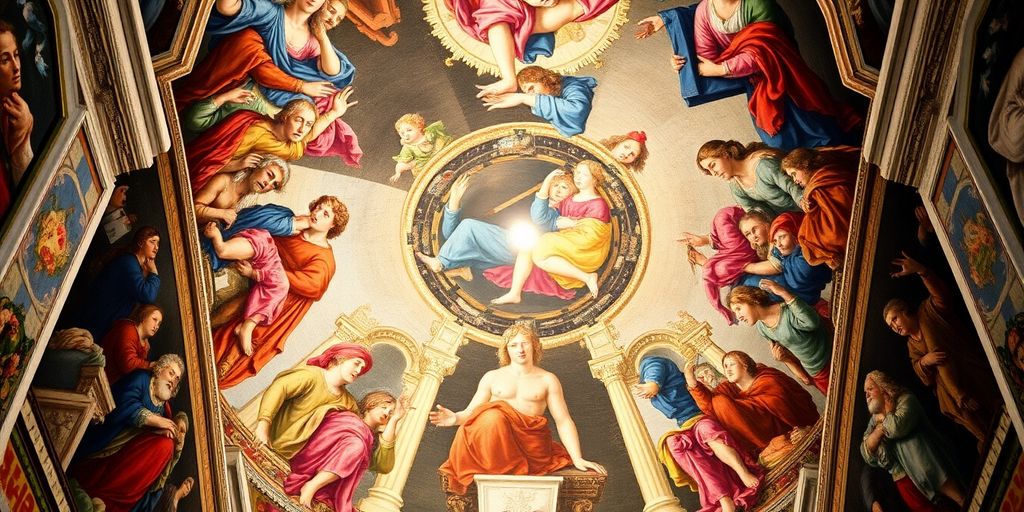
Okay, so the Sistine Chapel ceiling? It’s not just pretty pictures. It’s packed with religious symbolism. The main story is about God creating the world and humanity, then humanity messing up and getting punished with the Great Flood. It’s basically a visual representation of the Christian idea that humans need God to save them. The Old Covenant and the New Covenant are represented, showing the path to salvation through Jesus. Some people even think there are hidden, "forbidden" meanings in there, too. It’s like Michelangelo was trying to say a lot without actually saying it, you know? The ceiling’s creation narrative is quite something.
Humanism and the Divine
Michelangelo was all about humanism, which was a big deal back then. It’s about celebrating human potential and achievement. But he was also super religious. So, in the Sistine Chapel, you see this interesting mix of humanism and the divine. He painted these incredibly muscular, beautiful figures, showing off the human form. But they’re all part of these religious stories, so it’s like he’s saying humans are awesome, but they’re also connected to something bigger than themselves. It’s a tricky balance, but Michelangelo pulls it off.
Interpretations of the Figures
People have been arguing about what the figures in the Sistine Chapel really mean for centuries. Some think Michelangelo was expressing his own inner struggles through his art. Like, his love for classical beauty versus his religious beliefs, or his feelings about love and sin. There’s even this theory that the Creation of Adam has a hidden image of a human brain, suggesting that God gave humans intelligence. Others see more, uh, risqué imagery hidden in the paintings. It’s all up for interpretation, really.
It’s worth remembering that Michelangelo lived in a time of great change and upheaval. His art reflects the complex and often contradictory ideas that were circulating at the time. He wasn’t just painting pretty pictures; he was grappling with some of the biggest questions about life, death, and the nature of humanity.
Impact on Art and Culture
Influence on Future Artists
Michelangelo’s Sistine Chapel ceiling had a HUGE impact. It basically redefined what was possible in fresco painting and artistic expression. Artists for centuries looked at it and were like, "Whoa, how did he DO that?" It set a new standard for depicting the human form, drama, and emotion in art. You see echoes of it in the work of Raphael, Bernini, and countless others. It’s like the ultimate artist’s benchmark. The Sistine Chapel is a testament to the power of art.
Cultural Significance
The Sistine Chapel isn’t just a pretty picture; it’s a cultural icon. It represents a high point of the Renaissance, a moment when human potential seemed limitless. It’s a symbol of the Catholic Church, of course, but it’s also a symbol of human creativity and ambition. Think about it: millions of people visit every year, not just for religious reasons, but to stand in awe of this incredible achievement. It’s a shared experience that transcends language and background. It’s one of those places that just feels important.
Michelangelo’s Legacy
Michelangelo’s legacy is secure, and the Sistine Chapel is a big reason why. He wasn’t just a painter; he was a sculptor, architect, and poet. But the Sistine Chapel ceiling? That’s what everyone remembers. It cemented his place as one of the greatest artists of all time. It’s not just about the technical skill; it’s about the vision, the passion, and the sheer audacity of taking on such a massive project. He changed the way people thought about art, about the human body, and about what one person could achieve. It’s a legacy that continues to inspire today. The artwork details are amazing.
Michelangelo’s impact extends beyond the art world. His dedication and innovative spirit serve as a reminder that pushing boundaries can lead to extraordinary results. His work encourages us to strive for excellence and to challenge conventional thinking.
Visiting the Sistine Chapel Today
Visitor Experience
Okay, so you’re planning a trip to see the Sistine Chapel? Awesome! Just a heads-up, it’s not exactly a walk in the park. Expect crowds, and I mean serious crowds. The chapel is part of the Vatican Museums, and everyone wants to see it. The sheer volume of people can be a bit overwhelming, so mentally prepare yourself.
To make the most of your visit:
- Go early: Seriously, the earlier, the better. Like, before the sun thinks about rising early.
- Book in advance: Don’t even think about showing up without a ticket. Skip the lines by booking online.
- Dress appropriately: Shoulders and knees covered, folks. It’s a church, after all.
Inside, it’s breathtaking, but remember, no photos or talking. Guards are watching, and they’re not shy about enforcing the rules. Just soak it all in and try to find a quiet corner to contemplate the art.
Preservation Efforts
Keeping Michelangelo’s masterpiece in tip-top shape is a big deal. The Vatican is constantly working on preservation. They monitor the temperature, humidity, and even the dust levels to protect the frescoes. Think of it like a super delicate operation, because it is. They even limit the number of visitors allowed in at any one time to minimize the impact on the artwork. It’s all about making sure future generations can appreciate the Sistine Chapel just as much as we do.
Guided Tours and Resources
If you really want to understand what you’re looking at, a guided tour is the way to go. You can find tons of tours, from general overviews to super in-depth art history lessons. Some tours even offer early access, which can help you beat the crowds. Alternatively, do your homework before you go. Read up on Michelangelo, the history of the chapel, and the stories behind the paintings. There are plenty of books, documentaries, and websites out there to learn about Michelangelo. You could even take a virtual tour online before you go, so you know what to expect. That way, when you finally stand beneath the ceiling, you’ll have a deeper appreciation for the art and the artist. You can even take a 3D virtual tour before you go!
Controversies and Criticisms
Debates Over Artistic Intent
Okay, so Michelangelo’s Sistine Chapel ceiling? It’s not like everyone just automatically loved it. From the get-go, there were whispers and outright arguments about what he was really trying to say. Was it all just Bible stories, or was there something more going on? People have been picking apart the symbolism for centuries, and honestly, they still don’t all agree. Some think the iconography of the ceiling is pretty straightforward, others see hidden meanings everywhere. It’s kind of like trying to solve a puzzle with a million pieces and no picture on the box.
Restoration Controversies
Then there’s the whole restoration thing. Oh boy. Back in the ’80s and ’90s, they cleaned the ceiling, and it was a HUGE deal. The restorers removed layers of grime and overpainting, revealing brighter colors than anyone had seen for centuries. But a lot of people freaked out! They said the cleaning had gone too far, that it had stripped away Michelangelo’s original glazes and made everything look garish and flat. It sparked a massive debate about what it means to "restore" art, and whether you can ever really know what the artist intended.
Here’s a quick rundown of some arguments:
- Pro-Restoration: Colors are now vibrant and closer to Michelangelo’s original palette.
- Anti-Restoration: Glazes were removed, altering the intended shading and depth.
- Neutral: The cleaning revealed details previously hidden, allowing for new interpretations.
It’s a tough one, because on the one hand, you want to preserve the art for future generations. But on the other hand, you don’t want to accidentally destroy it in the process. It’s a balancing act, and there’s no easy answer.
Public Reception Over Time
Public opinion on the Sistine Chapel has definitely changed over the years. Initially, there was shock and awe, but also some disapproval, especially regarding the nudity. I mean, can you imagine Pope Adrian VI being happy about the ignudi? Over time, though, it became a symbol of artistic genius and religious devotion. Now, it’s one of the most visited artworks in the world, and people travel from everywhere just to stand there and crane their necks. But even today, there are still people who find it overwhelming, confusing, or even a little bit boring. Art is subjective, right?
Final Thoughts on Michelangelo’s Masterpiece
In the end, Michelangelo’s work on the Sistine Chapel ceiling is nothing short of incredible. It’s hard to believe that one man could create such a vast and detailed masterpiece in just four years. Every time you look up at those frescoes, you see something new, something that makes you think. The stories from the Old Testament come alive in a way that’s both beautiful and powerful. Even if you’re not an art expert, you can feel the emotion and the skill that went into every brushstroke. This ceiling isn’t just a bunch of paintings; it’s a piece of history that continues to inspire and amaze people from all over the world. So, whether you’ve seen it in person or just read about it, Michelangelo’s work will always be a significant part of our cultural heritage.
Frequently Asked Questions
Who painted the Sistine Chapel ceiling?
The Sistine Chapel ceiling was painted by Michelangelo.
Why did Michelangelo not want to paint the ceiling?
Michelangelo preferred to be a sculptor and was not excited about painting the ceiling.
What are some famous scenes from the Sistine Chapel ceiling?
Some well-known scenes include ‘The Creation of Adam’ and ‘The Flood’.
How long did it take Michelangelo to paint the ceiling?
It took Michelangelo about four years to complete the ceiling.
What techniques did Michelangelo use in his paintings?
He used a method called fresco, which involves painting on wet plaster.
Can visitors see the Sistine Chapel today?
Yes, millions of people visit the Sistine Chapel each year to see Michelangelo’s artwork.





 PERFECT PAINTER
Leave a comment