

If you’re looking to express your creativity without the hassle of downloading software, you’re in luck. There are plenty of drawing apps available online that are completely free to use. Whether you’re a beginner or an experienced artist, these tools provide a range of features to help you create stunning artwork right from your browser. Here’s a look at the top 10 drawing apps free online no download needed, perfect for unleashing your artistic side.
Key Takeaways
- Most of these apps are user-friendly, making them great for beginners.
- You can create professional-looking art without spending a dime.
- These tools are accessible from any device with internet access.
- Many apps offer unique features like layers and brushes to enhance your art.
- Experiment with different apps to find the one that suits your style best.
1. Clip Studio Paint
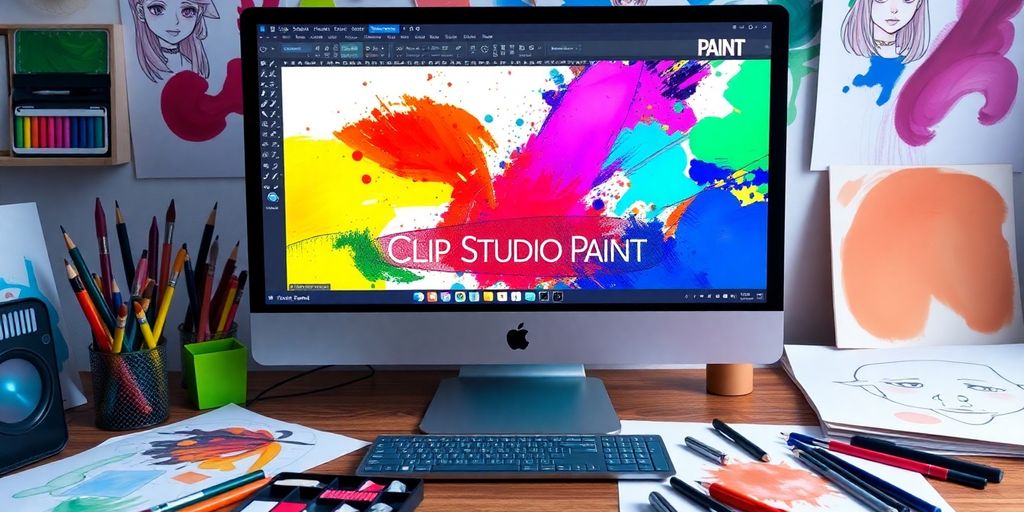
Clip Studio Paint (CSP) is a powerhouse, and it’s designed for digital illustration, comics, and animation. It’s popular with both beginners and pros, offering powerful brush settings and high customizability. You can use it on your PC, tablet, or even your smartphone.
I’ve been messing around with it for a few weeks, and honestly, it’s pretty impressive. The sheer number of brushes and materials available is mind-blowing. You can download tons of custom brushes and materials from the community. It’s like a never-ending supply of creative tools. Plus, it’s cool that you can record timelapses of your artwork to share your process. I tried it once, and it was fun to see how my drawing came together.
CSP comes in two versions: PRO and EX. PRO is great for illustrations and short animations. EX includes everything in PRO, plus tools for multi-page comics and full-length animation. If you’re serious about animation or making webtoons, EX is the way to go. I’m currently using the PRO version, and it’s more than enough for my needs.
I really appreciate that Clip Studio Paint lets you work across different devices. I can start a drawing on my iPad and finish it on my computer without any hassle. The cloud storage makes it super convenient. It’s also used in schools and studios, which says a lot about its capabilities.
Here’s a quick breakdown of the pricing:
- Perpetual license (Windows/macOS): $58.50 USD for PRO; $258 USD for EX
- Annual/Monthly plan (iPad/iPhone/Android/Windows/macOS): From $0.99 USD/month
If you’re curious, you can grab a 3-month free trial of Clip Studio Paint. If you go through the Galaxy Store, you might even get up to 6 months free. They also have a dedicated support site where you can get help and find answers to common questions. It’s a solid option for artists looking to create their own black-and-white comic.
2. Krita
Okay, so Krita is next on the list. I’ve messed around with it a bit, and it’s pretty cool, especially since it’s free and open-source. That’s a big win right there. It’s got a ton of features, which can be a little overwhelming at first, but once you get the hang of it, it’s super powerful. It’s definitely not some watered-down free program; it can hang with the big boys.
One thing that’s awesome is that it works on Linux, which is a big deal because not many art programs do. Plus, you can import all sorts of resources that other people have made, which is a nice touch. It’s like having a huge library of brushes and textures at your fingertips. The Krita app is versatile, supporting unlimited layers, including vector layers, so you can scale stuff without losing quality. That’s clutch for logos and stuff.
I remember trying to make a comic page with Krita, and the symmetry tool saved me so much time. I was able to create these intricate patterns without having to draw each side individually. It’s features like that that make Krita a serious contender.
Now, it’s not all sunshine and rainbows. I’ve noticed that the brushstrokes can be a little laggy sometimes, which can be annoying. It doesn’t happen all the time, but when it does, it can throw off your flow. If you need super-smooth brushwork, you might want to check out something like Clip Studio Paint. But honestly, for a free program, Krita is hard to beat. You can download Krita for free from their website. If you want automatic updates, you can buy a paid version for $12.99.
Here’s a quick rundown:
- Free and open-source
- Works on Windows, macOS, and Linux
- Supports a ton of features, including vector layers and animation
- Brushstrokes can be a little laggy
- Contact support from the official website
3. Ibis Paint
Ibis Paint is a pretty cool app that’s been gaining traction, especially if you’re into creating illustrations and manga on your phone, tablet, or even computer. It’s free to download, which is a huge plus, and it’s actually a solid choice if you’re just starting out with digital art. I remember when I first tried it; the interface was surprisingly easy to get the hang of.
Ibis Paint is great for manga creation, offering over 47,000 brushes and textures. It also has 80+ filters and tones, plus paneling tools and manga templates. For printing black-and-white comics, you can select A4 or B4 canvas sizes with up to 600 dpi resolution. The free version does have ads and limits brush access, but you can unlock features temporarily by watching ads.
Here’s a quick rundown of the pricing options:
- ibisPaint (ad-free mobile version): $14.99 USD
- Pro Add-on (ad-free PC version): $41.99 USD
- Prime Membership: $4.49 USD/month, or $27.99 USD/year
You can even record your drawing process as a timelapse video and share it on the app’s official community site or social media. With cloud storage, you can sync artwork created on ibisPaint across devices, and even export it to Clip Studio Paint to continue working on your PC or iPad.
Ibis Paint’s official website offers FAQs and tutorials, making it a great resource for digital art beginners. You can also contact support through the official contact form. In addition to their official YouTube channel, user-created tutorial videos and artwork can be found in the ibisPaint website gallery, so you can get inspiration from other creators.
4. Medibang Paint
Medibang Paint is a free drawing software, and it’s pretty good for making comics. If you sign up and log in, you get even more stuff. It’s a nice way to see what it can do before you really get into it.
I think the best part is that it’s available on a bunch of different devices. You can use it on Windows, macOS, iPad, iPhone, and Android. That’s super handy if you like to switch between your computer and your tablet. It’s made by MediBang Inc., so you know they’re serious about art software.
MediBang Paint has the tools you need for making manga, like borders and screentones. If you want to print comics in black and white, you can pick A4 or B4 sizes with up to 600 dpi. That’s pretty neat. It’s a solid choice if you want to create your own black-and-white comic. It’s not as flexible as some of the paid apps, but it has over 1,000 screen tones. Plus, you get 3GB of cloud storage, so you can switch devices and keep drawing. Just remember, brush settings don’t transfer between different operating systems, except between Windows and macOS.
You need to make an account to use all the features. If you go for MediBang Premium, you get more cloud storage and better features. It’s something to think about if you really get into it.
If you’re looking for help, they have tutorials, materials, and a FAQ on their website. You can also check out ARTstreet, their social media site, to share art and find resources. It’s a good way to connect with other artists. If you want to transfer project files to a flash drive, you may want to check the updated review.
5. PaintTool SAI
Paint Tool SAI is a favorite among illustrators, especially known for its stabilization and the smooth feel you get while drawing. The interface is pretty straightforward, which makes sketching and coloring easy. However, it doesn’t have advanced features for adjusting colors or adding text, and it doesn’t support CMYK output. So, while some people use SAI for comics, you might need to switch to another program like Clip Studio Paint to finish up and get it ready for printing.
- It’s lightweight.
- Has a simple interface.
- Offers a smooth brush engine.
Paint Tool SAI is a solid choice for beginners in digital art and those who want a simple drawing experience. Version 2 is in development, and if you’ve bought Paint Tool SAI, you can use the beta version of Ver.2 for free.
Paint Tool SAI is a lightweight software with a simple interface and a smooth brush engine, making it great for drawing illustrations.
It costs around $40 USD (5,500 JPY). You can pay with PayPal or a credit card. If you need help, there’s an FAQ page on the official site, and the software comes with a basic manual. There isn’t an official community, but since Paint Tool SAI has been around for a while, there are plenty of online resources available if you want to learn more about how to use it.
6. Photoshop
Photoshop, from Adobe, is a big name in the graphics world. It’s used by designers, photographers, and editors all over. While it’s known for photo editing, you can totally draw with it too. Lots of design schools and studios use it. It might take a bit to get the settings and brushes just how you like them, but it’s worth it if you want something super customizable. If you’re looking for something more focused on drawing from Adobe, maybe check out Adobe Fresco instead.
Photoshop is great if you know what you want and don’t mind tweaking settings. It’s good for making artwork that meets industry standards. Plus, it can export projects for online use, printing, and video. It’s really good with colors, including CMYK, which is important for print work. A lot of drawing apps don’t support CMYK, so Photoshop is a solid choice if your stuff needs to be printed. You can even use the magic crop tool.
- It’s available on iPad, Windows, and macOS.
- Adobe provides support through their contact form, chat, and community forum.
- There are tons of books and websites with Photoshop tips.
Photoshop has a big community of users, from beginners to pros, mostly focused on design and photography. Lots of people have made custom brushes and resources to make Photoshop even better for drawing.
You can try it out with a seven-day free trial. Just remember, you need an Adobe ID to use all the features, and they’ll automatically charge you after the trial, so keep an eye on that. After the trial, it’s $22.99 a month. They take credit cards, PayPal, and wire transfers.
7. Procreate
Okay, so Procreate is a big deal if you’re into digital art on an iPad. It’s won awards and stuff, and people really like it. The interface is pretty clean, which is nice, and it doesn’t take forever to figure out where everything is. Even though it looks simple, it’s got a ton of tools. You can mess around with brushes, use perspective rulers, clipping masks, and even add text. They even have Procreate Pocket for iPhones, but it’s not quite the same as the iPad version.
One thing to keep in mind is that Procreate is only for iPads. There’s no Android version or anything like that. And they don’t have a trial version, so you have to buy it outright. It’s around $13 from the App Store, so it’s not super expensive, but it’s something to think about. The touch-based interface is really responsive, which makes drawing feel pretty natural.
Procreate has a community site where you can check out other users’ art. It’s a good place to get inspiration or just see what other people are doing with the app. There are also tons of tutorials online if you get stuck or want to learn new tricks.
Here’s a quick rundown:
- Price: Around $12.99
- Trial: None
- Platform: iPad only
If you’re looking for a solid iPad painting app, Procreate is definitely worth checking out.
8. Fresco
Okay, so Fresco is Adobe’s answer to the digital painting world, and it’s pretty neat. It’s built to work super well with styluses and touchscreens, kinda like Procreate. If you’re already in the Adobe ecosystem, this might be a no-brainer.
Fresco really shines with its "live brushes." These brushes try to mimic the way real paint mixes and blends. You can mess with the amount of water and how the colors interact, which is pretty cool if you’re into traditional art styles. Plus, it lets you use both raster and vector brushes on the same canvas, giving you a lot of flexibility. If you want to enhance your artistic skills, this is a great option.
I’ve been messing around with Fresco for a few weeks, and the live brushes are seriously impressive. It’s like having real watercolors without the mess. The integration with other Adobe apps is also a huge plus for my workflow.
Here’s a quick rundown:
- Developed by Adobe
- Great for stylus and touch devices
- Live brushes mimic real paint
Fresco uses a freemium model. You can get a basic version for free, but to unlock all the features, you’ll need a subscription. It’s also part of the Adobe Creative Cloud plan, so if you’re already paying for that, it’s included. For support, you can reach out via chat and email through the Adobe website. There isn’t a huge dedicated Fresco community outside of the official Adobe forums, but there are some tutorials available on the official site that focus on watercolor and oil painting techniques.
9. Sketchbook
Sketchbook is a solid choice if you want something straightforward. I remember when I first started messing around with digital art, a friend recommended it. It’s pretty easy to pick up, which is a plus. It’s designed for artists who want a simple, effective tool for drawing.
It has a clean interface, so you can jump right into sketching. The customizable brushes, like pencils and markers, feel pretty close to traditional media. Plus, it has rulers and symmetry guides, which are super helpful for refining sketches. Layers and blend modes are there too, which is nice for coloring and shading. It’s cool that it supports PSD file formats, making it easy to switch to more advanced software like Photoshop or Clip Studio Paint later on.
I think the best part about Sketchbook is how uncomplicated it is. You don’t get lost in a million different features. It’s just you and your sketch, which can be really freeing.
One thing to keep in mind is that while the mobile app is free, the desktop version, Sketchbook Pro, isn’t. It’s something to consider depending on what you’re looking for. If you’re just starting out and want to try free drawing apps for Chromebooks, the mobile version is a great place to begin.
Here’s a quick rundown:
- Clean and intuitive interface
- Customizable brushes
- PSD file support
10. Drawing Desk
Okay, so Drawing Desk. I remember when my niece showed me this one. She’s super into art, always doodling. I thought it was just another one of those simple drawing apps for kids, but it’s actually got some cool stuff going on. It’s definitely worth a look, especially since it’s free to start.
One thing that’s neat is how it tries to teach you stuff. It’s not just a blank canvas; it has lessons and tutorials built in. My niece was following along with a Marvel superhero drawing lesson the other day, which was pretty cool. I even tried it, and it was surprisingly fun. It’s a good way to learn some basics, even if you’re not a kid.
Here’s a quick rundown of what I’ve noticed:
- Lots of different drawing tools to create art online. Pencils, markers, brushes – the whole shebang.
- Lessons for different skill levels. From beginner stuff to more advanced techniques.
- A pretty active community. You can share your art and see what other people are making.
I think the best part about Drawing Desk is that it’s accessible. You don’t need a fancy tablet or a ton of experience to get started. It’s a good way to just mess around and see what you can create. Plus, the fact that it has lessons built in is a huge bonus for anyone who wants to actually improve their skills.
It’s not perfect, of course. Sometimes the interface can feel a little cluttered, and there are definitely some ads. But for a free app, it’s got a lot to offer. If you’re looking for something to mess around with or want to practice sketching without spending any money, Drawing Desk is a solid choice.
Wrapping It Up
So there you have it! Ten awesome drawing apps that you can use online without any downloads. Whether you’re just doodling for fun or trying to create something more serious, these tools can really help you express your creativity. The best part? They’re all free! Just pick one that fits your style and start drawing. Remember, the right app can make a big difference in your creative process, so don’t hesitate to try a few out. Happy drawing!
Frequently Asked Questions
What are the best free drawing apps available online?
Some of the top free drawing apps you can use online include Clip Studio Paint, Krita, and Ibis Paint. These apps offer great tools for artists without needing to download anything.
Can I use these apps on my phone?
Yes! Many of these drawing apps, like Ibis Paint and Medibang Paint, are available on both smartphones and tablets, making it easy to create art on the go.
Do I need to have drawing experience to use these apps?
Not at all! These apps are designed for everyone, from beginners to advanced artists. You can start with simple features and gradually explore more complex tools as you improve.
Are there any costs involved with these apps?
All the apps listed are free to use, but some may offer in-app purchases for extra features or tools if you want to enhance your experience.
What kind of art can I create with these apps?
You can create a wide range of art styles, including sketches, paintings, comics, and even animations depending on the app you choose.
How do I choose the right drawing app for me?
Think about what you want to create and what device you will use. Trying out a few different apps can help you find the one that fits your style and needs best.




 PERFECT PAINTER
Leave a comment