
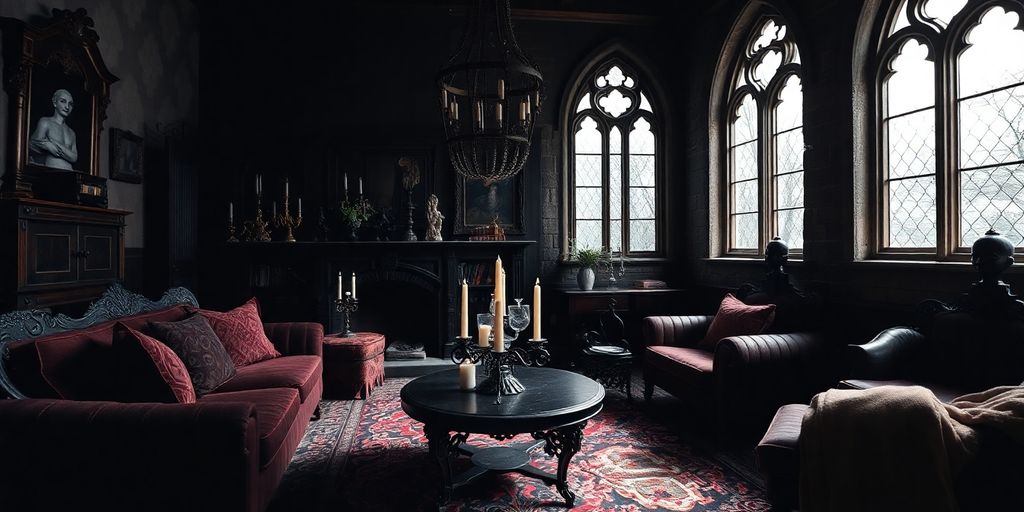
Gothic home decor is making a comeback, and it’s not just for Halloween anymore. Many people are drawn to the dark, dramatic, and mysterious vibe that gothic design brings to a space. If you love the idea of shadowy corners, intricate details, and a hint of the macabre, this guide is here to help you turn your home into a gothic haven that feels both stylish and inviting.
Key Takeaways
- Gothic decor thrives on dark colors and rich textures, creating a cozy yet dramatic atmosphere.
- Incorporate unique architectural elements like pointed arches and stained glass to add character.
- Lighting is key; opt for vintage fixtures and candles to set the mood without making the space feel gloomy.
- Mix modern and vintage pieces to keep the decor fresh while embracing the gothic aesthetic.
- Don’t overcrowd your space; choose decor items that complement each other for a balanced look.
Understanding Gothic Aesthetics
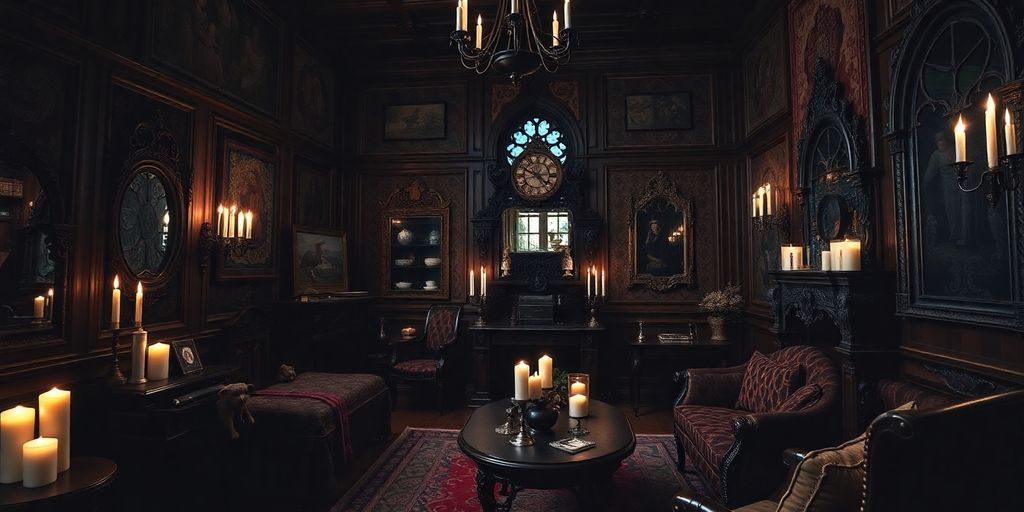
Gothic home decor isn’t just about being dark and spooky; it’s a rich and complex style with a fascinating history. It’s about creating a space that feels dramatic, elegant, and maybe just a little bit mysterious. Let’s break down the core elements that make up this unique aesthetic.
Core Elements of Gothic Design
Gothic design is characterized by a few key features. Think grand architecture, intricate details, and a sense of drama. It’s about creating an atmosphere that feels both imposing and inviting, drawing inspiration from medieval castles and cathedrals. Here are some elements:
- High ceilings and pointed arches
- Dark, rich colors
- Ornate carvings and details
The Role of Color in Gothic Decor
Color is super important in setting the mood for a gothic space. While dark colors are definitely a staple, it’s not just about painting everything black. It’s about using a range of shades to create depth and drama. Think deep reds, purples, greens, and blues, often paired with metallic accents like gold or silver. You can balance dark tones with lighter accents.
Textures That Define Gothic Spaces
Texture is just as important as color when it comes to gothic decor. Think about materials like velvet, leather, and brocade. These add a sense of luxury and depth to the space. Rough stone or exposed brick can also work well, adding a touch of rawness and authenticity. Don’t be afraid to mix and match different textures to create a space that feels both visually and tactilely interesting.
Gothic design is all about creating a mood. It’s about evoking a sense of history, mystery, and drama. By understanding the core elements, the role of color, and the importance of texture, you can start to create a gothic-inspired space that truly reflects your personal style.
Color Scheme: Embracing the Dark Side
The colors you pick really set the stage for a gothic vibe. It’s not just about slapping on some black paint; it’s about creating depth and mood. Think of it like setting the scene for a dramatic play – the colors tell the audience what to expect.
Choosing the Right Shades
Okay, so black is a big player, but it’s not the only one. Deep reds, like burgundy or crimson, can add a touch of luxury and warmth. Dark blues, like navy or indigo, bring a sense of mystery. And don’t forget about grays – charcoal or slate can be surprisingly elegant. The key is to choose shades that feel rich and intense.
Here’s a quick rundown:
- Black: The classic choice, but use it wisely.
- Burgundy: Adds warmth and a touch of opulence.
- Navy: Mysterious and sophisticated.
- Charcoal Gray: A softer alternative to black.
Combining Dark and Light
Too much darkness can make a room feel like a cave. The trick is to balance it out with lighter elements. Think about using off-white or cream on the walls to create contrast. Metallic accents, like gold or silver, can also help to reflect light and brighten things up. You can find some gothic architectural prints to add to your walls.
Accent Colors for Depth
Don’t be afraid to add pops of color to your gothic space. Jewel tones, like emerald green or sapphire blue, can create a sense of drama and intrigue. You could also use metallic accents, like bronze or copper, to add warmth and texture. Just remember to use these colors sparingly – you don’t want to overwhelm the space.
A good rule of thumb is to stick to a limited color palette. Choose two or three main colors and then use accent colors to add interest. This will help to create a cohesive and balanced look. Think about how light interacts with your chosen colors. Darker shades absorb light, while lighter shades reflect it. Use this to your advantage to create a space that feels both dramatic and inviting.
Creating Focal Points in Your Home
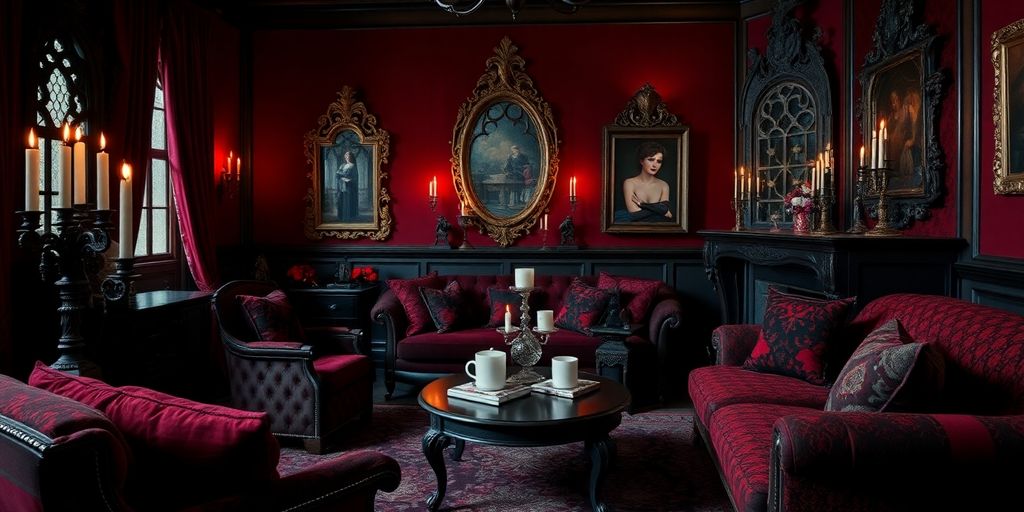
Every room needs something that immediately grabs your attention, and in gothic decor, this is your chance to really shine. Forget blending in; we’re aiming for dramatic! It’s about creating a space that tells a story, and the focal point is the opening chapter.
Striking Fireplaces and Mantels
If you’re lucky enough to have a fireplace, make it the star. Think dark wood, intricate carvings, and maybe even a gargoyle or two. If a full fireplace isn’t an option, a mantelpiece can still work wonders. Adorn it with candles (lots of them!), antique books, and maybe a skull for good measure. You can even paint the mantel black for extra drama. Here’s a few ideas to get you started:
- Dark wood stain
- Intricate carvings
- Gargoyle accents
Dramatic Lighting Fixtures
Chandeliers are your friend. The bigger and more ornate, the better. Think wrought iron, dark metals, and maybe even some crystals for a touch of sparkle. If chandeliers aren’t your thing, consider sconces or lamps with dark shades. The goal is to create a moody, atmospheric vibe. Don’t be afraid to mix and match different styles to create a unique look. Lighting is key to setting the mood, so don’t skimp on it!
Gallery Walls of Dark Art
Forget those generic landscapes; we’re going for something a bit more… intense. Think portraits of stern-looking ancestors, dark landscapes, or maybe even some anatomical drawings. Frame them in ornate, gilded frames and arrange them in a salon-style gallery wall. The more, the merrier! It’s a great way to showcase your personality and add some visual interest to your space. Plus, it’s a conversation starter!
Creating a focal point isn’t just about aesthetics; it’s about creating a space that feels authentic to you. It’s about surrounding yourself with things that inspire you, intrigue you, and make you feel at home. So, don’t be afraid to experiment and have fun with it!
Incorporating Gothic Architectural Elements
Gothic architecture is all about drama and detail, and bringing some of those elements into your home can really amp up the gothic vibe. You don’t need to live in a castle to make it work! Let’s explore some ways to incorporate these features.
Pointed Arches and Vaults
Okay, so you probably can’t just install a vaulted ceiling overnight. But, there are ways to suggest the look. Consider using wall decals or stencils to create the illusion of pointed arches above doorways or windows. You could also frame mirrors or artwork with custom-built frames that mimic the shape. If you’re feeling ambitious, an interior designer can help you create a real archway if your home’s structure allows. It’s a commitment, but the impact is huge.
Stained Glass Features
Stained glass is a classic gothic element. You don’t have to replace all your windows, though! Smaller stained glass panels can be hung in front of existing windows, or used as decorative accents on walls. Look for antique pieces at flea markets or consider commissioning a custom piece. Even a small stained glass piece can add a touch of gothic elegance. Here’s a few ideas:
- Hang a small panel in a window to catch the light.
- Use a larger panel as a headboard for your bed.
- Incorporate stained glass into a room divider.
Ornate Carvings and Details
Think about adding ornate carvings to furniture or walls. You can find decorative moldings at most home improvement stores and paint them a dark color for a gothic look. Attach them to bookshelves, fireplace mantels, or even door frames. Look for pieces with intricate designs like fleur-de-lis or gargoyles. These small details can make a big difference.
Don’t be afraid to get creative with your carvings. You can even try your hand at carving your own designs into wood or foam. Just remember to take your time and be careful with sharp tools.
Curating Unique Gothic Decor
Gothic decor is all about expressing yourself and creating a space that feels truly unique. It’s not about following strict rules, but about assembling items that speak to you and create a captivating atmosphere. Let’s explore some ways to curate a collection of decor that embodies the gothic spirit.
Intriguing Artwork Selections
Art is a powerful way to express the gothic spirit in your home. Look for pieces that resonate with the darker, more romantic aspects of the aesthetic. Think about artwork featuring skulls, ravens, or mystical landscapes. Don’t be afraid to mix different styles and mediums to create a gallery that reflects your personal taste. Consider these ideas:
- Ornate picture frames containing vintage photographs or dark art prints
- Wrought iron wall sculptures
- Antique clocks
Collections of Curiosities
Gothic design thrives on the unusual and mysterious. Infuse your home with curiosity by displaying a collection of unique finds. Antique books, vintage keys, ornate boxes, and mystical crystals can transform shelves and tables into captivating displays. Each item tells a story, inviting guests to take a closer look and immerse themselves in the enchanting world you’re creating. Consider these items for your collection:
- Vintage apothecary bottles
- Taxidermied specimens (ethically sourced, of course!)
- Antique scientific instruments
Remember, the essence of gothic design isn’t about strict rules, but about creating a space that resonates with you on a deeply personal level. It’s about finding beauty in the unexpected and embracing the darker side of aesthetics.
Mixing Modern and Vintage
Don’t feel like you have to stick to only antique or vintage items. One of the coolest things you can do is mix modern pieces with vintage finds. A sleek, modern sofa can look amazing with skull-patterned cushions. Or, try a vintage tapestry-inspired rug under a contemporary coffee table. This mix of old and new creates a uniquely welcoming vibe. Here’s how to make it work:
- Incorporate modern lighting with a gothic twist, like minimalist lamps with dark shades.
- Use contemporary artwork featuring classic gothic motifs.
- Pair sleek, modern furniture with vintage accessories for an eclectic look.
Balancing Drama and Comfort in Gothic Design
Gothic design is all about drama, but who says you can’t be comfy while embracing the darkness? It’s about striking that perfect balance where your space feels both intriguing and inviting. It’s totally doable, trust me.
Finding the Right Textures
Textures are key. Think about how things feel as much as how they look. You want to create a space that begs to be touched, not just admired from afar.
- Velvet: A must-have. Drapes, pillows, upholstery – velvet adds instant luxury and depth.
- Faux Fur: Throw blankets or rugs can soften the harshness of darker elements.
- Leather: Adds a touch of ruggedness and ages beautifully, enhancing the gothic vibe.
Don’t be afraid to mix and match. A velvet pillow on a leather chair? Yes, please! The contrast is what makes it interesting. Layering textures is your friend here. It adds depth and makes the space feel more inviting.
Lighting for Ambiance
Lighting can make or break a gothic space. You don’t want it to be too dark, but you also don’t want it to be bright and cheery. It’s a delicate balance. Dramatic lighting is key, but it needs to be balanced with softer elements.
- Dimmer Switches: Essential for controlling the mood. You can adjust the lighting depending on the time of day or your mood.
- Candles: Real or LED, candles add a warm, flickering glow that’s perfect for a gothic setting.
- Sconces: Wall sconces with intricate designs can add a touch of elegance and provide soft, ambient light.
Avoiding Overcrowding
It’s easy to get carried away with gothic decor. There are so many cool things to collect! But resist the urge to fill every nook and cranny. A cluttered space feels chaotic, not cozy.
- Focus on Key Pieces: Choose a few statement pieces that really stand out.
- Negative Space: Leave some empty space to allow the eye to rest.
- Edit Ruthlessly: If something doesn’t add to the overall aesthetic, get rid of it.
Extending Gothic Decor to Outdoor Spaces
Wrought Iron Furniture
Wrought iron furniture is a staple for any gothic-inspired outdoor space. It’s durable, looks fantastic, and really nails that dark, romantic vibe. Think about a wrought iron bench, maybe with some cushions in a deep burgundy or forest green. A small wrought iron table is also a great addition for holding drinks or displaying plants. You can often find these pieces at antique stores or even flea markets, giving them an authentic, aged feel. Don’t be afraid to paint them black for a more dramatic effect. It’s a simple way to add a touch of gothic elegance to your patio or garden.
Gargoyle Statues and Fountains
Gargoyles aren’t just for old cathedrals; they can bring a unique, quirky charm to your outdoor space. Consider placing a gargoyle statue near your entrance or among your plants. A gargoyle fountain can also be a striking focal point, adding both visual interest and the soothing sound of water. You can find gargoyles in various sizes and styles, from the traditional grotesque figures to more modern interpretations. They add a touch of mystery and history to your garden, making it feel like a hidden sanctuary.
Gothic Lanterns and Plants
Lighting is key to setting the mood, even outdoors. Gothic lanterns can cast a beautiful, eerie glow, perfect for evening gatherings or simply enjoying a quiet night outside. Look for lanterns with intricate designs or dark finishes. As for plants, think about incorporating dark-colored foliage or plants with interesting shapes. Here are some ideas:
- Black petunias
- Purple fountain grass
- Ivy (especially if you have stone walls or structures)
- Roses (deep red or black varieties)
Creating a gothic outdoor space is all about atmosphere. It’s about creating a place that feels both mysterious and inviting, a place where you can escape the everyday and embrace the darker side of beauty. Don’t be afraid to experiment and have fun with it. After all, your outdoor space should be a reflection of your personal style and taste. You can transform your space with these simple additions.
Your Gothic Retreat Awaits
Wrapping up, creating a gothic home isn’t just about slapping on some dark paint and calling it a day. It’s about building a vibe that feels like a cozy escape from the everyday. By mixing in deep colors, rich textures, and unique decor pieces, you can turn your space into a gothic haven that’s both stylish and comfortable. Whether you want to go all out or just sprinkle in a few gothic touches, the main thing is to have fun and let your personality shine through. So, don’t be afraid to embrace the shadows and the mysterious. Your perfect gothic retreat is just a few decor choices away!
Frequently Asked Questions
What is Gothic home decor?
Gothic home decor is a style that features dark colors, intricate designs, and a mysterious atmosphere. It often includes elements from the Victorian and medieval periods.
How can I use color in Gothic decor?
You can use deep colors like black, dark blue, and rich red. Mixing these with lighter shades or metallics can add balance and interest.
What are some key features of Gothic design?
Key features include pointed arches, ornate details, and dramatic lighting. You can also find elements like stained glass and vintage furniture.
How can I create a Gothic focal point in my room?
To create a focal point, consider using a large fireplace, an ornate chandelier, or a gallery wall with dark art. These elements draw attention and set the mood.
Can I mix modern and Gothic styles?
Yes! You can mix modern furniture with Gothic elements like vintage decor or dark colors. This blend can create a unique and inviting space.
What outdoor elements can I use for Gothic decor?
For outdoor spaces, think about wrought iron furniture, gargoyle statues, and Gothic lanterns. Dark plants can also enhance the theme.





 PERFECT PAINTER
Leave a comment