
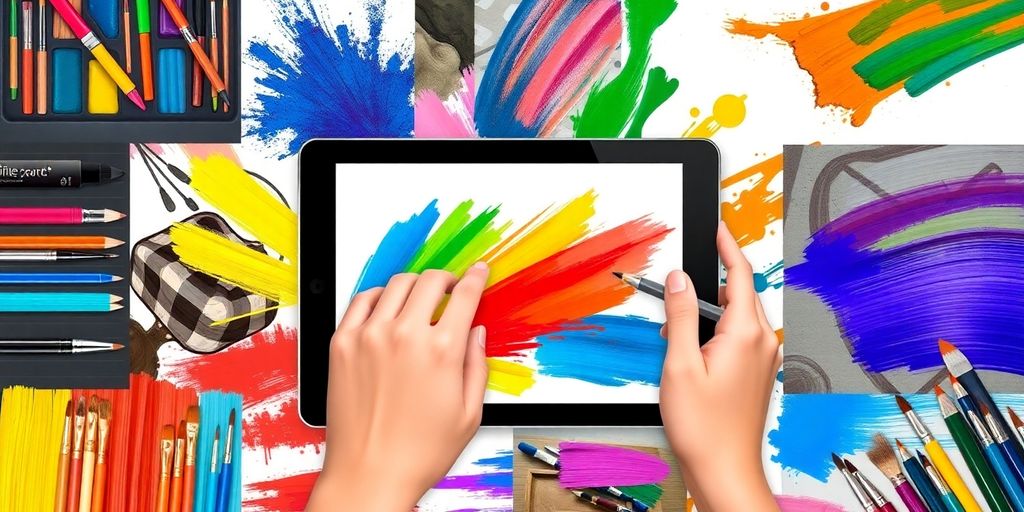
Infinite Painter is a fantastic digital painting app that gives artists a lot of tools to express their creativity. Whether you’re just starting out or you’ve been creating art for years, this guide will help you get the most out of Infinite Painter. We’ll cover everything from the basics of the interface to advanced techniques that can improve your workflow and artistic style. So, let’s jump right in and explore what makes Infinite Painter such a great choice for digital artists!
Key Takeaways
- Infinite Painter features an easy-to-use interface that makes it accessible for all skill levels.
- The app provides advanced brush settings, allowing for unique textures and blending options.
- Layer management tools help organize your artwork, making it easier to edit and refine.
- The color selection tools, including custom palettes and harmony techniques, enhance your color choices.
- Recording your process with the time lapse feature can help you share your art journey with others.
Unleashing Creativity with Infinite Painter
Infinite Painter is a pretty cool app. It’s got a ton of features that can really help you get your creative juices flowing. It’s not just for pros either; even if you’re just starting out, you can still make some awesome stuff. It’s like having a whole art studio right on your tablet or phone. I remember when I first started using it, I was amazed at how many different things I could do. The possibilities really do seem endless.
Exploring the User-Friendly Interface
Okay, so the first thing you’ll notice is that Infinite Painter’s interface is actually pretty easy to get the hang of. Everything is laid out in a way that makes sense, and you won’t have to spend hours trying to figure out where everything is. The menus are clear, and the icons are pretty self-explanatory. I think the developers did a good job of making it accessible to everyone, no matter their skill level. It’s not intimidating at all, which is a big plus. You can easily find the painting app’s interface and start creating without feeling overwhelmed.
Understanding the Toolset
Infinite Painter comes with a huge range of tools. We’re talking brushes, pencils, erasers, and all sorts of other stuff. Each tool has its own settings that you can tweak to get exactly the effect you want. It might seem like a lot at first, but trust me, it’s worth exploring. Experiment with different brushes and see what they can do. You might be surprised at what you discover. I know I was! I found some brushes that I never would have thought to use, but now they’re my go-to’s. Here’s a quick rundown of some of the basic tools:
- Brushes: For painting and adding broad strokes.
- Pencils: For sketching and creating fine lines.
- Erasers: For correcting mistakes and refining details.
Infinite Painter’s toolset is really powerful. It gives you a lot of control over your artwork. Don’t be afraid to play around with the settings and see what you can come up with. You might just surprise yourself.
Navigating the Canvas
Moving around the canvas in Infinite Painter is super easy. You can zoom in and out with a pinch, and you can pan around by dragging your fingers. It’s all very intuitive and responsive. This makes it easy to work on details and get a good overview of your entire piece. Plus, the canvas is huge, so you don’t have to worry about running out of space. I’ve worked on some pretty big projects in Infinite Painter, and I’ve never had any issues with the canvas size. It’s a real game-changer. You can easily navigate the canvas and focus on the details that matter most.
Mastering Color Selection Techniques
Color is super important in art, right? It can make or break a piece. Infinite Painter gives you a bunch of ways to pick and manage colors, so let’s look at some ways to get the most out of it.
Creating Custom Color Palettes
Okay, so, making your own color palettes is a game changer. Instead of always hunting for the right shade, you can have a set of colors ready to go. This makes your workflow way faster and helps keep your art consistent.
Here’s how I usually do it:
- Start with a mood board or reference image. What feeling are you going for?
- Pick a base color. This is your main color, the one that stands out.
- Add complementary colors. These are colors that look good with your base color. Think opposites on the color wheel.
- Save the palette! Name it something useful so you can find it later.
I like to create different palettes for different types of projects. For example, I have one for landscapes, one for portraits, and one for abstract art. It really helps to keep things organized.
Utilizing the Color Wheel
The color wheel is your friend. Seriously. It’s not just some decoration; it’s a tool that can help you understand color relationships. Infinite Painter has a color wheel built right in, so you can easily see how colors relate to each other. You can customize the color wheel for a personalized experience.
- Hue: This is the actual color (red, blue, green, etc.).
- Saturation: This is how intense the color is. High saturation is bright, low saturation is dull.
- Value: This is how light or dark the color is. High value is light, low value is dark.
By playing with these three things, you can create a huge range of colors.
Implementing Color Harmony
Color harmony is all about making colors work together. If you want to create a visually appealing piece, you need to understand how colors interact. Here are a few common color harmonies:
- Complementary: Colors opposite each other on the wheel (e.g., red and green). These create contrast.
- Analogous: Colors next to each other on the wheel (e.g., blue, blue-green, green). These create a calm, harmonious feel.
- Triadic: Three colors evenly spaced on the wheel (e.g., red, yellow, blue). These create a vibrant, balanced look.
Experiment with these different harmonies to see what works best for your art. You can even create color palettes from images for inspiration.
Enhancing Workflow with Layer Management
Layer management is where things get real in Infinite Painter. It’s not just about stacking images; it’s about controlling every aspect of your artwork. If you’re not using layers effectively, you’re basically painting with one hand tied behind your back. Let’s look at some ways to make the most of them.
Grouping and Transforming Layers
Grouping layers is a game-changer for complex projects. Instead of moving each element individually, you can group related layers together and treat them as a single unit. This is super useful for things like characters, backgrounds, or any element that has multiple parts. You can move, scale, rotate, or apply effects to the entire group at once. Transforming layers is also key. You can move, resize, and even skew layers to get the exact look you want. It’s all about having control over every detail.
Locking Layers for Precision
Ever accidentally messed up a layer you were perfectly happy with? Locking layers prevents accidental edits. It’s a simple feature, but it can save you a ton of frustration. Once a layer is locked, you can’t paint on it, move it, or make any changes until you unlock it. This is especially useful when you’re working on intricate details and don’t want to risk messing up something you’ve already perfected. It’s a simple way to preserve elements and keep your workflow smooth.
Using Solo and Trace Layer Options
Solo mode lets you isolate a single layer, hiding all the others. This is great for focusing on details or troubleshooting issues. Trace mode lets you see a faint version of the layers below your current layer, which is helpful for creating clean outlines or adding details that align perfectly with existing elements. These options are all about giving you more control and making it easier to work on complex projects.
Layer management is the backbone of digital art. It allows for non-destructive editing, experimentation, and complex compositions. Mastering these techniques will significantly improve your workflow and the quality of your artwork.
Here’s a quick rundown of layer management benefits:
- Non-destructive editing: Make changes without permanently altering the original pixels.
- Experimentation: Try out different ideas without fear of ruining your work.
- Complex compositions: Build up intricate scenes with multiple elements.
Utilizing Advanced Brush Features
Infinite Painter really shines when you start digging into the advanced brush features. It’s not just about picking a brush and going to town; you can really tweak things to get exactly the effect you’re after. It might seem a little intimidating at first, but trust me, it’s worth the effort. Experimenting with these features can seriously level up your digital art.
Customizing Brush Settings
Okay, so first up, let’s talk about customizing brush settings. This is where you can really make a brush your own. You can adjust everything from the size and opacity to the flow and jitter. It’s all about finding the right balance for your style. For example, if you’re doing line art, you might want a hard, crisp edge, but if you’re painting clouds, you’ll want something soft and blended. Don’t be afraid to play around with the settings and see what happens. You can even save your custom brushes for later use, which is a huge time-saver.
Adding Textures to Brushes
Adding textures to brushes is another cool feature. This can give your artwork a more realistic or interesting look. You can use built-in textures or even import your own. Imagine painting a portrait and adding a subtle skin texture to the brush – it can make a big difference. Or, think about creating a landscape and using a brush with a rock texture for the mountains. The possibilities are endless. It’s a great way to add depth and visual interest to your work. Infinite Painter offers the ability to add textures to brushes, providing an intuitive method to customize your brush to suit specific areas or styles within your artwork.
Exploring Brush Blending Modes
Brush blending modes are like the secret sauce of digital painting. They control how the brush interacts with the colors underneath. You’ve probably heard of modes like Multiply, Overlay, and Screen. Each one has a different effect, and they can be used to create all sorts of cool things, like shadows, highlights, and color variations. It might take some experimenting to figure out which modes work best for you, but once you get the hang of it, you’ll be amazed at what you can do. Infinite Painter offers a wide variety of brushes, and to expand their possibilities, you can change brush blending mode of each brush.
Think of blending modes as filters that change how colors mix. They can create subtle effects or dramatic transformations, depending on the mode and the colors you’re using. It’s all about experimentation and finding what works best for your artistic vision.
Here’s a quick rundown of some common blending modes:
- Normal: The default mode, simply paints the selected color.
- Multiply: Darkens the colors, great for shadows.
- Screen: Lightens the colors, perfect for highlights.
- Overlay: Combines Multiply and Screen, creating contrast.
Incorporating Special Effects and Filters
Infinite Painter isn’t just about basic drawing; it’s also about adding that extra oomph to your artwork. Special effects and filters can really transform a piece, taking it from good to amazing. Let’s explore how to use them.
Applying Filters to Enhance Art
Filters are a quick way to change the look and feel of your art. Infinite Painter has a bunch of them, from simple color adjustments to wild distortions. You can find them in the layer panel. Applying a filter affects all the layers below it, preserving the integrity of the layers above.
Here’s a quick rundown of some common filters:
- Gaussian Blur: Softens the image, great for creating depth of field.
- Sharpen: Makes details pop, but be careful not to overdo it.
- Color Balance: Adjusts the colors in your image, useful for fixing color casts.
- Hue/Saturation: Changes the colors and their intensity.
Experiment with different filters and combinations. Don’t be afraid to go overboard – you can always undo it! The key is to find what works best for your style and the specific piece you’re working on.
Experimenting with Layer Effects
Layer effects are another way to add visual interest. These are applied directly to a layer and can create things like shadows, glows, and bevels. To access them, go to the layer panel and tap on the effects button. Infinite Painter enables you to apply filters and effects to multiple layers simultaneously.
Some cool layer effects to try:
- Drop Shadow: Adds a shadow behind the layer, making it look like it’s floating.
- Outer Glow: Creates a glow around the layer, great for making things stand out.
- Bevel & Emboss: Gives the layer a 3D look.
Creating Unique Visual Styles
Combining filters and layer effects is where things get really interesting. You can create some truly unique visual styles by layering different effects on top of each other. For example, you could use a combination of blur, color adjustments, and layer effects to create a dreamy, ethereal look. Or, you could use sharpen, contrast, and bevel effects to create a gritty, industrial feel. The possibilities are endless!
Here’s a simple example of how you can combine effects:
| Layer | Effect | Settings | Result |
|---|---|---|---|
| Base | None | Default | Basic drawing |
| Above | Gaussian Blur | Radius: 5px | Softens the base layer |
| Above | Outer Glow | Color: Light Blue, Size: 10px | Adds a subtle glow |
| Above | Drop Shadow | Distance: 3px, Opacity: 50% | Creates a sense of depth |
Recording and Sharing Your Artistic Process
Using the Time Lapse Feature
Okay, so you’ve made something cool in Infinite Painter. Now what? Well, one of the neatest things is showing how you made it. The time-lapse feature is perfect for this. It records your entire process, from the first stroke to the final detail, and condenses it into a short, watchable video. It’s like magic! You can then use this to show off your skills, or even just to look back on your own process and see how you can improve. It’s pretty simple to use; just make sure it’s turned on before you start painting. You can find the activate menu tab in the settings.
Exporting Your Artwork
Once you’re done with your masterpiece, you’ll want to, you know, actually have it. Infinite Painter lets you export your work in a bunch of different formats. Here’s a quick rundown:
- JPEG: Good for general sharing, smaller file size. Great for posting on social media.
- PNG: Better quality than JPEG, supports transparency. Use this if you need a transparent background.
- PSD: Exports as a Photoshop file, layers intact. Super useful if you want to keep working on it in another program.
- TIFF: High-quality, lossless format. Best for printing, but the files are huge.
Choose the format that best fits what you want to do with the artwork. For example, if you’re planning to print a poster, go with TIFF. If you just want to share it on Instagram, JPEG is fine.
Sharing on Social Media
So, you’ve got your artwork exported. Now it’s time to show it off! Sharing on social media is a great way to get your work seen and connect with other artists. Here are a few tips:
- Use relevant hashtags: This helps people find your work. Think about what your art is about and use hashtags that match. #digitalart, #painting, #illustration, etc.
- Tag Infinite Painter: This gives them a shout-out and might get your work featured on their page.
- Engage with comments: Respond to people who comment on your work. It’s a great way to build a following and connect with other artists.
Don’t be afraid to share your work, even if you’re not completely happy with it. Getting feedback is a great way to improve, and you never know who might see your art and be inspired by it. Just put yourself out there and see what happens. You might be surprised at the response you get.
Continuous Learning and Improvement
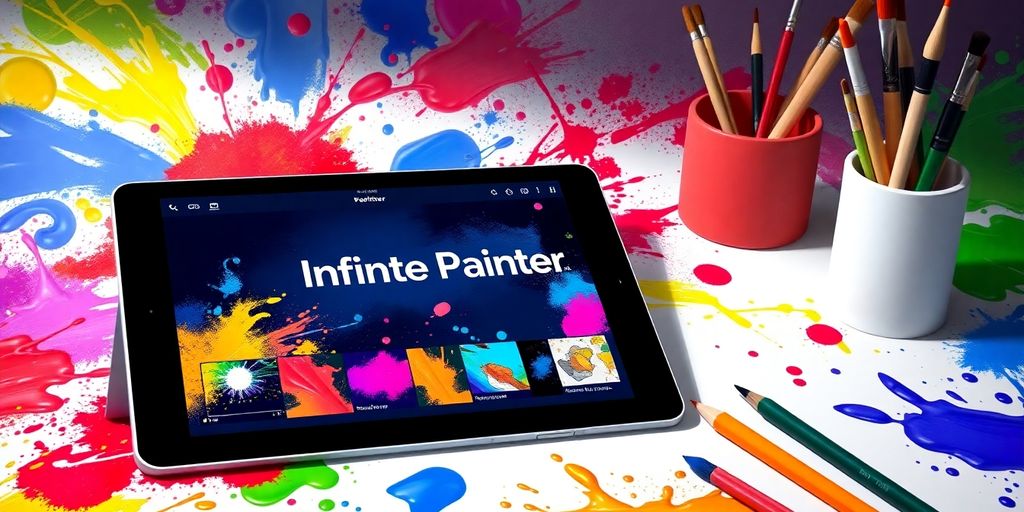
It’s easy to get comfortable with your current skills, but the world of digital art is always changing. New techniques, software updates, and community trends pop up all the time. To really grow as an artist, you need to commit to continuous learning. It’s not just about mastering the tools; it’s about staying inspired and adaptable. The best artists are always learning.
Accessing Tutorials and Resources
Infinite Painter has a bunch of built-in resources, but don’t stop there! There are tons of places to find tutorials and guides. Here’s a few ideas:
- Check out the official Infinite Painter website. They usually have updated documentation and tips.
- YouTube is your friend. Search for specific techniques or brush settings you want to learn.
- Skillshare and Udemy have more structured courses if you want a deeper dive. Look for courses on digital painting apps in general, not just Infinite Painter.
Participating in Online Communities
Art is often a solitary activity, but it doesn’t have to be! Connecting with other artists can be super helpful. You can get feedback, share tips, and find inspiration. Here’s how:
- Join art forums or subreddits. Post your work and ask for constructive criticism.
- Follow artists you admire on social media. See what they’re working on and how they use Infinite Painter.
- Participate in online art challenges. It’s a fun way to push yourself and connect with others.
Staying Updated with New Features
Software updates can be annoying, but they often include cool new features that can seriously improve your workflow. Make sure you’re keeping up with the latest versions of Infinite Painter. Here’s how:
- Turn on automatic updates in the app settings.
- Read the release notes when a new version comes out. See what’s changed and what’s new.
- Experiment with the new features. Don’t be afraid to try things out and see what they can do for your art.
It’s easy to fall into the trap of using the same old techniques, but pushing yourself to learn new things is what separates good artists from great ones. Don’t be afraid to experiment, make mistakes, and ask for help. The more you learn, the more creative you’ll become.
Final Thoughts
So, there you have it! Infinite Painter is packed with features that can really help you tap into your artistic side. Whether you’re just starting out or you’ve been creating for years, this app has something for everyone. The tips and tricks we’ve covered can make your experience smoother and more enjoyable. Don’t be afraid to play around with the tools and find what works best for you. Art is all about experimenting and having fun, right? So grab your stylus, open up Infinite Painter, and let your creativity flow!
Frequently Asked Questions
What is Infinite Painter?
Infinite Painter is a digital art app that lets you create drawings and paintings using a variety of tools and features.
Is Infinite Painter easy to use for beginners?
Yes! Infinite Painter has a simple interface that makes it easy for beginners to start creating art.
Can I customize my brushes in Infinite Painter?
Absolutely! You can change the settings of your brushes and even add textures to make them unique.
How do I select colors in Infinite Painter?
You can choose colors using the color wheel or create custom palettes to keep your favorite colors handy.
Can I share my artwork directly from the app?
Yes, you can easily export your artwork and share it on social media platforms.
Are there tutorials available for learning Infinite Painter?
Yes! There are many tutorials available online that can help you learn how to use Infinite Painter effectively.




 PERFECT PAINTER
Leave a comment