

Thinking about sprucing up your home office for 2025? You’re not alone. With remote work becoming more common, having a workspace that feels both personal and functional is key. Whether it’s adding a touch of nature or integrating the latest tech, there are plenty of ways to make your office a place you actually want to be. Let’s explore some creative home office design ideas to inspire your workspace decor journey.
Key Takeaways
- Incorporate plants and natural materials for a calming workspace.
- Use smart technology like adjustable desks and voice-controlled devices to enhance productivity.
- Choose ergonomic furniture to support comfort during long working hours.
- Design multifunctional spaces that adapt to different activities in your home.
- Embrace a minimalist aesthetic to reduce clutter and improve focus.
Nature as Your Co-worker: Biophilic Design
Biophilic design is all the rage, and honestly, I’m here for it. Who wouldn’t want to bring the outdoors in? It’s not just about aesthetics; it’s about creating a workspace that actually makes you feel good. Think natural light, plants, and materials that remind you of, well, nature. It’s like giving your office a big, green hug.
Incorporating Natural Elements
So, how do you actually do biophilic design? It’s easier than you think. Start with the basics: plants. Snake plants, pothos, succulents – they’re all pretty low-maintenance and can survive even if you forget to water them sometimes. Then, think about natural light. Position your desk near a window if you can. If not, mirrors can help bounce light around the room. And don’t forget about materials! Wooden desks, bamboo accents, even stone paperweights can add a touch of the outdoors.
Benefits of Greenery in Workspaces
Okay, so plants look nice, but do they actually do anything? Turns out, yeah! Studies have shown that having plants in your workspace can boost your mood, reduce stress, and even improve your concentration. Plus, they help purify the air, which is always a good thing. It’s like having a little natural air purifier right on your desk.
Here’s a quick rundown:
- Improved mood
- Reduced stress levels
- Increased concentration
- Air purification
Creating a Calming Atmosphere
It’s about more than just plants. Think about the overall vibe of your space. Use natural colors like greens, browns, and blues. Add soft textures like wool or cotton. And don’t forget about sound! A small water fountain or even just a nature sounds playlist can help create a more relaxing environment. The goal is to create a space where you feel calm, focused, and ready to tackle your to-do list.
I’ve found that incorporating natural elements into my workspace has made a huge difference in my productivity and overall well-being. It’s like bringing a little bit of peace and tranquility into my workday, which is something we could all use a little more of, right?
Upgrade Your Office IQ: Technology Integration
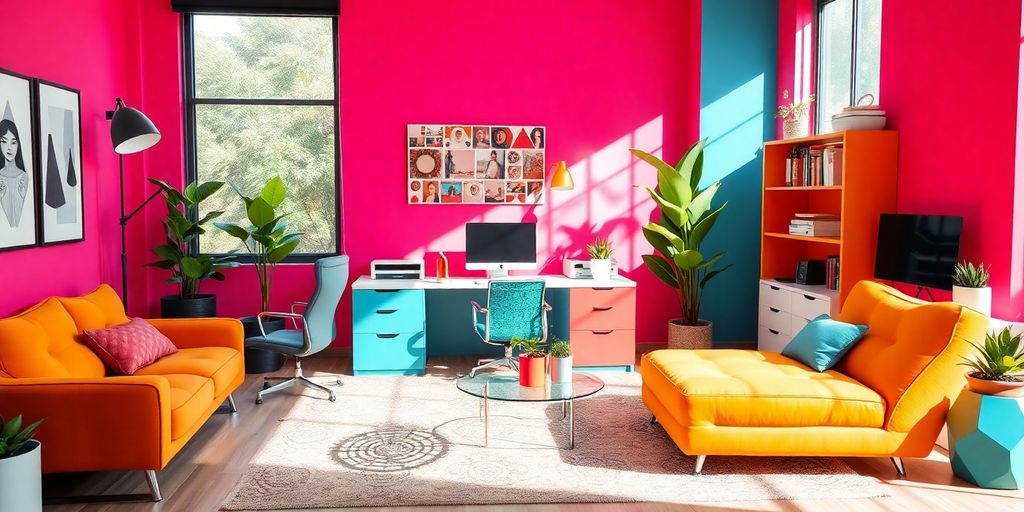
Okay, so you’re trying to make your home office feel like it’s actually from 2025, right? That means ditching the old stuff and bringing in the tech. It’s not just about having a fast computer; it’s about making your whole workspace smarter. Think about how tech can actually make your work easier, not just add more distractions. I mean, we all love a good gadget, but let’s focus on what actually boosts productivity.
Smart Desks and Adjustable Furniture
I’ve been looking into adjustable furniture lately, and it’s kind of a game-changer. Imagine a desk that remembers your perfect sitting and standing heights. No more fiddling around every time you switch positions. Some desks even have built-in charging pads for your phone or tablet. It’s all about convenience and keeping things clutter-free. Plus, there are chairs that adjust to your body, giving you support where you need it most. It’s a big investment, but your back will thank you.
Voice-Controlled Devices
I’m not gonna lie, I was skeptical about voice assistants at first. But now I use them all the time in my office. I can control the lights, play music, set reminders, and even answer calls without lifting a finger. It’s especially useful when I’m in the middle of something and don’t want to break my focus. Just make sure you choose a device that integrates well with your other tech and respects your privacy. Here’s a quick rundown:
- Hands-Free Control: Manage tasks without interrupting your workflow.
- Customizable Settings: Adjust lighting, temperature, and music with voice commands.
- Seamless Integration: Connect with other smart devices for a cohesive experience.
Enhancing Workflow with Tech
It’s easy to get caught up in the latest gadgets, but the real goal is to use tech to streamline your workflow. Think about automating repetitive tasks, using project management software to stay organized, and investing in tools that help you communicate and collaborate effectively. I’ve found that even small changes, like using a better calendar app or a durable iPad wall mount, can make a big difference in my productivity. It’s all about finding what works for you and making your tech work for you, not the other way around.
The key to successful technology integration is to focus on solutions that address specific pain points in your workflow. Don’t just buy the latest gadgets because they’re cool; choose tools that will actually help you work smarter and more efficiently. Think about what tasks take up the most time or cause the most frustration, and then look for tech solutions that can help you overcome those challenges.
Work Smart, Sit Smart: Ergonomic Furniture
Working from home is great, but those long hours can really take a toll on your body. That’s why investing in good ergonomic furniture is so important. It’s not just about comfort; it’s about taking care of your health and boosting your productivity. Let’s get into some key pieces you should consider for your 2025 home office.
Choosing the Right Chair
A good ergonomic chair is the foundation of a healthy workspace. You’re going to be spending a lot of time in it, so it needs to support your body properly. Look for chairs with adjustable lumbar support – that’s the part that supports the curve in your lower back. Make sure the chair also has adjustable height and armrests so you can customize it to fit your body. A chair that allows for some movement is also a plus; dynamic seating can help prevent stiffness and keep you comfortable all day long. When you’re looking at office chairs, make sure they have these features.
Adjustable Desks for Comfort
Adjustable desks, also known as standing desks, are becoming increasingly popular, and for good reason. They allow you to easily switch between sitting and standing throughout the day. This is great for breaking up long periods of sitting, which can lead to back pain and other health problems. When choosing an adjustable desk, make sure it’s sturdy and can easily adjust to your desired height. You’ll also want to ensure it has enough surface area for all your work essentials. Here’s a quick look at the benefits:
- Reduces back pain
- Improves posture
- Boosts energy levels
Accessories for Optimal Posture
Don’t underestimate the power of accessories! Small additions like footrests and monitor stands can make a big difference in your overall comfort and posture. A footrest can help reduce leg strain, while a monitor stand ensures your screen is at eye level, preventing neck strain. Consider a keyboard tray to keep your wrists in a neutral position. These little things can add up to a much more comfortable and ergonomic workspace. Think of it as investing in your long-term well-being.
Investing in ergonomic furniture is an investment in your health and productivity. By choosing the right chairs, desks, and accessories, you can create a workspace that supports your body and allows you to focus on your work. It’s a small price to pay for long-term comfort and well-being.
Every Inch Counts: Multifunctional Spaces
Homes are getting smarter, and so is how we use space. The big thing in 2025 is making every room do double duty. Think your office can only be for work? Nope! It can be a guest room, a reading nook, or even a mini-gym. It’s all about being smart with what you’ve got.
Designing for Flexibility
It’s all about furniture that can change its purpose. A desk that folds away? Yes, please! A sofa that turns into a bed? Absolutely! The goal is to have a space that can quickly transform depending on what you need. I recently saw a fold-out desk that was disguised as a mirror – pretty cool!
Furniture That Adapts
Think about pieces that can be easily moved or reconfigured. Modular shelves are great because you can change them around as needed. Ottomans with storage inside are perfect for stashing away clutter. The key is to look for furniture that offers more than one function.
Here’s a quick look at some adaptable furniture options:
- Foldable desks
- Sofa beds
- Storage ottomans
- Rolling carts
Maximizing Small Areas
Got a tiny space? No problem! Vertical storage is your best friend. Think tall bookshelves or wall-mounted cabinets. Use mirrors to make the room feel bigger. And don’t forget about lighting – good lighting can make even the smallest space feel open and airy. Every little bit of space counts when you’re trying to maximize a small area.
I turned my closet into a mini-office. It’s small, but it’s perfect for getting work done without taking up a whole room. A simple shelf for a desk, good lighting, and a comfy chair – that’s all it took. It’s proof that you don’t need a lot of space to create a functional workspace.
Mind and Body: Wellness Zones
It’s easy to get caught up in work, but taking care of yourself is super important. That’s why wellness zones are becoming a big thing in home offices. These are spots dedicated to helping you relax and recharge. Think of it as creating a mini-retreat right in your workspace.
Creating Relaxation Areas
Setting up a relaxation area doesn’t have to be complicated. Start with a comfy chair or soft furnishings. Add some calming elements like plants or a small water feature. The goal is to create a space where you can step away from your desk and de-stress. Maybe you could add a diffuser with essential oils or some cozy blankets. It’s all about making it a place you actually want to go to unwind.
Incorporating Movement
Sitting all day is terrible for you, we all know that. So, think about ways to add movement into your workday.
- Standing Desk: A standing desk is a great start.
- Yoga Breaks: Try quick yoga or stretching breaks. There are tons of free videos online.
- Walks: Even a short walk around the block can make a huge difference.
I’ve found that scheduling these breaks into my calendar helps me stick to them. Otherwise, I just get sucked back into work and forget to move.
Balancing Work and Well-being
The key to a good wellness zone is balance. It’s not just about having a nice space; it’s about using it to create a healthier work routine. Here’s a simple table to illustrate:
| Activity | Duration | Frequency | Benefit |
|---|---|---|---|
| Meditation | 10 mins | Daily | Reduces stress, improves focus |
| Stretching | 5 mins | Several | Improves flexibility |
| Short Walk | 15 mins | Daily | Boosts energy, clears mind |
It’s about finding what works for you and making it a regular part of your day. Don’t feel like you need to do everything at once. Start small and gradually add more wellness practices into your routine.
Less is More: Minimalist Aesthetic
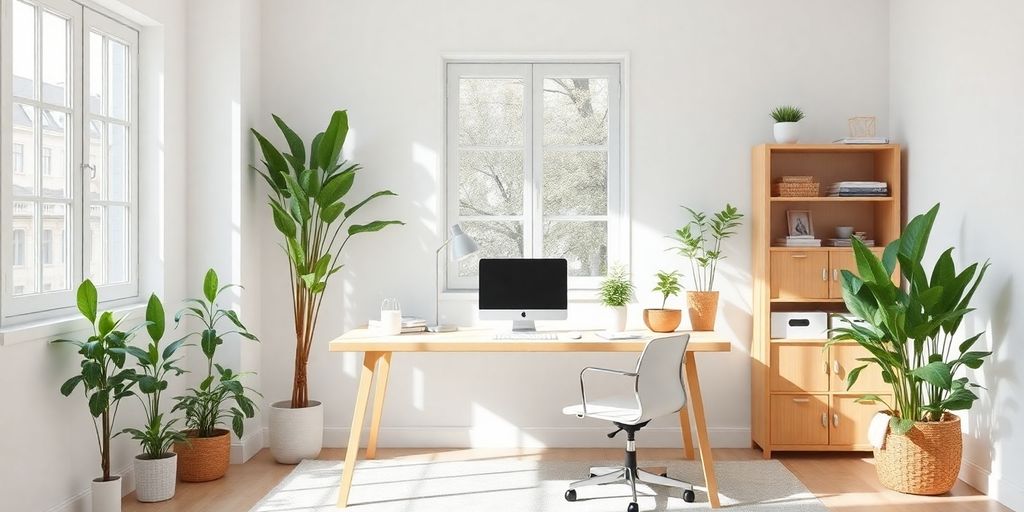
Okay, so minimalism. It’s not just about having less stuff; it’s about creating a space where you can actually think. I used to have all sorts of knick-knacks on my desk, and honestly, it was just visual noise. Now? Much better. Let’s break it down.
Embracing Clean Lines
Think simple. Think functional. Think furniture that doesn’t scream for attention. I swapped out my bulky desk for a sleek, flat one, and it made a world of difference. No crazy curves, no unnecessary drawers. Just a surface to work on. It’s amazing how much calmer I feel now.
Choosing a Neutral Palette
Colors matter. I repainted my office a light gray, and it’s so much more relaxing than the bright blue it used to be. Neutral colors are your friends. They don’t distract, and they make the space feel bigger. You can always add a pop of color with a plant or a piece of art, but keep the overall vibe calm. Consider these home office decor trends for inspiration.
Decluttering for Focus
This is the big one. Get rid of anything you don’t need. Seriously. I went through my drawers and threw out so much junk. Now, everything has a place, and my desk stays clear. It’s not just about aesthetics; it’s about mental clarity.
A minimalist workspace isn’t just about how it looks; it’s about creating a space where you can actually focus. By getting rid of the clutter, you free up your mind to concentrate on what’s important. It’s like a mental reset button.
Innovative Furniture and Layout Solutions
Home offices are evolving, and it’s not just about a desk and a chair anymore. It’s about creating spaces that are both functional and inspiring. Let’s explore some innovative furniture and layout solutions that can transform your home office into a productivity powerhouse.
Hidden Storage Options
Okay, who doesn’t need more storage? Especially when you’re trying to keep your workspace clutter-free. Hidden storage is a game-changer. Think desks with built-in drawers that disappear, shelves concealed behind panels, or even storage ottomans that double as seating. It’s all about maximizing space without sacrificing aesthetics. I recently saw a multi-functional desk that had a secret compartment for all my cables – genius!
Flexible Layouts for Productivity
Gone are the days of static office setups. Today, it’s all about flexibility.
- Modular furniture is your friend. Think pieces that can be easily reconfigured to suit your needs.
- Consider mobile workstations that can be moved around the room or even to different parts of the house.
- Don’t forget about vertical space. Shelving units and wall-mounted desks can free up valuable floor space.
I’ve found that rearranging my office every few months keeps things fresh and prevents me from getting into a rut. It’s amazing how a simple change of scenery can boost creativity.
Transforming Small Spaces
Living in a small apartment doesn’t mean you can’t have a functional home office. It just requires a little creativity.
- Utilize corners with corner desks or shelving units.
- Consider a Murphy bed that transforms into a desk during the day.
- Use wall-mounted organizers to keep supplies off your desk.
I’ve even seen people convert closets into mini-offices! The key is to think vertically and find furniture that serves multiple purposes. Optimizing office design is key to productivity.
Wrapping It Up: Your Perfect Home Office Awaits
So there you have it! If you’re looking to revamp your home office in 2025, these ideas can really help. From adding some greenery to your space to investing in smart tech, there are tons of ways to make your workspace more enjoyable and productive. Remember, it’s all about creating a spot that feels good to work in. Whether you need a cozy nook or a high-tech setup, the right design can make a big difference. Take your time, experiment with what works for you, and soon enough, you’ll have a home office that not only looks great but also helps you get things done.
Frequently Asked Questions
What are some popular home office trends for 2025?
In 2025, popular trends include using natural designs, smart technology, ergonomic furniture, and spaces that serve multiple purposes.
How can I make my home office more eco-friendly?
To make your office greener, choose sustainable materials like recycled wood, natural fabrics, and eco-friendly decorations.
What can I do to reduce noise in my home office?
To cut down on noise, you can use soundproof panels or noise-canceling headphones to help you stay focused.
How can I create a relaxing area in my home office?
You can set up a small corner with comfortable seating, plants, or a yoga mat for quick breaks and relaxation.
What furniture is best for a small home office?
For small spaces, look for furniture that can serve multiple functions, like a desk that doubles as a table or a sofa bed for guests.
Why is ergonomic furniture important for my workspace?
Ergonomic furniture helps support your body, reducing strain and discomfort when you work for long hours.





 PERFECT PAINTER
Leave a comment