
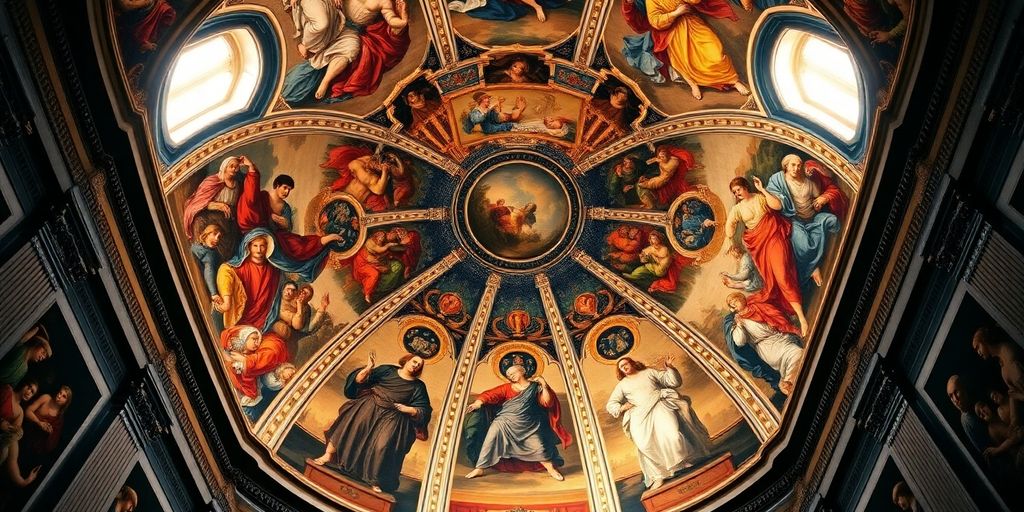
The painting on the ceiling of the Sistine Chapel is one of the most iconic masterpieces in art history. Created by Michelangelo between 1508 and 1512, this monumental work features stunning scenes from the Book of Genesis. It’s not just a visual feast; it also tells profound stories about humanity, divinity, and the Renaissance itself. In this article, we will explore the historical significance, artistic techniques, key themes, Michelangelo’s vision, visiting tips, iconography, and preservation efforts related to this extraordinary work of art.
Key Takeaways
- The painting on the ceiling of the Sistine Chapel showcases Michelangelo’s mastery of the fresco technique, blending art and architecture seamlessly.
- It has had a lasting impact on Renaissance art, influencing generations of artists with its complex themes and vibrant colors.
- The ceiling’s imagery explores deep religious themes, particularly humanity’s relationship with God as depicted in the Book of Genesis.
- Michelangelo faced numerous challenges during the creation of the ceiling, yet he ultimately transformed the chapel into a visual masterpiece.
- Visiting the Sistine Chapel offers a unique experience, with guided tours available to help understand its historical and artistic context.
Historical Significance of The Painting on Ceiling of Sistine Chapel
Cultural Impact on Renaissance Art
Okay, so the Sistine Chapel ceiling? Huge deal. Before Michelangelo got his hands on it, the ceiling was just a blue background with stars, kind of like the Arena Chapel. Then Pope Julius II, who was all about showing off the Church’s power, decided he wanted something way more impressive. Michelangelo’s frescoes changed everything. It wasn’t just a painting; it was a statement. Other artists were doing their thing, like Botticelli and Ghirlandaio, but Michelangelo took it to a whole new level. The Sistine Chapel became the place to see art, and it influenced pretty much every artist who came after him.
Influence on Future Generations of Artists
Think about it: Michelangelo basically set the bar for what art could be. His use of the fresco technique, the way he depicted the human body, the sheer scale of the thing – it all had a massive impact. Artists started studying his work, trying to figure out how he did it. He showed them that art could be both beautiful and powerful, and that an artist could have a vision and bring it to life, no matter how challenging. It’s hard to overstate how much he shaped the course of Western art. The painting techniques he used were revolutionary.
Symbolism in Religious Context
It’s easy to forget that the Sistine Chapel wasn’t just a pretty picture. It was a religious space, and the paintings were meant to convey important messages. The scenes from Genesis, the stories of creation and humanity’s relationship with God – they were all carefully chosen to reinforce the teachings of the Catholic Church. Pope Julius II wanted the ceiling to be read with many layers of meaning. It was a way of using art to communicate complex theological ideas to a wide audience. The Old Testament scenes are particularly powerful.
The chapel itself was the site of regular meetings and Masses of an elite body of officials known as the Papal Chapel. They would observe the decorations and interpret their theological and temporal significance. The iconography of the ceiling was to be read with many layers of meaning.
Artistic Techniques Used in The Painting on Ceiling of Sistine Chapel
Understanding the Fresco Technique
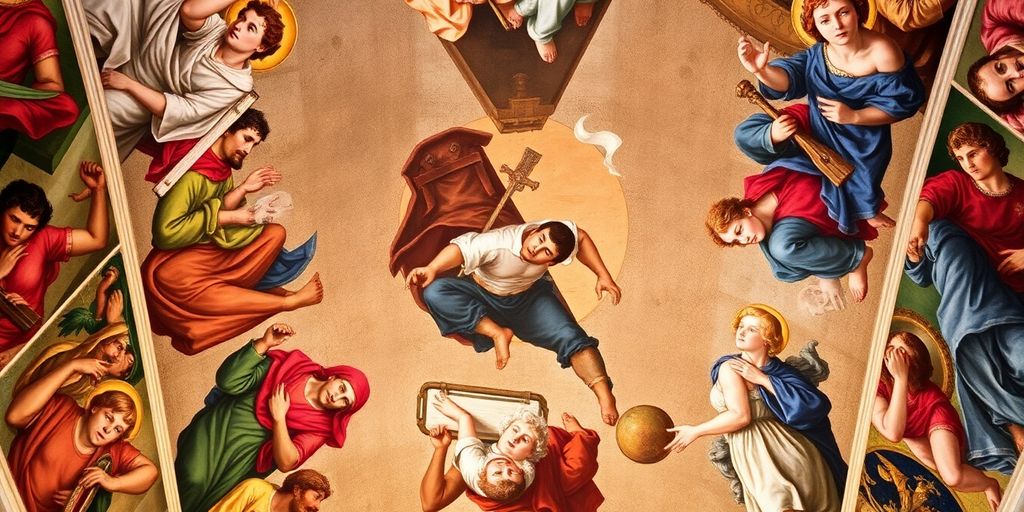
Okay, so Michelangelo didn’t just slap some paint on the ceiling and call it a day. He used a technique called fresco, specifically buon fresco, which is a fancy way of saying "painting on wet plaster." Basically, you mix pigments with water and then apply them to freshly laid plaster. As the plaster dries, the paint becomes a permanent part of the wall. It’s like a chemical bond, man. This is why the colors are still so vibrant after all these years. It’s a pretty unforgiving method, though. You have to work fast because once the plaster dries, that’s it. No do-overs. Imagine the pressure!
Michelangelo’s mastery of the fresco technique allowed him to create a lasting masterpiece. The process demanded speed and precision, but the results speak for themselves. It’s a testament to his skill and dedication.
Color Palette and Its Significance
Let’s talk colors. Michelangelo wasn’t afraid to use them. He employed a vibrant palette, using a range of pigments to bring his figures to life. The colors weren’t just for show, though. They had meaning. For example, blues were often used to represent the heavens, while reds symbolized passion or sacrifice. The use of color adds another layer to the iconography of the ceiling, making it even more complex and fascinating. He also used light and shadow to create depth and dimension, making the figures appear more realistic.
Composition and Spatial Dynamics
Now, the composition of the Sistine Chapel ceiling is mind-blowing. It’s not just a bunch of random scenes thrown together. Michelangelo carefully planned out the arrangement of figures and scenes to create a cohesive narrative. He used perspective to create a sense of depth, making the ceiling feel much larger than it actually is. The way he arranged the figures also creates a sense of movement and drama. It’s like a visual symphony, with each element working together to create a powerful and moving experience. The spatial dynamics are so well-executed that it draws the viewer’s eye across the entire ceiling, revealing new details with each viewing.
Here’s a simplified breakdown of the compositional elements:
- Central Panels: Scenes from Genesis
- Spandrels: Figures of prophets and sibyls
- Lunettes: Ancestors of Christ
Michelangelo’s use of fictive architecture also helps to organize the composition, dividing the ceiling into distinct sections. It’s a masterful display of artistic skill and vision.
Key Themes Depicted in The Painting on Ceiling of Sistine Chapel
Creation and Divine Intervention
The ceiling of the Sistine Chapel is basically a visual telling of the Book of Genesis. You’ve got God creating light, separating water from land, and, of course, the iconic Creation of Adam. It’s all about showing God’s power and how involved He was in making the world. Michelangelo really wanted to show that divine spark, that moment when God gives life to humanity. It’s not just a creation story; it’s about the relationship between the creator and what’s created.
Humanity’s Relationship with God
Michelangelo didn’t just paint scenes; he painted relationships. The figures on the ceiling show all sorts of ways humans interact with God. There’s awe, fear, obedience, and even defiance. Think about Adam reaching out to God – it’s a connection, but there’s also a gap. Some people think that gap represents the unattainability of divine perfection by man. It’s like Michelangelo is saying, "Here’s how we try to connect, but there’s always something between us."
Narratives from the Book of Genesis
The ceiling isn’t just one big picture; it’s a bunch of stories from Genesis all mashed together. You’ve got Noah’s Ark, the Flood, and other key moments. Each scene tells its own story, but they all fit into the bigger picture of God’s plan for humanity. Michelangelo chose these stories to show the ups and downs of that relationship, the times when humans messed up and the times when God offered a way back. It’s like a visual history lesson, but with way more drama.
The Sistine Chapel’s ceiling is more than just pretty pictures; it’s a theological statement. Michelangelo used his art to explore big questions about faith, humanity, and our place in the universe. He wasn’t just illustrating the Bible; he was interpreting it.
Here’s a quick rundown of some key Genesis narratives depicted:
- The Drunkenness of Noah
- The Deluge
- The Fall of Man
Michelangelo’s Vision for The Painting on Ceiling of Sistine Chapel
Initial Commission and Artistic Freedom
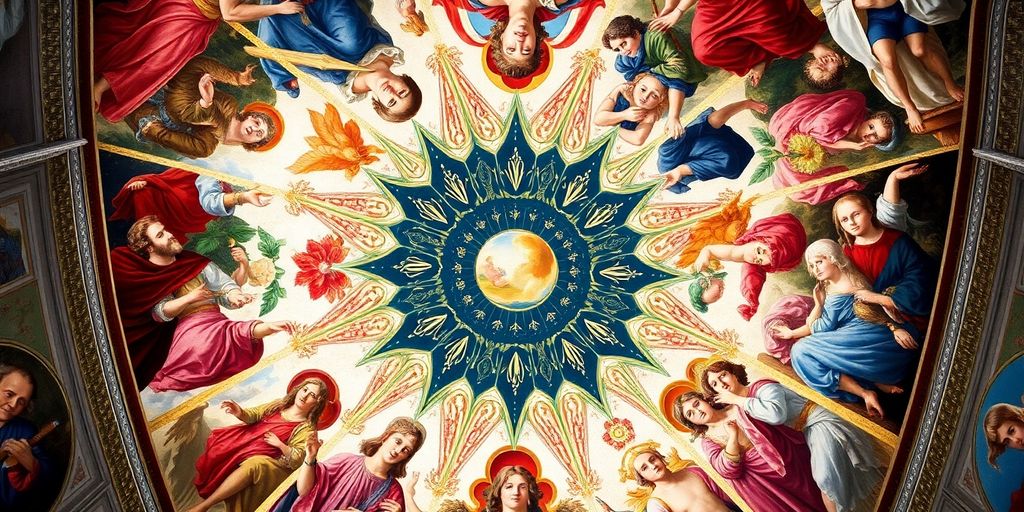
So, Michelangelo and the Sistine Chapel… it’s a story. Initially, Pope Julius II wanted something pretty standard: the twelve apostles painted in geometric patterns. Can you imagine? Michelangelo, though, had other ideas. He negotiated for a much grander, more complex scheme. Eventually, he got the go-ahead to "do as I liked," which is pretty much the dream for any artist, right? It’s believed that Giles of Viterbo may have influenced the theological layout.
Challenges Faced During Creation
Okay, let’s be real, painting the Sistine Chapel ceiling was no walk in the park. We’re talking about a massive space, way up high. The popular image of Michelangelo lying on his back the whole time? Probably not true, thankfully. But still, imagine the physical strain! Plus, he was working with fresco, which is a tricky technique. You’re painting on wet plaster, so you have to work fast, and mistakes are hard to fix. And let’s not forget the whole political stuff going on at the time. It was a lot to handle.
Personal Reflections of Michelangelo
It’s hard to know exactly what Michelangelo was thinking, but we do have some clues. Ascanio Condivi, his biographer, said that Michelangelo read and reread the Old Testament while he was working on the ceiling. He drew inspiration from the scriptures themselves, not just from artistic traditions. The frescoes painted after a break are different from the ones he painted before it. These are the paintings, like The Creation of Adam, where the narratives have been pared down to only the essential figures depicted on a monumental scale. Because of these changes, Michelangelo is able to convey a strong sense of emotionality that can be perceived from the floor of the chapel. It seems like he really poured himself into this project, and it became a deeply personal expression of his faith and his artistic vision. The Old Testament scenes are now found on the vault.
It’s easy to forget that behind every great work of art, there’s a human being with their own struggles, doubts, and inspirations. Michelangelo’s Sistine Chapel ceiling is a testament to his genius, but it’s also a reflection of his humanity.
Visiting The Painting on Ceiling of Sistine Chapel
Planning a trip to see Michelangelo’s masterpiece? It’s an experience you won’t forget, but a little preparation goes a long way. The Sistine Chapel is a popular destination, so expect crowds. Here’s what you need to know to make the most of your visit.
What to Expect During Your Visit
First off, be prepared for crowds. Seriously. The Sistine Chapel is a major tourist attraction, and it gets packed, especially during peak season. Expect to spend a fair amount of time waiting in line, even with pre-booked tickets. Once inside, remember that silence is strictly enforced. Photography is also prohibited, so leave your camera in your bag and soak it all in. The sheer scale and artistry of the Old Testament scenes are breathtaking, but the atmosphere can be a bit overwhelming due to the number of people.
Guided Tours and Educational Resources
Consider joining a guided tour. A knowledgeable guide can provide valuable insights into the history, symbolism, and artistic techniques used in the frescoes. This can really deepen your appreciation for the work. Alternatively, there are plenty of educational resources available online and in print. Here are some options:
- Audio guides available at the Vatican Museums entrance.
- Documentaries about Michelangelo and the Sistine Chapel.
- Books detailing the history and iconography of the frescoes.
Taking the time to learn about the artwork beforehand will enhance your experience and allow you to notice details you might otherwise miss. It’s worth the effort to understand the context and meaning behind Michelangelo’s vision.
Preservation Efforts and Restoration
The Sistine Chapel has undergone several restoration projects over the centuries to preserve its beauty for future generations. These efforts have sometimes been controversial, with debates over cleaning techniques and the interpretation of Michelangelo’s original colors. The chapel is constantly monitored and maintained to protect it from environmental damage and the effects of tourism. The Vatican takes preservation seriously, ensuring that this renowned masterpiece remains accessible for years to come. The chapel recently underwent a controversial cleaning, which has once again brought to light Michelangelo’s jewel-like palette, his mastery of chiaroscuro, and additional iconological details which continue to captivate modern viewers even five hundred years after the frescoes’ original completion. Not bad for an artist who insisted he was not a painter.
Iconography in The Painting on Ceiling of Sistine Chapel
Interpretation of Major Figures
Okay, so when you look up at the Sistine Chapel ceiling, it’s easy to get overwhelmed by the sheer scale and number of figures. But each one is there for a reason, and understanding who they are is key to unlocking the painting’s meaning. Michelangelo didn’t just throw figures up there randomly; he carefully selected and placed them to tell a story.
- God the Father: Often depicted as an older, powerful man, representing divine authority and creation.
- Adam: Usually shown as a youthful, athletic figure, symbolizing humanity and its connection to God.
- Eve: Representing the creation of woman and, later, temptation and the fall of man.
- Prophets and Sibyls: These figures line the edges of the ceiling and are meant to represent those who foretold the coming of Christ. They bridge the gap between the Old Testament and the New Testament.
Symbolic Elements and Their Meanings
Beyond the figures themselves, the Sistine Chapel ceiling is packed with symbolic elements. These aren’t always obvious, but they add layers of meaning to the overall composition. It’s like Michelangelo was using a visual code to communicate deeper ideas. The Book of Genesis is central to the ceiling decoration.
- Nudity: The use of nude figures isn’t just about showing off artistic skill. It represents purity, innocence, and the uncorrupted state of humanity before the Fall.
- Gestures: Pay close attention to the hands and arms of the figures. They often convey important messages, such as the moment of creation when God reaches out to Adam.
- Architectural Framework: The painted architecture isn’t just decorative. It helps to organize the scenes and create a sense of depth and perspective.
The use of light and shadow is also super important. Michelangelo used light to highlight key figures and create a sense of drama. The shadows add depth and make the figures seem more three-dimensional. It’s all about creating a powerful visual experience.
Comparative Analysis with Other Works
To really appreciate the iconography of the Sistine Chapel ceiling, it helps to compare it to other works of art from the same period. This gives you a sense of what was typical and what was innovative about Michelangelo’s approach. It’s like putting his work in context. The Sistine Chapel is a large papal chapel.
Consider these points:
- Renaissance Art: Compare Michelangelo’s figures to those of other Renaissance masters like Raphael or Leonardo da Vinci. How do their styles differ? What similarities do you see?
- Religious Art: How does the iconography of the Sistine Chapel ceiling compare to other religious paintings and sculptures from the same era? Are there common themes or symbols?
- Classical Influences: Michelangelo was heavily influenced by classical art. Can you see any echoes of Greek or Roman sculpture in his figures? The unattainability of divine perfection is represented by a small gap.
Restoration and Preservation of The Painting on Ceiling of Sistine Chapel
The Sistine Chapel ceiling, a treasure of Renaissance art, hasn’t always looked as vibrant as it does today. Over the centuries, grime, smoke from candles, and layers of varnish dulled the original colors. This section explores the fascinating journey of restoring and preserving this iconic masterpiece.
History of Restoration Efforts
The ceiling has undergone several restoration attempts. Early efforts in the 20th century aimed to address surface dirt, but a more comprehensive project began in 1980 and concluded in 1994. This ambitious undertaking sought to remove centuries of accumulated grime and reveal Michelangelo’s original colors. The initial phase focused on the lunettes, followed by the ceiling itself, and finally, The Last Judgment. The unveiling by Pope John Paul II marked a new chapter in the ceiling’s history.
Controversies Surrounding Cleaning Techniques
The restoration wasn’t without its critics. Some argued that the cleaning techniques were too aggressive, potentially removing original paint along with the grime. The debate centered on the interpretation of Michelangelo’s techniques and the extent to which later additions should be preserved. The team, led by Fabrizio Mancinelli and including Gianluigi Colalucci, Maurizio Rossi, Pier Giorgio Bonetti, and Bruno Baratti, defended their methods, emphasizing their commitment to revealing the artist’s true vision. The core of the controversy revolved around the balance between preserving the past and revealing the original artwork.
Current State and Future Preservation Plans
Today, the Sistine Chapel ceiling appears brighter and more colorful than it has in centuries, showcasing daytime scenes and a springlike atmosphere. However, preservation is an ongoing process. Modern climate control systems help regulate temperature and humidity, minimizing the impact of environmental factors. Visitor numbers are also carefully managed to reduce the accumulation of dust and pollutants. Future plans likely involve continued monitoring, non-invasive cleaning methods, and research into advanced preservation techniques to ensure that this artistic masterpiece endures for generations to come.
The restoration of the Sistine Chapel ceiling serves as a reminder of the delicate balance between preserving cultural heritage and revealing the artist’s original intent. It highlights the challenges and complexities involved in conserving such iconic works of art, sparking ongoing discussions about the best approaches to ensure their longevity.
Final Thoughts on the Sistine Chapel Ceiling
In wrapping up our journey through the Sistine Chapel ceiling, it’s clear that Michelangelo’s work is more than just a bunch of pretty pictures on a ceiling. It’s a blend of art, faith, and history that still speaks to us today. Each scene tells a story, and the way he painted them shows off his incredible talent. Sure, it took him four years to finish, and he probably had some tough days up there, but the result? Absolutely worth it. People from all over the world come to see this masterpiece, and it’s easy to see why. It’s not just about the art; it’s about the experience of standing under that magnificent ceiling and feeling the weight of history above you. If you ever get the chance to visit, don’t pass it up. It’s a sight you won’t forget.
Frequently Asked Questions
What is the Sistine Chapel famous for?
The Sistine Chapel is famous for its stunning ceiling painted by Michelangelo, which features many important scenes from the Bible, especially from the Book of Genesis.
How long did it take Michelangelo to paint the ceiling?
Michelangelo took about four years to complete the ceiling, working from 1508 to 1512.
What painting techniques did Michelangelo use?
Michelangelo used a technique called fresco, which involves painting on wet plaster so that the colors become part of the wall as it dries.
What are some key themes in the paintings?
The paintings explore themes like creation, the relationship between humanity and God, and various stories from the Book of Genesis.
Can visitors see the Sistine Chapel today?
Yes, visitors can see the Sistine Chapel as part of the Vatican Museums, where it remains one of the main attractions.
What efforts are made to preserve the paintings?
There are ongoing restoration efforts to clean and preserve the paintings, ensuring that they remain in good condition for future generations.





 PERFECT PAINTER
Leave a comment