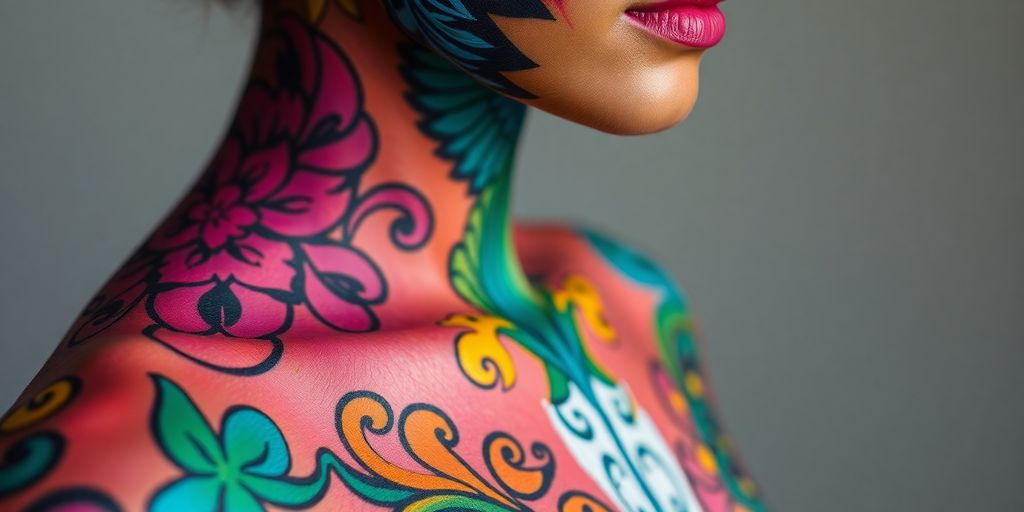
Painting in body is more than just applying color to skin; it’s a form of expression that has deep roots in history and culture. As we step into 2025, this art form continues to evolve, blending traditional techniques with modern innovations. In this article, we’ll explore the journey of body painting, the techniques artists use, the different styles emerging today, and how technology is reshaping this vibrant art. Whether you’re an artist, a fan, or just curious, there’s a lot to discover about this captivating way to express oneself.
Key Takeaways
- Body painting has a rich history, evolving from ancient traditions to modern art forms.
- Techniques like brushwork, color mixing, and shading are essential for creating stunning body art.
- Different styles, such as realism and abstract, showcase the versatility of body painting.
- Innovative materials and tools are crucial for safe and effective body painting.
- Technology plays a significant role in enhancing body painting through digital design and performance art.
The Evolution of Painting In Body
Historical Roots of Body Art
Body painting? It’s ancient! We’re talking thousands of years old, making it one of the oldest art forms around. Think way back to prehistoric times, when people used natural pigments to decorate themselves. It wasn’t just for looks, though. It was about rituals, showing what group you belonged to, and even spiritual protection. In places like Africa, Australia, and Oceania, it was a big deal for ceremonies, dances, and even war. These designs weren’t just pretty; they meant something deep.
- Ritualistic practices
- Social signaling
- Spiritual protection
Body art has been around for ages, and it’s cool to see how different cultures used it for different reasons. It shows how important self-expression has always been.
Modern Interpretations
Fast forward to today, and body painting is still going strong. It had a big comeback in the 1960s with the counterculture movement. It became a way to rebel against what was considered normal and to explore personal freedom. Artists started using the human body as a canvas for performance art and to express political and social ideas. Now, you see it everywhere, from art galleries to advertising campaigns. Modern artists are using all sorts of new techniques, paints, and even digital tech to create mind-blowing works of art. It’s a mix of old traditions and new innovations.
Cultural Significance
Body painting isn’t just about art; it’s deeply connected to culture. Different cultures have their own unique styles and meanings. Think about the geometric patterns in African ceremonies or the spiritual symbols in Native American body paintings. Even now, artists are inspired by these multicultural influences, creating art that shows the diversity of the world. Body painting has become a way to express identity, challenge social norms, and celebrate cultural heritage.
| Culture | Style | Meaning |
|---|---|---|
| African Tribes | Geometric patterns, vibrant colors | Ceremonial, social status |
| Native Americans | Spiritual symbols, natural pigments | Connection to nature, spiritual beliefs |
| Modern Era | Diverse styles, experimental techniques | Personal expression, social commentary |
The cultural significance of body painting is huge. It’s a way for people to connect with their heritage, express themselves, and challenge the status quo. It’s more than just skin deep; it’s a powerful form of communication.
Techniques for Mastering Painting In Body

Brushwork and Application
Okay, so you want to get good at body painting? It’s not just slapping paint on someone! It’s about understanding how different tools and techniques affect the final look. Think of it like this: you wouldn’t use a hammer to screw in a lightbulb, right? Same deal here. You need the right brush (or sponge, or airbrush) for the job.
- Brushes: Great for detail work and controlled application. Different sizes and shapes will give you different effects. Experiment!
- Sponges: Awesome for blending and creating smooth, even coverage. Think backgrounds and base layers.
- Airbrushes: The king of smooth transitions and gradients. A bit of a learning curve, but totally worth it for that professional finish.
Don’t be afraid to mix and match! Use a sponge for the base, then go in with a fine-tipped brush for details. It’s all about finding what works best for you and the design you’re trying to create. Also, practice your brushwork and application on paper first to get a feel for the tools.
Color Theory and Mixing
Color theory is your friend. Seriously. Knowing how colors interact is super important. You don’t want to end up with a muddy mess, do you? Think about complementary colors (opposites on the color wheel) – they create contrast and make each other pop. Analogous colors (next to each other) create harmony.
Here’s a simple guide to basic color mixing:
| Color 1 | Color 2 | Result |
|---|---|---|
| Red | Yellow | Orange |
| Blue | Yellow | Green |
| Red | Blue | Purple |
Also, consider these points:
- Skin tones: Mixing realistic skin tones can be tricky. Start with a base of yellow, red, and blue, and then adjust with white or brown.
- Opacity: Some colors are more transparent than others. Keep this in mind when layering.
- Practice: Mix, mix, mix! The more you practice, the better you’ll get at predicting the outcome.
Shading and Texturing
Shading and texturing are what take a body painting from flat to fantastic. It’s all about creating the illusion of depth and dimension. Contouring is a key technique for shaping and emphasizing the body’s natural curves. By strategically applying shadows and highlights, you can accentuate certain areas, giving the impression of volume or even altering the visual proportions of the body.
Here are some tips:
- Light source: Decide where your light is coming from and shade accordingly.
- Highlights: Use lighter colors to highlight areas that would naturally catch the light.
- Shadows: Use darker colors to create shadows in areas that are recessed or hidden from the light.
- Blending is key. You want smooth transitions between your highlights and shadows. Use a sponge or a soft brush to blend the colors together. Don’t forget about skin-safe paints when choosing your colors.
Exploring Styles in Painting In Body
Realism and Detail
Realism in body painting is super impressive, but it’s also one of the hardest styles to pull off. It’s all about making the body look like something else entirely, like a landscape or a hyper-realistic object. You really need to know your stuff when it comes to shading, lighting, and how perspective works to trick the eye into seeing something that isn’t really there. It’s not just about painting; it’s about creating an illusion.
Abstract Expressions
Abstract body painting is where things get really interesting. It’s less about representing something real and more about expressing feelings or ideas through shapes, colors, and lines. It’s like turning the body into a canvas for pure emotion. You can go super minimal with clean lines or create these wild, dynamic compositions that just explode with energy. It’s all about abstract body painting and letting your creativity run wild.
Tribal and Cultural Influences
Tribal body painting is one of the oldest and most recognizable styles, with roots in the cultural traditions of indigenous peoples. This style often uses geometric patterns, simple lines, and natural colors, applied to the body to mark important events, rituals, or to signal belonging to a particular group. In the contemporary context, tribal style is often reinterpreted, while preserving its symbolic essence and connection to ancient traditions.
Body painting styles are diverse, reflecting cultural and historical influences, as well as modern innovations and aesthetic preferences. Each style offers a unique approach to how the human body can be transformed into a work of art, using color, shape, and texture in a creative and captivating manner.
Innovative Materials for Painting In Body
Skin-Safe Paints
When it comes to body painting, the most important thing is the paint itself. You can’t just use any old craft paint! We’re talking about paints specifically designed to be gentle on the skin. These are non-toxic and hypoallergenic, which is super important because you don’t want to cause any allergic reactions or skin irritation. There’s a huge range of colors and finishes available now, from matte to shimmery, so you can really get creative. It’s amazing how far body painting has come since the early days.
Application Tools and Techniques
Okay, so you’ve got your skin-safe paints. Now you need the right tools to apply them.
Here’s a quick rundown:
- Brushes: Essential for detail work. Get a variety of sizes.
- Sponges: Great for covering large areas quickly and creating smooth blends.
- Airbrushes: For those super smooth gradients and intricate designs. Requires a bit of practice, but the results are worth it.
Don’t forget stencils! They’re perfect for creating precise shapes and patterns, especially if you’re not super confident with freehand painting. Also, blending is key. Mix colors directly on the skin for smooth transitions.
Protective Finishes
So, you’ve spent hours creating this amazing body painting. The last thing you want is for it to smudge or fade before you even get a chance to show it off. That’s where protective finishes come in. These are basically sealants that you spray or brush on to help the paint last longer. They also add a layer of protection against sweat and rubbing. Just make sure to choose a finish that’s also skin-safe and easy to remove when you’re done. Think of it like hairspray for your body art – it keeps everything in place! And when it’s all said and done, specialized removers will gently take the paint off.
The Role of Technology in Painting In Body

Digital Design Integration
Okay, so, digital tools? They’re a big deal now. Artists are using software to plan out their body paintings before they even pick up a brush. It’s like having a digital sketchpad that lets you experiment with colors, designs, and placements without wasting any paint or time. You can even simulate how the design will look on a moving body, which is pretty cool. It’s not just about planning, though. Some artists are using projection mapping to add dynamic elements to their work, making the body a living, breathing canvas.
Lighting and Performance Art
Lighting can totally change a body painting. Think about it: UV lights making neon colors pop, or colored gels casting different shadows. It’s all about creating a mood and highlighting certain aspects of the design. And when you combine body painting with performance art, things get really interesting. The movement of the body, combined with the lighting and the paint, can tell a story or create an experience that’s way more impactful than just a static image. It’s like the integrated medium of art forms coming together.
Photography and Documentation
Body painting is temporary, right? So, photography is key to preserving the art. But it’s not just about taking a snapshot. Artists are using high-resolution cameras and editing software to capture every detail and enhance the colors. And with social media, it’s easier than ever to share these images with the world. It’s a way to document the process, showcase the artist’s skills, and inspire others. Plus, some artists are even using 3D scanning and printing to create replicas of their body paintings, which is pretty wild. Here are some ways technology helps with documentation:
- High-resolution photography captures intricate details.
- Editing software enhances colors and textures.
- 3D scanning allows for replication and preservation.
Technology has really opened up new possibilities for body painting. It’s not just about the paint and the brush anymore. It’s about using digital tools, lighting, and photography to create art that’s dynamic, engaging, and shareable. It’s a whole new world for body art.
Inspirational Artists in Painting In Body
Joanne Gair’s Iconic Works
Joanne Gair is a big name in body painting, known for her crazy attention to detail. She can turn a person into a total visual illusion. One of her most famous pieces is "Demi’s Birthday Suit," which she did for Vanity Fair. Demi Moore looks like she’s wearing a suit, but it’s all paint! It really shows how body painting can mess with what you think you see and mix art with reality. It’s wild how she uses body painting to create such realistic illusions.
Craig Tracy’s Nature-Inspired Art
Craig Tracy is another important artist. He’s famous for blending people’s bodies with landscapes and nature scenes. One of his best-known works is "The Nature of Reality," where he painted a leopard on a woman’s body. He used the body’s curves to make the leopard look alive. Tracy makes the body seem like it’s part of the environment, like skin and nature are the same thing. It’s pretty cool how he makes nature art come to life on the human form.
Emerging Talents in Body Painting
Body painting is always changing, with new artists popping up all the time. These artists are pushing the limits of what’s possible, using new techniques and ideas. They’re exploring different styles, from abstract designs to hyper-realistic images. Some are even using digital tools to plan their paintings. It’s exciting to see where body art is headed. Here are some things they are doing:
- Experimenting with UV paint for glow-in-the-dark effects.
- Using body painting as a form of political and social commentary.
- Creating interactive body art that changes with movement.
Body painting is more than just putting paint on skin. It’s about telling stories, expressing yourself, and challenging people’s ideas about beauty and identity. These new artists are keeping the art form alive and relevant.
It’s cool to see how these artists are using painting in body to express themselves.
The Impact of Painting In Body on Identity
Personal Expression Through Art
Body painting offers a powerful avenue for personal expression. It’s a way to communicate feelings, beliefs, and aspects of one’s identity that might be difficult to articulate otherwise. The body becomes a canvas, allowing individuals to externalize their inner world in a visible and tangible form. It’s not just about aesthetics; it’s about making a statement, exploring emotions, and connecting with oneself on a deeper level. Body painting is a dynamic art form that evolves with cultural changes.
- Exploring hidden aspects of self
- Communicating complex emotions
- Creating a unique visual narrative
Body painting allows individuals to reclaim their bodies and redefine their self-image. It’s a way to challenge societal norms and celebrate individuality.
Body Positivity and Representation
Body painting plays a significant role in promoting body positivity and diverse representation. By adorning bodies of all shapes, sizes, and backgrounds, artists challenge conventional beauty standards and celebrate the human form in its entirety. This can be incredibly empowering for both the artist and the model, fostering self-acceptance and challenging societal expectations. It’s about seeing beauty in diversity and using art to promote a more inclusive and accepting view of the body. Body painting is used not only in performance art, but also in social and activist campaigns, where the body becomes a medium for transmitting powerful messages about freedom of expression.
Cultural Narratives and Storytelling
Body painting has deep roots in many cultures, serving as a means of storytelling, preserving traditions, and expressing cultural identity. From ancient tribal rituals to contemporary celebrations, body art carries rich narratives that connect individuals to their heritage and community. These painted stories can convey myths, legends, social structures, and spiritual beliefs, ensuring that cultural knowledge is passed down through generations. Body painting is a form of body art with a long history.
- Preserving cultural heritage
- Transmitting ancestral knowledge
- Celebrating community identity
| Culture | Purpose of Body Painting |
|---|---|
| African Tribes | Rituals, ceremonies, social status |
| Native Americans | War rituals, festivals, connection to the spiritual world |
| Aboriginals | Dreamtime stories, connection to the land |
Wrapping Up the Journey of Body Painting
So, there you have it. Body painting is more than just slapping some paint on skin; it’s a whole world of creativity and expression. From the techniques that let artists turn bodies into stunning visuals, to the cultural stories that each design can tell, this art form is alive and kicking. As we move into 2025, it’s clear that body painting will keep evolving, mixing old traditions with new ideas. Whether you’re a seasoned artist or just curious, there’s always something fresh to discover in this vibrant field. So grab some paint, find a willing canvas, and let your imagination run wild!
Frequently Asked Questions
What is body painting?
Body painting is an art form where artists use the human body as a canvas to create colorful designs and images.
What materials are used in body painting?
Artists use special skin-safe paints and tools to apply the designs. These paints are non-toxic and come in many colors.
Is body painting permanent?
No, body painting is temporary. The paint can be washed off with soap and water.
Can anyone try body painting?
Yes! Anyone can try body painting, whether for fun, events, or as a form of artistic expression.
What are some popular styles of body painting?
Popular styles include realism, abstract, and tribal designs. Each style has its own unique look and meaning.
How can I learn body painting techniques?
You can learn body painting by taking classes, watching online tutorials, or practicing with friends.


Leave a Reply