

Sunset painting is a captivating way to express the beauty of nature. Artists have long been drawn to the vibrant colors and fleeting moments of a sunset, using various techniques to capture its essence on canvas. Whether you’re a beginner or a seasoned painter, understanding different styles and methods can enhance your sunset painting experience. In this article, we’ll explore the world of sunsets painting, from classic techniques to modern approaches, and provide inspiration to help you create your own stunning sunset artwork.
Key Takeaways
- Impressionist artists like Monet and Van Gogh have greatly influenced sunset painting techniques.
- Acrylic paints are ideal for capturing the vibrant colors of sunsets due to their quick-drying nature.
- Observing sunsets across different seasons can inspire unique color palettes and compositions.
- Innovative techniques, like Open Impressionism, can add a fresh perspective to sunset paintings.
- Using the right materials, including quality paints and brushes, is essential for achieving the desired effects in sunset painting.
Exploring Impressionism in Sunsets Painting
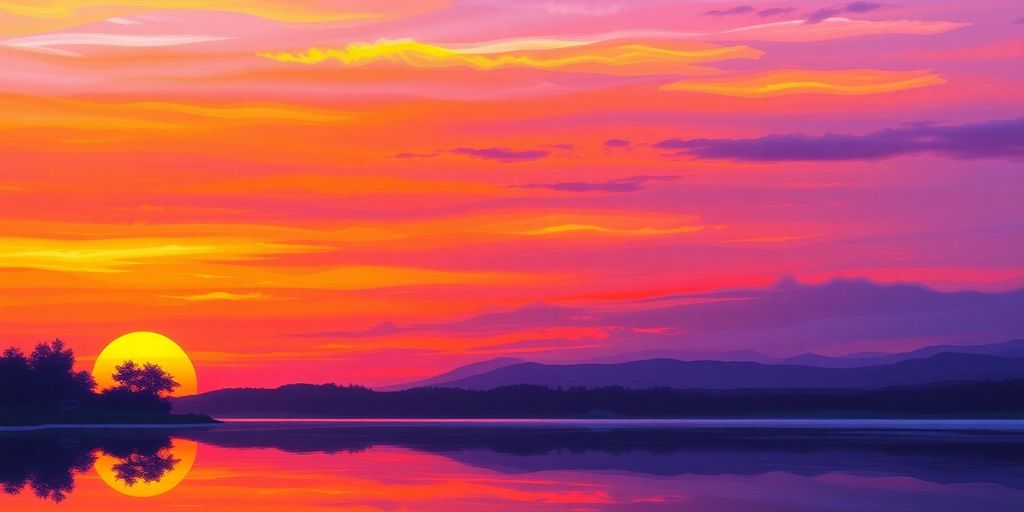
Impressionism really nailed capturing a moment, and sunsets? Perfect match. Think about it: vibrant colors, light changing fast – it’s all about grabbing that fleeting feeling. When we think of impressionist paintings, names like Monet and Van Gogh come to mind. It’s like the artist didn’t just paint the colors, but the actual feeling of being there. That’s why they’re so timeless.
The Legacy of Claude Monet
Monet, the OG impressionist, was all about sunsets. His work wasn’t just painting what he saw, but how he saw it. He captured the light and atmosphere like no one else. His famous painting, Impression, Sunrise, captures the serene beauty of the sunrise over the harbor at Le Havre, France. His use of pastel colors and loose brushstrokes creates a dreamy, hazy atmosphere that transports the viewer into the moment.
Capturing Light with Renoir
Renoir also painted some killer sunsets. He was a master of light and shadow, creating a peaceful vibe in his paintings. His painting, The Seine at Asnières, features a gorgeous sunset reflected on the water of the Seine River. Renoir’s use of light and shadow and his soft brushwork create a serene and peaceful mood.
Van Gogh’s Unique Approach
Van Gogh took a different route. His sunsets are bold, full of emotion, and totally unique. His famous painting, The Starry Night, features a brilliant night sky with the moon and stars shining brightly over a quaint village. His use of bold, vibrant colors and his distinctive brushwork create a dynamic and expressive composition that captures the energy and excitement of a sunset.
Impressionism is known for its vibrant and bold use of color to capture the essence of a moment, whether it’s a sun-dappled garden or a shimmering sunset over the water. And there’s something particularly special about a sunset painting in the impressionist style. The way the colors blend and merge into each other, creating an ethereal and dreamlike atmosphere, is truly magical.
Techniques for Acrylic Sunsets Painting
Blending Colors for Depth
Acrylics are known for drying fast, which can make blending tricky. The key is to work quickly and in thin layers. Don’t be afraid to mix colors directly on the canvas, but also pre-mix on your palette to have a range of hues ready to go. A wet palette can also help slow down the drying process, giving you more time to blend. Consider using a blending medium to extend the open time of your acrylics. This will allow you to manipulate the paint for a longer period, achieving smoother transitions between colors. Remember, practice makes perfect, so don’t get discouraged if your first few attempts aren’t exactly what you envisioned. Keep experimenting with different techniques and find what works best for you.
Layering Techniques for Texture
Layering is where acrylics really shine. Start with thin washes of color to establish the base of your sunset. Then, build up layers to add depth and texture. Dry brushing is great for creating a sense of rough texture in clouds, while glazing (thin, transparent layers) can add luminosity. Don’t be afraid to let some of the underlayers peek through to create visual interest. Here’s a simple layering approach:
- Base Layer: Apply a thin wash of your lightest colors.
- Mid-tones: Add layers of slightly darker colors, blending as needed.
- Highlights: Use lighter colors to create highlights and points of interest.
- Shadows: Introduce darker colors to define shapes and create depth.
Layering isn’t just about adding color; it’s about building up a sense of atmosphere and realism in your sunset painting. Experiment with different brushstrokes and techniques to create unique textures and effects.
Creating Atmospheric Effects
Atmosphere is what makes a sunset painting truly captivating. To create a sense of depth and distance, use lighter, cooler colors for elements that are further away. This is called atmospheric perspective. Also, consider the role of light. Sunsets are all about the interplay of light and shadow, so pay close attention to how the light is hitting different parts of the scene. Use glazes to create a soft, diffused light, and dry brushing to create a more intense, direct light. To really nail those atmospheric effects, think about these elements:
- Color Temperature: Warmer colors (reds, oranges, yellows) tend to advance, while cooler colors (blues, purples) recede.
- Value: Lighter values suggest distance, while darker values create a sense of proximity.
- Edges: Softer edges create a sense of distance, while sharper edges bring objects forward.
Remember to choose a striking sunset photo to work from. You can also use a Liquitex Basics set for your acrylic paints.
Inspiration from Nature’s Palette
Nature provides an endless source of inspiration for sunset paintings. From the fiery skies over deserts to the tranquil hues reflecting on mountain lakes, the possibilities are truly limitless. It’s about observing, feeling, and then translating that onto the canvas. I find that the more time I spend just watching sunsets, the more ideas I get. It’s almost like nature is whispering secrets about color and light.
Sunsets Across Different Seasons
Sunsets aren’t just a summer thing! Each season brings its own unique palette to the sky. Winter sunsets can be surprisingly vibrant, with crisp, clear air allowing for deeper blues and purples. Spring brings softer pastels, while autumn explodes with oranges and reds. Summer, of course, is the classic time for those fiery, dramatic displays. Here’s a quick breakdown:
- Winter: Deep blues, purples, and occasional pinks.
- Spring: Soft pastels, gentle oranges, and yellows.
- Summer: Fiery reds, oranges, and intense yellows.
- Autumn: Rich oranges, reds, and golds.
Unique Locations for Sunset Painting
Different locations offer different perspectives and color combinations. A beach sunset will have a completely different feel than a mountain sunset. Deserts offer incredible clarity and intense colors, while forests can create dramatic silhouettes. Consider these locations for inspiration:
- Beaches: Reflective light, wide horizons, and coastal elements.
- Mountains: Layered landscapes, dramatic shadows, and unique perspectives.
- Deserts: Intense colors, clear skies, and stark contrasts.
- Forests: Silhouettes, dappled light, and earthy tones.
The Role of Weather in Sunset Colors
Weather plays a huge role in the colors we see at sunset. Clouds can act as canvases, reflecting and scattering light in amazing ways. Humidity can soften colors, while clear, dry air can make them more intense. Even the presence of dust or pollution can affect the colors, sometimes creating unusual and beautiful effects. For example, after a volcanic eruption, sunsets can be incredibly vibrant due to the particles in the atmosphere. Understanding how weather affects light is key to capturing light accurately in your paintings.
The best sunsets often happen when you least expect them. It’s worth keeping an eye on the sky, even when the weather seems dull. You never know when nature might surprise you with a breathtaking display.
Innovative Styles in Sunsets Painting
Open Impressionism Explained
Open Impressionism is a cool technique that some artists use to paint sunsets. It’s all about putting bright, bold strokes of color right next to each other. This creates a textured and lively surface, which is perfect for capturing the energy of a sunset. Think of it like a mosaic, but with paint! It’s a way to show movement and light in a really unique way. Erin Hanson is a modern artist who’s known for using this technique a lot. She captures the feeling of a sunset over places like Monterey, California, with a sense of spontaneity. You can see how the sunset colors blend together to create something amazing.
Contemporary Artists to Watch
There are so many artists doing interesting things with sunset paintings right now. It’s cool to see how different people interpret the same scene. Some artists focus on super realistic details, while others go for a more abstract approach. Keep an eye out for artists who are experimenting with new materials and techniques. You might find someone who uses mixed media, combining paint with things like collage or digital art. It’s all about finding artists who are pushing the boundaries and bringing a fresh perspective to creative painting ideas.
Combining Techniques for Unique Results
Why stick to just one style when you can mix things up? Try combining different techniques to create your own unique sunset paintings. For example, you could start with a base layer of acrylics for the bold colors, and then add details with oil pastels for texture. Or, you could use watercolor washes to create a dreamy, atmospheric effect, and then add sharp lines with ink for contrast. The possibilities are endless! It’s all about experimenting and finding what works best for you. Don’t be afraid to break the rules and try something new. You might just discover your own signature style. Here are some ideas to get you started:
- Combine acrylics with oil pastels for texture.
- Use watercolor washes with ink for contrast.
- Try layering different mediums for depth.
Experimenting with different styles is a great way to find your own voice as an artist. Don’t be afraid to try new things and see what happens. You might surprise yourself with what you can create.
Materials for Successful Sunsets Painting
Choosing the Right Paints
Selecting the right paints is the first step in creating a stunning sunset painting. Acrylics are a popular choice because they dry quickly and offer vibrant colors. Oil paints, on the other hand, provide a richer, more blendable texture, allowing for smoother transitions and subtle color gradations. Watercolors are great for achieving soft, atmospheric effects, but they can be more challenging to work with for beginners. Consider starting with a basic set of acrylics to get a feel for sunset painting before exploring other mediums.
- Acrylics: Fast-drying, vibrant, easy to clean.
- Oils: Slow-drying, rich colors, require solvents.
- Watercolors: Transparent, delicate, best for soft effects.
Essential Brushes and Tools
Having the right brushes and tools can significantly impact your painting process. A variety of brush shapes and sizes will allow you to create different textures and effects. Flat brushes are great for covering large areas, while round brushes are ideal for detail work. Palette knives can be used to apply paint in thick, textured layers. Don’t forget a palette for mixing colors, a jar of water for cleaning brushes (if using acrylics or watercolors), and a rag for wiping excess paint.
- Flat Brushes: Ideal for backgrounds and broad strokes.
- Round Brushes: Perfect for fine details and lines.
- Palette Knives: Useful for creating texture and applying thick paint.
Preparing Your Canvas
Preparing your canvas properly ensures that your paint adheres well and your colors remain vibrant. Most pre-stretched canvases come pre-primed, but it’s always a good idea to add an extra layer of gesso for a smoother surface. This is especially important if you’re working with acrylics, as they can sometimes sink into the canvas if it’s not properly primed. For watercolor paintings, use watercolor paper that is thick enough to prevent buckling. Consider easy painting ideas for spring to get started.
A well-prepared canvas not only enhances the longevity of your painting but also makes the painting process more enjoyable. Taking the time to properly prime your surface can prevent issues like paint cracking or uneven color absorption, allowing you to focus on capturing the beauty of the sunset.
Step-by-Step Guide to Sunset Painting
Drafting Your Composition
Okay, so you want to paint a sunset? Awesome! First things first, let’s talk composition. This is where you decide what your painting will actually look like. Think about where you want the sun, how much sky versus land or water you want to show, and if there are any interesting shapes like trees or clouds to include. Don’t just slap some paint on the canvas; plan it out a bit. I usually do a quick sketch in my sketchbook to get a feel for the layout. It doesn’t have to be perfect, just enough to guide you when you start painting. Consider the rule of thirds – it can really help make your painting more visually appealing.
A good composition can make or break a painting. Spend some time thinking about what you want to emphasize and how you want to lead the viewer’s eye through the scene.
Selecting Reference Photos
Reference photos are your best friend, especially when you’re starting out. I mean, unless you have a photographic memory, you’re gonna need something to look at! You can use your own photos, which is cool because they’re personal, or you can find royalty-free images online. Sites like Pixabay or Unsplash are great for that. When choosing a photo, look for good color variations and interesting cloud formations. Don’t be afraid to use multiple photos for inspiration, mixing and matching elements you like from each. Just don’t copy one photo exactly; try to put your own spin on it. Think about the sunset painting you want to create.
Final Touches for Impact
Alright, you’ve got your base layers down, the colors are blended (hopefully!), and it’s starting to look like a sunset. Now comes the fun part: adding those final touches that really make it pop. This is where you can add highlights to the clouds, deepen the shadows, and maybe even throw in some birds silhouetted against the sky. Don’t overdo it, though! Sometimes less is more. Step back from your painting every now and then to get a fresh perspective. And remember, there’s no such thing as perfect. Just keep tweaking it until you’re happy with it. Here are some things to consider:
- Adding subtle glimmers on the water.
- Adjusting the color intensity in certain areas.
- Refining the edges of clouds for a softer look.
Capturing Movement and Emotion in Sunsets Painting
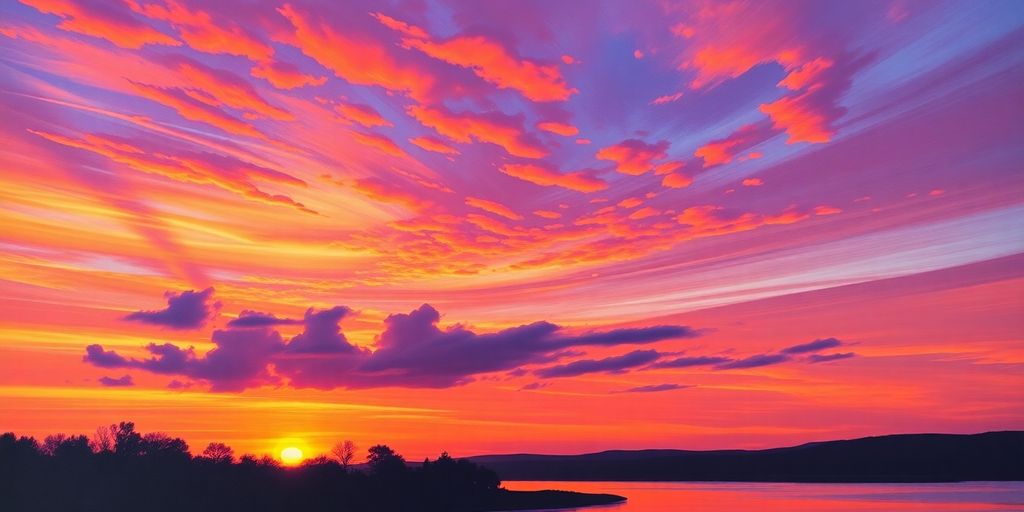
Expressive Brushwork Techniques
When painting sunsets, don’t just think about color; think about how you can use your brush to show movement and feeling. Loose, gestural strokes can suggest the wind, the shifting light, and the overall energy of the sunset. Try different brushes and techniques. A palette knife can add texture and drama, while a soft brush can blend colors for a dreamy effect. Experiment with the direction and pressure of your strokes to convey different emotions. For example, short, choppy strokes might represent a turbulent sky, while long, flowing strokes could depict a calm, peaceful sunset. Consider how horizontal strokes can mimic the ocean’s surface.
Using Color to Convey Mood
Color is your most powerful tool for expressing emotion in a sunset painting. Think about what feelings you want to evoke and choose your colors accordingly. Warm colors like reds, oranges, and yellows can create a sense of joy, excitement, or passion. Cool colors like blues, purples, and greens can evoke feelings of peace, tranquility, or melancholy. Don’t be afraid to use contrasting colors to create drama and visual interest. For example, a vibrant orange sunset against a deep blue sky can be incredibly striking. Consider these color combinations:
- Warm & Inviting: Yellows, oranges, soft pinks
- Dramatic & Intense: Deep reds, purples, fiery oranges
- Calm & Serene: Blues, lavenders, muted greens
The key is to use color intentionally to communicate your personal interpretation of the sunset. Don’t just copy what you see; express what you feel.
Creating a Sense of Depth
Creating depth in a sunset painting can make it more immersive and engaging. One way to achieve this is through atmospheric perspective. This means that objects in the distance appear less detailed, with softer edges and cooler colors. You can also use layering techniques to create a sense of depth. Start by painting the background, then gradually add layers of detail as you move towards the foreground. Another technique is to use contrasting values to create a sense of distance. Darker values in the foreground and lighter values in the background can help to create the illusion of depth. Consider these tips:
- Use lighter, cooler colors for distant objects.
- Soften edges of objects in the background.
- Layer your paint, starting with the background.
Final Thoughts on Sunset Painting
In the end, painting sunsets is all about capturing that fleeting moment of beauty. Each sunset is different, and that’s what makes them so special. Whether you’re just starting out or you’ve been painting for years, there’s always something new to learn. So grab your brushes and paints, and don’t be afraid to experiment. Remember, it’s not about perfection; it’s about expressing how you feel in that moment. Keep practicing, and soon enough, you’ll find your own style and voice in your sunset paintings. Happy painting!
Frequently Asked Questions
What is the best technique for painting sunsets?
Blending colors is key for sunset paintings. Start with lighter colors and gradually add darker shades to create depth.
Which colors should I use for a sunset painting?
Use warm colors like orange, pink, and yellow for the sky, and cooler colors like blue and purple for shadows.
How can I make my sunset painting look more realistic?
Focus on the light and shadows. Use layers to add texture and create a sense of movement in the clouds.
What materials do I need for acrylic sunset painting?
You will need acrylic paints, brushes, a canvas, a palette, and water for cleaning your brushes.
Can I paint sunsets in other mediums besides acrylic?
Yes! You can also use oil paints, watercolors, or pastels to create beautiful sunset paintings.
Where can I find inspiration for sunset paintings?
Look at nature, take photos of sunsets, or explore artworks by famous artists for ideas.





 PERFECT PAINTER
Leave a comment