

Michelangelo, a name that echoes through centuries, is one of the most celebrated artists in history. Known for his groundbreaking sculptures and awe-inspiring frescoes, his work is a cornerstone of Renaissance art. But what made his painting techniques so unique? What legacy did he leave for the art world? In this article, we’ll explore Michelangelo’s life, his innovative painting methods, and the lasting impact of his masterpieces.
Key Takeaways
- Michelangelo’s transition from sculpture to painting showcased his incredible versatility as an artist.
- He mastered fresco painting, a technique that required precision and speed.
- His use of light and shadow brought a three-dimensional quality to his work.
- Religious and mythological themes were central to his paintings, often filled with symbolic depth.
- The Sistine Chapel remains a monumental achievement, influencing countless artists and art movements.
The Life and Artistic Journey of Michelangelo

Early Influences and Training
Michelangelo Buonarroti, born on March 6, 1475, in Caprese, Tuscany, grew up in a world brimming with artistic innovation. Florence, where he spent much of his youth, was the epicenter of the Renaissance—a cultural movement that shaped his artistic vision. At just thirteen years old, he apprenticed under Domenico Ghirlandaio, a renowned painter of the time. This early exposure to fresco techniques and classical themes laid the groundwork for his later masterpieces. However, it was his time in the Medici Garden under the mentorship of Bertoldo di Giovanni that ignited his passion for sculpture.
Transition from Sculpture to Painting
Though primarily celebrated as a sculptor, Michelangelo’s foray into painting was nothing short of revolutionary. His early works showcased his ability to blend sculptural precision with painterly finesse. The Sistine Chapel ceiling, for instance, was a monumental project that pushed him to master fresco painting on an unprecedented scale. While he initially resisted the commission, citing his preference for sculpture, the result became one of the most iconic artworks in history.
Key Milestones in His Career
Michelangelo’s career was marked by a series of groundbreaking achievements:
- The Pietà (1498-1499): A marble sculpture that captures Mary cradling the body of Jesus, showcasing his unparalleled ability to convey emotion.
- David (1501-1504): Standing at over 13 feet tall, this statue became a symbol of Florence’s strength and resilience.
- The Sistine Chapel Ceiling (1508-1512): Depicting scenes from Genesis, this masterpiece redefined the possibilities of fresco painting.
Michelangelo’s ability to transcend mediums—whether marble, paint, or architecture—cemented his status as a Renaissance genius.
Michelangelo’s legacy endures, with his work continuing to inspire countless artists and admirers. His contributions remain a testament to the transformative power of art, as seen in his enduring influence on the cultural and artistic world.
Decoding Michelangelo’s Painting Techniques
Mastery of Fresco Painting
Michelangelo’s ability to work with fresco painting was nothing short of groundbreaking. Fresco, a method where pigments are applied to wet plaster, required speed, precision, and an eye for detail. He used the buon fresco technique to great effect, ensuring that his colors bonded seamlessly with the plaster. This method not only gave his works a vibrant, enduring quality but also showcased his ability to adapt to the medium’s challenges. Every layer of paint had to be applied before the plaster dried, leaving no room for hesitation or error. The Sistine Chapel ceiling is a prime example of this mastery, where he brought biblical stories to life with breathtaking color and depth.
Use of Light and Shadow
Michelangelo had an unmatched skill in manipulating light and shadow, a technique known as chiaroscuro. This wasn’t just about making things look three-dimensional—it was about creating emotion and drama. He used light to highlight key figures and shadow to add depth, making his scenes feel alive. For example, in the Sistine Chapel, the contrast between light and dark pulls the viewer’s eye to the central figures, emphasizing their importance. This play of light and shadow added a level of realism that was rare for his time.
Anatomical Precision in Art
Michelangelo’s understanding of the human body was exceptional, and it showed in how he painted. He spent years studying anatomy, even dissecting cadavers, to understand muscles, bones, and how they moved. This knowledge translated into figures that were both dynamic and lifelike. Whether it was the outstretched arm of Adam in "The Creation of Adam" or the muscular forms of the prophets and sibyls, every figure he painted was a testament to his anatomical expertise. This precision made his characters not just visually stunning but also emotionally impactful, as their poses and expressions conveyed the essence of their stories.
Symbolism and Themes in Michelangelo’s Paintings
Religious Motifs and Allegories
Michelangelo’s art is overflowing with religious imagery, but it’s not just about painting biblical stories. He layered his works with deeper meanings that invited viewers to think beyond the surface. For example, in the Sistine Chapel ceiling, the nine central panels depict scenes from Genesis, but each figure and gesture feels like it carries a hidden message. Every brushstroke seems intentional, as if he wanted to communicate something profound about humanity’s relationship with the divine. His use of allegory—like the separation of light and darkness—was a way to explore spiritual concepts in a visual form.
Classical Mythology in His Work
While Michelangelo was deeply tied to religious art, he also borrowed from classical mythology to add richness to his paintings. Figures like Sibyls, who were thought to have foretold the coming of Christ, appear prominently in his works. These mythological elements helped bridge the gap between ancient traditions and Renaissance spirituality. It’s like he was saying, "Look, the old stories and the new ones—they’re connected." This blend of classical and Christian themes made his art timeless, appealing to both scholars and everyday viewers.
Interpreting Hidden Messages
Michelangelo wasn’t just a painter; he was a storyteller who loved to pack his work with subtle, almost secret meanings. Take "The Last Judgment" on the altar wall of the Sistine Chapel. Some scholars believe he included self-portraits in the flayed skin of Saint Bartholomew, possibly reflecting his own struggles with faith and mortality. Other details, like the twisted poses of certain figures, might symbolize internal conflict or redemption. It’s almost like he left breadcrumbs for us to follow, making his art feel alive centuries later.
Michelangelo’s ability to weave layers of meaning into his paintings ensures that his work remains endlessly fascinating. It’s not just art—it’s a conversation across time, asking us to look closer and think deeper.
The Sistine Chapel: A Testament to Michelangelo’s Genius
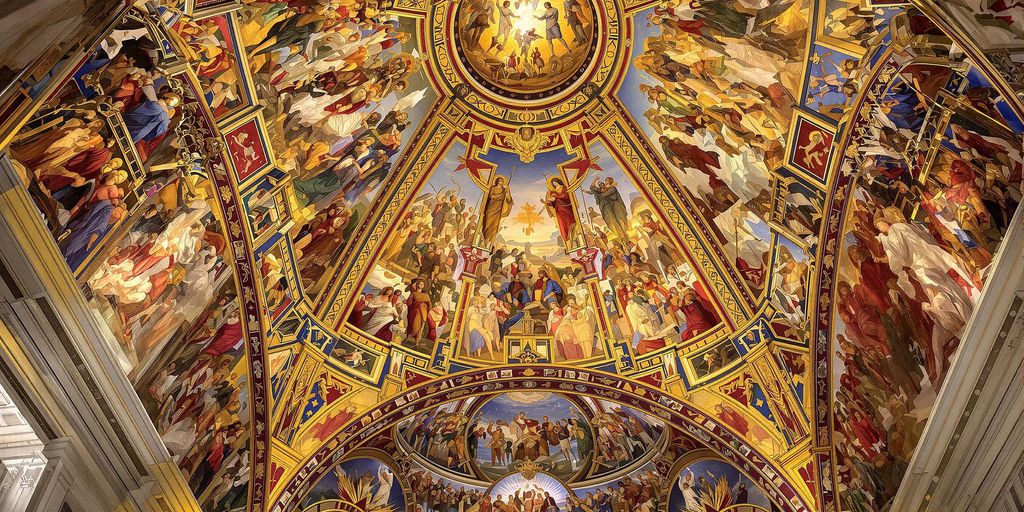
Creation of the Ceiling Frescoes
When Michelangelo was commissioned by Pope Julius II in 1508 to paint the ceiling of the Sistine Chapel, it was no small task. Covering an expansive 5,000 square feet, this project was both a technical and artistic challenge. Michelangelo, primarily a sculptor, initially resisted the commission. However, his eventual acceptance led to one of the most celebrated artistic undertakings in history. The ceiling’s central panels depict nine scenes from the Book of Genesis, including the iconic "Creation of Adam," where God and Adam’s fingertips nearly touch—a moment that has become a universal symbol of life and divinity.
Challenges Faced During the Project
The physical demands of painting the Sistine Chapel ceiling were immense. Michelangelo worked for over four years, often lying on his back atop scaffolding, craning his neck for hours on end. The paint dripped onto his face, and the sheer scale of the work required relentless focus and precision. Adding to the difficulty, Michelangelo was a perfectionist. He frequently repainted sections he deemed unsatisfactory, driven by an uncompromising vision. Despite these challenges, he completed the frescoes in 1512, leaving behind a masterpiece that continues to awe and inspire.
Impact on Renaissance Art
Michelangelo’s work on the Sistine Chapel ceiling revolutionized Renaissance art. His use of vivid colors, dynamic compositions, and impeccable anatomical accuracy set new standards for artistic excellence. The ceiling became a benchmark for future artists, influencing the likes of Raphael and countless others. Beyond its technical brilliance, the frescoes encapsulate the spirit of the Renaissance—a celebration of human potential, divine inspiration, and artistic innovation. Today, the Sistine Chapel remains a testament to Michelangelo’s genius and the enduring power of creativity.
Michelangelo’s Influence on Future Generations
Inspiration for Renaissance Artists
Michelangelo wasn’t just a genius of his time; he became the gold standard for artists who followed. His mastery of anatomy, his ability to imbue figures with emotion, and his innovative techniques like chiaroscuro set the stage for a new era of art. Renaissance artists, including Raphael and Titian, studied his works to refine their own styles. His influence was so profound that many considered him the ultimate "Master," someone to emulate, not compete with.
Legacy in Modern Art
Fast forward to today, and Michelangelo’s fingerprints are still all over modern art. Artists and sculptors still dissect his works, marveling at how he achieved such realism and depth. His approach to human anatomy and expression has shaped everything from academic art training to contemporary sculpture. Even abstract artists, who veer away from realism, often cite Michelangelo’s sense of balance and movement as inspiration.
Cultural References in Media
Michelangelo’s art doesn’t just live in galleries—it’s everywhere. Think about "The Creation of Adam" from the Sistine Chapel ceiling. It’s been parodied, reimagined, and referenced in everything from movies to memes. Films like The Shawshank Redemption use his imagery to convey themes of hope and redemption. Fashion designers have even borrowed from his draped fabrics, and architects have mirrored his sense of grandeur. His work doesn’t just belong to the past; it’s woven into the fabric of today’s culture.
Michelangelo didn’t just shape art; he shaped how we think about creativity, ambition, and human potential. His legacy isn’t just in his masterpieces but in the countless ways his work continues to inspire.
The Intersection of Faith and Art in Michelangelo’s Work
Religious Beliefs Shaping His Art
Michelangelo’s deep connection to his faith was the foundation of his artistic vision. Raised in a devout Christian environment, he often turned to biblical narratives for inspiration. His works, like the Sistine Chapel ceiling, weren’t just displays of artistic skill—they were acts of devotion. Each brushstroke seemed to carry a sense of reverence, reflecting his belief in the divine. Michelangelo didn’t shy away from exploring complex theological ideas, often embedding them in layers of symbolism and allegory.
Depictions of Biblical Narratives
The Bible was Michelangelo’s greatest muse. From the iconic "Creation of Adam" to "The Last Judgment," his paintings brought scripture to life in a way that words alone couldn’t. His ability to depict human emotion and divine intervention in harmony made these stories accessible and relatable. For example, the Sistine Chapel ceiling narrates the Book of Genesis with such detail and drama that it feels as if the events are unfolding in real-time. Michelangelo’s understanding of the human form added an almost tangible quality to his depictions, making them timeless.
Harmony Between Spirituality and Aesthetics
Michelangelo managed to strike a balance between spiritual depth and artistic brilliance. His work wasn’t just about glorifying God; it was about capturing the beauty of creation itself. This harmony is evident in the Sistine Chapel, where every element—from the composition to the use of color—serves both a spiritual and aesthetic purpose. By blending faith and artistry, Michelangelo created pieces that resonate with believers and art enthusiasts alike. His legacy is a testament to how art can transcend its medium to become a spiritual experience.
The Enduring Legacy of Michelangelo’s Masterpieces
Global Recognition of His Art
Michelangelo’s name is synonymous with artistic excellence. His works, like the Sistine Chapel ceiling and the sculpture of David, are celebrated worldwide as benchmarks of creativity and skill. Few artists in history have achieved such universal acclaim. His art transcends borders, captivating audiences from every corner of the globe, and continues to be studied and admired in museums, classrooms, and cultural discussions.
Timeless Appeal Across Centuries
What sets Michelangelo apart is the timeless quality of his creations. Whether it’s the emotional depth of the Pietà or the intricate details of the Last Judgment, his masterpieces feel as relevant today as they did centuries ago. This enduring appeal lies in his ability to capture universal human experiences—grief, hope, and awe—and present them with unmatched technical precision. His works don’t just belong to the Renaissance; they belong to all of humanity.
Impact on Art History and Education
Michelangelo’s contributions have become foundational in the study of art history. His innovative techniques, like the use of chiaroscuro to enhance realism, are still taught in art schools around the world. Beyond technique, his ability to blend spirituality with artistic expression has inspired countless movements and artists. From the Baroque period to modern times, his influence is unmistakable. Michelangelo’s legacy is not just in his art but in the way he shaped how we think about creativity itself.
Michelangelo’s genius reminds us that art has the power to bridge time, culture, and belief, leaving a mark that endures far beyond the artist’s lifetime.
Conclusion
Michelangelo’s art is more than just paint on a ceiling or marble shaped into a figure—it’s a testament to the power of human creativity and determination. His works, like the Sistine Chapel ceiling and the statue of David, continue to amaze us, not just for their technical brilliance but for the emotion and stories they convey. Centuries later, his influence is still felt, inspiring artists and captivating audiences around the world. Michelangelo’s legacy reminds us that art has the unique ability to connect us across time, leaving a mark that never fades.
Frequently Asked Questions
Who was Michelangelo and why is he so important?
Michelangelo was a famous Italian artist from the Renaissance period, celebrated for his amazing sculptures like “David” and paintings like the Sistine Chapel ceiling. His work changed the art world and continues to inspire people today.
What are Michelangelo’s most famous paintings?
Michelangelo’s most famous paintings include the ceiling of the Sistine Chapel, which features scenes from the Book of Genesis, and “The Last Judgment,” a massive fresco on the chapel’s altar wall.
Why did Michelangelo paint the Sistine Chapel ceiling?
Michelangelo was commissioned by Pope Julius II to paint the ceiling of the Sistine Chapel. Although he considered himself more of a sculptor than a painter, he took on the challenge and created one of the greatest masterpieces in art history.
What painting techniques did Michelangelo use?
Michelangelo was a master of fresco painting, a technique where paint is applied to wet plaster. He also used light and shadow to make his figures look three-dimensional and incredibly lifelike.
How did Michelangelo’s faith influence his art?
Michelangelo’s deep religious beliefs played a big role in his work. Many of his paintings and sculptures, like “The Creation of Adam” and “Pietà,” reflect biblical themes and show his devotion to God.
What is Michelangelo’s legacy in the art world?
Michelangelo’s influence is enormous. He set new standards for art with his mastery of human anatomy, emotion, and storytelling. Artists for centuries have studied his techniques and been inspired by his work.





 PERFECT PAINTER
Leave a comment