
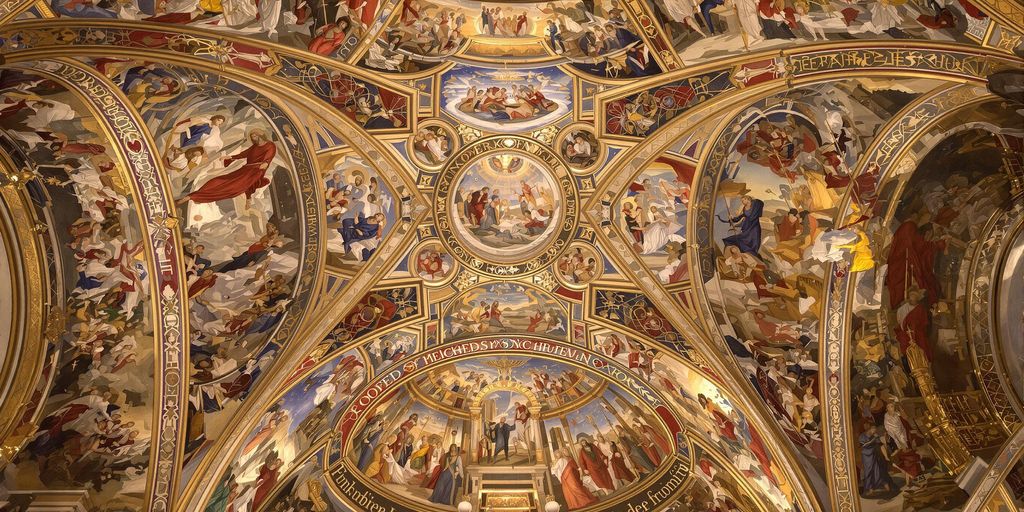
When you think of art that leaves you speechless, Michelangelo’s work on the Sistine Chapel ceiling has to come to mind. It’s not just a painting; it’s a massive, jaw-dropping masterpiece that has stood the test of time. From being a reluctant project to becoming a symbol of artistic brilliance, Michelangelo’s journey with this ceiling is nothing short of extraordinary. Let’s dive into what makes this work so legendary.
Key Takeaways
- Michelangelo initially didn’t want to paint the Sistine Chapel ceiling; he considered himself more of a sculptor than a painter.
- The ceiling spans over 5,000 square feet and includes nine panels depicting scenes from the Book of Genesis.
- Painting on a ceiling was physically grueling, requiring Michelangelo to work lying on his back for years.
- The fresco technique he used involved painting on wet plaster, which allowed no room for mistakes.
- The iconic ‘Creation of Adam’ scene has become one of the most recognized images in art history.
Michelangelo’s Vision for the Sistine Chapel Ceiling
The Divine Commission by Pope Julius II
Michelangelo’s journey to the Sistine Chapel ceiling began with Pope Julius II’s grand vision. Initially, he was invited to sculpt a monumental tomb, but plans changed. Instead, the pope asked him to transform the chapel’s ceiling, which was then a simple blue with stars, into a masterpiece portraying biblical stories. Michelangelo, though hesitant, proposed a sweeping narrative from the Old Testament. This bold decision redefined the chapel’s purpose and set the stage for one of the greatest artistic achievements in history.
Transition from Sculptor to Painter
Michelangelo was primarily known as a sculptor, and this project pushed him into unfamiliar territory. He had never worked on frescoes at such a scale before. Learning the technique while managing the immense scope of the project was no small feat. Despite his initial reluctance, Michelangelo embraced the challenge and poured his sculptor’s precision into his painting, giving the figures a three-dimensional, lifelike quality.
The Old Testament Themes in the Frescoes
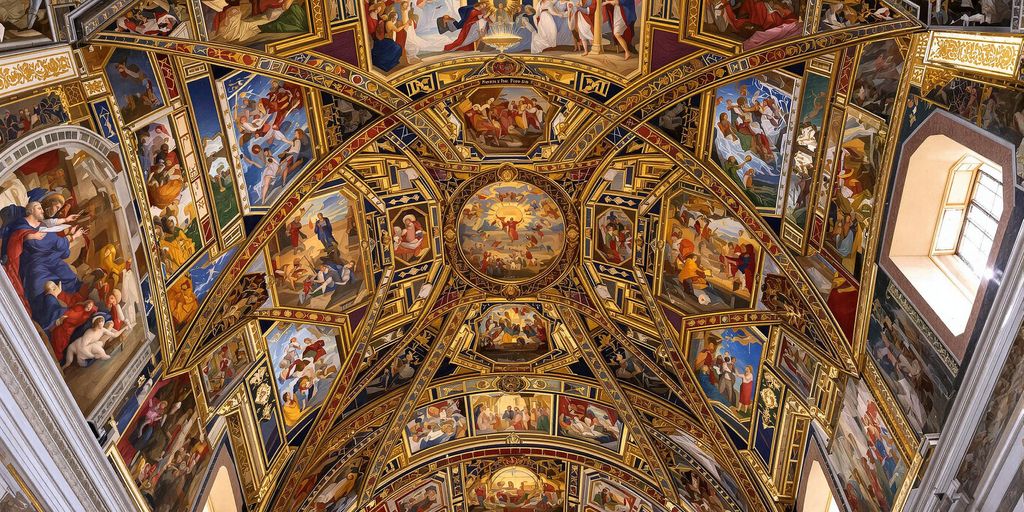
The ceiling’s frescoes are a visual retelling of key moments from the Book of Genesis. Michelangelo divided the ceiling into nine central panels, illustrating stories like the Creation of Adam and the Fall of Man. Surrounding these panels are prophets, sibyls, and other figures that connect the Old and New Testaments. This intricate design reflects profound theological themes and human experience, offering a Neoplatonic representation of the Bible. It’s a complex tapestry of faith, philosophy, and art that continues to awe viewers today.
The Artistic Challenges of Painting the Ceiling
The Physical Demands of Working on a Ceiling
Imagine spending years craning your neck and stretching your arms above your head for hours a day. That’s exactly what Michelangelo endured while painting the Sistine Chapel ceiling. He worked on scaffolding high above the chapel floor, lying on his back or leaning at uncomfortable angles. The physical toll was immense, leaving him with chronic pain and exhaustion. Michelangelo even wrote a poem describing how his body ached and twisted from the unnatural positions he had to maintain. It wasn’t just art—it was a grueling physical feat.
Mastering the Fresco Technique
Fresco painting isn’t for the faint of heart. The technique involves applying pigment to wet plaster, meaning every stroke had to be precise and quick before the plaster dried. Michelangelo, who was primarily a sculptor, had to learn this method on the job. Mistakes weren’t easy to fix, and entire sections sometimes had to be redone. To make things harder, he initially hired assistants to help, but he dismissed most of them when their work didn’t meet his standards. He ended up executing much of the fresco himself, perfecting the technique through sheer determination.
Overcoming Reluctance and Adversity
Michelangelo didn’t even want the job at first. He saw himself as a sculptor, not a painter, and felt unqualified for the task. On top of that, he faced constant pressure from Pope Julius II to finish the work quickly, despite the enormity of the project. Personal struggles, rivalries, and technical setbacks only added to his challenges. Yet, he persevered, turning what he initially saw as a burden into one of the most celebrated masterpieces in history.
Michelangelo’s journey to complete the Sistine Chapel ceiling wasn’t just about creating art—it was about pushing through pain, doubt, and obstacles to achieve something extraordinary.
Iconic Imagery in the Sistine Chapel Ceiling
The Creation of Adam: A Symbol of Divine Spark
One of the most unforgettable moments on the Sistine Chapel ceiling is The Creation of Adam. Michelangelo painted a scene that has become a universal symbol of life and connection. God, surrounded by angels, stretches out his hand toward Adam, whose own fingers almost meet His. The gap between their fingers is electrifying—it’s like the whole of creation hinges on that tiny space. This single image captures the divine energy of Genesis, and it’s no wonder it’s one of the most famous works of art ever made.
The Ignudi: Decorative Yet Symbolic Figures
Scattered throughout the ceiling are 20 nude male figures, called the Ignudi. At first glance, they might seem like decoration, but they’re so much more. These figures frame the central panels and add a sense of movement and vitality to the composition. Their muscular forms are a testament to Michelangelo’s background as a sculptor. Some say they represent human potential, while others think they’re just there to balance the visual weight. Either way, they’re stunning.
Hidden Anatomical Mastery in the Frescoes
Michelangelo’s knowledge of the human body wasn’t just for show—it was layered into his art. Some scholars believe that parts of the frescoes contain hidden anatomical references. For instance, the shape surrounding God in The Creation of Adam resembles the outline of a human brain. Could this be Michelangelo hinting at the divine gift of intellect? It’s one of those details that makes you want to look closer and wonder what else might be hiding in plain sight.
Michelangelo’s ceiling isn’t just a painting—it’s a puzzle, a story, and a masterpiece all rolled into one. Every detail, every figure feels intentional, like it’s part of a bigger plan.
The Scale and Ambition of Michelangelo’s Work
Covering Over 5,000 Square Feet of Ceiling
Imagine standing under a ceiling that stretches over 5,000 square feet, every inch bursting with intricate details and vivid storytelling. That’s the Sistine Chapel ceiling for you. Michelangelo took on this colossal task, transforming a blank canvas into one of the most celebrated masterpieces in history. It wasn’t just the size that was daunting; it was the sheer amount of planning, sketching, and execution required to make it all come together seamlessly.
Nine Central Panels Depicting Genesis
At the heart of the ceiling are nine central panels that bring to life stories from the Book of Genesis. These include iconic scenes like "The Creation of Adam" and "The Fall of Man." Each panel flows into the next, creating a narrative that feels both grand and intimate. Michelangelo’s use of light, shadow, and perspective draws your eyes upward, making you feel like you’re part of the story.
The Fictive Architectural Framework
What’s even more fascinating is how Michelangelo used painted architecture to frame his work. Columns, cornices, and other architectural elements give the illusion of a three-dimensional structure, adding depth and complexity to the ceiling. This clever technique not only organizes the various scenes but also enhances the overall grandeur of the space.
Michelangelo’s work on the Sistine Chapel ceiling is a testament to human creativity and determination. It’s not just a painting; it’s an experience that continues to awe millions of visitors to this day.
The Legacy of Michelangelo’s Ceiling Frescoes
Influence on Renaissance and Baroque Art
Michelangelo’s Sistine Chapel ceiling didn’t just stay in its time—it rippled through the art world for centuries. Artists of the Renaissance and Baroque periods looked at his work and thought, "How can we even compete with this?" The dynamic poses, the sheer emotion, and the storytelling in his figures became a kind of gold standard. You see it in Caravaggio’s dramatic lighting or Bernini’s sculptural movement. They weren’t just copying Michelangelo; they were inspired to push their own boundaries.
The Controversial Restoration and Its Impact
In the late 20th century, the ceiling got a much-needed cleaning, and wow, did it stir the pot. People were divided. Some said, "Finally, we can see the real colors Michelangelo used—bright and vivid, not dull and muted." Others felt it went too far, stripping away what time had added. Regardless, the restoration gave us a new appreciation for the detail and color Michelangelo intended. It was like seeing the Sistine Chapel through fresh eyes.
Enduring Global Fascination with the Masterpiece
Here’s the thing: the Sistine Chapel ceiling isn’t just a masterpiece; it’s a global icon. Tourists from all over the world flock to Vatican City just to crane their necks and take it all in. It’s not just about the art—it’s about the human achievement. Michelangelo turned a simple commission into something timeless, a work that still sparks awe and wonder more than 500 years later.
"The ceiling of the Sistine Chapel reminds us of what humans are capable of when they dare to dream big and work relentlessly to make it real."
Michelangelo’s Reflection in Later Years
Returning to the Sistine Chapel for The Last Judgment
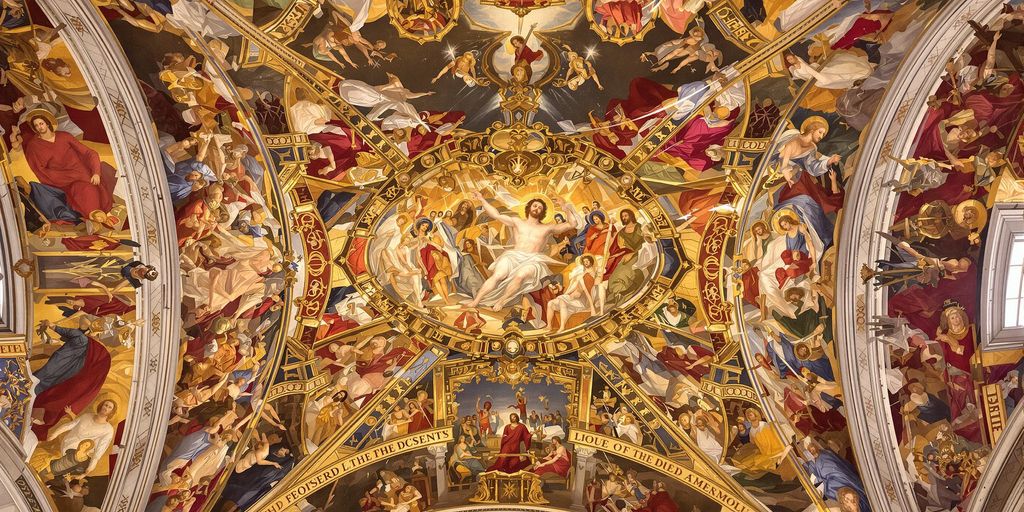
Decades after completing the Sistine Chapel ceiling, Michelangelo was asked by Pope Paul III to return and paint The Last Judgment on the chapel’s altar wall. By this time, Michelangelo was no longer the ambitious young artist striving to prove himself. Instead, he was a seasoned master, carrying the weight of his reputation as one of history’s greatest artists. This commission was not just another project—it was a confrontation with his own legacy. Standing under the ceiling he had painted years earlier, Michelangelo faced the challenge of outdoing his younger self while reflecting on the passage of time and his evolution as an artist.
Confronting His Younger Self Through Art
Painting The Last Judgment was deeply personal for Michelangelo. He was no longer the fiery sculptor who had reluctantly taken on the Sistine ceiling. Instead, he approached this work with a maturity borne from decades of experience and hardship. The themes of judgment, redemption, and human frailty mirrored his own introspection. In some ways, the project forced him to "meet" his younger self—the man who had endured grueling physical and emotional trials to paint the ceiling. Did he feel pride? Regret? Or perhaps a mix of both? These questions remain unanswered, but they add a layer of humanity to his monumental achievements.
The Evolution of His Artistic Philosophy
Over the years, Michelangelo’s outlook on art and life had shifted. His earlier works, like the David, celebrated human strength and potential. By the time he painted The Last Judgment, his focus had turned to spiritual themes and the fragility of human existence. This evolution is evident in the darker tones and more somber mood of his later works. Unlike the vibrant optimism of the ceiling frescoes, the altar wall exudes a sense of gravity and finality, reflecting Michelangelo’s own journey through faith, doubt, and self-discovery.
Michelangelo’s later years were marked by a profound sense of reflection. Through The Last Judgment, he not only left behind another masterpiece but also a deeply personal statement about the human condition and his own place within it.
Conclusion
Michelangelo’s work on the Sistine Chapel ceiling isn’t just a painting—it’s a story of grit, creativity, and sheer determination. He wasn’t even a painter by trade, yet he managed to create something that still leaves people in awe centuries later. From the vivid scenes of Genesis to the intricate details of the ignudi, every inch of that ceiling speaks to his genius. It’s a reminder that pushing through challenges, even the ones we don’t want to face, can lead to something extraordinary. The Sistine Chapel stands as proof that art, at its best, connects us to something bigger than ourselves.
Frequently Asked Questions
Who commissioned Michelangelo to paint the Sistine Chapel ceiling?
Pope Julius II commissioned Michelangelo to paint the Sistine Chapel ceiling in 1508. Originally, Michelangelo was asked to sculpt a tomb, but the project shifted to painting the ceiling.
How long did it take Michelangelo to complete the Sistine Chapel ceiling?
Michelangelo worked on the Sistine Chapel ceiling from 1508 to 1512, taking about four years to complete the masterpiece.
What themes are depicted on the Sistine Chapel ceiling?
The ceiling features scenes from the Book of Genesis, including iconic moments like The Creation of Adam, as well as prophets, sibyls, and other decorative figures.
What technique did Michelangelo use to paint the ceiling?
Michelangelo used the fresco technique, where pigments are applied to wet plaster. This method required careful planning since adjustments couldn’t be made once the plaster dried.
Was painting the Sistine Chapel ceiling physically challenging for Michelangelo?
Yes, painting the ceiling was physically demanding. Michelangelo had to work on scaffolding high above the floor, often in awkward positions, which caused him great discomfort.
What is the significance of The Creation of Adam on the Sistine Chapel ceiling?
The Creation of Adam is one of the most famous panels on the ceiling. It symbolizes the divine spark of life as God reaches out to touch Adam’s hand, capturing a powerful moment of creation.





 PERFECT PAINTER
Leave a comment