

Movies and paintings—they’ve got this special connection. Sometimes, a film borrows from a painting’s vibe, its colors, or even its story. Other times, movies dive deep into the life of an artist, bringing that creative struggle to the big screen. It’s like these films are a canvas themselves, painting stories that celebrate the world of art. So, let’s check out some flicks where cinema and painting meet in the coolest ways.
Key Takeaways
- Movies often draw inspiration from famous paintings, blending visual art with storytelling.
- Some films explore the lives of iconic painters, offering a glimpse into their artistic journeys.
- Cinematic techniques can mimic painting styles, creating a unique visual experience.
- Directors sometimes act like painters, crafting scenes with the same care as a brushstroke.
- Art movements and their themes often find new life in films, connecting past and present art forms.
The Intersection of Art and Film: A Cinematic Canvas
Exploring the Visual Language of Cinema
Cinema is like a canvas where directors paint their stories using light, color, and movement. Each frame is meticulously crafted to convey emotions, similar to how a painter chooses colors and brush strokes. Directors like David Graham transform scenes into untold stories, capturing moments that feel alive and waiting to unfold.
- Light and Shadow: Just as painters use light to create depth, filmmakers manipulate lighting to evoke emotions and highlight themes.
- Color Palettes: Directors often choose specific color schemes to set the mood, much like how painters use colors to express feelings.
- Composition: The arrangement of elements within a frame can guide the viewer’s eye and suggest underlying themes.
How Paintings Influence Film Aesthetics
Paintings have long been a source of inspiration for filmmakers, offering a rich tapestry of visual ideas. Directors often draw from the art world to enhance their cinematic storytelling.
- Framing Techniques: Many directors use framing techniques inspired by classical paintings to create visually striking scenes.
- Symbolism: Just as painters use symbols to convey deeper meanings, filmmakers incorporate symbolic imagery to add layers to their narratives.
- Texture and Detail: By borrowing the texture and detail found in paintings, films can achieve a more immersive and tactile experience.
The Role of Art in Storytelling
Art plays a crucial role in storytelling by providing a visual language that transcends words. Films, like paintings, can express complex emotions and ideas through imagery alone.
Films are visual narratives that, much like paintings, invite viewers into a world of imagination and emotion. They speak a universal language that connects audiences across cultures and time.
- Emotional Resonance: Art in films helps create emotional connections with the audience, making stories more impactful.
- Cultural Reflection: Films often reflect cultural and historical contexts, much like paintings capture the essence of their time.
- Narrative Depth: The integration of artistic elements in film can add depth to the narrative, providing a richer viewing experience.
In essence, the intersection of art and film creates a dynamic and expressive medium where visual storytelling thrives, captivating audiences with its blend of artistic elements and cinematic techniques.
Masterpieces on Screen: Films Inspired by Iconic Paintings
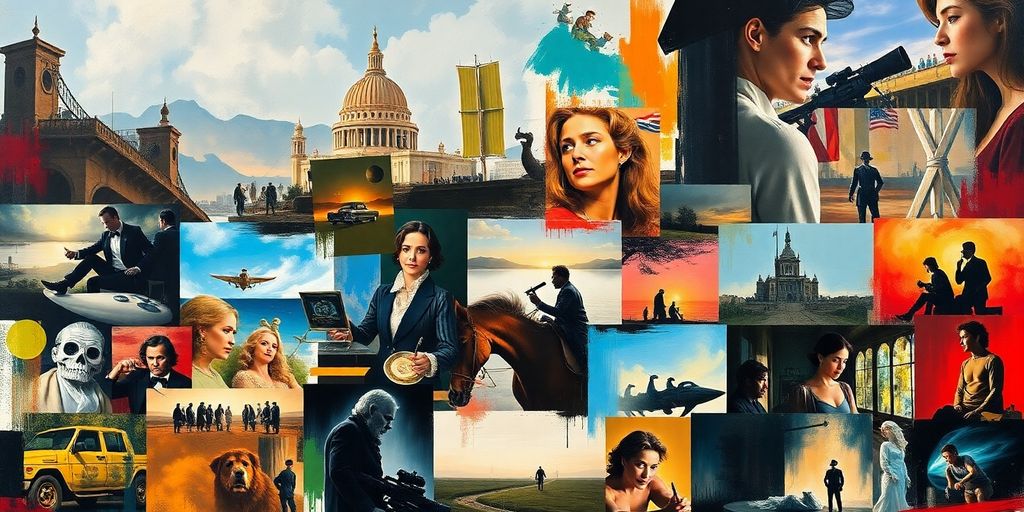
Pan’s Labyrinth and Goya’s Dark Visions
Guillermo del Toro’s Pan’s Labyrinth is a stunning film that draws inspiration from Francisco Goya’s haunting painting, "Saturn Devouring His Son." The movie’s eerie and dark atmosphere mirrors the unsettling themes of Goya’s work. Del Toro masterfully uses visual storytelling to evoke the same sense of dread and wonder that Goya’s painting does. This film is a perfect example of how art can transcend mediums, creating a bridge between the canvas and the screen.
The Agony and the Ecstasy: Michelangelo’s Sistine Struggle
The Agony and the Ecstasy takes us into the world of Michelangelo as he paints the Sistine Chapel ceiling. This movie, based on Irving Stone’s novel, gives viewers a glimpse into the artist’s intense dedication and the immense pressure he faced. Charlton Heston’s portrayal of Michelangelo captures the artist’s passion and turmoil. The film not only highlights the beauty of Michelangelo’s work but also the artistic struggle, making it a tribute to the painstaking process behind a masterpiece.
Girl with a Pearl Earring: Vermeer’s Light and Shadow
In Girl with a Pearl Earring, the mesmerizing light and shadow play of Johannes Vermeer’s painting come to life. The film, starring Scarlett Johansson, explores the mysterious relationship between Vermeer and his muse. It beautifully captures the essence of the 17th-century Dutch art scene, emphasizing Vermeer’s unique ability to transform ordinary moments into extraordinary art. The movie is a visual feast, echoing the subtle yet profound impact of Vermeer’s original work.
Films inspired by paintings not only honor the original artworks but also offer a new perspective, allowing audiences to experience the art in a fresh and dynamic way.
Biographical Films: The Lives Behind the Canvas
Frida: A Portrait of Passion and Pain
Frida Kahlo’s life was a whirlwind of emotions and art. The film "Frida" captures her spirit, showcasing how her personal struggles and triumphs fueled her iconic paintings. Kahlo’s story is a tapestry of love, pain, and resilience. After a devastating accident, she found solace in painting, transforming her suffering into vibrant self-portraits. Her work is a blend of Mexican culture and personal symbolism that still resonates today. Salma Hayek’s portrayal of Frida earned her an Oscar nomination, bringing Kahlo’s vibrant spirit to life on screen.
Pollock: The Turbulent Genius of Abstract Expressionism
"Pollock" dives into the chaotic life of Jackson Pollock, a pioneer of abstract expressionism. The film doesn’t shy away from his struggles with alcoholism and his volatile personality. It highlights his revolutionary drip painting technique, which changed the art world forever. Pollock’s intense dedication to his craft is evident in every frame, showcasing his impact on modern art. His story is a reminder of how creative painting ideas can transform the ordinary into extraordinary expressions.
Loving Vincent: Van Gogh’s Animated Legacy
"Loving Vincent" is a unique cinematic experience, bringing Vincent Van Gogh’s art to life through animation. Each frame is a hand-painted masterpiece, echoing Van Gogh’s iconic style. The film explores the mystery surrounding his death, weaving a narrative that immerses viewers in his world. By animating his landscapes and portraits, "Loving Vincent" offers a new perspective on Van Gogh’s life and legacy, celebrating the beauty and emotion in his work.
Biographical films about artists offer a window into their souls, painting a picture of their lives that words alone cannot capture. Through these films, we glimpse the passion and pain that drove these artists to create works that continue to inspire.
Artistic Techniques in Film: Bringing Paintings to Life
The Chiaroscuro of Caravaggio in Cinema
Caravaggio’s use of chiaroscuro is like a masterclass in drama. This technique, which plays with light and shadow, has been borrowed by filmmakers to create depth and emotion in their scenes. It’s all about contrast—bright highlights against deep shadows—that makes a film visually striking. Movies use this to set the mood, whether it’s a tense thriller or a heartfelt drama. Chiaroscuro doesn’t just make things look pretty; it tells a story on its own.
Edward Hopper’s Influence on Film Noir
Edward Hopper’s paintings are like snapshots of quiet moments, often filled with a sense of loneliness or waiting. His work has seeped into the film noir genre, where directors mimic his use of light and shadow to create that same feeling of suspense and introspection. Hopper’s influence can be seen in the way these films use urban settings and stark lighting to build a world that feels both real and surreal.
The Drip Technique: Jackson Pollock’s Cinematic Impact
Jackson Pollock’s drip technique was all about movement and chaos, and this has found its way into films that aim to capture raw emotion and energy. Directors use swirling camera movements and chaotic cuts to echo Pollock’s style, bringing a sense of dynamism to the screen. It’s not just about showing action; it’s about making the audience feel the frenetic energy that Pollock captured on his canvases.
Films have a unique way of breathing life into artistic techniques, transforming static images into dynamic narratives. By drawing inspiration from the masters of painting, cinema continues to evolve, offering viewers a rich tapestry of visual storytelling.
Cinematic Tributes to Art Movements

Exploring Baroque Through Caravaggio
Caravaggio’s dramatic use of light and shadow has inspired countless filmmakers to bring the baroque aesthetic to the screen. His chiaroscuro technique, which contrasts intense light with deep shadow, creates a dynamic visual tension that directors love to mimic. This style is particularly evident in films that strive for a dramatic, almost theatrical presentation of their narratives. By using stark lighting and bold contrasts, filmmakers pay homage to Caravaggio’s influence, crafting scenes that feel both timeless and immediate.
Impressionism in Film: A Study of Light and Color
Impressionism, with its focus on capturing the fleeting effects of light, has found a natural home in the world of cinema. Films that draw on this art movement often emphasize the play of light and color to evoke mood and atmosphere. Directors use soft focus, gentle transitions, and a pastel color palette to reflect the Impressionist’s fascination with the ephemeral. In these films, light is not just an element of the scene but a character in its own right, shaping the viewer’s emotional journey.
Realism and Its Cinematic Interpretations
Realism in film seeks to portray life as it is, without embellishment or romanticism. This movement, which began in the visual arts, has been adapted by filmmakers who aim to present stories with authenticity and grit. The influence of Realism can be seen in movies that focus on everyday life, social issues, and the human condition, often using natural lighting and unpolished settings. These films strive to connect with audiences on a fundamental level, offering a mirror to society and inviting viewers to reflect on their own realities.
The intersection of art movements and cinema is a testament to the enduring power of visual storytelling. Through the lens of film, these art styles are not only preserved but reimagined, allowing audiences to experience them in new, dynamic ways.
The Artist’s Eye: Directors as Painters
Federico Fellini’s Dreamlike Visuals
Federico Fellini, known for his surreal and dreamlike style, painted with his camera, crafting films that felt like vivid dreams. He didn’t just tell stories; he created worlds. His films often blurred the lines between reality and fantasy, much like a painting where the brush strokes suggest more than they show. Fellini’s unique approach to cinema was akin to a painter’s technique, where each frame was carefully composed to evoke emotion.
- Emphasis on surreal narratives
- Use of bold colors and elaborate sets
- Integration of fantastical elements into everyday scenes
Fellini once expressed a desire to create “an entire film made of immobile pictures,” highlighting his fascination with stillness and visual storytelling.
David Lynch: Crafting Moving Paintings
David Lynch, a filmmaker renowned for his distinctive storytelling and surreal style, often described his films as "moving paintings." His work is a blend of the bizarre and the beautiful, with each scene meticulously crafted to provoke thought and emotion. Lynch’s films are known for their haunting visuals and complex narratives, inviting viewers to experience cinema in a way that transcends traditional storytelling.
- Use of light and shadow to create mood
- Incorporation of surreal and unsettling imagery
- Exploration of themes like identity and reality
Lynch’s films challenge viewers to see beyond the surface, much like a painting that reveals more with each viewing.
Andrei Tarkovsky’s Poetic Imagery
Andrei Tarkovsky’s films are often described as visual poetry. His use of long takes and deliberate pacing allowed viewers to immerse themselves in the imagery, much like observing a painting. Tarkovsky’s work is characterized by its spiritual depth and philosophical themes, with each frame serving as a canvas for his ideas.
- Long, contemplative shots
- Rich, symbolic imagery
- Exploration of existential and spiritual themes
Tarkovsky believed that cinema was an art form capable of conveying the complexity of human emotion and thought, much like a painter communicates through brush and canvas.
In the world of cinema, these directors stand out as artists who use film as their canvas, each creating a unique visual language that continues to inspire and captivate audiences.
The Emotional Palette: Conveying Mood Through Art in Film
Using Color to Evoke Emotion
Color in film is like a secret weapon. It sneaks into your subconscious and makes you feel things before you even realize it. Directors use color to set the mood, whether it’s the warm hues of a sunset to evoke nostalgia or the cold blues of a rainy day to make you feel isolated. Colors can turn a simple scene into an emotional powerhouse. In "The Grand Budapest Hotel," Wes Anderson uses pastel colors to create a whimsical and nostalgic world, making the audience feel like they’re stepping into a storybook.
The Power of Visual Metaphors
Visual metaphors in film are like poetry without words. They let the audience understand complex emotions and themes through imagery. For instance, a broken mirror might symbolize a fractured identity or a stormy sea might represent inner turmoil. These metaphors allow filmmakers to tell deeper stories without spelling everything out. In "American Beauty," the recurring image of rose petals symbolizes both beauty and danger, reflecting the protagonist’s inner conflict.
Symbolism in Cinematic Storytelling
Symbolism in film adds layers of meaning that can transform a simple story into something profound. Objects, colors, and settings are often loaded with meaning, giving audiences clues about the underlying themes. In "Inception," the spinning top is a symbol of reality versus illusion, leaving viewers questioning what’s real. These symbols engage the audience, inviting them to look deeper into the narrative.
Films use art to paint emotions. They don’t just tell stories; they show them, using color, metaphor, and symbolism to create a rich tapestry of feelings. It’s like watching a painting come to life, with each brushstroke carefully chosen to stir the soul.
For more on how color impacts our surroundings, check out the significance of color in interior design.
Wrapping Up Our Cinematic Art Journey
So, there you have it. Movies and paintings, they go hand in hand more often than you’d think. It’s like directors and artists are having a secret chat across time. These films don’t just show art; they breathe life into it, making us see paintings in a whole new way. Whether it’s the haunting beauty of Van Gogh’s starry nights or the raw intensity of Pollock’s splatters, cinema gives us a fresh lens to appreciate these masterpieces. Next time you watch a movie inspired by a painting, take a moment to soak it all in. Who knows? You might just find a new favorite piece of art. Until then, keep exploring the canvas of cinema.
Frequently Asked Questions
What is the connection between art and movies?
Art and movies both tell stories, but they use different tools. Art uses colors and shapes, while movies use movement and sound. When they come together, they can create something magical.
How do paintings influence the look of films?
Paintings can inspire the way a film looks by showing how to use light, color, and shadows. Directors might use these ideas to make their movies more beautiful and interesting.
Can you name a movie inspired by a famous painting?
Yes, the movie ‘Pan’s Labyrinth’ was inspired by Francisco Goya’s painting ‘Saturn Devouring His Son.’ The film uses dark and imaginative visuals similar to Goya’s art.
What are biographical films about artists?
Biographical films, or biopics, tell the life stories of famous artists. They show their struggles, achievements, and how their experiences shaped their art.
What is ‘Loving Vincent’ about?
‘Loving Vincent’ is a movie about Vincent Van Gogh. It’s unique because it’s made with thousands of hand-painted frames, bringing Van Gogh’s paintings to life while exploring the mystery of his death.
How do directors use art to show emotions in movies?
Directors use colors, symbols, and visual metaphors to show emotions in movies. These elements can help set the mood and make the audience feel a certain way.





 PERFECT PAINTER
Leave a comment