
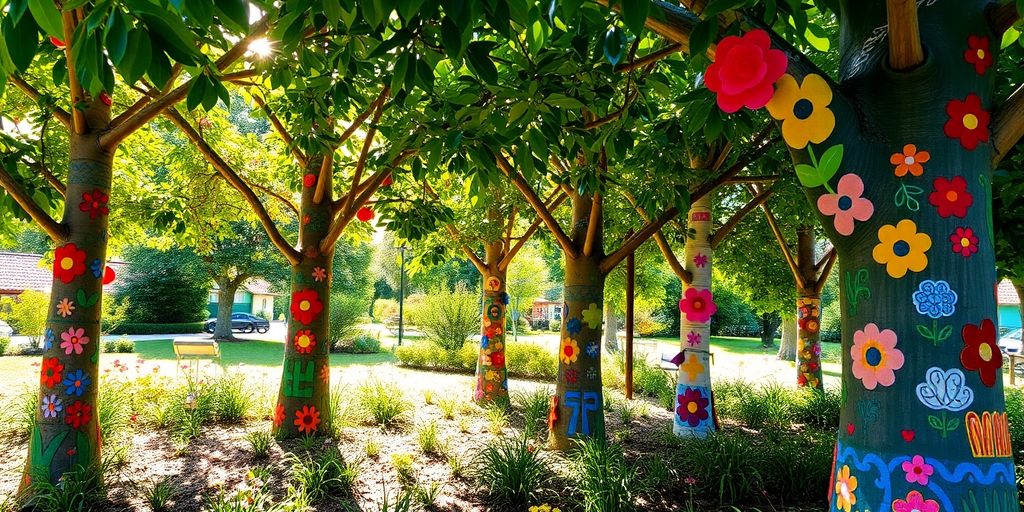
Ever thought about turning your garden trees into a canvas? Painting on trees can bring a unique charm to your outdoor space. It’s not just about slapping some paint on bark; it’s an art form that blends creativity with nature. Whether you’re aiming for a whimsical fairy tale look or a sleek modern vibe, tree painting can transform your garden into a magical place. Let’s dive into some creative ideas and practical tips to get you started on this artistic journey.
Key Takeaways
- Tree painting is a creative way to enhance your garden’s aesthetics.
- Choosing the right paints and trees is crucial for a successful project.
- Safety and environmental considerations are important when painting on trees.
- Incorporating natural patterns and textures can create stunning effects.
- Regular maintenance is key to preserving your tree art.
Exploring the Art of Painting on Trees
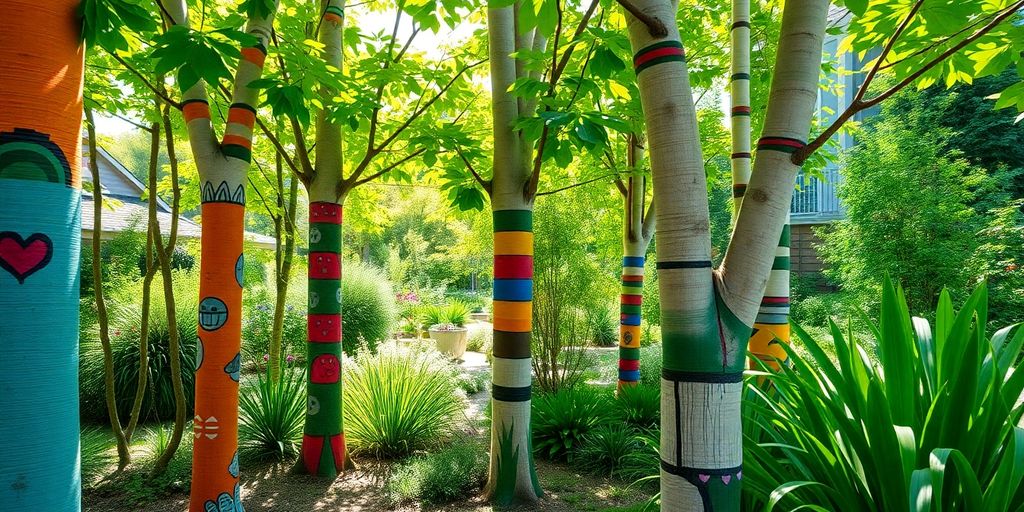
Understanding Tree-Friendly Paints
When it comes to painting trees, not just any paint will do. You need to choose paints that are safe for the tree and the environment. Tree-friendly paints are usually water-based and non-toxic. They allow the tree to "breathe" and don’t harm the bark or the underlying layers. Look for paints labeled as "eco-friendly" or "natural," which are often made from natural minerals and pigments. These paints not only protect the tree but also withstand the elements, ensuring your artwork lasts.
Choosing the Right Tree for Your Art
Selecting the right tree is crucial for a successful painting project. Consider the bark’s texture and color, as these will influence the final look of your artwork. Trees with smooth bark, like birches or beeches, provide a more even surface, while textured barks, like oaks or pines, add a unique dimension to the painting. Make sure the tree is healthy and free from disease or pests, as these can compromise both the tree and your art.
Safety Tips for Painting on Trees
Safety should always be a priority. Before starting your project, ensure you have the right gear. Wear gloves and protective eyewear, especially if you’re using ladders or scaffolding to reach higher parts of the tree. Be mindful of your surroundings and avoid painting during adverse weather conditions. It’s also wise to inform someone about your activity, in case you need assistance. Remember, the goal is to create art safely without harming yourself or the tree.
Creative Techniques for Painting on Trees
Using Natural Colors and Patterns
When painting on trees, embracing natural colors and patterns can truly blend your art with the environment. Observe the hues and textures around you—the greens of leaves, the browns of bark, and the subtle grays of stones. These colors can inspire your palette, making your artwork feel like a natural extension of the landscape. Consider using earth tones to mimic the natural surroundings, or even experiment with colors that change with the seasons.
Incorporating Textures and Layers
Creating texture on tree bark involves layering paints to build depth and dimension. Start with a base coat, then gradually add layers using different techniques like sponging or dry brushing. This approach can mimic the intricate patterns found in nature, such as the roughness of bark or the smoothness of leaves. You might even incorporate materials like sand or small pebbles into your paint to add a tactile element.
Creating Optical Illusions on Tree Bark
Optical illusions can transform your tree painting into a captivating focal point. By using perspective and shading techniques, you can create images that seem to pop out from the tree or recede into it. Consider painting a window that opens to a hidden world or a path that winds deeper into the tree. These illusions not only engage viewers but also invite them to explore the art from different angles.
Painting on trees is not just about color and form; it’s about creating a dialogue between art and nature. The tree becomes your canvas, but also your partner in creativity, offering its unique shape and texture to inspire your work.
For more techniques and expert advice on capturing the essence of trees in your art, consider learning from Keiko Tanabe’s watercolor techniques. Her insights can help you bring out the natural beauty and character of trees in your own artistic endeavors.
Inspiring Tree Painting Ideas for Your Garden
Whimsical Fairy Tale Themes
Transform your garden into a magical wonderland by painting enchanting fairy tale scenes on your trees. Imagine a tree trunk adorned with a castle, a dragon winding its way up the bark, or a serene forest with mythical creatures peeking out from behind the branches. These whimsical designs can capture the imagination of both children and adults alike.
- Paint a storybook scene with characters like fairies, gnomes, or elves.
- Use soft, pastel colors to create a dreamy atmosphere.
- Incorporate elements like stars, moons, and clouds for added whimsy.
Nature-Inspired Designs
Bring the beauty of the natural world to your garden by painting nature-inspired designs on your trees. You can recreate the look of a lush jungle, a tranquil beach, or a vibrant meadow right in your backyard.
- Opt for floral patterns, with vines and blossoms climbing the tree.
- Paint birds, butterflies, or other wildlife that seem to inhabit the tree.
- Use shades of green, blue, and earth tones to reflect nature’s palette.
Abstract and Modern Art Concepts
For those who love bold and contemporary art, consider abstract designs that turn your trees into living sculptures. Use geometric shapes, striking colors, and creative patterns to make a statement.
- Experiment with contrasting colors to make your design pop.
- Try out different textures and techniques, like splattering or dripping paint.
- Create optical illusions that play with perspective and depth.
Adding tree paintings to your garden not only enhances its visual appeal but also allows you to express your creativity in a unique way. Whether you choose a whimsical fairy tale, a nature-inspired design, or a modern abstract concept, your painted trees will surely be a conversation starter.
For more inspiration, check out a collection of large tree paintings available as canvas art prints. These artworks can provide ideas and themes to incorporate into your own garden creations.
Tools and Materials for Tree Painting
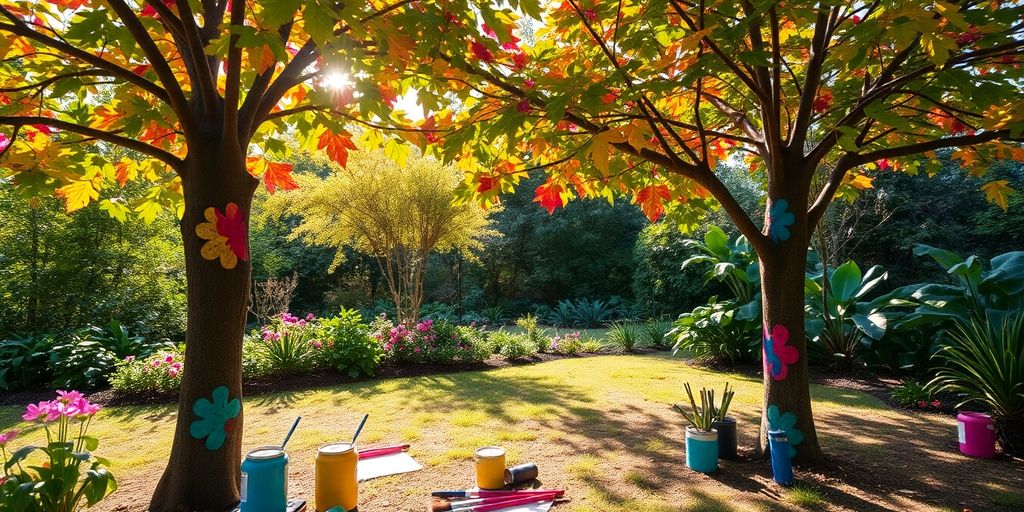
Selecting the Best Brushes and Paints
When it comes to painting on trees, choosing the right brush and paint can make all the difference. A good quality brush is your best friend in this endeavor. Typically, a #2 liner brush is recommended for its precision and flexibility. This kind of brush allows you to create fine lines and intricate details on tree bark without much hassle.
As for paints, opt for non-toxic, water-based paints that are safe for the environment and your trees. These paints are not only eco-friendly but also ensure the longevity of your artwork. Acrylic paints are a popular choice due to their durability and vibrant colors. Make sure to test your paint on a small, inconspicuous part of the tree to see how it reacts with the bark.
Eco-Friendly Painting Supplies
Incorporating eco-friendly supplies is crucial when painting on trees. Look for paints labeled as "non-toxic" and "biodegradable." These types of paints minimize harm to the tree and the surrounding environment.
Consider using natural pigments derived from plants or minerals. These pigments not only offer a unique palette but also blend harmoniously with the natural surroundings. Additionally, using brushes made from sustainable materials can further reduce your environmental impact.
Preparing Your Tree for Painting
Preparation is key to ensuring your tree painting project is a success. Start by cleaning the tree bark to remove any dirt, moss, or loose bark that might interfere with the paint. Use a soft brush or cloth to gently clean the surface without damaging the tree.
Next, assess the health of the tree. Avoid painting on trees that are diseased or have significant bark damage, as this could further stress the tree. Once your tree is clean and healthy, sketch your design lightly onto the bark with a pencil or chalk. This step helps you visualize the final product and make adjustments before applying paint.
Prepping the tree properly not only helps the paint adhere better but also ensures the tree remains healthy and vibrant. Taking these steps shows respect for nature while allowing your creativity to flourish.
By following these guidelines, you can transform your garden into a vibrant canvas that reflects both your artistic vision and your commitment to sustainable practices. Whether you choose whimsical designs or nature-inspired themes, your painted trees will surely stand out as unique pieces of art.
Maintaining and Protecting Your Tree Art
Weatherproofing Your Painted Trees
When you’ve put time and effort into painting a tree, the last thing you want is for the weather to ruin it. Weatherproofing your tree art is key to ensuring its longevity. Start by choosing paints that are designed to withstand the elements. Look for those labeled as waterproof or weather-resistant. After painting, apply a clear sealant over your artwork. This protective layer will help shield it from rain, sun, and wind. Keep an eye on the forecast, especially during the first few days after painting, and try to avoid painting right before a storm.
Regular Maintenance Tips
Just like any other piece of art, tree paintings need regular care. Inspect your painted trees every few months. Look for signs of peeling or fading and touch up as needed. If your tree is located in a high-traffic area, consider setting up a small barrier to prevent accidental damage. Regularly clean the painted surface gently with a damp cloth to remove dust and grime. Also, keep an eye on the health of the tree itself, as a healthy tree will better support the paint.
Repairing and Retouching Tree Art
Over time, your tree art might need some repairs. Maybe a branch has grown over part of your painting, or perhaps the paint has chipped. To retouch, first clean the area gently to remove any dirt. Then, use the same type of paint you initially used to fill in the gaps. For larger repairs, you might need to repaint entire sections. Make sure to blend the new paint with the old to maintain a consistent look. If the tree has grown significantly, consider adjusting your design to incorporate new elements or patterns.
Community and Environmental Impact of Tree Painting
Promoting Environmental Awareness
Tree painting can be a unique way to highlight environmental issues. By using trees as a canvas, artists can draw attention to the importance of preserving our natural surroundings. This form of art can spark conversations about conservation and sustainability. People passing by are more likely to notice a painted tree, which can lead to discussions about the environment and the need to protect it.
Engaging the Local Community
Creating art on trees isn’t just about the final product; it’s also about the process. Involving the local community in tree painting projects can foster a sense of ownership and pride. Here’s how you can get the community involved:
- Organize Workshops: Host sessions where local artists and residents can learn about tree painting techniques.
- Collaborative Projects: Encourage community members to contribute ideas and paint together.
- Public Exhibitions: Display the finished works in community spaces, inviting everyone to appreciate the art.
Balancing Art with Nature Conservation
While tree painting is an exciting artistic endeavor, it’s crucial to balance creativity with the health of the trees. Using eco-friendly paints and methods ensures that the art doesn’t harm the trees. Here are some tips to maintain this balance:
- Choose Non-Toxic Paints: Always opt for paints that are safe for trees and the environment.
- Limit Coverage: Avoid covering the entire tree to allow it to breathe and grow naturally.
- Regular Monitoring: Check the health of painted trees periodically to ensure they remain unharmed.
Tree painting can be a vibrant expression of art and nature coexisting. By engaging communities and raising awareness, we can celebrate creativity while still prioritizing the health of our environment. Embracing this balance is key to sustaining both art and nature.
Wrapping Up Your Tree Painting Adventure
So, there you have it! Painting on trees can really bring a whole new vibe to your garden. It’s not just about adding color; it’s about letting your creativity run wild and making your outdoor space truly yours. Whether you’re going for a whimsical fairy tale look or something more modern and abstract, the possibilities are endless. Just remember to have fun with it and don’t stress too much about perfection. After all, nature is all about the imperfect beauty. So grab your brushes, pick your colors, and start transforming those trees into living art pieces. Your garden will thank you for it!
Frequently Asked Questions
What kind of paint is safe for trees?
Use water-based paints that are non-toxic and designed for outdoor use. These paints are gentle on tree bark and won’t harm the tree.
How do I choose the right tree for painting?
Pick a healthy tree with smooth bark for the best results. Avoid trees that are sick or have rough, flaky bark.
Are there any safety tips for painting on trees?
Yes, always wear gloves and protective clothing. Make sure to use a stable ladder if you are painting high up on the tree.
What are some creative ideas for painting on trees?
Try painting whimsical themes like fairy tales, or use nature-inspired designs. You can also create optical illusions or abstract art.
How can I protect my tree art from weather?
Apply a clear, weatherproof sealant over your painting to help it last longer and protect it from rain and sun damage.
What materials do I need for tree painting?
You’ll need eco-friendly paints, a variety of brushes, and possibly a ladder. Make sure to prepare the tree by cleaning its surface before painting.





 PERFECT PAINTER
Leave a comment