
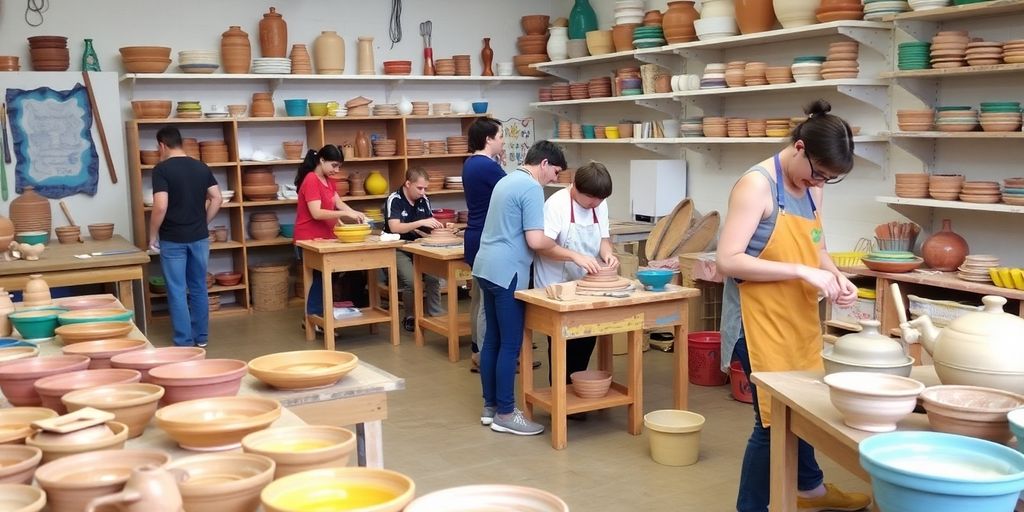
Ever thought about trying pottery? It’s one of those things that sounds super cool, but you never get around to it. Well, maybe now’s the time to dive in. Whether you’re a total newbie or you’ve dabbled a bit, finding the right pottery class near you can be a game-changer. From learning the basics of wheel throwing to mastering advanced techniques, there’s a class out there for everyone. Plus, who doesn’t want a new hobby that lets you get your hands dirty and make something beautiful? Let’s explore some options to unleash your creativity!
Key Takeaways
- Pottery classes offer a range of techniques, from wheel throwing to handbuilding, suitable for all skill levels.
- Finding local studios is key to starting your pottery journey, as they provide the tools and community support needed.
- Classes for kids and teens can be a fun way to introduce younger folks to the art of pottery.
- Advanced classes are available for those looking to refine their skills and explore more complex pottery forms.
- Pottery is not just an art form; it’s a way to relax and unwind, offering therapeutic benefits.
Exploring Pottery Classes Near Me: A Creative Journey
Discovering Local Pottery Studios
Finding a pottery class nearby can be like discovering a hidden gem. Local studios offer a variety of classes that cater to all skill levels, from beginners to advanced potters. You can find classes that focus on different pottery techniques, such as wheel throwing or handbuilding. Many studios also provide specialized courses, like crafting ceramic musical instruments or creating decorative home pottery.
Understanding Different Pottery Techniques
When you step into the world of pottery, you’ll come across various techniques. Wheel throwing is one of the most popular, where you learn to center, open, and pull up clay walls to create beautiful vessels. Handbuilding, on the other hand, lets you explore your creativity by shaping clay with your hands. You’ll also find classes that teach you how to incorporate decorative elements like carving or mixed media.
Finding the Right Class for Your Skill Level
Choosing the right class depends on your current skill level and what you hope to achieve. Beginners might start with a basic wheel throwing or handbuilding class to get a feel for the clay. Intermediate students can explore more dynamic forms and surface decoration methods. For those looking to advance their skills, classes like altered pottery or intermediate wheel throwing offer a chance to push boundaries and experiment with new techniques.
Pottery classes not only provide an opportunity to learn and create but also offer a therapeutic escape from the daily grind. The tactile nature of working with clay can be incredibly calming and satisfying.
The Art of Wheel Throwing: Mastering the Basics
Learning to Center and Open Clay
Kicking off your pottery journey with wheel throwing can feel a bit like learning to ride a bike. Centering the clay on the wheel is the first hurdle. It’s all about getting that lump of clay perfectly balanced, so it doesn’t wobble and throw you off. Start by wedging your clay to remove air bubbles, then slap it down on the wheel and press it firmly. As the wheel spins, use your hands to guide the clay into a centered position. It might take a few tries, but once you get the hang of it, you’ll be ready to open up the clay. Opening the clay means creating a hole in the center, setting the stage for shaping your piece.
Techniques for Pulling Up Clay Walls
Once you’ve got your clay centered and opened, it’s time to pull up the walls. This is where your piece starts to take shape. Use your fingers to gently pinch and pull the clay upwards, slowly forming the walls of your vessel. Remember to keep the pressure even and steady. Here’s a quick rundown of the steps:
- Keep your hands wet – Dry hands will stick to the clay and ruin your work.
- Use both hands – One hand inside the pot and one outside to support and guide.
- Work gradually – Don’t rush; slow and steady wins the race.
Tips for Repeating Classes to Build Confidence
Repetition is key in mastering wheel throwing. This mixed-level pottery class is perfect for beginners who want to refine their skills. You can repeat classes as often as needed to build confidence. Each session offers a chance to improve and learn something new. Plus, being in a class setting provides valuable feedback from instructors and peers. Whether it’s centering, pulling, or finishing, practice makes perfect. Don’t be afraid to make mistakes, as they are part of the learning process.
Pottery is as much about the journey as it is about the final product. Embrace the messiness and enjoy the creative process.
Handbuilding Techniques: Crafting Unique Pottery
Exploring Cultural Handbuilding Methods
Handbuilding is a pottery technique with deep roots in various cultures worldwide. From coiling to pinching, each method carries a unique cultural signature. For instance, the Japanese use a technique called "nerikomi," which involves layering different colored clays to create intricate patterns. Meanwhile, African pottery often showcases the use of coiling, where clay is layered in a spiral to build up the walls of a pot. This method not only reflects the potter’s skill but also the cultural stories and traditions passed down through generations.
Creating Functional and Sculptural Pieces
Handbuilding allows for a wide range of creativity, whether you’re crafting a functional mug or a sculptural art piece. Here are a few ways to get started:
- Coiling: Roll out long strands of clay and stack them to form the walls of your vessel.
- Pinching: Start with a ball of clay, press your thumb into the center, and gently pinch the sides to create a hollow form.
- Slab Building: Roll out flat pieces of clay and cut them into shapes to assemble your design.
Each technique offers a different texture and form, making handbuilt pottery truly unique.
Incorporating Decorative Elements
Decorating your pottery can be as simple or as complex as you like. Some popular methods include:
- Carving: Use tools to etch designs into the clay before it dries.
- Slip Trailing: Apply a contrasting liquid clay to create raised patterns.
- Impressing: Press objects like leaves or fabric into the clay to leave an imprint.
These techniques can be combined to create intricate designs that add character and depth to your pottery. Whether you’re aiming for a minimalist look or something more elaborate, the possibilities are endless.
Handbuilding is not just about creating objects; it’s a journey of self-expression and cultural appreciation. As you mold the clay with your hands, you connect with the earth and countless artisans who have shaped this art form over centuries.
Advanced Pottery Skills: Taking Your Craft to the Next Level
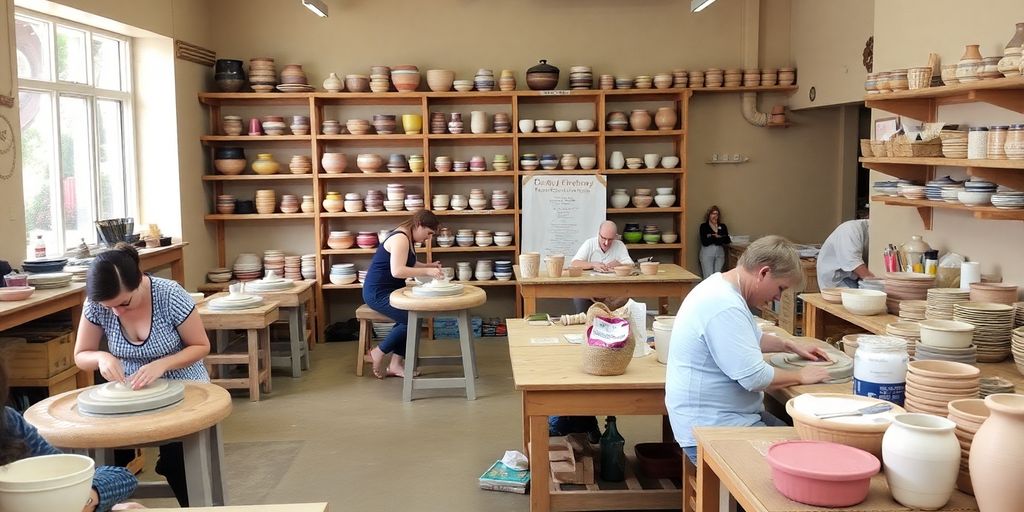
Intermediate Wheel Throwing Techniques
Once you’ve got the basics down, it’s time to push your wheel throwing skills further. Think of it as moving from making basic bowls to crafting intricate vases and pitchers. The key here is mastering the art of achieving height and form. Classes like Intermediate Wheel Throwing often focus on creating more dynamic shapes, which means you’ll be working with taller pieces and experimenting with different forms.
Achieving Dynamic Forms and Heights
Creating dynamic pottery isn’t just about getting taller; it’s about the balance and flow of the piece. You’ll learn to manipulate the clay to create graceful curves and striking silhouettes. Here are some tips to help you get there:
- Focus on Consistency: Ensure your clay is well-prepared and consistent in moisture.
- Control Your Speed: Adjust the wheel speed to suit the form you’re aiming for.
- Use the Right Tools: Invest in quality tools that help refine your shapes.
Exploring Surface Decoration Methods
Once your forms are perfected, it’s time to add some personality with surface decorations. Techniques such as carving, slip trailing, and using colored slips can transform your piece. In classes like Surface Decoration for Pottery, you’ll experiment with layering techniques to create unique, narrative pottery. The goal is to find a style that resonates with you and enhances your creations.
Advanced pottery classes are all about pushing boundaries and finding your unique style. They’re a chance to experiment and make mistakes, which is where true learning happens. Don’t be afraid to try new things and see where your creativity takes you.
Pottery for All Ages: Classes for Kids and Teens
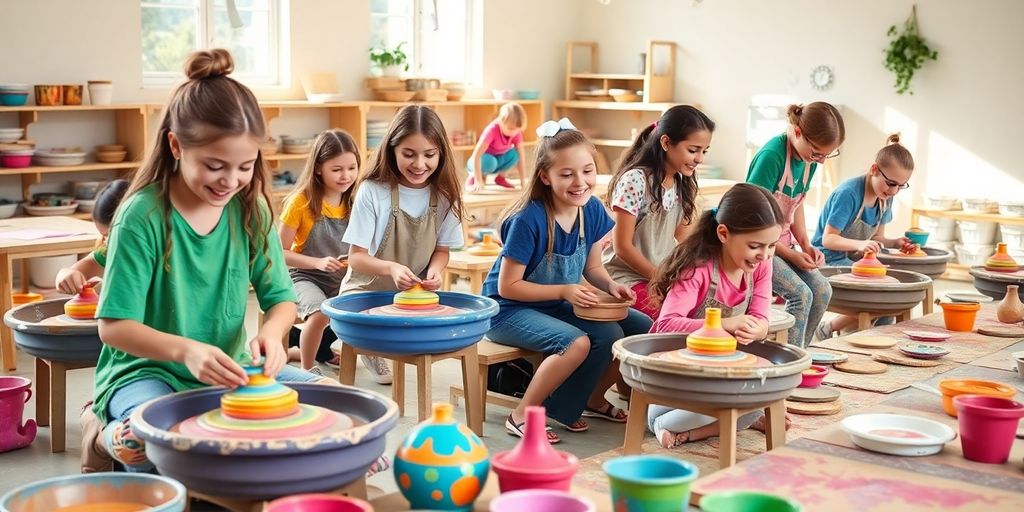
Creative Clay Projects for Young Artists
Kids love getting messy, and pottery classes are the perfect outlet for their creativity. Imagine the joy on a child’s face as they mold their first clay masterpiece. These classes offer a hands-on experience that encourages imagination and artistic expression. Young artists can create anything from a small bowl to a whimsical animal sculpture.
- Set the Table with Clay (Ages 5-8): Held on Saturdays, this class lets kids make functional pottery like plates and bowls, decorated with fun spring designs. It’s a great way for little ones to see their creations come to life.
- Creating with Clay Winter Garden (Ages 8-13): This class focuses on hand-building techniques, allowing kids to craft nature-inspired pottery pieces.
- Clay for Homeschool (Ages 8-12): Aimed at homeschoolers, this class offers a chance to explore both sculptural and functional pottery forms.
Combining Fun and Learning in Pottery
Pottery classes for kids and teens aren’t just about art; they’re about learning and having fun too. These sessions often incorporate lessons on the history of pottery, basic chemistry of glazes, and even some physics when it comes to balancing a pot on the wheel. It’s a sneaky way to get some education in while having a blast.
- Interactive Lessons: Teachers often use storytelling to explain the process of pottery, making it more relatable and engaging.
- Hands-On Experience: Kids get to touch, feel, and shape the clay, which enhances their learning experience.
- Social Interaction: Working alongside peers helps kids develop social skills and make new friends.
Developing Skills Through Guided Sessions
For teens, pottery classes can be a bit more advanced, focusing on skill development and personal style. Whether it’s handbuilding pottery for teens or an advanced wheel class, these sessions are designed to challenge and inspire.
Pottery is not just about creating art; it’s about building patience, improving focus, and boosting confidence. Through guided sessions, teens learn to refine their techniques and express their unique artistic voice.
- Advanced Wheel for Teens (Ages 13-17): This class helps teens expand their skills on the potter’s wheel, creating intricate forms and designs.
- Exploring Sculpture for Teens (Ages 13-17): Teens can experiment with sculpting techniques to create figures and imaginative creations.
- Handbuilt Pottery for Teens (Ages 13-17): Offers a chance to manipulate clay into both sculptural and functional art, experimenting with various surface decorations.
Specialized Pottery Classes: Exploring Unique Art Forms
Crafting Ceramic Musical Instruments
Ever thought about combining music with pottery? Some classes offer the chance to create ceramic musical instruments, like the Ocarina. You get to shape these instruments and even tune them. It’s a blend of art and music that’s both fun and challenging.
Creating Decorative Home Pottery
Decorative pottery for the home is all about adding a personal touch to your space. You can make anything from wall hangings to ceramic bells. Classes often focus on surface techniques like wax resist and carving, and you might even incorporate mixed media like cotton or wood. It’s a fantastic way to make your living space feel unique and warm.
Exploring Multimedia Sculpture Techniques
For those who like to push boundaries, multimedia sculpture classes are a must-try. These classes let you combine different materials with clay, offering a new dimension to pottery. Whether it’s adding textiles or experimenting with new forms, the possibilities are endless. It’s a creative playground for those who want to explore beyond traditional pottery.
The Therapeutic Benefits of Pottery: Mindfulness and Creativity
Connecting Meditation with Pottery
Pottery isn’t just about creating beautiful pieces; it’s a way to find peace and mindfulness. The process of shaping clay can be meditative, allowing you to focus your mind and let go of stress. Imagine starting your day with a short meditation session, followed by a hands-on pottery class. This combo can help you feel centered and ready to tackle whatever comes your way.
Finding Relaxation Through Clay Art
When you’re molding clay, you enter a state of flow where time seems to stand still. It’s like a mini-vacation from your daily worries. You can lose yourself in the rhythm of the wheel or the texture of the clay. Many people find that working with clay is as soothing as a warm bath or a quiet walk in nature.
- Focus on the feel of the clay in your hands.
- Let your mind drift and relax.
- Enjoy the satisfaction of creating something unique.
Building a Community of Pottery Enthusiasts
Pottery classes often bring together a diverse group of people who share a love for creativity. In these classes, you can connect with others, share ideas, and learn from each other. It’s not just about the pottery; it’s about being part of a community. Whether you’re crafting a ceramic musical instrument or just chatting with a fellow potter, these interactions can enrich your life.
Pottery isn’t just an art form; it’s a way to connect with yourself and others. It’s a journey of creativity and mindfulness, offering a break from the hustle and bustle of everyday life.
Choosing the Right Pottery Class: Tips and Considerations
Evaluating Class Schedules and Locations
When picking a pottery class, the first thing to think about is your schedule. Are you free on weekdays, or do weekends suit you better? Finding a class that fits your routine is key to enjoying the experience. Check if the studio is nearby or if you’re okay with a bit of a drive. Some folks love a local spot, while others don’t mind traveling for a great class.
Understanding Instructor Expertise
The teacher can make or break your pottery journey. Look for instructors with a good mix of experience and teaching skills. Are they patient and encouraging? Do they have a knack for explaining things clearly? It’s worth asking around or reading reviews to get a sense of their teaching style. A good instructor can turn a frustrating moment into a learning opportunity.
Balancing Cost and Value in Pottery Education
Pottery classes can vary widely in price. Some might seem pricey, but they include materials and firing fees. Make sure to compare what’s included in the cost. Sometimes a cheaper class might cost more in the long run if you have to buy a lot of extras. Evaluate the value you’re getting for the price.
Choosing the right pottery class is about finding the perfect balance between convenience, quality of instruction, and cost. Make sure you feel excited about the class you choose, as this enthusiasm will carry you through the learning process.
Wrap-Up: Dive into Pottery Today!
So, there you have it! Pottery classes are a fantastic way to let your creative juices flow and maybe even find a new hobby you love. Whether you’re a total newbie or have some clay experience, there’s a class out there for you. From wheel throwing to handbuilding, the options are endless. Plus, it’s a great way to meet new people who share your interests. So why wait? Check out a local pottery class and start creating something amazing today!
Frequently Asked Questions
What should I bring to my first pottery class?
For your first pottery class, wear comfy clothes that you don’t mind getting messy. Bring an old towel and a water bottle. Most studios provide the clay and tools you need.
How long does it take to get good at pottery?
Getting good at pottery takes time and practice. Some people start feeling comfortable after a few months, but it can take years to truly master the craft.
Can kids take pottery classes too?
Yes, many studios offer pottery classes for kids and teens. These classes are designed to be fun and educational, helping young artists develop their skills.
What is wheel throwing in pottery?
Wheel throwing is a pottery technique where you shape clay on a spinning wheel. It’s a common way to make bowls, vases, and other round items.
Do I need any experience to join a pottery class?
No, beginners are welcome in most pottery classes. Instructors will guide you through the basics, so you can start creating right away.
How do I find the right pottery class for me?
Consider what you want to learn, your schedule, and your budget. Look for classes that match your skill level and interest, and read reviews if available.





 PERFECT PAINTER
Leave a comment