
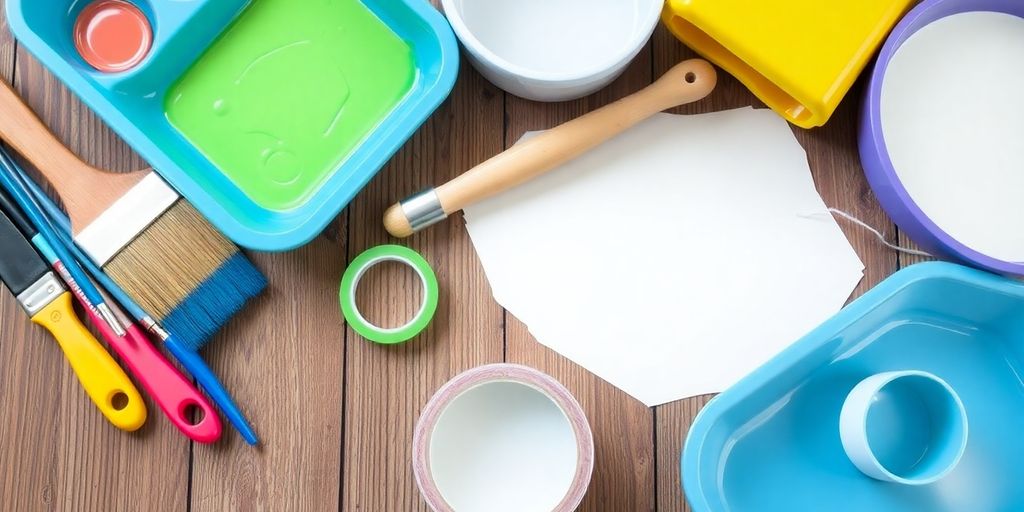
If you’re a DIY enthusiast looking to tackle painting projects, having the right tools is essential. This guide will help you understand the various painting tools you need to make your work easier and more efficient. From brushes to safety gear, we’ll cover everything you need to know to get started on your next painting adventure.
Key Takeaways
- Choosing the right brush is important for different surfaces.
- Rollers can help you finish big jobs faster.
- Prep tools like sandpaper and tape ensure a smooth finish.
- Advanced tools allow for detailed and creative work.
- Safety gear is crucial to protect yourself while painting.
Basic Brushes for Every Project
When it comes to painting, having the right brushes is essential for achieving a great finish. Choosing the right brush can make all the difference in your project. Here’s what you need to know:
Choosing the Right Brush Material
- Natural Bristles: Best for oil-based paints. They hold more paint and provide a smooth finish.
- Synthetic Bristles: Ideal for water-based paints. They are durable and easy to clean.
- Foam Brushes: Great for smooth surfaces and applying finishes evenly.
Sizes and Shapes for Different Surfaces
| Brush Type | Best For | Size Recommendation |
|---|---|---|
| Flat Brush | Large, flat areas | 2-4 inches |
| Angled Brush | Corners and edges | 1-2 inches |
| Detail Brush | Intricate designs | 1 inch or smaller |
Proper Care and Maintenance
- Always clean brushes immediately after use to prevent paint from drying.
- Store brushes upright or hang them to maintain their shape.
- Regularly check for loose bristles and replace brushes when necessary.
Using the right tools, like brushes, is crucial for a successful paint job. Proper preparation and technique are key to achieving a professional finish.
Rollers: Speeding Up Large Jobs
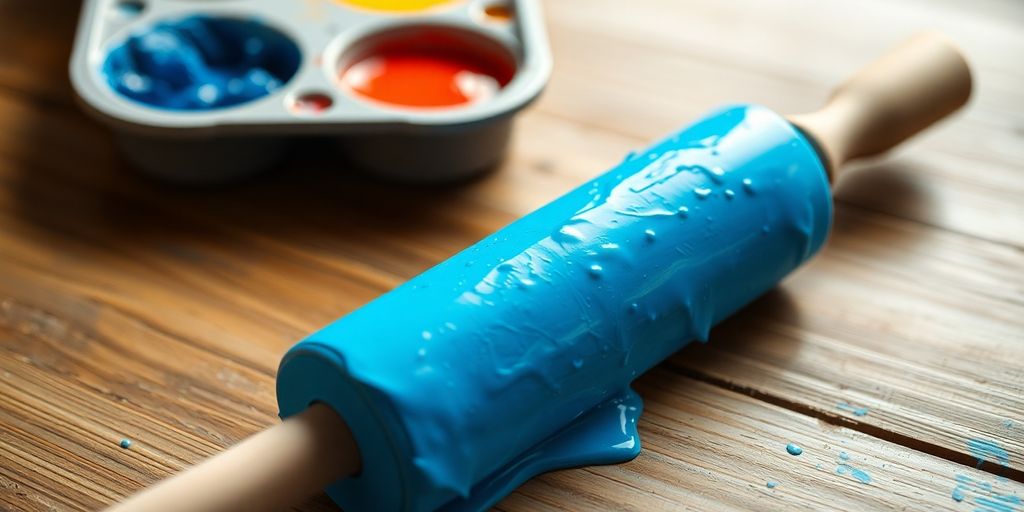
When it comes to painting large areas quickly, rollers are your best friend. They cover more surface area than brushes, making them ideal for big jobs like walls and ceilings. Here are some key points to consider:
Selecting the Right Nap Length
- Short Nap (1/4" to 3/8"): Best for smooth surfaces like drywall.
- Medium Nap (1/2" to 3/4"): Good for semi-smooth surfaces like plaster.
- Long Nap (1" or more): Ideal for rough surfaces like textured walls or concrete.
Using Extension Poles Effectively
- Choose the Right Length: Make sure the pole is long enough to reach high areas without a ladder.
- Secure the Roller: Ensure the roller is tightly attached to avoid it falling off while painting.
- Maintain a Steady Pace: Roll in a consistent manner to avoid streaks and ensure even coverage.
Cleaning and Storing Rollers
- Rinse Immediately: Clean rollers right after use to prevent paint from drying on them.
- Use Warm Soapy Water: This helps to remove paint more effectively.
- Store Properly: Keep rollers in a cool, dry place to extend their life.
Using the right tools can make a huge difference in your painting projects. Rollers not only save time but also help achieve a smooth finish, especially when you choose the right type for your surface.
By understanding these aspects of rollers, you can make your painting tasks faster and more efficient. Remember, the best paint brushes and rollers can significantly enhance your results, so choose wisely!
Essential Prep Tools for a Smooth Finish
Preparing your surfaces is crucial for a great paint job. Using the right tools can make all the difference in achieving a smooth finish. Here are some essential prep tools you should have:
Importance of Sandpaper and Scrapers
- Sandpaper: Helps smooth out rough areas on walls.
- Scrapers: Remove old paint or imperfections.
- Different Grits: Use coarse grit for rough surfaces and fine grit for finishing touches.
Using Painter’s Tape Like a Pro
- Clean Edges: Painter’s tape helps create clean lines.
- Apply Firmly: Make sure the tape sticks well to avoid paint bleeding.
- Remove Carefully: Take off the tape while the paint is still wet for the best results.
Primers and Sealers for Better Adhesion
- Primers: Prepare the surface for paint, ensuring better adhesion.
- Sealants: Protect surfaces and improve durability.
- Types of Primers: Choose between oil-based or water-based depending on your project.
Preparing your walls properly is key to a successful paint job. Following the right steps ensures a professional finish and helps avoid mistakes. Remember to gather your tools, clean the surfaces, and apply primer for the best results!
Advanced Tools for Detailed Work
When it comes to achieving a professional finish, having the right tools is essential. Advanced tools can make a big difference in the quality of your work. Here are some key tools to consider:
Mastering the Art of Edging Tools
- Edging tools help you create clean lines along walls and ceilings.
- They come in various shapes, including straight and angled.
- Using them correctly can save you time and effort in touch-ups.
Using Detail Brushes for Intricate Designs
- Detail brushes are perfect for small areas and fine work.
- They allow for precision in painting, especially for designs and patterns.
- Choose brushes with different bristle types for various effects.
Stencils and Patterns for Creative Touches
- Stencils can add unique designs to your projects.
- They are available in many shapes and sizes, making them versatile.
- Use painter’s tape to secure stencils and prevent paint bleed.
Using the right tools can transform your painting project. Remember, consistent maintenance and timely touch-ups can prolong the life of your paint.
By investing in these advanced tools, you can elevate your painting skills and achieve stunning results.
Safety Gear for Painting Projects
When it comes to painting, safety should always come first. Using the right gear can protect you from harmful substances and accidents. Here are some essential items you should consider:
Protective Clothing and Gloves
- Wear long sleeves and pants to cover your skin.
- Use protective gloves to shield your hands from chemicals and paints.
- Consider wearing a paint suit for full-body protection.
Masks and Respirators for Fume Safety
- Use a mask to avoid inhaling paint fumes.
- A respirator is best for projects with strong odors or harmful chemicals.
- Make sure your mask fits well to ensure it works effectively.
Eye Protection and First Aid
- Always wear safety goggles to protect your eyes from splashes.
- Keep a first aid kit nearby in case of accidents.
- Know how to treat minor injuries like cuts or scrapes.
Remember, taking the time to wear the right safety gear can prevent injuries and make your painting project more enjoyable!
Paint Trays and Containers
When it comes to painting, having the right paint trays and containers can make a big difference in your project. Here’s what you need to know:
Choosing the Right Tray for Your Paint
- Material Matters: Plastic trays are lightweight and easy to clean, while metal trays are more durable.
- Size Selection: Choose a tray that fits your roller size to avoid spills and mess.
- Design Features: Look for trays with built-in handles for easy carrying.
Using Liners to Save Time
Using liners in your paint trays can help you save time and effort. Here are some benefits:
- Easy Cleanup: Just remove the liner and toss it away after use.
- Less Waste: You can use different colors without cleaning the tray each time.
- Consistent Results: Liners help keep the paint fresh and prevent drying out.
Proper Cleaning and Storage of Trays
To keep your trays in good shape:
- Clean Immediately: Wash your trays right after use to prevent paint from hardening.
- Use Warm Soapy Water: This helps remove paint easily.
- Store Properly: Keep trays in a dry place to avoid rust or damage.
Remember, using the right tools can lead to a smoother painting experience. This guide offers essential tips for achieving professional results in home painting projects. By following these tips, you can transform your space beautifully and effectively.
Ladders and Scaffolding for Hard-to-Reach Areas
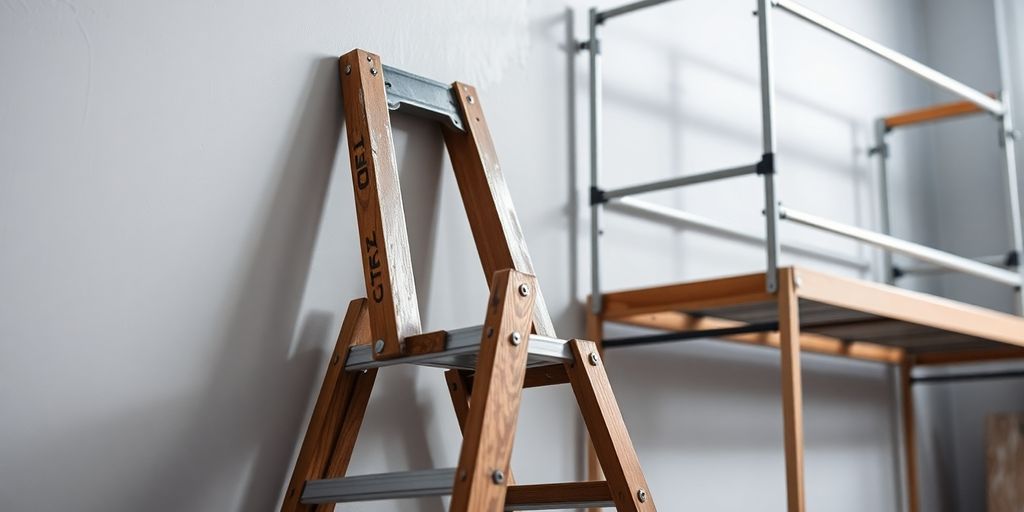
When tackling painting projects, having the right equipment is crucial for safety and efficiency. Using the correct ladder or scaffolding can make a big difference in how easily you can reach high spots. Here’s what you need to know:
Selecting the Right Ladder for Your Needs
- Types of Ladders: Choose between step ladders, extension ladders, and multi-position ladders based on your project.
- Height Considerations: Make sure the ladder reaches the height you need without stretching or overreaching.
- Weight Capacity: Check the ladder’s weight limit to ensure it can support you and your tools.
Safe Use of Scaffolding
- Set Up on Level Ground: Always place scaffolding on a flat surface to prevent tipping.
- Follow Manufacturer Instructions: Each scaffolding type has specific guidelines for safe assembly and use.
- Use Guardrails: Ensure that guardrails are installed to protect against falls.
Tips for Working at Heights
- Wear a Safety Harness: If you’re working on scaffolding, a harness can provide extra security.
- Keep Tools Secure: Use tool belts or lanyards to prevent tools from falling.
- Stay Aware of Your Surroundings: Be mindful of overhead power lines and other hazards.
Working safely at heights is essential to avoid accidents. Always prioritize your safety and the safety of others around you.
By understanding how to choose and use ladders and scaffolding properly, you can ensure a smoother and safer painting experience. Remember, safety first!
Wrapping Up Your Painting Journey
In conclusion, having the right tools is key to making your painting projects easier and more enjoyable. Whether you’re just starting out or have some experience, the tools we’ve discussed will help you achieve great results. Remember, a good brush, a sturdy roller, and the right tape can make a big difference. So, gather your supplies, get creative, and don’t be afraid to try new things. Happy painting!
Frequently Asked Questions
What types of brushes should I use for painting?
You should have a variety of brushes. Flat brushes are great for big areas, while round brushes work well for details. Choose brushes made from synthetic materials for water-based paints and natural bristles for oil-based paints.
How do I pick the right roller for my project?
When choosing a roller, consider the nap length. A short nap is best for smooth surfaces, while a longer nap is better for rough surfaces. This helps the paint go on evenly.
Why is prep work important before painting?
Prep work is key to a good paint job. Sanding surfaces and using painter’s tape helps the paint stick better and gives you a cleaner finish.
What tools are best for detailed painting?
For detailed work, use edging tools and small detail brushes. Stencils can also help you create cool patterns and designs.
What safety gear do I need for painting?
Wear protective clothing and gloves to keep your skin safe. Masks or respirators are important to avoid breathing in fumes, and goggles protect your eyes.
How do I clean and store my painting tools?
After painting, clean your brushes and rollers right away to keep them in good shape. Use warm soapy water for water-based paints and the right cleaner for oil-based paints. Store them in a dry place.





 PERFECT PAINTER
Leave a comment